

A new report predicts the fitness app market will grow from $10.6 billion in 2024 to $33.6 billion by 2033 as artificial intelligence, wearables and social features push the category beyond simple tracking
If you want to know where the fitness and wellness industry is moving, follow how people train when left to their own devices. Literally.
With most consumers keeping their phones within arm’s reach, it’s little surprise that the global fitness app market, valued at $10.6 billion in 2024, is projected to climb to $33.6 billion by 2033 with a 13.5% compound annual growth rate, according to new data from ResearchAndMarkets.com.
The drivers are familiar but still accelerating: higher health awareness, pandemic-related rewiring that pushed hybrid fitness into the fold, the steady rise of wearable tech and economic forces like increased disposable income and rising healthcare costs.
Fitness apps pulled in 345 million users in 2024 and generated nearly $4 billion in revenue, an 11.1% increase from the year before, according to Business of Apps. With 850 million downloads last year, the data points to a shift where digital coaching and tracking have become embedded in how people manage workouts, sleep and nutrition.
Training Moves to the Phone
What’s emerging in the report is a clearer picture of where consumer habits are headed. Smartphones have become a command center for personal health, with apps integrating with wearables to monitor activity, nutrition and overall wellness. It’s also becoming widely adopted, as nearly one-third of Americans monitored their health this way in 2023, according to the National Institutes of Health, which the report cites as evidence that real-time tracking has become routine behavior.
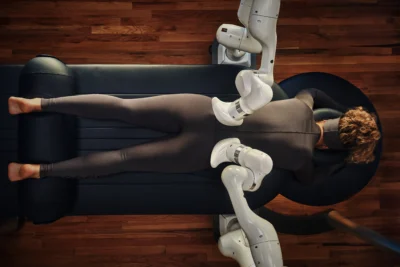
It’s made the wearables space feel like a land grab for who can connect it all first. Fountain Life, co-founded by motivational speaker Tony Robbins, just synced its AI-driven app with Apple, Garmin, Oura, Whoop and hundreds of others, with its AI assistant, Zori, interpreting everything from sleep to genomics in real time. Meanwhile, Bevel, the “AI for human potential” app that built a following on Reddit, just raised $10 million to tackle the same problem. Its platform already links Apple, Garmin, Dexcom and Libre data and uses its AI engine, Bevel Intelligence, to connect sleep, workouts, glucose and meals into one behavioral map.
Specialized Apps Take the Lead
The report also points to a shift in what users expect in an increasingly competitive space, and one path forward could be focusing on specialized categories like running, which has taken a noticeable share of the market.
It’s an area where AI-powered apps are gaining ground. Runna, acquired by Strava, creates customized training plans for runners and has grown internationally, operating in more than 180 countries. This year, Olympian Mo Farah teamed up with Adam Clarke and U.K.-based fit tech company WithU to launch URunn, a digital coaching app designed for everyday runners. Meanwhile, a new contender has just joined the mix. Kotcha, an AI-driven coaching platform co-founded by running legend Eliud Kipchoge, just raised $4.1 million for its next phase of growth.
 credit: Strava
And it doesn’t have to be activity-specific. Zing Coach, an AI-powered platform backed by health tech company Palta that builds adaptive workout plans and delivers live feedback and personalized motivation, has grown to 2.5 million users. The company says its approach can save users more than $2,000 a year compared to personal training sessions, a pitch that echoes the shift toward tools that offer tailored guidance without the premium price tag.
For those looking to compete, the takeaway is clear: companies that can pair AI-driven personalization with wearable integration and user-friendly design are the ones likely to succeed in the decade ahead.
Connection Becomes a Feature
As social connection becomes a bigger part of the wellness conversation, digital apps are beginning to merge physical activity with real-life meetups. The latest example is Dink Date, an AI-powered social and dating app created for the global pickleball community. The platform, which just launched on the Apple App Store and Google Play, matches players by style, skill level and availability while helping them find local games, clubs and events.
 credit: Dink Date
Another bid for offline connection is emerging with ex-Peloton instructor Kendall Toole’s Never Knocked Out (NKO) app, which pairs workouts, recipes and mental health tools with a vision for real-world meetups and community events that pull users out of the scroll and into shared spaces. Both are small but telling signs of where the category is heading, as wellness tech shifts toward supporting connection, not just performance.
The report also highlights how global the market has become. Asia-Pacific, Europe and Latin America are all expected to expand as more consumers adopt digital fitness tools and look for accessible support across spaces such as running, cycling, yoga and strength training. A big part of global growth now comes down to language. Runna, in particular, is ready, having recently expanded to seven new languages and unlocking access to personalized training plans and coaching videos for millions of runners across Europe, Latin America and Asia. Nutrition and activity tracking continue to climb as users look for platforms that manage multiple parts of their wellness.