
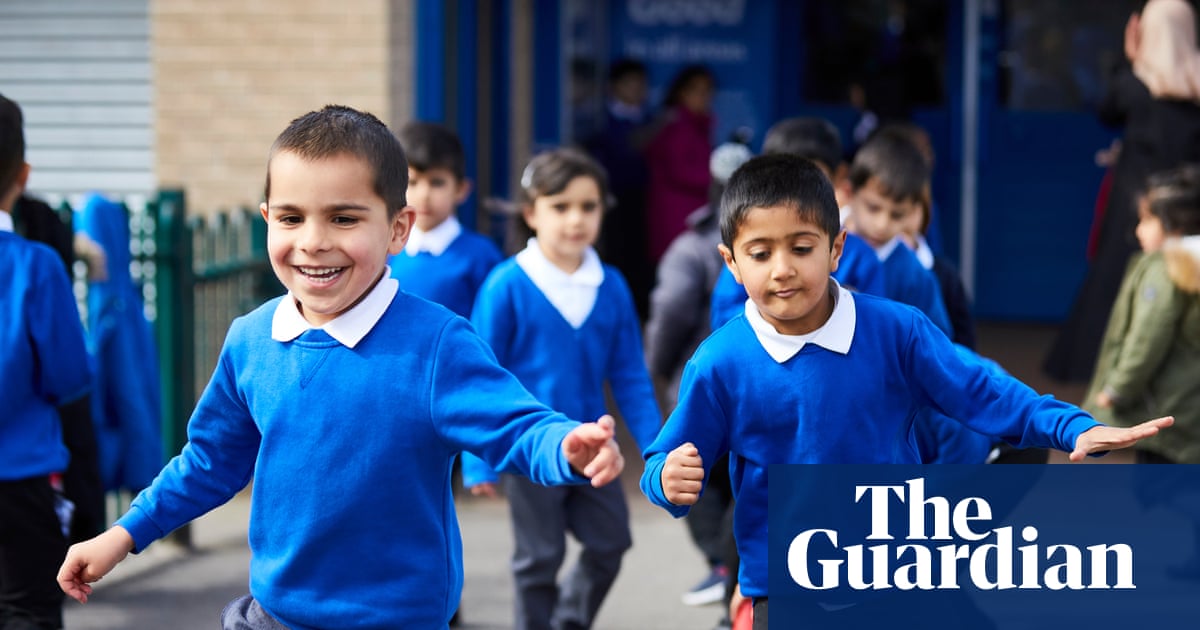
Children in England are the most active they have been since 2017, according to research that warns that less than half are meeting government activity level targets.
In 2024-25, 3.6 million children took part in an average of more than 60 minutes of sport and physical activity per day across the week, according to Sport England’s annual active lives survey. This represents 49.1% of five- to 16-year-olds in England – a 1.3% increase on the previous year, and a 5.8% increase on 2017, when the survey began.
Simon Hayes, Sport England’s chief executive, said the improvement reflected “the positive impact that schools, clubs, community organisations, and many others are having across the country”.
“More than half a million additional children are now meeting the chief medical officers’ guidelines,” said Hayes. “That is real progress and something the sport and physical activity sector can be proud of, especially after the huge disruption of the pandemic.”
He added: “But the report also makes clear how much more we must do. It cannot be right that fewer than half of children are moving as much as recommended, and that stark inequalities mean too many among the poorest in our society miss out. We need a renewed national effort to change this.”
The survey, which questioned more than 100,000 children between five and 16 in England, also highlighted inequalities. Boys are still more active than girls, though the gap has narrowed slightly (from 6.4% to 5.9%), and is widest among teenagers. White and mixed children are more likely than Asian, black or other ethnic minority children to be active, and children from richer households are more likely to be active than poorer children (58% compared with 45%).
Children between seven and nine are the least active (42%), while five- to seven-year-olds and 11- to 13-year-olds are the most (53%) active. The latter have notably increased activity levels, with 5.2% more active than in 2017-18.
In particular, children are now more likely to walk or cycle to school or go to the gym and do fitness classes, though participation in team sports has remained static. The survey found that children who were more active were more likely to report feeling happy.
Responding to the report, the sports minister, Stephanie Peacock, said: “We know there is more to do. Too many children still miss out on the joy and benefits of sport.
“That is why we are investing £400m in grassroots sports facilities where they are needed most, and launching a new PE and school sport partnerships model to ensure that every child, no matter where they live or whatever their background, gets the same opportunities to be active.”