
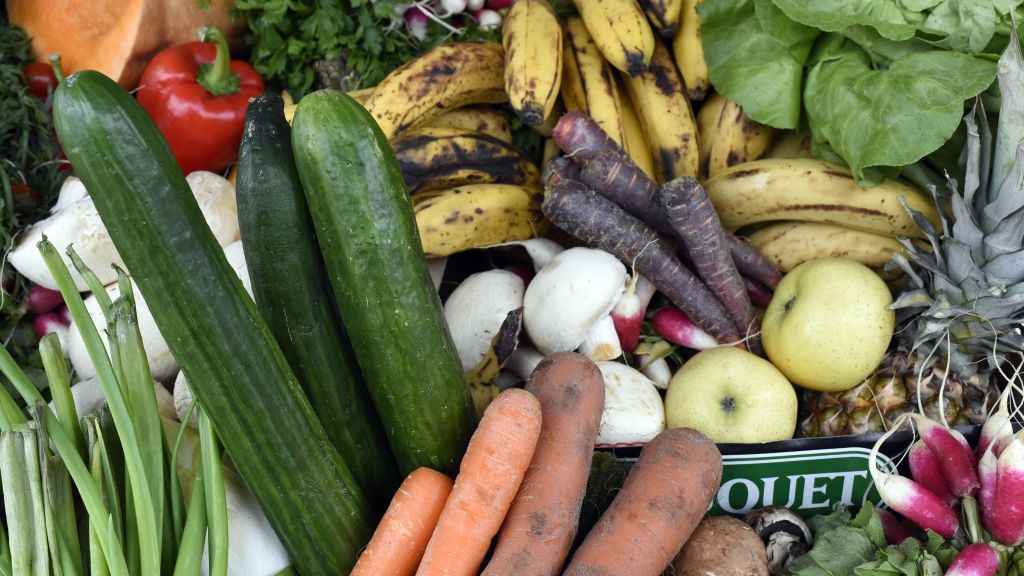
Oncologists have been moving away from the notoriously unpopular neutropenic diet. It requires nearly all food to be cooked to high temperatures — or, as some have described it, “boiled to death” — to reduce the risk of food-borne illnesses. But since evidence in recent years suggested the diet didn’t actually help ward off infections, doctors started leaning away from a strict neutropenic diet.
Now, a new study published last week in the Journal of Clinical Oncology is giving some physicians pause about fresh fruits and vegetables for patients whose treatment involves heavy suppression of the immune system, particularly neutrophils, white blood cells that are key to preventing infection. Contrary to research in the past, the trial found that certain blood cancer patients who were allowed a less restrictive or liberalized diet had 11% more infections than patients who were prescribed the neutropenic diet.
“There has been a move in the last 10 years in liberalizing diets for patients, for sure,” said Talal Hilal, a hematologist oncologist and bone marrow transplant physician at the Mayo Clinic who did not work on the study. But reading the paper, Hilal said, “it does pose the question of maybe we need to revisit how liberal we want to be with our patients.”
Oncologists first began using the neutropenic diet decades ago, particularly for intensively treated cancer patients like those undergoing hematopoietic stem cell or bone marrow transplants. These procedures can give certain blood cancer patients an opportunity for a cure, but sometimes use heavy doses of chemotherapy that’s extremely harsh on the immune system.
While the weakened immune system is recovering after the procedure, infections have a higher potential of turning deadly, until the patient’s cell counts recover. Hospitals have been known to go to great lengths to protect these patients including preventing outside food or fresh flowers from entering their rooms. As cruel as it may have felt, clinicians assured themselves it was better than potentially introducing dangerous bacteria, viruses, or fungal spores to the defenseless.

STAT Plus: Bone marrow transplant patients could be spared from ‘bland’ diet, study finds
Over the years, though, evidence suggested that normal diets don’t pose much of an infection risk. Rather, neutropenic diets were blamed for decreasing patient quality of life and increasing malnutrition. So hospitals have gradually shifted toward being more liberal when it comes to neutropenic patients.
In particular, a group at the University of Milan published the first randomized evidence that a non-restrictive diet was not inferior to the neutropenic diet for certain stem cell transplant patients in 2023, leading many oncologists to rejoice that the benefits of the neutropenic diet were finally debunked. They also showed a non-restrictive diet improved quality of life.
But John Wingard, a hematologist-oncologist and emeritus faculty at the University of Florida, wanted to take another look. In particular, he wanted to know if un-restricting the diet for neutropenic patients would actually improve patients’ nutrition, an ongoing challenge for many cancer patients undergoing intensive therapy. Like the Milan group, Wingard enrolled over 200 blood cancer patients and randomized them to get either a liberalized diet allowing fresh fruits, vegetables, and pasteurized yogurt, or the neutropenic diet. In this study, patients were allowed to eat home-cooked or restaurant food as long as it adhered to diet guidelines.
Wingard planned to look at how many clinically confirmed infections were in each group at different time periods. “We had to prematurely stop the trial from data safety monitoring committee because the liberalized diet had 11% more infections,” Wingard said. Only about half of the patients who were allowed the liberalized diet actually consumed fresh fruits or vegetables, Wingard added. “When we did an analysis of just the people who complied with the liberalized diet, the rate of infection was 1.5 times higher.”
The study also suggested that allowing the liberalized diet didn’t seem to improve patients’ nutrition or quality of life.
Taken together, Mayo Clinic’s Hilal said he’s starting to rethink his practice of being more permissive with transplant patients’ diets. “I feel like if you are liberalizing diet and you’re not even seeing improvements in quality of life or nutritional status, then there is no trade-off here. Why would I be very easy with liberalizing my diet, if I don’t benefit in any other domain?” he said.
There are some caveats, Hilal said. For one, the patient population in both the 2023 Milan group study and this study are different. The 2023 paper was a multi-center study, which can help remove hospital-specific biases. It was also done in Europe, where certain practices may be different than what’s typical in the U.S., which could plausibly make comparison harder as well. “They are also a higher-risk population that seems to be enrolled in this JCO paper,” he said.
Ultimately, Hilal said he felt the study may reignite a debate on the neutropenic diet, and cancer researchers might argue over the strengths and weaknesses of both trials. “It’ll probably get discussed. People will take sides,” he said.
Notably, Hilal and other physicians, including Wingard, said that it’s likely still reasonable to allow a non-restrictive diet with other patients like solid tumor patients who may still be neutropenic, but not as high risk or neutropenic for as long as bone marrow transplant patients. This study also showed that being neutropenic longer was the main variable associated with infection. No patients died during the study intervention either, and oncologists can manage many infections well.
As for why neither diet improved nutrition or quality of life for patients, Wingard thinks that might be because intensive cancer treatment can leave patients nauseous, without an appetite, and generally uncomfortable. No matter what food they get, some patients will just struggle to eat.
“I don’t think the neutropenic diet is that bad,” Wingard said. “It’s just that patients who have been treated this way have a symptom called dysgeusia, which means everything tastes bad. And then you have nausea and stuff.”
Probably the best way to settle the neutropenic diet debate and help patients’ quality of life and nutrition, Wingard said, is to focus on improving treatment. New effective therapies that are less toxic to the immune system would mean there’s no need for something like the neutropenic diet.