
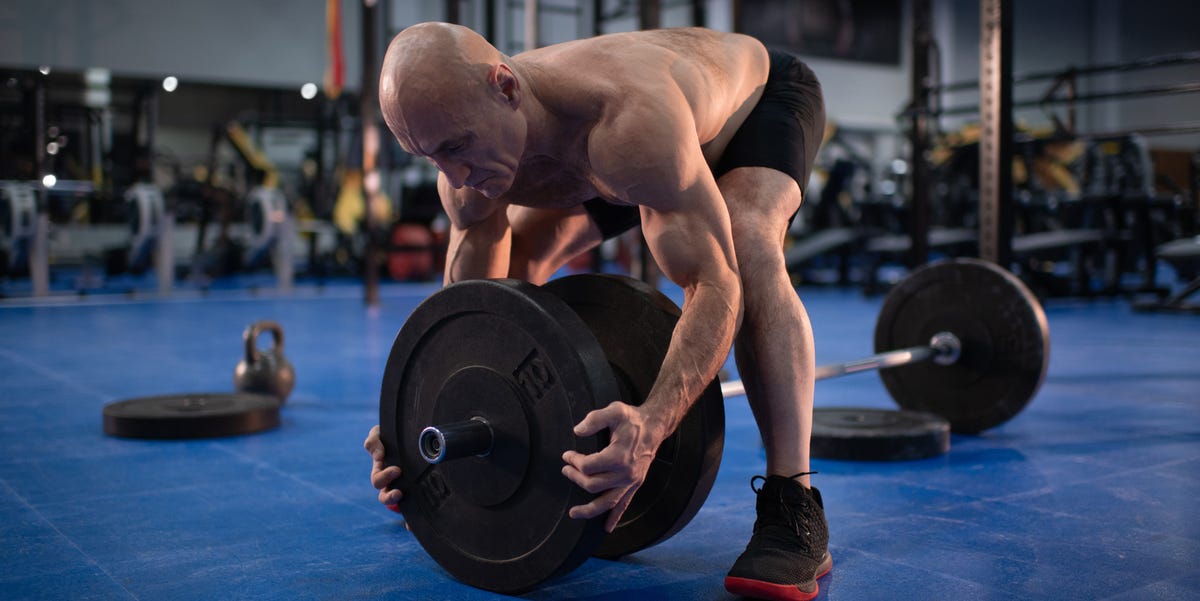
Turning 50 is a significant milestone. It’s also a sensible point to reassess your strength and fitness benchmarks to make sure they still reflect what you’re capable of. Set the bar too low and you risk selling yourself short; set it unrealistically high and the chance of injury increases.
The benchmarks below, shared by trainer Alain Gonzalez, offer realistic targets for men in their fifties to work towards. They’re designed to guide training, not dictate it. Approach them with flexibility, adjust where needed, and use them as reference points for staying strong and capable long term.
Maximal Strength for Men in Their 50s
‘Muscle strength is one of the strongest predictors of all-cause mortality and overall quality of life as you age,’ says Gonzalez. It’s not just about living longer, but maintaining independence, resilience and physical confidence in later life.
These benchmarks reflect what healthy, trained men in their 50s can reasonably aim for with consistent, progressive training. ‘They’re not elite standards,’ Gonzalez explains. ‘They’re based on decades of strength coaching experience.’
While each benchmark is expressed as a one-rep max, Gonzalez is clear that testing a true max isn’t essential – or even appropriate – for many lifters in their fifties. ‘If you know your six- to 10-rep numbers, you can estimate your one-rep max without ever having to test it,’ he says.
For that reason, Men’s Health has included five-rep max estimates alongside Gonzalez’s one-rep max recommendations, offering a safer and more practical option for those who prefer not to test maximal lifts. These targets are intended for men who already have a solid foundation of lifting experience.
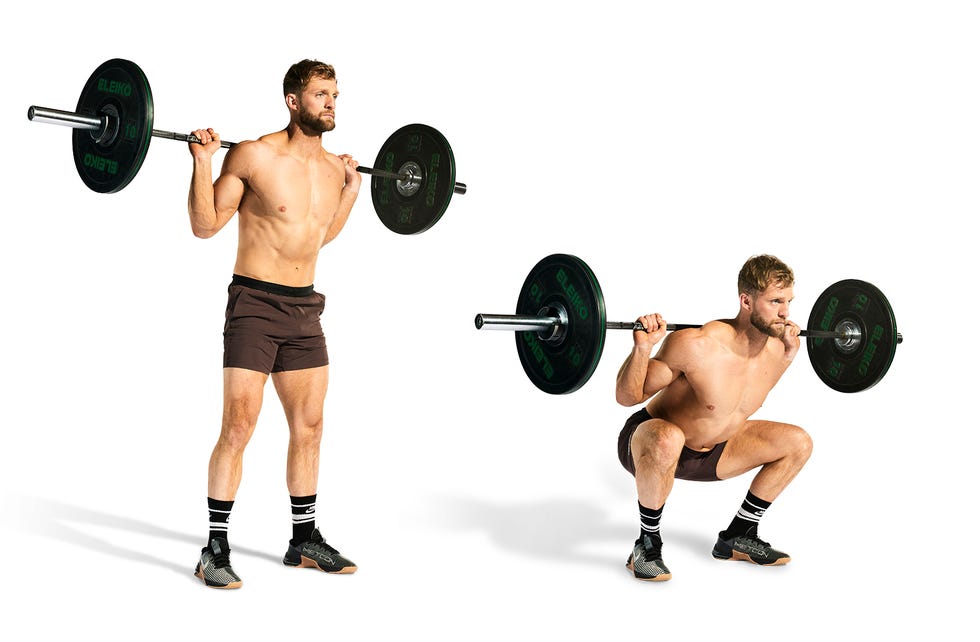
One-rep max: 1.4 × bodyweight
Five-rep max: ~1.2 × bodyweight
Acceptable variations:
Barbell back squatSafety bar squat
Smith machine:
Add ~10% to the target load to account for the reduced stability demands of the fixed bar path.
A loaded squat tests leg strength, mobility, coordination and core stability. You should be able to reach depth (breaking parallel) with control, then drive out of the bottom while maintaining posture and bar path throughout the lift.
One-rep max: 0.9 × bodyweight
Five-rep max: ~0.75-0.8 × bodyweight
Dumbbells:
Aim for a combined load of ~80-85% bodyweight.
Smith machine:
Add ~10% to the barbell standard.
Pressing strength reflects upper-body force production and shoulder stability. The weight should move smoothly and under control, without loss of scapular position or bar path consistency.
One-rep max: 1.6 × bodyweight
Five-rep max: ~1.3-1.4 × bodyweight
Acceptable variation:
The deadlift tests posterior-chain strength and hinge mechanics. You should be able to lift the load without excessive spinal movement, hitching or loss of position from the floor to lockout.
Build strength, add muscle and strip body fat in 2026 with this simple four-week training plan from Men’s Health fitness director Andrew Tracey. You’ll also get a fully comprehensive nutrition guide, giving you the tools to create a smart, sustainable calorie deficit – without compromising your training. Tap the link below to unlock 14 days of free access to the Men’s Health app and start training today.
 Endurance Benchmarks for Men in Their 50s
Muscular endurance reflects how long muscles can repeatedly contract or sustain tension. It’s a key factor in joint health, resilience and long-term physical function as you age.
Target: 60 seconds (active hang)
‘The goal is to hang for at least 60 seconds with the shoulders slightly depressed and the shoulder blades engaged,’ advises Gonzalez. Avoid passive hanging through the joints.
If needed, build up gradually. ‘Break it into two sets of 30 seconds or three sets of 20 seconds,’ he suggests, focusing on maintaining tension and control throughout.
Target: ~50 reps
All reps must be strict: chest to the floor, core braced, no hip sagging and no excessive elbow flare. Quality matters more than chasing numbers.
Target: ~2 minutes
If you can comfortably hit this benchmark, Gonzalez says your lower-body endurance is in good shape for your age. Maintain an upright torso, thighs parallel to the floor and even weight through both feet.
Power Benchmarks for Men in Their 50s
Power is the ability to produce force quickly. It declines faster with age than maximal strength, which makes it especially important to maintain. While often associated with heavy lifting, Gonzalez uses loaded carries and jumping tests here as practical indicators of power, coordination and force transfer.
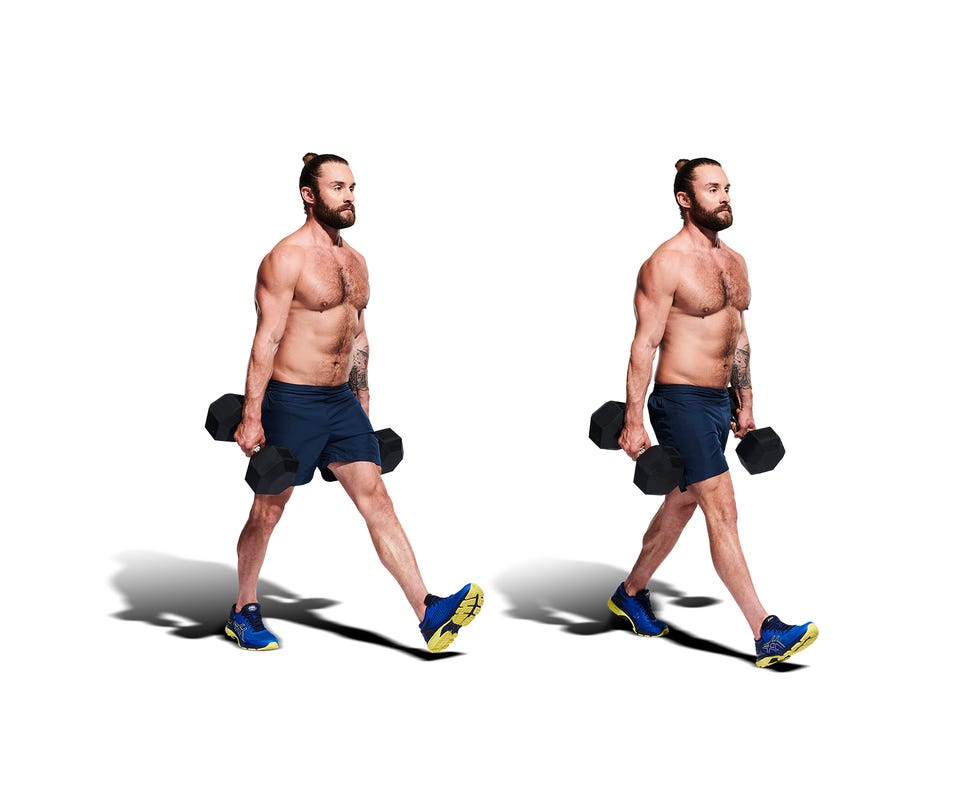
Target: Carry bodyweight for 100ft, split evenly between both hands
‘Carry your bodyweight split evenly between each hand for 100ft,’ says Gonzalez. This benchmark tests grip strength, core stability, posture and gait under load, all of which are critical for real-world strength and injury resilience as you age.
Maintain an upright torso, steady stride and controlled breathing throughout the carry.
Broad Jump
Target: Jump at least your own height (distance)
If you can cover at least your own height in distance, Gonzalez says you’re still producing solid explosive force for your age. The broad jump reflects lower-body power, coordination and the ability to rapidly apply force, qualities that are closely linked to fall prevention and athletic capacity later in life.
Focus on a strong arm swing, a controlled landing and stable posture on impact.
Cardiovascular Fitness for Men in Their 50s
Cardiovascular fitness underpins endurance, recovery between sets and long-term heart health. It also plays a key role in maintaining training capacity and day-to-day energy as you age.
Target: Under ~8:30
‘If you’re in your 40s and can complete a one-mile run in under eight minutes, it’s a clear sign your cardiovascular system is working at a high level,’ says Gonzalez. For men in their 50s, he suggests adding around 30 seconds per decade to account for normal, age-related changes in aerobic capacity.
The goal isn’t racing flat-out, but demonstrating that you can sustain a strong, steady pace without excessive fatigue. Running efficiency, breathing control and recovery afterwards matter as much as the time itself.
Balance Benchmarks for Men in Their 50s
Balance often declines gradually and without obvious warning, increasing the risk of falls and injury. The good news is that it can be measured, trained and improved at any age.
Single-Leg Stand (Eyes Closed)
Target: ~15–20 seconds per leg
Stand tall with arms crossed over your chest and eyes closed. Stop the clock if you hop, uncross your arms or put the raised foot down.
‘If you’re hitting this target for your age group, it’s a strong sign your neuromuscular control and coordination are right where they should be,’ says Gonzalez. Balance reflects how well the brain, muscles and joints are communicating, making it a key indicator of long-term independence.
The Bottom Line
If you’re not hitting every benchmark, don’t panic. These numbers aren’t pass-or-fail tests, and they’re not meant to be achieved all at once. They’re reference points Gonzalez uses to guide training and set realistic targets.
If a benchmark isn’t right for you, adjust it to suit your experience, history and needs. Focus on consistent, progressive training and sensible intensity, and you’ll continue building strength, fitness and resilience to be proud of, whatever that looks like for you.
Related Stories
Kate is a fitness writer for Men’s Health UK where she contributes regular workouts, training tips and nutrition guides. She has a post graduate diploma in Sports Performance Nutrition and before joining Men’s Health she was a nutritionist, fitness writer and personal trainer with over 5k hours coaching on the gym floor. Kate has a keen interest in volunteering for animal shelters and when she isn’t lifting weights in her garden, she can be found walking her rescue dog.