
At least four people have been diagnosed with the deadly disease meningococcal B in Western Australia, although authorities say there is no link between the cases.
WA Health said two of the people affected were confirmed in December 2025, and two were confirmed in January.
Meningococcal disease is an uncommon, life-threatening illness caused by a bacterial infection of the blood or of the membranes that line the spinal cord and brain.
It can occasionally affect other sites such as the throat, lungs or large joints.
‘These four latest cases do not indicate an increase in meningococcal case numbers at this stage,’ WA Health said in a statement on Tuesday.
‘However, the Department of Health continues to closely monitor this notifiable disease.’
Most people with the disease recover from it with treatment. But it can lead to death in 5 to 10 per cent of cases.
Around 15 per cent of people who are diagnosed with invasive meningococcal may experience long-term complications such as hearing loss, limb amputations or brain damage.

At least four people have been diagnosed with the deadly disease meningococcal B in Western Australia (stock image)
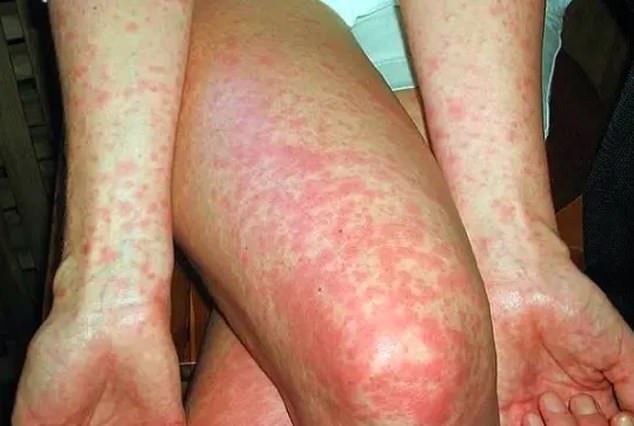
Sometimes symptoms may be accompanied by the appearance of a spotty red-purple rash
In 2025, there were a total of 13 cases of invasive meningococcal disease and one death reported – which was identical to the numbers reported in 2024.
Of the 13 cases in 2025, 12 were serogroup B and one was serogroup Y.
WA Health noted meningococcal bacteria is not easily spread from person-to-person.
‘The bacterium is present in droplets discharged from the nose and throat when coughing or sneezing but is not spread by saliva and does not survive more than a few seconds in the environment,’ the statement said.
‘Meningococcal bacteria are carried harmlessly in the back of the nose and throat by about 10 to 20 per cent of the population at any one time.
‘Very rarely, the bacteria invade the bloodstream or tissues and cause serious infections.
‘Although meningococcal infection is treatable with antibiotics, it can progress very rapidly, so it is important that anyone with these symptoms seek medical attention urgently.’
The symptoms can include a high fever, chills, headache, neck stiffness, nausea and vomiting, drowsiness, confusion, and severe muscle and joint pains.

Pictured, a 3D illustration of the bacterium neisseria meningitidis which can cause meningitis and other forms of meningococcal disease
Sometimes symptoms may be accompanied by the appearance of a spotty red-purple rash that looks like small bleeding points beneath the skin, or bruises.
Young children may not complain of symptoms, so fever, pale or blotchy complexion, vomiting, inactivity, poor feeding and rash are important signs.
Vaccination has significantly reduced the number of infections in Australia, and there are two types available.
One vaccine protects against four strains of meningococcal disease (serogroups A, C, W and Y), and the other protects against serogroup B.
The ACWY vaccine is offered free to all children at 12 months of age, and to all Year 10 students, with a free catch-up program for teenagers between 15 and 19 years old.
Due to a higher rate of meningococcal disease in Aboriginal children in WA, the ACWY vaccine is offered free to Aboriginal children aged from six weeks to 12 months old.
The meningococcal B vaccine is free for all Aboriginal children aged up to two years old in the state.
Both vaccines are also free for people with certain medical risk conditions. Anyone who is not eligible for the free option can request vaccinations for a fee.