
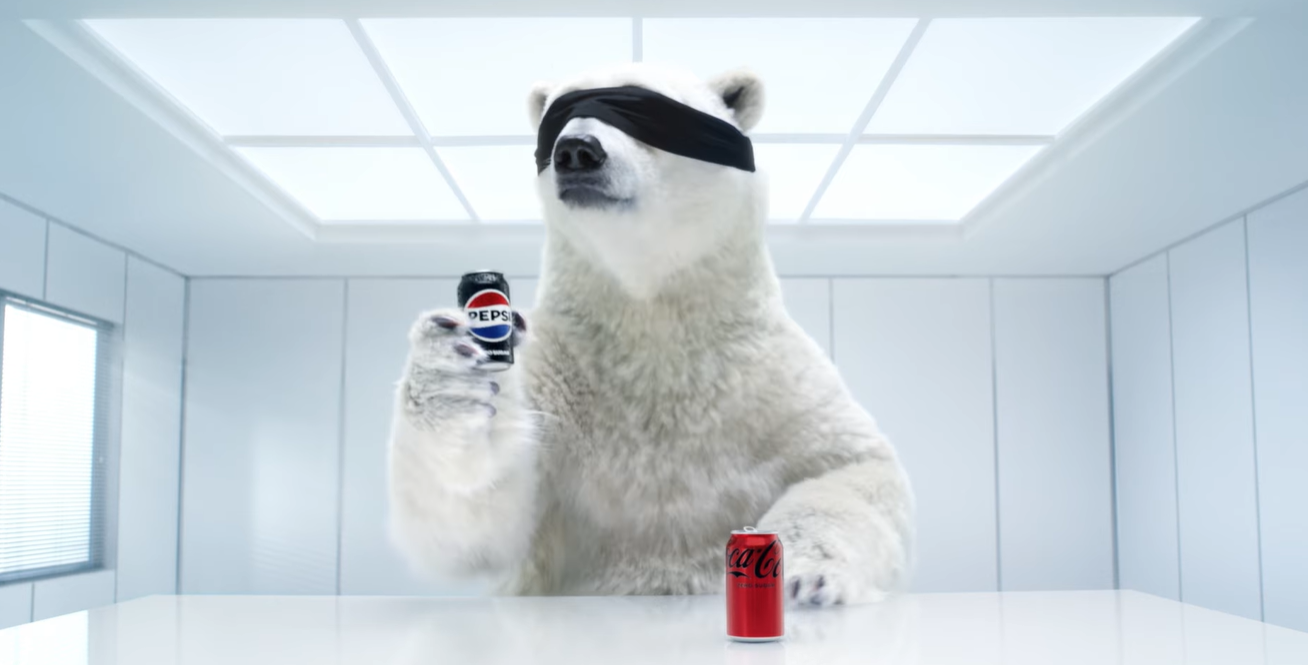
Marketers adore a good showdown. Mac versus PC. Burger King nudging the golden arches. And back in the spotlight once again, Pepsi versus Coke. Comparative advertising is the industry’s version of a public battle bold, theatrical and designed to get people talking. But while the creative drama plays out on screen, a quieter contest unfolds in people’s minds.
The trouble with sharing the stage
Pepsi’s high profile Super Bowl ad for 2026, directed by Oscar-winning filmmaker Taika Waititi, leans heavily on competitor references and cultural callbacks.
The polar bear is not just a cute animal. For some viewers, it is a well-rehearsed mental shortcut to Coca-Cola. Layer onto that additional cues such as taste test tropes that feature the competitor’s product, a classic rock soundtrack and a nod to a certain stadium concert moment that had the internet in a spin – a single ad becomes cluttered very quickly.
It makes for entertaining viewing, yes. But at what cognitive cost? It raises the question: how well do comparative ads work at evoking the correct brand in viewers’ minds?
ADVERTISEMENT
We put it to the test
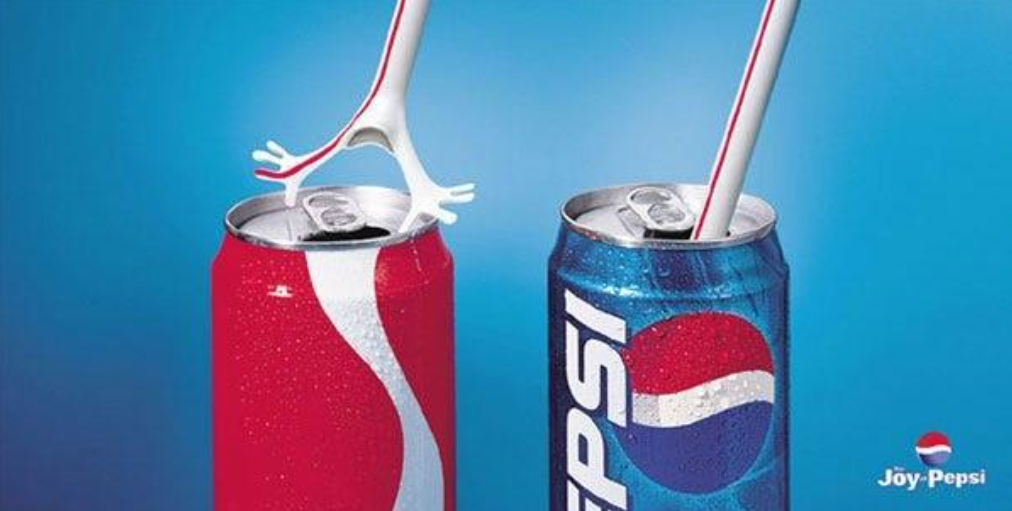
In a multi-market study across the US, India, China and Brazil, we tested a past comparative ad for Pepsi that playfully referenced Coca-Cola as the inferior choice. The print execution features a Pepsi can alongside a competitor-coded can, identifiable through its distinctive red and white colouring.
In the visual, a straw appears to strongly resist entering the competitor can, forming the basis of the comparative joke. We analysed this ad against another print execution that featured only Pepsi. Everything else remained consistent across the two ads.
A straw poll shows Pepsi is the winner
After ad exposure and a short distraction task, we measured brand linkage and ad-likability among more than 1,600 respondents.
The results were sobering. So much so it might make you want to add some Jack Daniels or Absolut to that cola…
Most people recalled only one brand, with only 10% remembering more than one brand in the comparative ad execution.
Introducing Coke to the ad meant linkage to Pepsi dropped. Most concerning was that a notable proportion of people (about one-fifth) walked away believing the ad was actually for Coca-Cola. In other words, introducing the competitor reduced correct brand linkage for the advertiser and sometimes handed memory credit to the rival. That is not just reminding people the category exists. That is strengthening the wrong brand.
Just showing the Pepsi can with a straw scored 3.6 likeability out of 5, not surprising as it was a pretty uninteresting ad. However, add in the competitor, the straining straw, the joke, and likeability shot up to 3.8.
Not exactly reaching creative heights. Nevertheless, enjoyment without attribution is a poor investment.
Why this happens
Attention and working memory are limited. When similar salient stimuli appear together, they compete for processing resources. This can lead to retrieval inhibition, where the presence of one well-learned cue makes it harder to retrieve another. This plays out in the real world where showing Coke can make it harder for people to remember Pepsi.
But it is so entertaining?
That is the seductive trap. Comparative work often feels smarter and more entertaining. But for every person where you vividly evoke a competitor, you are refreshing that competitor brand in their mind and building their ‘mental availability’. You may hope that a clever jab casts doubt about the rival. Perhaps it does for a moment. But that fragile association must compete against decades of brand memory. Retrieval is a competitive sport too, but one where today’s exposures determine if you win tomorrow’s game.
A bigger lesson for brand builders
This is a reminder that brands grow by building their own memory structures, not by borrowing someone else’s. The potential upside is a moment of cultural buzz and a small bump in ad-likability. The downside is weakened brand linkage and unintentional reinforcement of your key competitor or some other random pop culture reference.
There are many ways to dramatise brand associations that don’t rely on activating a rival. Especially at Super Bowl scale, where the goal is long term memory building as much as short term talkability.