
We’ve surely all got the message by now that strength training is essential for muscle and bone preservation, aerobic exercise maintains our heart and lungs, and flexibility work keeps us supple. Yet one important element is missing from many people’s fitness routines that, from their thirties onwards, will enable them to move more freely and ward off injury — mobility exercises.
In fact most people aren’t even sure what better mobility means, according to Paul Shawcross,
an assistant professor in physiotherapy at Coventry University and a spokesperson for the Chartered Society of Physiotherapy.
Although the terms are often used interchangeably, good mobility is different from flexibility, which simply describes the extent to which your muscle tissue can lengthen and stretch. Mobility measures how effectively you can move a joint through its entire range of motion and requires the nervous system, muscles, tendons, joints and lubricating synovial fluid to work in unison.
• Read more expert advice on healthy living, fitness and wellbeing
“Someone who can touch their toes easily displays good hamstring flexibility,” Shawcross says. “But the same person might struggle to squat or to walk down stairs without difficulty, which suggests limited mobility.”
With that in mind, many gyms and physiotherapists are billing mobility exercises as this year’s big fitness priority: Frame studios has added a variety of classes to target hip, back and shoulder mobility; Gymshark is holding free 45-minute full-body mobility workouts at its flagship store in London; and Peloton provides live and on-demand full-body mobility sessions as well as specific routines to improve mobility in every joint, from the wrists and ankles to the neck.
A review of 22 studies by sports scientists at Deakin University in Australia confirmed that in 20 of the published papers, mobility training was found to help maintain sporting performance. Yet even for those of us with little or no athletic ambition, good mobility is essential to support functional daily movement.
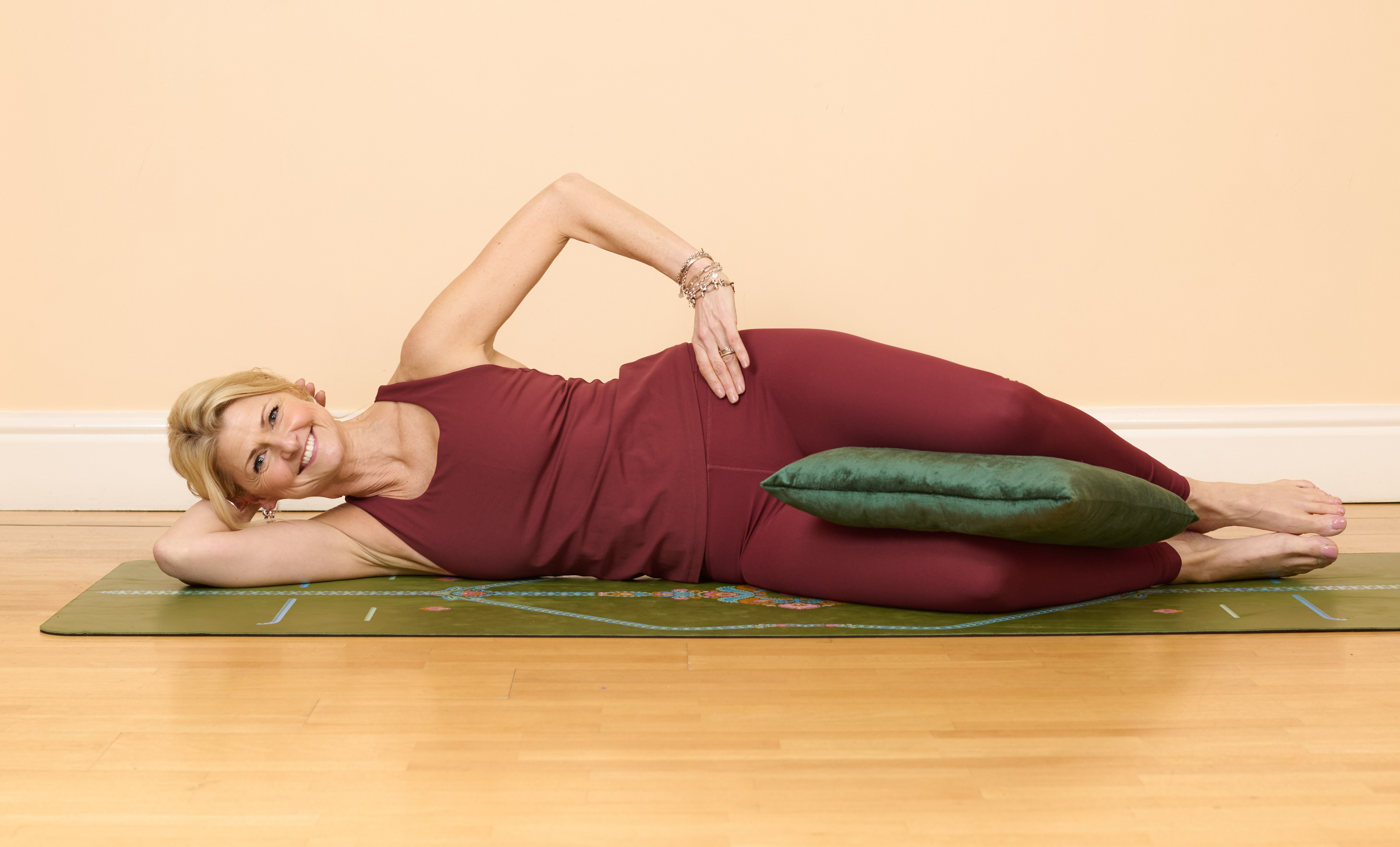
Performing exercises to rotate your hips can help you develop better joint mobility, says Tuffrey
SARAH CRESSWELL FOR THE TIMES
A lack of mobility in the hips, for example, can mean you start to rely more heavily on other parts of the body, putting strain on the lower back and knees. Too little mobility in the thoracic spine increases forces into the neck or lower back.
Our joints — any place in the body where two bones meet — each have a unique optimal range of motion and thrive on rotating, extending and flexing to their maximum ability.
“You have the ball-and-socket joints of the shoulder and hip that should move and rotate in multiple ways, and the hinge joints of knee, elbow and ankle that are designed to straighten and bend,” says the posture and mobility coach Jo Tuffrey, who has a degree in physical education and works with celebrities, footballers and desk-damaged high-flyers.
In layman’s terms she says you need to keep joints “well oiled” by moving them in the way they were designed. “If you restrict joint movement then the joints effectively dry up, so that mobility is reduced,” Tuffrey says. “Think of motion as lotion for the joints.”
Most people instinctively start to stretch more when their bodies feel stiff and creaky. But while stretching and flexibility classes can make you feel better in the short term, they don’t necessarily change how well you can control essential movements.
• Hop to it! The six jumps that will build your body
What’s needed, according to Luke Worthington, a personal trainer for the film and television industry, are active mobility exercises that can be woven into gym sessions and daily life. “Mobility work should be a part of your daily infrastructure and not an add-on that you turn to when you get niggles and things start to go wrong,” he says.
Tuffrey’s biggest gripe is a preoccupation with people doing the same type of exercise week in, week out. You might be able to run six miles a day, or spend hours weight training and bench-press 100kg, but if they are all you do then your freedom of motion will ultimately be compromised. “Too much of anything, with no focus on maximising mobility, is not good news,” she says. “In the longer term that leaves you vulnerable to injury.”
The good news is that mobility training doesn’t have to be complicated or time-consuming. Little and often, with moves that can be woven into your day, is the best approach. If you do nothing else, walk more in every direction. “Walking will improve mobility in the joints of the lower body, especially if you were previously sedentary,” Shawcross says. Try a few steps walking sideways and even backwards. A recent review in the journal Physiotherapy Theory and Practice found that backwards walking combined with other exercises, such as standing from a seated position without using hands, for a few minutes a day improved knee-joint health and mobility in people with arthritis.
“Mobility responds best to frequent exposure, because you’re training the nervous system as much as the tissues,” Worthington says. “And it works best when it’s part of training and daily movement, not carved out as a separate ‘mobility hour’.” Tuffrey’s most popular social media posts — with some attracting more than six million views — are those outlining simple seven-minute mobility routines or individual exercises that can be done at your desk, in front of the telly or while you prepare dinner. Here’s how to get started.
How to improve your mobility
By Jo Tuffrey
Do some of these mobility exercises every day. You don’t have to do them all in one go and can integrate them into your daily life.
1. Start your day with a shoulder mobility routine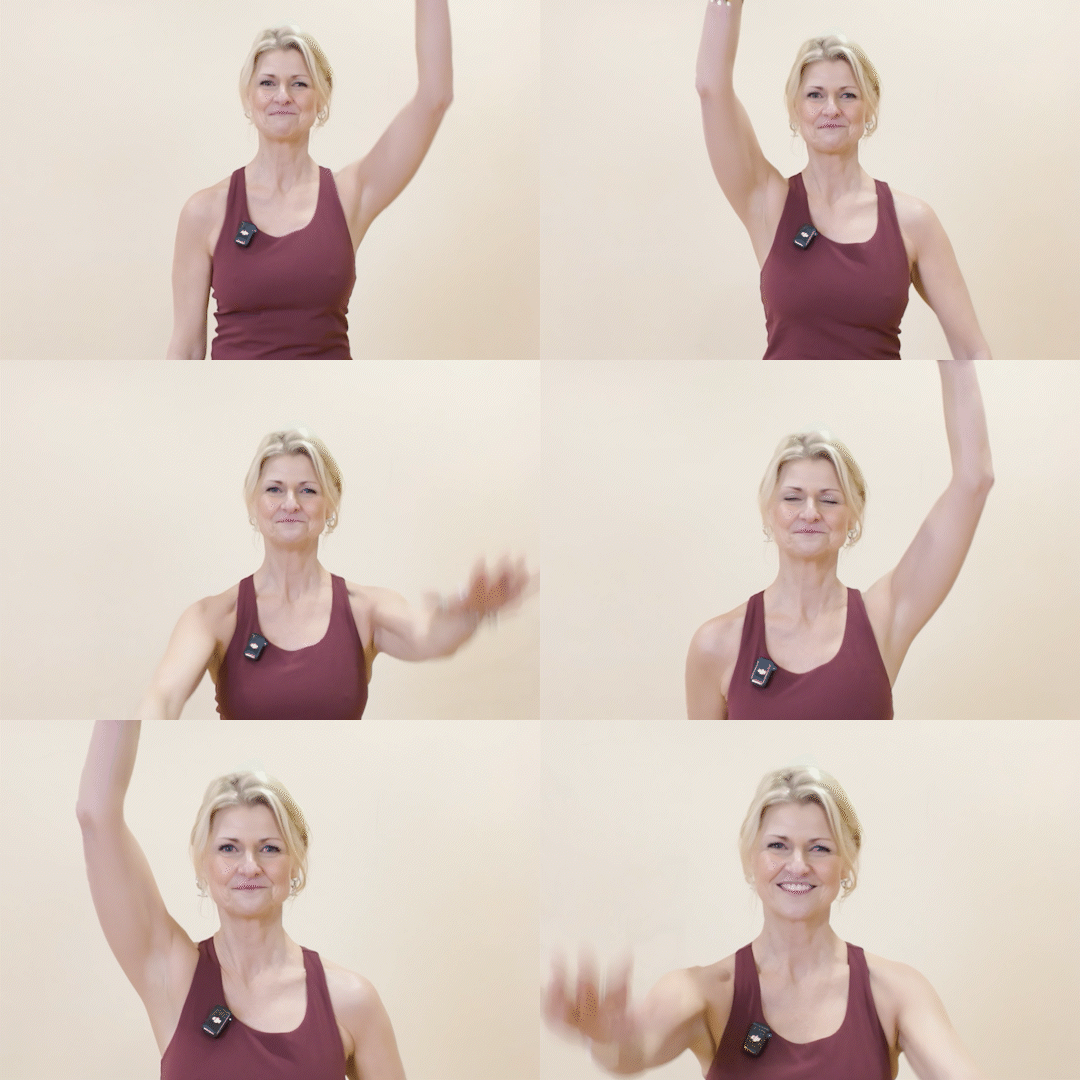
SARAH CRESSWELL FOR THE TIMES
This simple routine helps to improve mobility in the shoulders and upper back if you do it daily. Stand upright with knees gently flexed. Circle your right arm backwards, then your left arm and continue alternating for 15-30 seconds. Don’t force the range of movement. Work within your parameters. Then perform simultaneous double-arm backward circles for the same duration. Finally, do some arm swings in which you swing each arm up to ear level and back down to thigh level.
2. Do forearm wall slides for better elbow and shoulder mobility
SARAH CRESSWELL FOR THE TIMES
Good shoulder mobility enables the arms and shoulder blades to work together, which helps with reaching, lifting and throwing. Stand facing a wall, about 2ft away from it. Step forward with your left foot so that your toes are in contact with the wall, then place both forearms parallel to each other on the wall at shoulder height and lean forwards. Slide the forearms up and out on the wall, making sure your elbows and wrists are always touching the surface. The idea is to reach upwards as high as you can without straining. Slide your forearms back to the start position and repeat 6-8 times.
• The 10 ways to lead a healthier, longer life
3. Rotate the hips for better joint mobility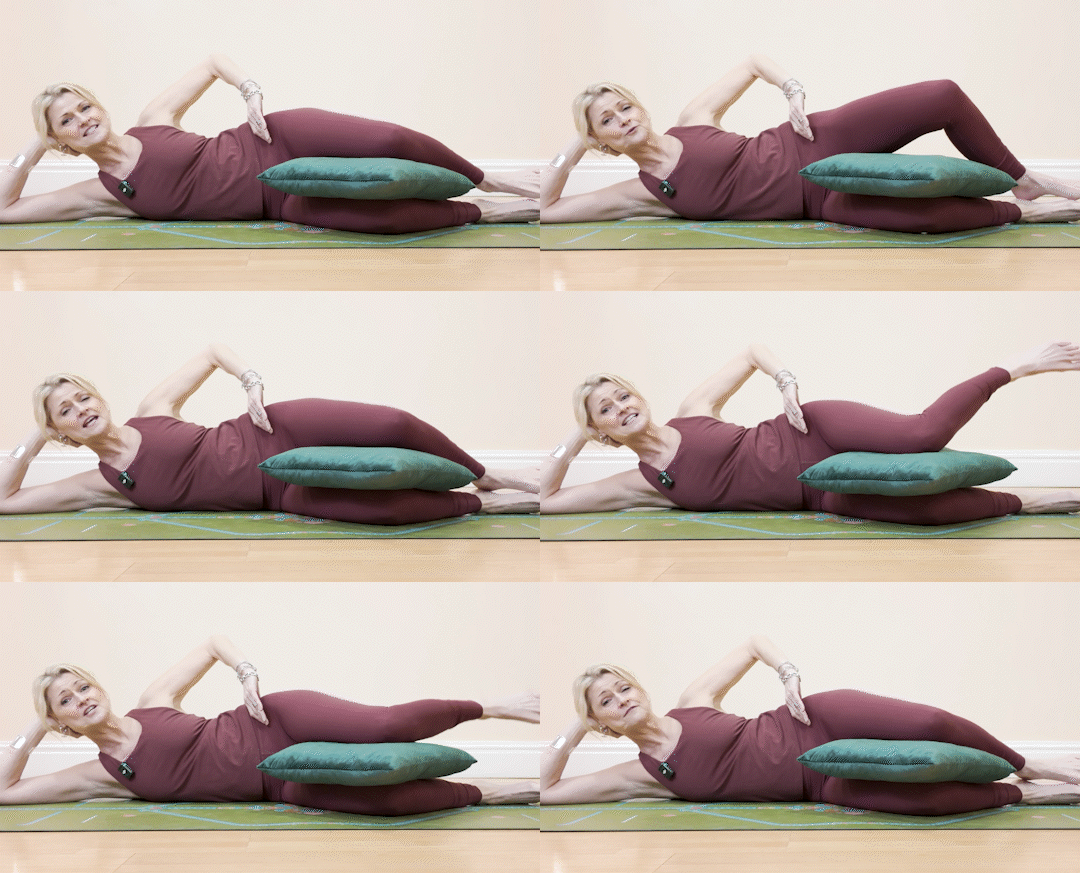
SARAH CRESSWELL FOR THE TIMES
Our hips are involved in so many functional daily movements, from sitting in a chair to climbing stairs. Hip-mobility exercises should focus on controlled range of movement around the joint. I like to put a cushion between my thighs for this exercise because it helps with positioning and comfort. Lie on your left side, knees slightly bent and legs and feet together. Keep your left arm outstretched on the floor and place your right arm on your right thigh for balance. Keeping feet together, lift your right knee as high as it will go to externally rotate the hip. Lower it back to the start position and, keeping knees together, raise the right foot upwards to rotate the hip joint internally. Repeat 6-8 times, then do it lying on the other side.
4. Thread the needle for middle-back mobility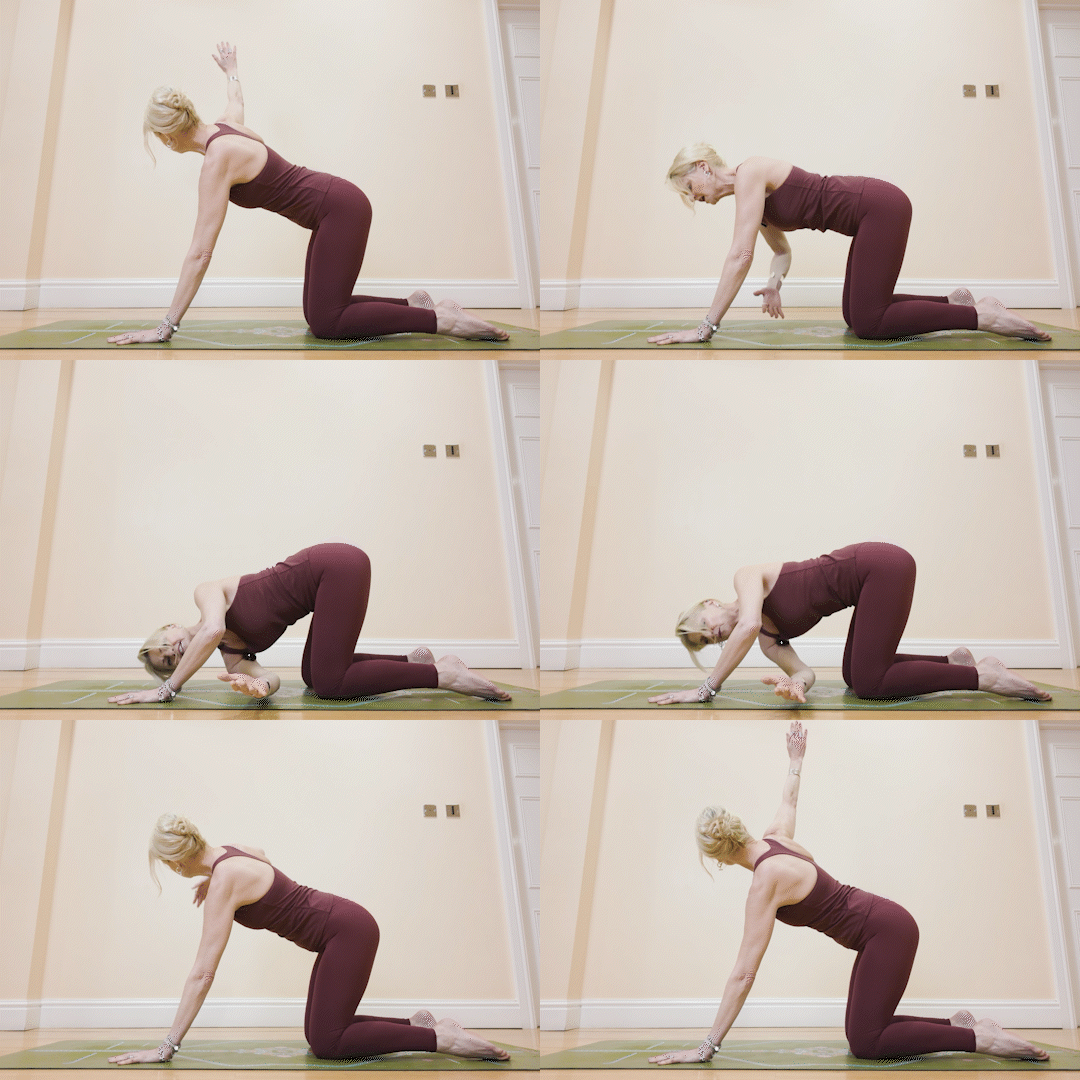
SARAH CRESSWELL FOR THE TIMES
The middle section of your back, your thoracic spine, needs to be mobile to rotate and extend for almost everything involving the arms — reaching, lifting, posture, even breathing. This mobility exercise uses thoracic rotation to mobilise the spine. Start on all fours with hips directly above your knees and shoulders over wrists. Lift up your right hand, looking upwards as you raise it, then follow your right hand down as you thread it beneath your left arm. Your pelvis should stay completely still during this move. Hold the position for as long as is comfortable and repeat 6-8 times before switching sides.
5. Try curls for better total spine mobility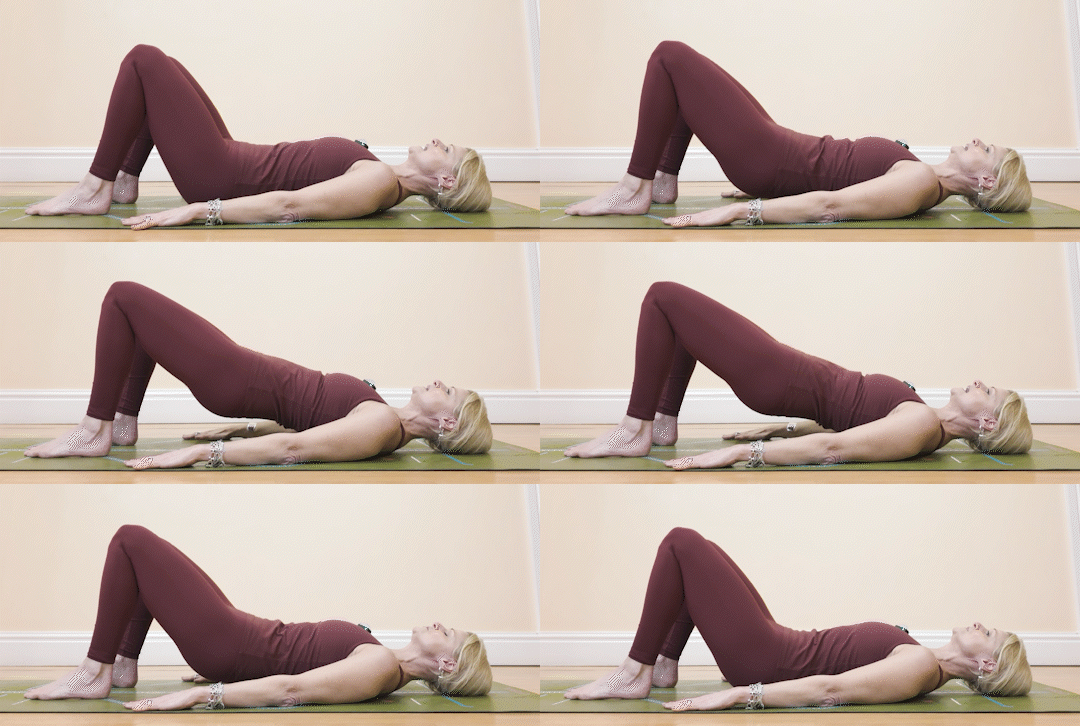
SARAH CRESSWELL FOR THE TIMES
Lie on your back on the floor with knees bent and feet close to your bottom. Have your hands palms down on the floor. Push your lower back into the floor, then start to peel the tailbone up to mobilise through the spine vertebra by vertebra. With your bottom off the floor, keep your ribcage and pelvis aligned so you are not arching your back. Rise to the point where your upper body is resting on the shoulder blades. As you lower yourself down, think about creating space between the vertebrae— no crunching the core — until you return to the start position. Repeat 6-8 times.
6. Do 90-90 leg rotations — or bear crawls — for more mobile hips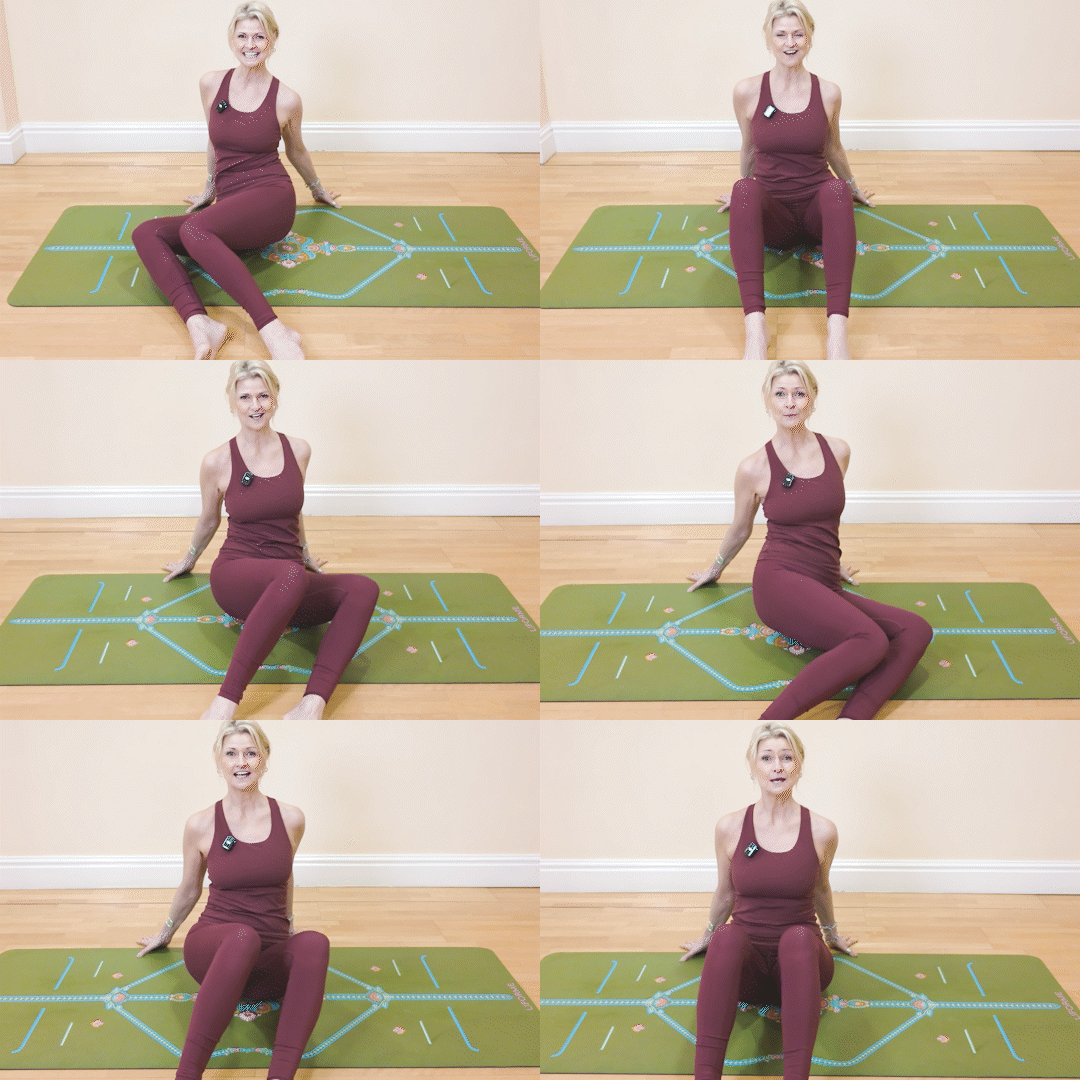
SARAH CRESSWELL FOR THE TIMES
Sit on the floor with hands just behind the body for support. Bend both knees to 90 degrees and place feet flat on the floor. Keep equal weight through the sit bones in the centre. Then gently take both knees to the right side, keeping feet in contact with the floor but allowing them to raise a little as you rotate the knees sideways, and then to the left side. Keep rotating in this way for as long as feels comfortable. You can also try bear or Spider-Man crawls — moving along the ground using only your hands and feet, as a bear would — around the house. Start with the full bear crawl (crawling forwards or backwards with knees off the floor) and progress to the advanced Spider-Man crawl, great for mobilising the hips, in which you start in a push-up position and then move forwards with your left hand and right foot simultaneously, bringing your right knee out to the side so that it almost touches your right elbow. Next, move the right hand and left foot forwards and continue moving that way. Increase the duration over time.
7. Over the gate for hip and pelvis mobility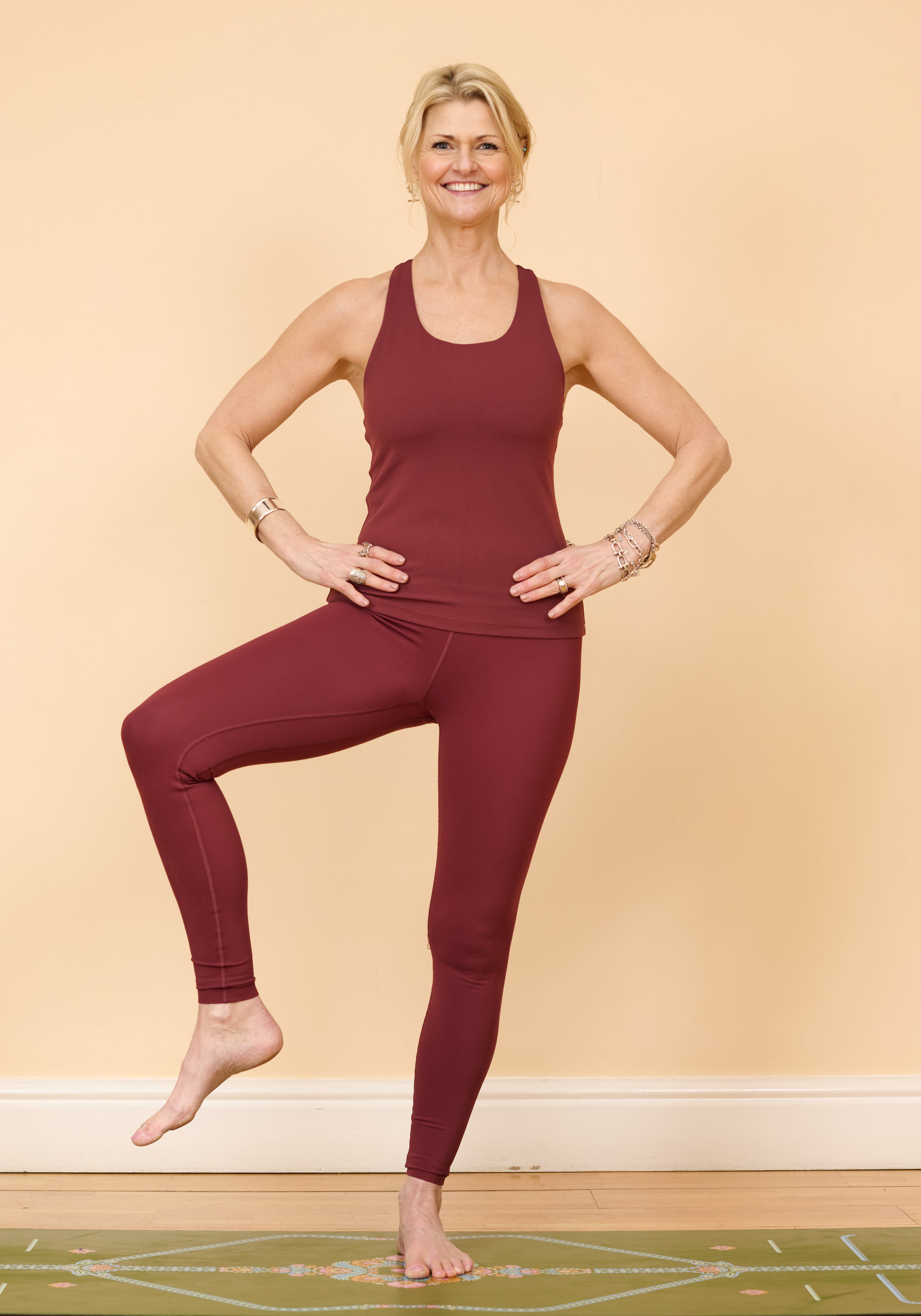
SARAH CRESSWELL FOR THE TIMES
Stand upright with hands on hips and looking forwards. Raise your left foot off the ground and bend the knee so that the upper leg is almost parallel to the ground. Press your right heel into the ground and rotate the raised left knee outwards, then back to the centre in a controlled way. Tap your toe on the ground and repeat 5-6 times before changing sides.