
China, Australia’s largest supplier of aviation fuel, has ordered refineries to halt oil exports in a move that could put further pressure on airfares, and increase concern about future shortages.
Australia mostly relies on imported jet fuel, with Chinese refineries accounting for 32 per cent of imports in 2025. The supply supports airports and planes across the country.
But on Thursday, four sources told Reuters that authorities in Beijing had ordered an immediate ban on refined fuel exports for March.
A day later, the move was confirmed by Aldric Chew, the head of oil pricing in Asia Pacific at data service Argus, according to the Australian Financial Review.
Mr Chew said the Chinese government had not issued an official statement but that emails to traders requested their ‘understanding to postpone or cancel’ cargo contracts.
It is understood the halt would not impact Australians for a few weeks as tankers travelling from north-east Asia and India can take up to 25 days to arrive.
The Daily Mail has contacted the Department of Climate Change, Energy, the Environment and Water (DCCEEW) for comment.
The news comes 24 hours after Sydney Airport chief executive Scott Charlton claimed Australia was too reliant on overseas supplies, News Corp reported.
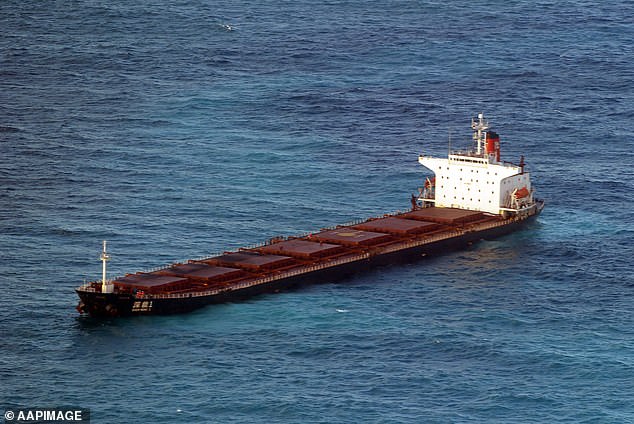
Chinese officials have postponed or cancelled cargo contracts for exports of jet fuel in a move that could impact Australia, which heavily relies on this supply for its airports and aircraft
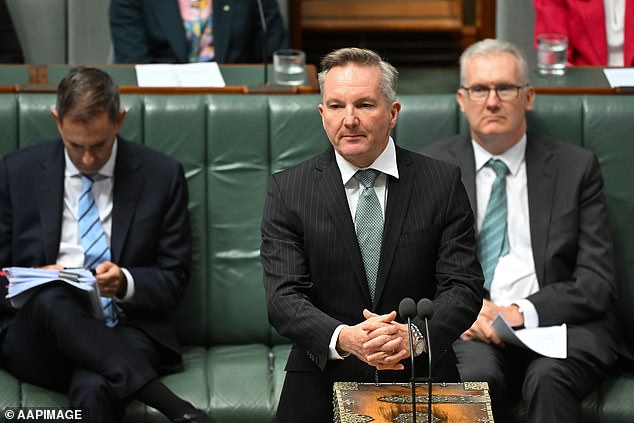
Climate Minister Chris Bowen said on Thursday that he could not guarantee Australia would avoid a fuel shortage which has been driven by conflict in the Middle East
‘(This) means the reliability of that 25-day supply depends on international shipping lanes, global refining capacity and geopolitical stability,’ he told a conference.
‘And when you look at the world today – with conflict in the Middle East and growing tension across global energy markets – you start to see why fuel security matters just as much as emissions.’
Petrol prices nationwide have surged to over $2 a litre, driven by the intensifying conflict involving Iran, the US, Israel, and other nations in the Middle East.
Some regional areas in the country have reported fuel shortages.
Climate Minister Chris Bowen told parliament on Thursday he could not guarantee Australia would avoid a fuel shortage, declaring a national crisis and advancing plans to release fuel from the strategic reserve.
However, he added that supply and price issues were being driven by panic-buying motorists, not by a shortage of fuel imports.
‘I ask Australians, buy as much fuel as you need: no more, no less,’ he said.
‘I’ve seen (people) on Facebook marketplace filling up jerry cans, Bunnings running out of jerry cans… going on Facebook marketplace, selling fuel at inflated prices – that is un-Australian.
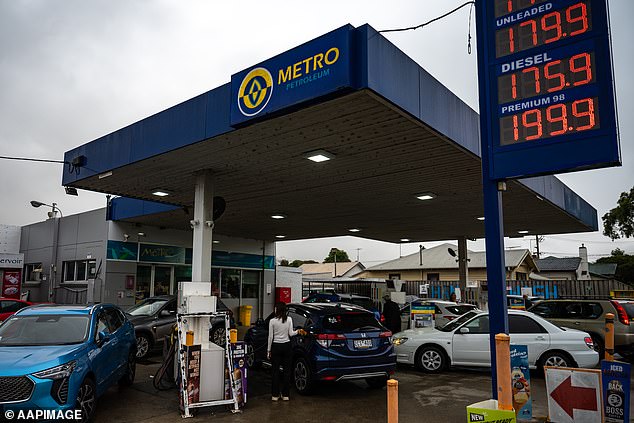
Petrol prices across Australia have soared to more than $2 a litre in response to the escalating war between Iran, the US, Israel and other countries
‘It’s dangerous. It shouldn’t be done.’
The government has also relaxed quality standards for the next 60 days, allowing the use of fuel with higher sulphur levels, to boost the domestic market by 100 million litres of petrol per month.
Mandatory diesel stockpiles will be cut from 2.7 billion litres to 2.2 billion litres, while petrol reserve requirements will drop from 1 billion litres to 700 million litres.
Quality levels would remain very high by international standards, the government said.
Opposition energy spokesman Dan Tehan said the government should also consider easing diesel quality standards.
‘Australia’s economy runs on diesel,’ he told reporters in Sydney on Friday.
Mr Tehan accused Mr Bowen of deploying ad hoc measures in response to the supply and price crunch.
Meanwhile, Resources Minister Madeleine King is travelling to Japan for talks with her international counterparts to discuss ways to secure fuel supplies, among other issues.
‘I’m hoping to achieve good discussions about where everyone else is sitting in addressing the fuel supply or demand issues they’re facing in their countries,’ she told ABC News on Friday.
Ms King said boosting supplies of critical minerals and rare earths – used in electric vehicle batteries, smartphones and sensitive defence technologies – would also be discussed.