
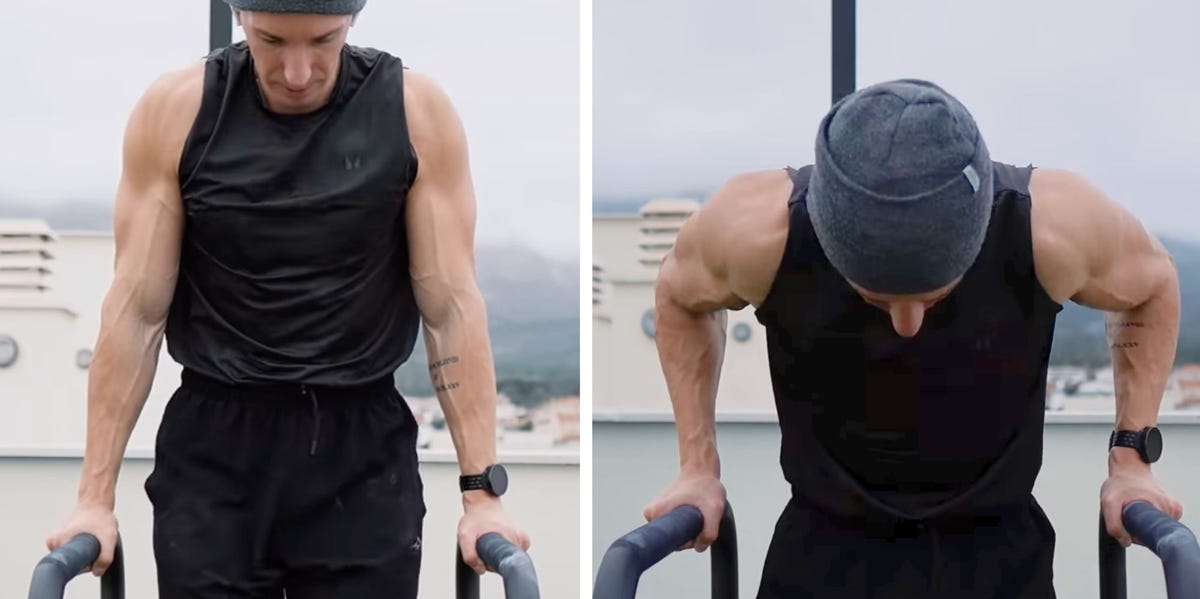
For prison inmates, training with zero equipment and minimal space is a necessity. Yet the results of this minimalist approach have sparked interest for decades.
When coach Markus Frison of Built Simple Training spoke to a former gym owner who had just been released from prison, one thing stood out immediately.
‘He got out last December. And when I saw him again two days after Christmas, the first thing I noticed was this: he looked more muscular and fit than when he went in. And he was already jacked before,’ Frison said. ‘And all that only with bodyweight training inside prison.’
Despite limited equipment, inmates have developed a brutally effective training style built around three key principles.
Tempo Training
‘The first thing he mentioned was how slow most guys train,’ the coach explains. ‘Not speaking about time duration, speaking about reps – push-ups, pull-ups, dips. Because when you can’t add weight to a movement, you make the exercise harder by staying under tension for longer.’
Without access to heavier loads, intensity is created through tempo. Slower reps increase time under tension, turning even basic movements into demanding efforts.
‘And that constant tension, especially pushed to muscle failure, is one of the strongest signals your muscle can receive. A slow push-up all of a sudden becomes a really challenging exercise,’ he says.
Stay in the Hardest Range
Frison says the second technique is one most people would likely criticise.
‘A lot of guys avoid lockout completely,’ he explains. ‘They stay in the hardest part of the movement longer. When you completely lock out for too long, the tension in your muscle disappears.’
This partial-rep approach keeps muscles under continuous strain, removing any chance to rest at the top of a movement.
‘Staying in that middle range the entire time is working your muscle really hard. There’s no pause, no rest – it’s not pretty, but even the best calisthenics athletes in the world use this intensity technique,’ says Frison.
Increase Volume
Frison says the former gym owner had one final takeaway.
‘The last thing he told me was really simple. They do a ton of reps over and over again. Because when you don’t have additional weight, volume becomes your progression. More reps, more sets, more total workload,’ he says.
With no barbells to load, progression comes from accumulating more work over time – which, at its core, is progressive overload.
Related Stories