
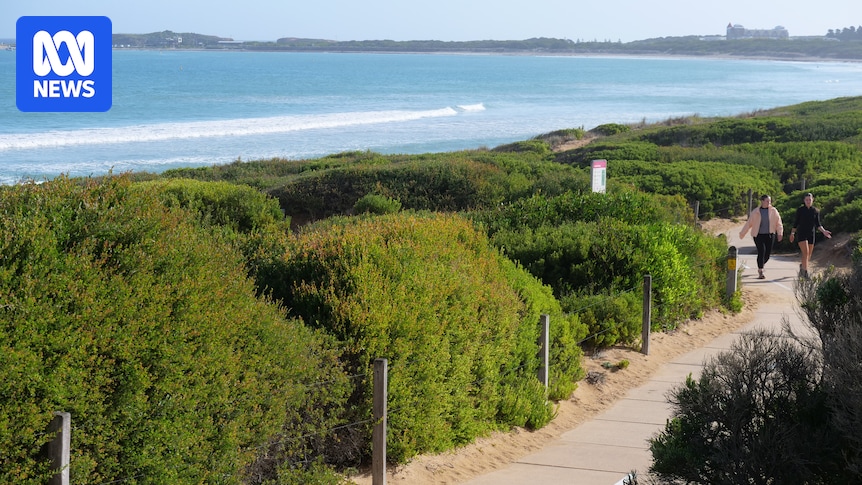
How much do you walk each week, and would you walk more if the infrastructure in your town allowed?
New research from the Menzies Institute for Medical Research at the University of Tasmania found that regional Australians living in “walkable” towns walked 75 minutes more each week than those who did not have access to footpaths.
The Institute’s senior author Verity Cleland said walkable towns had footpaths and pedestrian access that allowed residents to walk between home, work, public transport, and the shops with ease.
“Are you able to get around easily on foot or a bike to get to the places you need to go, or do you run into dead ends?” Professor Cleland said.
“That connectivity is absolutely critical.”
Aside from providing a health boost and combating preventable chronic diseases, including heart disease and type 2 diabetes, Professor Cleland said people would be able to save money on fuel if they had the option to walk more.
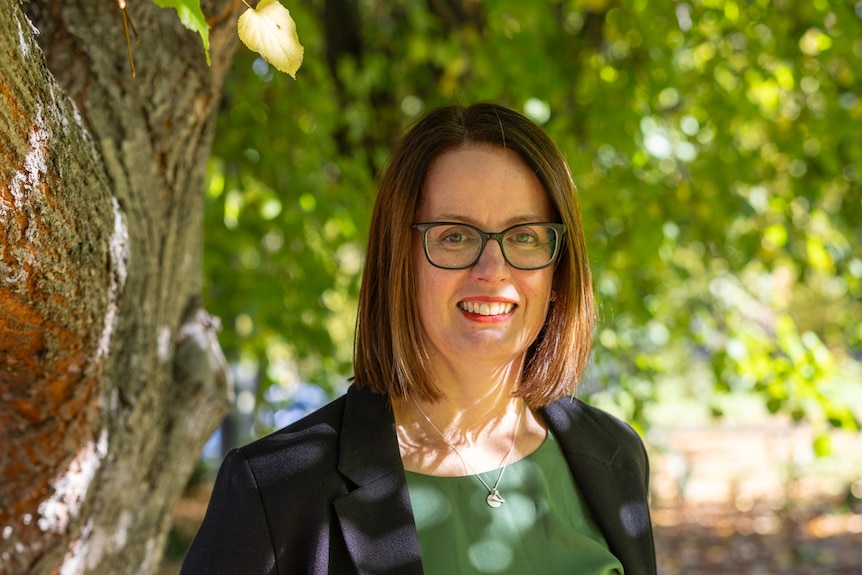
Verity Cleland says walkable towns have footpaths and pedestrian access that allow residents to walk between home, work, public transport, and the shops with ease. ( Supplied: Verity Cleland)
She said rural and regional communities needed safe and accessible footpaths, so that people were not forced to walk on roads, particularly for vulnerable members of a community, such as children and those with mobility issues.
Professor Cleland said government planning had traditionally prioritised roads and driving at the cost of developing footpaths and other infrastructure.
“In the 60s and 70s, it was very much a car-dominated mentality when we were planning and designing our towns,” she said.
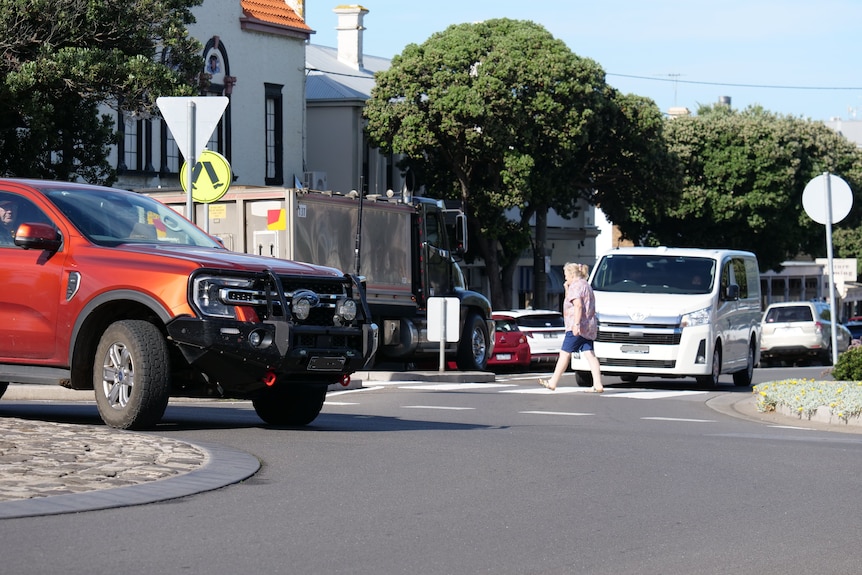
Warrnambool in south-west Victoria is among the regional centres with pedestrian crossings throughout the CBD. (ABC News: Jean Bell)
She said a cultural shift was needed to see more people choose to move on foot.
“Maybe it takes an international fuel crisis to get us to think a bit differently,” Professor Cleland said.
The distance Victorians walk has declined since the COVID pandemic, according to health promotion agency VicHealth.
Figures from the organisation show that since restrictions eased, the average walking trip distance has dropped by nearly 30 per cent from 820 metres pre-COVID to 586 metres.
Councils need help funding footpaths
One regional city that has been working towards being more walkable is Warrnambool, in south-west Victoria.
Aside from the lengthy foreshore promenade and walking trails that make the most of Warrnambool’s ocean views, the council has added numerous crossings in the city’s CBD that give pedestrians right of way, as well as lowering the speed limit to 40km/h and installing bike lanes.
The council is also working on a major long-term plan to improve crossings, footpaths and traffic flow in the city’s east, and a separate project to build 1.7kms of footpaths in the city’s west to enable hundreds of people to walk to work and other businesses.
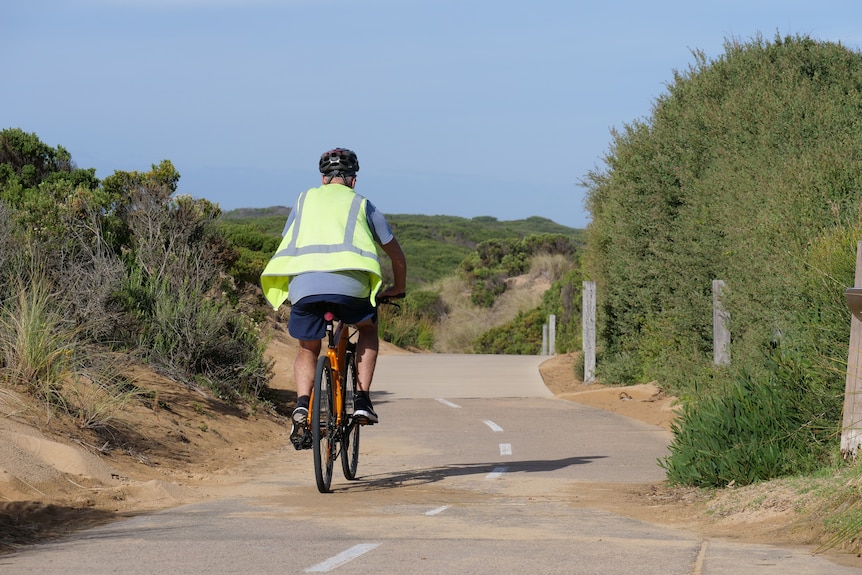
Warrnambool’s foreshore is a popular route for walkers and cyclists. (ABC News: Jean Bell)
Warrnambool City Council Mayor Ben Blain described the latter as the largest footpath project the council had embarked on in 20 years, costing $534,000, with the council and federal government sharing the cost.
He said making the city’s CBD and surrounding suburbs more easily travelled by foot was a key priority for the council, but it was impossible to achieve without financial help.
“In a rate-capped environment, we really need state and federal government support to keep doing this,” Cr Blain said.Two feet and a heartbeat
Not-for-profit Victoria Walks senior advisor Jo Eady said walkable towns had a range of benefits beyond improving people’s physical health, including feelings of community and belonging between locals, an economic boost to shops, and an environmental advantage.
She said there was a range of measures towns could take to improve walkability, including putting in raised pedestrian crossings and ensuring shops, services, and public spaces were easily accessible on foot.
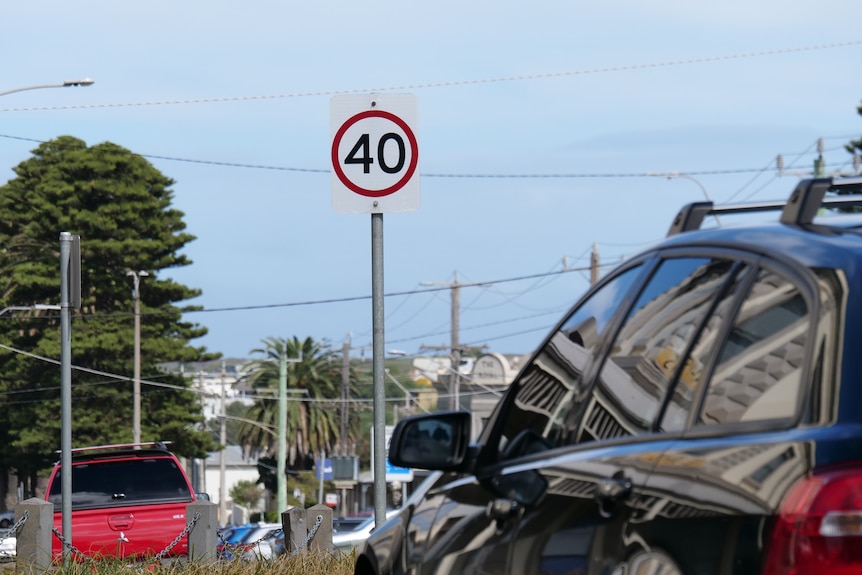
New research shows that lowering speed limits on certain roads in Victoria can improve pedestrian safety. (ABC News: Jean Bell)
Ms Eady said lowering speed limits was another factor to consider, with a new study from the Monash University Accident Research Centre confirming that lowering speed limits to 40 km/h could significantly improve road safety, particularly for pedestrians.
“People are much more likely to walk to local shops, let children walk to school, or get on a bike if they feel comfortable and protected from traffic,” she said.
The Victorian Department of Transport and Planning spokesperson said it worked closely with local governments to improve active transport options across Victoria.
A federal government spokesperson said a $100 million Active Transport Fund was created specifically for upgrading and building bicycle and walking pathways.