
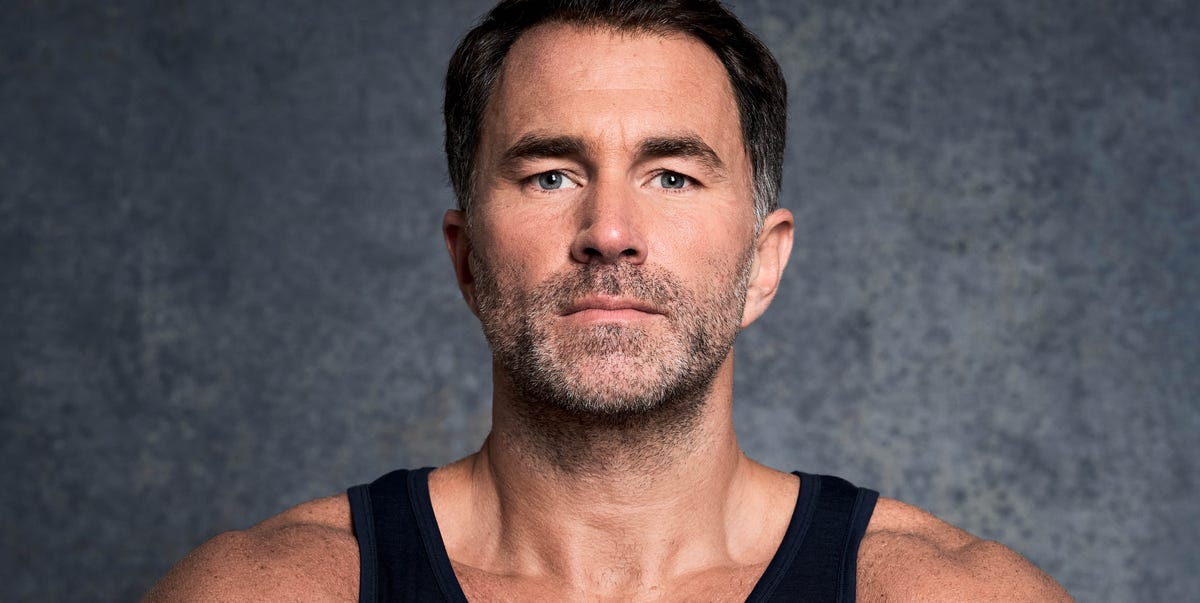
When Kai Peacock officially stepped into his role as Eddie Hearn’s go-to trainer, the brief wasn’t ‘get cover-lean at all costs’. It was much bigger: bring structure to a man who is seeking longevity, loves training, but whose diary (and default intensity) can turn every session into a 100mph sprint.
Peacock’s read on Eddie is simple: he’s a ‘bull in a China shop’ in the best possible way – decisive, high-output, always on, but that same mentality can derail training without proper guardrails
The early challenge, then, wasn’t motivation. It was direction. Peacock’s job was to give him a roadmap.
Step 1: Stop Beasting Yourself for No Reason
Eddie’s escape hatch has always been running. The problem, Peacock points out, is Eddie is a very big bloke – at his heaviest 18-stone. ‘Eddie was pushing without any sort of structure… just going out and hitting it hard.’ That, Peacock says, ‘smash[es] your nervous system’, ramps up fatigue for the rest of the day, and makes the other pillars (strength, recovery, consistency) harder to stick.
The education started with effort: perceived exertion, pacing, and knowing when not to redline. ‘Sometimes you just need to be a bit more tactical about what you’re doing – aiming for quality bang for your buck training sessions versus just training and killing yourself for no reason.’
Peacock reviews – in realtime – data from Hearn’s wearables. Important for a client with a penchant for burning the candle at both ends; and then coming at it sideways just for fun. His view is that Whoop/HRV-style scores can be useful, but they’re not gospel. A ‘red score’ doesn’t mean you down tools completely; it means you pivot to a different lever: ‘going for a walk… Pilates… stretching, yoga, massage… zone 2… low-impact steady state.’
Train like Eddie: Hearn’s PT, Kai Peacock, has created a plan exclusively for members of MH SQUAD. Existing members can access the training plan in full via the MH app.
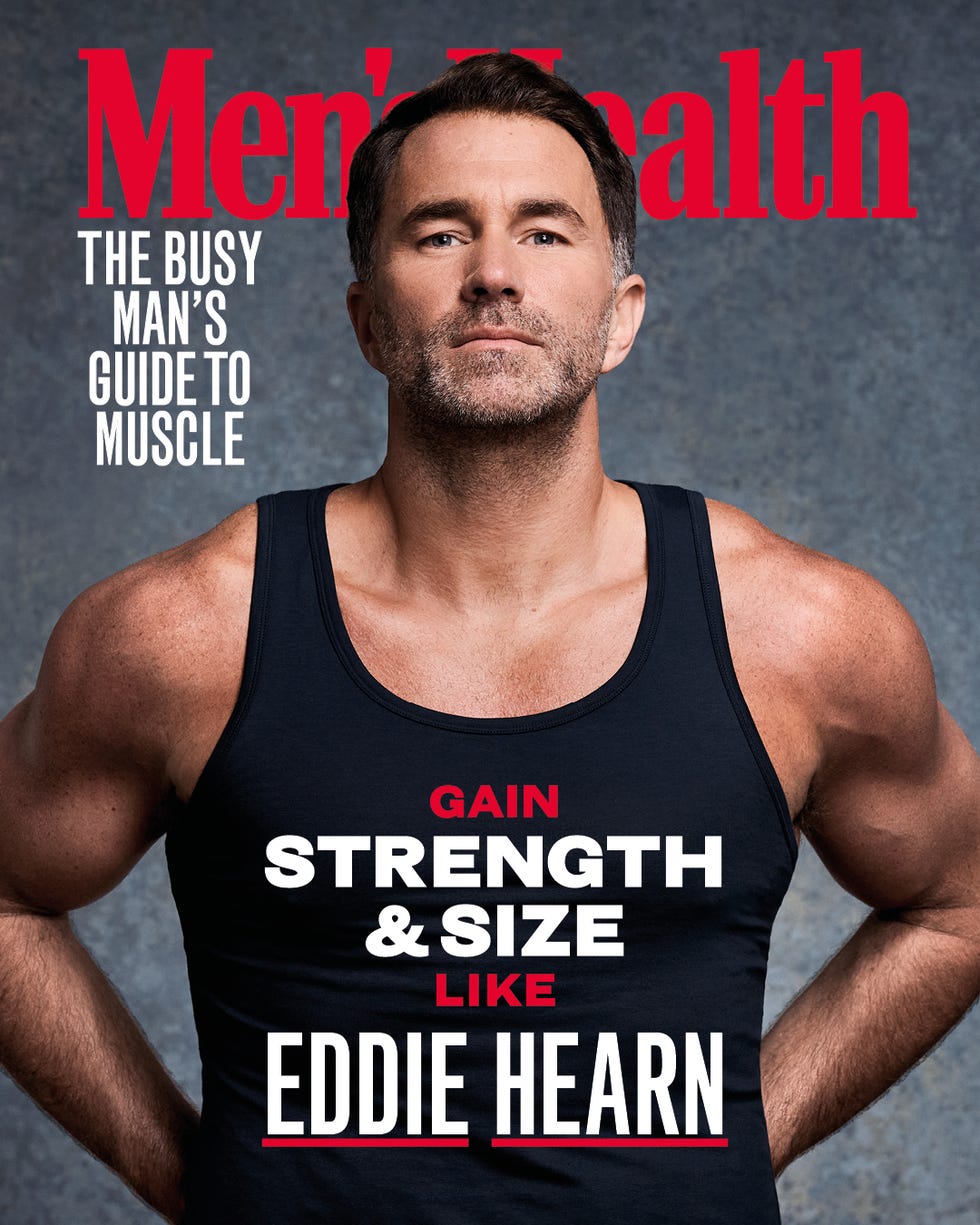 Step 2: Keep it Real(isitic)
The most transferable lesson from Peacock’s work with Eddie is the one most people ignore because it’s not sexy, and it forces introspection: your training has to match your actual life.
If Eddie walks into the gym chatty, switched on, bouncing, Peacock knows he can push. If he turns up quiet and flat, Peacock reads it as stress, travel fatigue, or a full brain – and adjusts on the fly. Sustainability beats heroics.
His advice for anyone without a coach making those calls for them is blunt: don’t let attachment to a rigid plan dictate a week that may be in flux. Cut volume. Drop the ‘nice-to-have’ movements. Up the rest time. But keep the habit. In a suitably boxing themed rebuttal to Apollo Creeds ‘Damn it Rocky, there is no tomorrow!’ Peacock insists: ‘There is always tomorrow…’
That mentality matters even more as you get older. Peacock, now 40 himself, says being brutally honest with his own training has helped him better relate to Hearn. Peacock says the goal now isn’t chasing ever-evolving PB’s on Strava or in the gym – it’s compounding repeatable efforts, day in, day out. ‘As long as you can keep doing that… you’re going to move forward.’
Step 3: Make it Simple, Make it Repeatable
Peacock is very clear: he’s not a ‘bells and whistles’ coach. Strong, repeatable basics beat a plan that collapses the moment Eddie walks into a mediocre hotel gym in a different time zone.
That’s why the spine of Eddie’s strength work is as frugal as it is functional:
• 2-3 push movements (flat/incline bench; shoulder press variations)
• Some strong rows (DB row; bent-over barbell row)
• Posterior-chain work (hamstring machines or deadlifts)
• Single-leg staples (step-ups; reverse lunges)
• and box squats, because it lets Eddie ‘move some serious weight… pretty safely’
Peacock likes to manipulate loads and rep ranges to keep things interesting: ladders sets, dropsets, supersets, or straight 5×5’s – but always nailing that basic exercise repertoire. ‘That’s how you get good… you hone in on your movements over and over again.’
Body parts and movement patterns are hit with decent frequency: 2-3 times each week. With leg work peppered into each session, rather than one big lower-body day that leaves Eddie struggling to get in his running – vital for his headspace.
Step 4: 2-Workout Days, When They Make Sense
When Eddie’s in one place long enough to be predictable, Peacock’s best-case week often looks like two sessions in a day: a strength session and a run, split am/pm depending on what Eddie has in the middle. If Eddie’s got a big on-camera day or a mentally draining run of meetings, Peacock chooses the session that won’t blunt his ‘performance’.
Lack of time is the ever-present problem. Peacock aims to keep sessions to a maximum of 45 minutes, and that constraint shapes everything: supersets, giant sets, minimal rest, minimal faff, and simple exercises Eddie can hit confidently in almost any gym.
And on the rare occasions there’s no gym access? Peacock uses bodyweight and keeps it moving: push-ups, squat-to-lunge patterns, walkouts to planks with shoulder taps, some more dynamic options (jumps). All using duration-based rounds (eg, 30 seconds on/off) for 20-30 minutes. ‘It does the job.’
A Lifestyle Choice
The easiest cheap shot with celebrity training is: Yeah, but they’ve got a trainer. Peacock doesn’t deny the support helps – but he’s adamant the harder part is still on Eddie: making the time when your day is volatile and your phone is basically glued to your palm and never off. Eddie could always choose the easier option: downtime, more calls, more business, more rest. ‘It would be easier for Eddie not to do it… but he chooses to, every time’.
And the ‘why’ isn’t just aesthetics, or even fitness. Peacock says Hearn loves feeling strong, ‘fitting in a shirt’, and turning up to fight night confident. ‘For all the other success, you can’t buy a good body… you have to work for it. It’s a badge of honour for Eddie.’
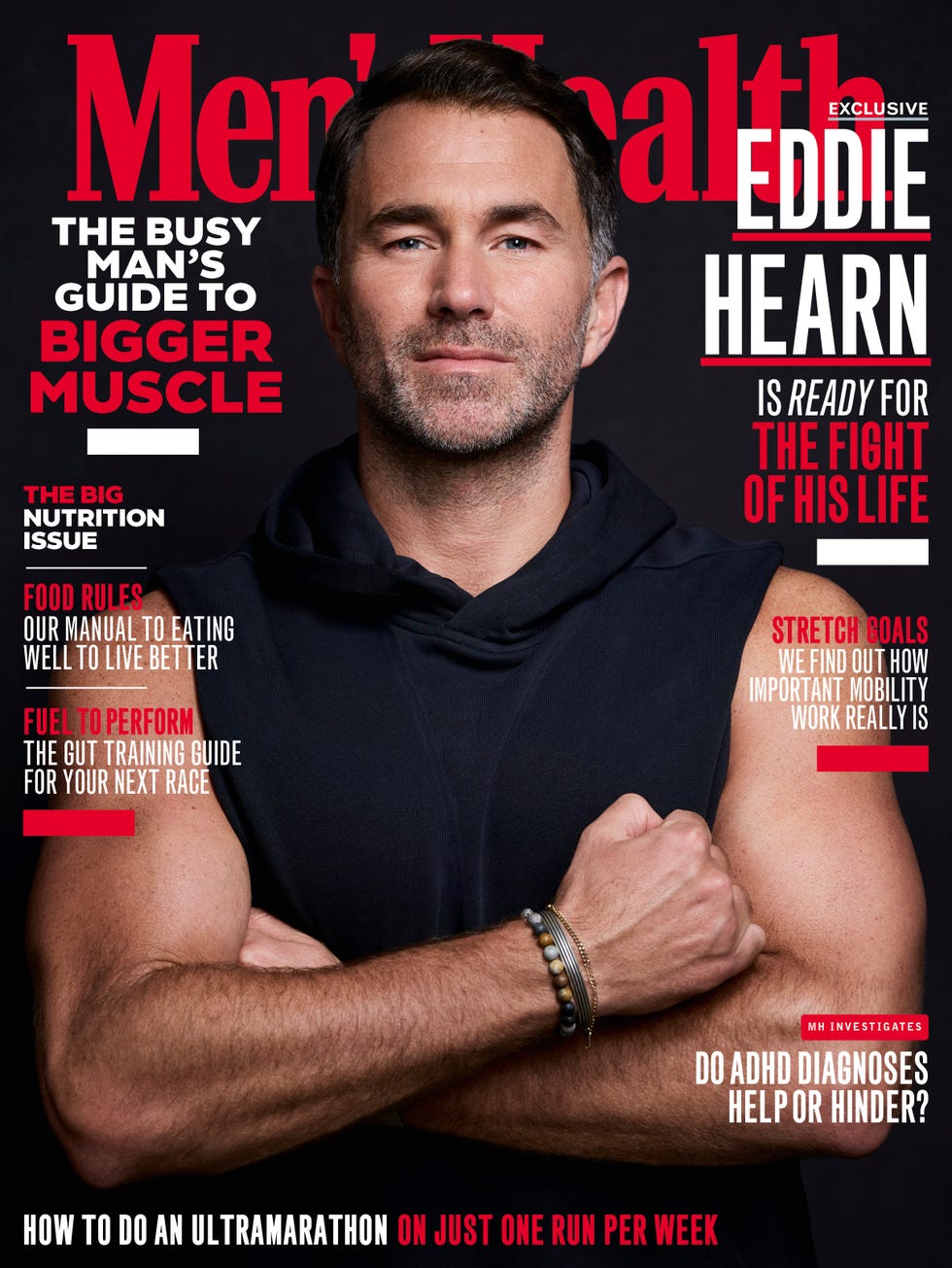

With almost 18 years in the health and fitness space as a personal trainer, nutritionist, breath coach and writer, Andrew has spent nearly half of his life exploring how to help people improve their bodies and minds.
As our fitness editor he prides himself on keeping Men’s Health at the forefront of reliable, relatable and credible fitness information, whether that’s through writing and testing thousands of workouts each year, taking deep dives into the science behind muscle building and fat loss or exploring the psychology of performance and recovery.
Whilst constantly updating his knowledge base with seminars and courses, Andrew is a lover of the practical as much as the theory and regularly puts his training to the test tackling everything from Crossfit and strongman competitions, to ultra marathons, to multiple 24 hour workout stints and (extremely unofficial) world record attempts.
You can find Andrew on Instagram at @theandrew.tracey, or simply hold up a sign for ‘free pizza’ and wait for him to appear.