
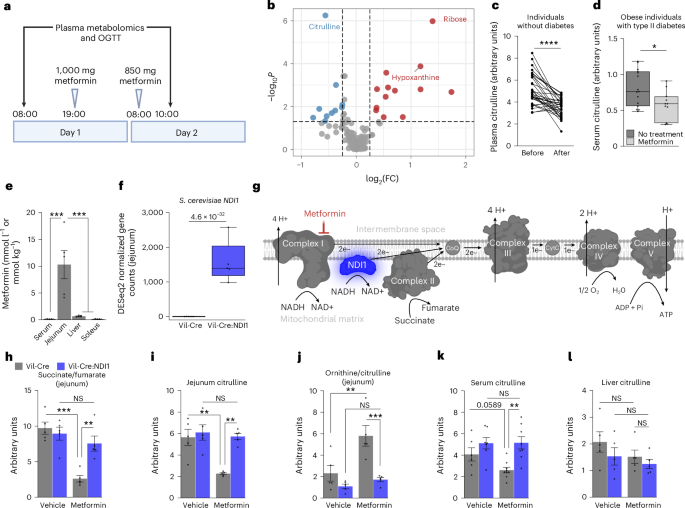
Foretz, M., Guigas, B. & Viollet, B. Metformin: update on mechanisms of action and repurposing potential. Nat. Rev. Endocrinol. 19, 460–476 (2023).
Bailey, C. J. Biguanides and NIDDM. Diabetes Care 15, 755–772 (1992).
DeFronzo, R. A., Barzilai, N. & Simonson, D. C. Mechanism of metformin action in obese and lean noninsulin-dependent diabetic subjects. J. Clin. Endocrinol. Metab. 73, 1294–1301 (1991).
Hundal, R. S. et al. Mechanism by which metformin reduces glucose production in type 2 diabetes. Diabetes 49, 2063–2069 (2000).
LaMoia, T. E. & Shulman, G. I. Cellular and molecular mechanisms of metformin action. Endocr. Rev. 42, 77–96 (2021).
Owen, M. R., Doran, E. & Halestrap, A. P. Evidence that metformin exerts its anti-diabetic effects through inhibition of complex 1 of the mitochondrial respiratory chain. Biochem. J. 348, 607–614 (2000).
El-Mir, M.-Y. et al. Dimethylbiguanide inhibits cell respiration via an indirect effect targeted on the respiratory chain complex I. J. Biol. Chem. 275, 223–228 (2000).
Bailey, C. J., Wilcock, C. & Scarpello, J. H. B. Metformin and the intestine. Diabetologia 51, 1552–1553 (2008).
Gormsen, L. C. et al. In vivo imaging of human 11C-metformin in peripheral organs: dosimetry, biodistribution, and kinetic analyses. J. Nucl. Med. 57, 1920–1926 (2016).
Wilcock, C. & Bailey, C. Accumulation of metformin by tissues of the normal and diabetic mouse. Xenobiotica 24, 49–57 (1994).
Madiraju, A. K. et al. Metformin suppresses gluconeogenesis by inhibiting mitochondrial glycerophosphate dehydrogenase. Nature 510, 542–546 (2014).
Xie, D. et al. Let-7 underlies metformin-induced inhibition of hepatic glucose production. Proc. Natl Acad. Sci. USA 119, e2122217119 (2022).
LaMoia, T. E. et al. Metformin, phenformin, and galegine inhibit complex IV activity and reduce glycerol-derived gluconeogenesis. Proc. Natl Acad. Sci. USA 119, e2122287119 (2022).
Sarabhai, T. et al. 222-OR: metformin reduces fasting glycemia in well-controlled type 2 diabetes by promoting aerobic glycolysis independent of decreasing endogenous glucose production. Diabetes https://doi.org/10.2337/db23-222-OR (2023).
Gormsen, L. C. et al. Metformin increases endogenous glucose production in non-diabetic individuals and individuals with recent-onset type 2 diabetes. Diabetologia 62, 1251–1256 (2019).
Konopka, A. R. et al. Hyperglucagonemia mitigates the effect of metformin on glucose production in prediabetes. Cell Rep. 15, 1394–1400 (2016).
Dietsche, K. B. et al. Glycemia and gluconeogenesis with metformin and liraglutide: a randomized trial in youth-onset type 2 diabetes. J. Clin. Endocrinol. Metab. 109, 1361–1370 (2024).
Christensen, M. M. H. et al. Endogenous glucose production increases in response to metformin treatment in the glycogen-depleted state in humans: a randomised trial. Diabetologia 58, 2494–2502 (2015).
McCreight, L. J. et al. Metformin increases fasting glucose clearance and endogenous glucose production in non-diabetic individuals. Diabetologia 63, 444–447 (2020).
Widén, E. I., Eriksson, J. G. & Groop, L. C. Metformin normalizes nonoxidative glucose metabolism in insulin-resistant normoglycemic first-degree relatives of patients with NIDDM. Diabetes 41, 354–358 (1992).
Rittig, N. et al. Metformin stimulates intestinal glycolysis and lactate release: a single-dose study of metformin in patients with intrahepatic portosystemic stent. Clin. Pharmacol. Ther. 110, 1329–1336 (2021).
Féry, F., Plat, L. & Balasse, E. O. Effects of metformin on the pathways of glucose utilization after oral glucose in non-insulin-dependent diabetes mellitus patients. Metabolism 46, 227–233 (1997).
Johnson, A. et al. The impact of metformin therapy on hepatic glucose production and skeletal muscle glycogen synthase activity in overweight type II diabetic patients. Metabolism 42, 1217–1222 (1993).
Gontier, E. et al. High and typical 18 F-FDG bowel uptake in patients treated with metformin. Eur. J. Nucl. Med. Mol. Imaging 35, 95–99 (2008).
Bybel, B., Greenberg, I. D., Paterson, J., Ducharme, J. & Leslie, W. D. Increased F-18 FDG intestinal uptake in diabetic patients on metformin: a matched case–control analysis. Clin. Nucl. Med. 36, 452–456 (2011).
Koffert, J. P. et al. Metformin treatment significantly enhances intestinal glucose uptake in patients with type 2 diabetes: results from a randomized clinical trial. Diabetes Res. Clin. Pract. 131, 208–216 (2017).
Tobar, N. et al. Metformin acts in the gut and induces gut-liver crosstalk. Proc. Natl Acad. Sci. USA 120, e2211933120 (2023).
Surasi, D. S., Bhambhvani, P., Baldwin, J. A., Almodovar, S. E. & O’Malley, J. P. 18F-FDG PET and PET/CT patient preparation: a review of the literature. J. Nucl. Med. Technol. 42, 5–13 (2014).
Oh, J.-R. et al. Impact of medication discontinuation on increased intestinal FDG accumulation in diabetic patients treated with metformin. AJR Am. J. Roentgenol. 195, 1404–1410 (2010).
Group, D. S. & Group, E. D. E. Glucose tolerance and cardiovascular mortality: comparison of fasting and 2-hour diagnostic criteria. Arch. Intern. Med. 161, 397–405 (2001).
Cavalot, F. et al. Postprandial blood glucose predicts cardiovascular events and all-cause mortality in type 2 diabetes in a 14-year follow-up: lessons from the San Luigi Gonzaga Diabetes Study. Diabetes Care 34, 2237–2243 (2011).
Lund, S. S. et al. Impact of metformin versus the prandial insulin secretagogue, repaglinide, on fasting and postprandial glucose and lipid responses in non-obese patients with type 2 diabetes. Eur. J. Endocrinol. 158, 35–46 (2008).
Bahne, E. et al. Metformin-induced glucagon-like peptide-1 secretion contributes to the actions of metformin in type 2 diabetes. JCI Insight 3, e93936 (2018).
Stocker, S. L. et al. The effect of novel promoter variants in MATE1 and MATE2 on the pharmacokinetics and pharmacodynamics of metformin. Clin. Pharmacol. Ther. 93, 186–194 (2013).
Rotroff, D. M. et al. Pharmacometabolomic assessment of metformin in non-diabetic, African Americans. Front. Pharmacol. 7, 135 (2016).
Aleidi, S. M. et al. Obesity connected metabolic changes in type 2 diabetic patients treated with metformin. Front. Pharmacol. 11, 616157 (2021).
Breier, M. et al. Immediate reduction of serum citrulline but no change of steroid profile after initiation of metformin in individuals with type 2 diabetes. J. Steroid Biochem. Mol. Biol. 174, 114–119 (2017).
Adam, J. et al. Metformin effect on nontargeted metabolite profiles in patients with type 2 diabetes and in multiple murine tissues. Diabetes 65, 3776–3785 (2016).
Curis, E. et al. Almost all about citrulline in mammals. Amino Acids 29, 177–205 (2005).
Bahadoran, Z., Mirmiran, P., Kashfi, K. & Ghasemi, A. Endogenous flux of nitric oxide: citrulline is preferred to Arginine. Acta Physiol. 231, e13572 (2021).
Consortium, G. et al. The Genotype-Tissue Expression (GTEx) pilot analysis: multitissue gene regulation in humans. Science 348, 648–660 (2015).
Uhlén, M. et al. Tissue-based map of the human proteome. Science 347, 1260419 (2015).
Imamura, H. et al. Visualization of ATP levels inside single living cells with fluorescence resonance energy transfer-based genetically encoded indicators. Proc. Natl Acad. Sci. USA 106, 15651–15656 (2009).
Legault, J. T. et al. A metabolic signature of mitochondrial dysfunction revealed through a monogenic form of Leigh syndrome. Cell Rep. 13, 981–989 (2015).
Zake, D. M. et al. Physiologically based metformin pharmacokinetics model of mice and scale-up to humans for the estimation of concentrations in various tissues. PLoS ONE 16, e0249594 (2021).
Bridges, H. R., Jones, A. J. Y., Pollak, M. N. & Hirst, J. Effects of metformin and other biguanides on oxidative phosphorylation in mitochondria. Biochem. J. 462, 475–487 (2014).
Bridges, H. R. et al. Structural basis of mammalian respiratory complex I inhibition by medicinal biguanides. Science 379, 351–357 (2023).
Robb, E. L. et al. Control of mitochondrial superoxide production by reverse electron transport at complex I. J. Biol. Chem. 293, 9869–9879 (2018).
Reczek, C. R. et al. Metformin targets mitochondrial complex I to lower blood glucose levels. Sci. Adv. 10, eads5466 (2024).
Iwata, M. et al. The structure of the yeast NADH dehydrogenase (Ndi1) reveals overlapping binding sites for water-and lipid-soluble substrates. Proc. Natl Acad. Sci. USA 109, 15247–15252 (2012).
Seo, B. B. et al. Molecular remedy of complex I defects: rotenone-insensitive internal NADH-quinone oxidoreductase of Saccharomyces cerevisiae mitochondria restores the NADH oxidase activity of complex I-deficient mammalian cells. Proc. Natl Acad. Sci. USA 95, 9167–9171 (1998).
Wheaton, W. W. et al. Metformin inhibits mitochondrial complex I of cancer cells to reduce tumorigenesis. eLife 3, e02242 (2014).
McElroy, G. S. et al. NAD+ regeneration rescues lifespan, but not ataxia, in a mouse model of brain mitochondrial complex I dysfunction. Cell Metab. 32, 301–308 (2020).
Molina, J. R. et al. An inhibitor of oxidative phosphorylation exploits cancer vulnerability. Nat. Med. 24, 1036–1046 (2018).
Bezawork-Geleta, A., Rohlena, J., Dong, L., Pacak, K. & Neuzil, J. Mitochondrial complex II: at the crossroads. Trends Biochem. Sci. 42, 312–325 (2017).
Bisbach, C. M. et al. Succinate can shuttle reducing power from the hypoxic retina to the O2-rich pigment epithelium. Cell Rep. 31, 107606 (2020).
Liemburg-Apers, D. C., Schirris, T. J., Russel, F. G., Willems, P. H. & Koopman, W. J. Mitoenergetic dysfunction triggers a rapid compensatory increase in steady-state glucose flux. Biophys. J. 109, 1372–1386 (2015).
Fletcher, J. W. et al. Recommendations on the use of 18F-FDG PET in oncology. J. Nucl. Med. 49, 480–508 (2008).
DeFronzo, R., Fleming, G. A., Chen, K. & Bicsak, T. A. Metformin-associated lactic acidosis: current perspectives on causes and risk. Metabolism 65, 20–29 (2016).
Xiao, S. et al. Lac-Phe mediates the effects of metformin on food intake and body weight. Nat. Metab. 6, 659–669 (2024).
Scott, B. et al. Metformin and feeding increase levels of the appetite-suppressing metabolite Lac-Phe in humans. Nat. Metab. 6, 651–658 (2024).
Coll, A. P. et al. GDF15 mediates the effects of metformin on body weight and energy balance. Nature 578, 444–448 (2020).
Kincaid, J. W. et al. The gastrointestinal tract is a major source of the acute metformin-stimulated rise in GDF15. Sci. Rep. 14, 1899 (2024).
Day, E. A. et al. Metformin-induced increases in GDF15 are important for suppressing appetite and promoting weight loss. Nat. Metab. 1, 1202–1208 (2019).
Zhang, S.-Y. et al. Metformin triggers a kidney GDF15-dependent area postrema axis to regulate food intake and body weight. Cell Metab. 35, 875–886 (2023).
Group, D. P. P. R. Long-term safety, tolerability, and weight loss associated with metformin in the Diabetes Prevention Program Outcomes Study. Diabetes Care 35, 731–737 (2012).
Ma, T. et al. Low-dose metformin targets the lysosomal AMPK pathway through PEN2. Nature 603, 159–165 (2022).
Sullivan, L. B. et al. Supporting aspartate biosynthesis is an essential function of respiration in proliferating cells. Cell 162, 552–563 (2015).
Bailey, C. J. Metformin: historical overview. Diabetologia 60, 1566–1576 (2017).
Lannuzel, A. et al. The mitochondrial complex I inhibitor annonacin is toxic to mesencephalic dopaminergic neurons by impairment of energy metabolism. Neuroscience 121, 287–296 (2003).
Park, I.-K., Lee, H.-S., Lee, S.-G., Park, J.-D. & Ahn, Y.-J. Antifeeding activity of isoquinoline alkaloids identified in Coptis japonica roots against Hyphantria cunea (Lepidoptera: Arctiidae) and Agelastica coerulea (Coleoptera: Galerucinae). J. Econ. Entomol. 93, 331–335 (2000).
Detzel, A. & Wink, M. Attraction, deterrence or intoxication of bees (Apis mellifera) by plant allelochemicals. Chemoecology 4, 8–18 (1993).
Tanner, C. M. et al. Rotenone, paraquat, and Parkinson’s disease. Environ. Health Perspect. 119, 866–872 (2011).
Caparros-Lefebvre, D. & Elbaz, A. Possible relation of atypical parkinsonism in the French West Indies with consumption of tropical plants: a case-control study. Lancet 354, 281–286 (1999).
Yin, J., Xing, H. & Ye, J. Efficacy of berberine in patients with type 2 diabetes mellitus. Metabolism 57, 712–717 (2008).
Turner, N. et al. Berberine and its more biologically available derivative, dihydroberberine, inhibit mitochondrial respiratory complex I: a mechanism for the action of berberine to activate AMP-activated protein kinase and improve insulin action. Diabetes 57, 1414–1418 (2008).
Maeng, H.-J. et al. P-glycoprotein-mediated transport of berberine across Caco-2 cell monolayers. J. Pharm. Sci. 91, 2614–2621 (2002).
Smolinski, M. P. et al. Discovery of encequidar, first-in-class intestine specific P-glycoprotein inhibitor. J. Med. Chem. 64, 3677–3693 (2021).
Zhou, S.-F. Structure, function and regulation of P-glycoprotein and its clinical relevance in drug disposition. Xenobiotica 38, 802–832 (2008).
Kartaram, S. et al. Plasma citrulline concentration, a marker for intestinal functionality, reflects exercise intensity in healthy young men. Clin. Nutr. 38, 2251–2258 (2019).
Bailey, S. J. et al. l-Citrulline supplementation improves O2 uptake kinetics and high-intensity exercise performance in humans. J. Appl. Physiol. 119, 385–395 (2015).
Walton, R. G. et al. Metformin blunts muscle hypertrophy in response to progressive resistance exercise training in older adults: a randomized, double-blind, placebo-controlled, multicenter trial: The MASTERS trial. Aging Cell 18, e13039 (2019).
Konopka, A. R. et al. Metformin inhibits mitochondrial adaptations to aerobic exercise training in older adults. Aging Cell 18, e12880 (2019).
Barzilai, N., Crandall, J. P., Kritchevsky, S. B. & Espeland, M. A. Metformin as a tool to target aging. Cell Metab. 23, 1060–1065 (2016).
He, L. & Wondisford, F. E. Metformin action: concentrations matter. Cell Metab. 21, 159–162 (2015).
Kajbaf, F., De Broe, M. E. & Lalau, J.-D. Therapeutic concentrations of metformin: a systematic review. Clin. Pharmacokinet. 55, 439–459 (2016).
Pentikäinen, P., Neuvonen, P. & Penttilä, A. Pharmacokinetics of metformin after intravenous and oral administration to man. Eur. J. Clin. Pharmacol. 16, 195–202 (1979).
Liang, X. & Giacomini, K. M. Transporters involved in metformin pharmacokinetics and treatment response. J. Pharm. Sci. 106, 2245–2250 (2017).
Shin, H., Schneeweiss, S., Glynn, R. J. & Patorno, E. Trends in first-line glucose-lowering drug use in adults with type 2 diabetes in light of emerging evidence for SGLT-2i and GLP-1RA. Diabetes Care 44, 1774–1782 (2021).
Nosadini, R. et al. Effect of metformin on insulin-stimulated glucose turnover and insulin binding to receptors in type II diabetes. Diabetes Care 10, 62–67 (1987).
Kim, Y.-B. et al. Troglitazone but not metformin restores insulin-stimulated phosphoinositide 3-kinase activity and increases p110β protein levels in skeletal muscle of type 2 diabetic subjects. Diabetes 51, 443–448 (2002).
Natali, A. & Ferrannini, E. Effects of metformin and thiazolidinediones on suppression of hepatic glucose production and stimulation of glucose uptake in type 2 diabetes: a systematic review. Diabetologia 49, 434–441 (2006).
Hother-Nielsen, O., Schmitz, O., Andersen, P. H., Beck-Nielsen, H. & Pedersen, O. Metformin improves peripheral but not hepatic insulin action in obese patients with type II diabetes. Eur. J. Endocrinol. 120, 257–265 (1989).
Zhang, B., Cao, Y., Qu, Z., Sun, Y. & Tian, X. The impact of metformin on mortality in patients with type 2 diabetes mellitus: a prospective cohort study. Endocrine 87, 136–143 (2025).
Forslund, K. et al. Disentangling type 2 diabetes and metformin treatment signatures in the human gut microbiota. Nature 528, 262–266 (2015).
Wang, L. et al. Spatially resolved isotope tracing reveals tissue metabolic activity. Nat. Methods 19, 223–230 (2022).
Agrawal, S. et al. El-MAVEN: a fast, robust, and user-friendly mass spectrometry data processing engine for metabolomics. Methods Mol. Biol. 1978, 301–321 (2019).
Pang, Z. et al. Using MetaboAnalyst 5.0 for LC–HRMS spectra processing, multi-omics integration and covariate adjustment of global metabolomics data. Nat. Protoc. 17, 1735–1761 (2022).
Sebo, Z. & Grant, R. Relevant code for ‘Metformin inhibits mitochondrial complex I in intestinal epithelium to promote glycemic control’. Zenodo https://doi.org/10.5281/zenodo.15396719 (2026).