Dr Mark Hyman only started strength training at 59. In just seven years, he has built an enviable physique, with resistance training having a significant impact on his health and quality of life.
Six exercises have proved particularly important in helping Dr Hyman age strongly, with rotational movements – often overlooked in traditional gym programmes – chief among them. While many exercises are performed in fixed planes of motion, rotational movements challenge your body in the positions it encounters in everyday life, from getting out of the car and out of bed to carrying shopping and doing household chores. Training these movement patterns can help build a body that’s fit for life.
‘I don’t train to look younger,’ he says. ‘I train because muscle is one of the most powerful tools we have for healthy ageing. I train to protect my brain, my metabolism, my bones, my balance and my independence. Every workout is an investment in my future self. It’s about staying strong enough to hike mountains, travel the world, carry my own bags and keep doing the things I love for decades to come.’
6 Movements for Men Over 60Rotational Cable Press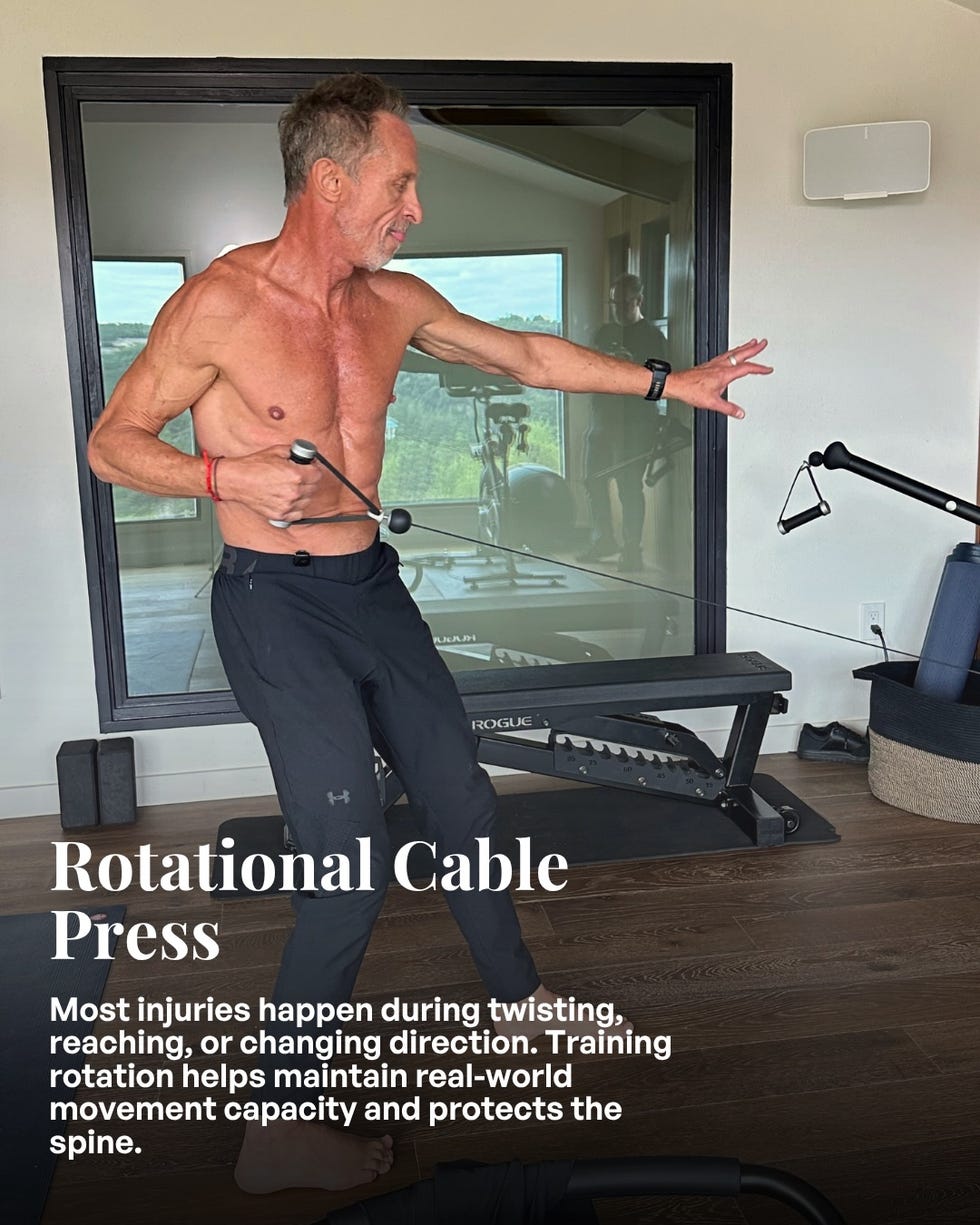
@drmarkhyman//Instagram
A movement that builds upper-body and core strength, the rotational cable press challenges both shoulder stability and rotational power. Work towards making the movement as explosive as possible.
‘Most injuries happen during twisting, reaching or changing direction. Training rotation helps maintain real-world movement capacity and protects the spine,’ Dr Hyman says.
How to do the exercise:
Attach a handle to a cable machine at about shoulder height.Stand facing slightly away from the machine, with one foot in front of the other in a staggered stance. If your left hand is gripping the handle, your right foot should be forward.Press the cable out in front of you while rotating your body. Your back foot can pivot to help with the rotation – use your hips and glutes to generate power.Return the handle to the starting position under control. Repeat.Single-Arm Rotational Cable Row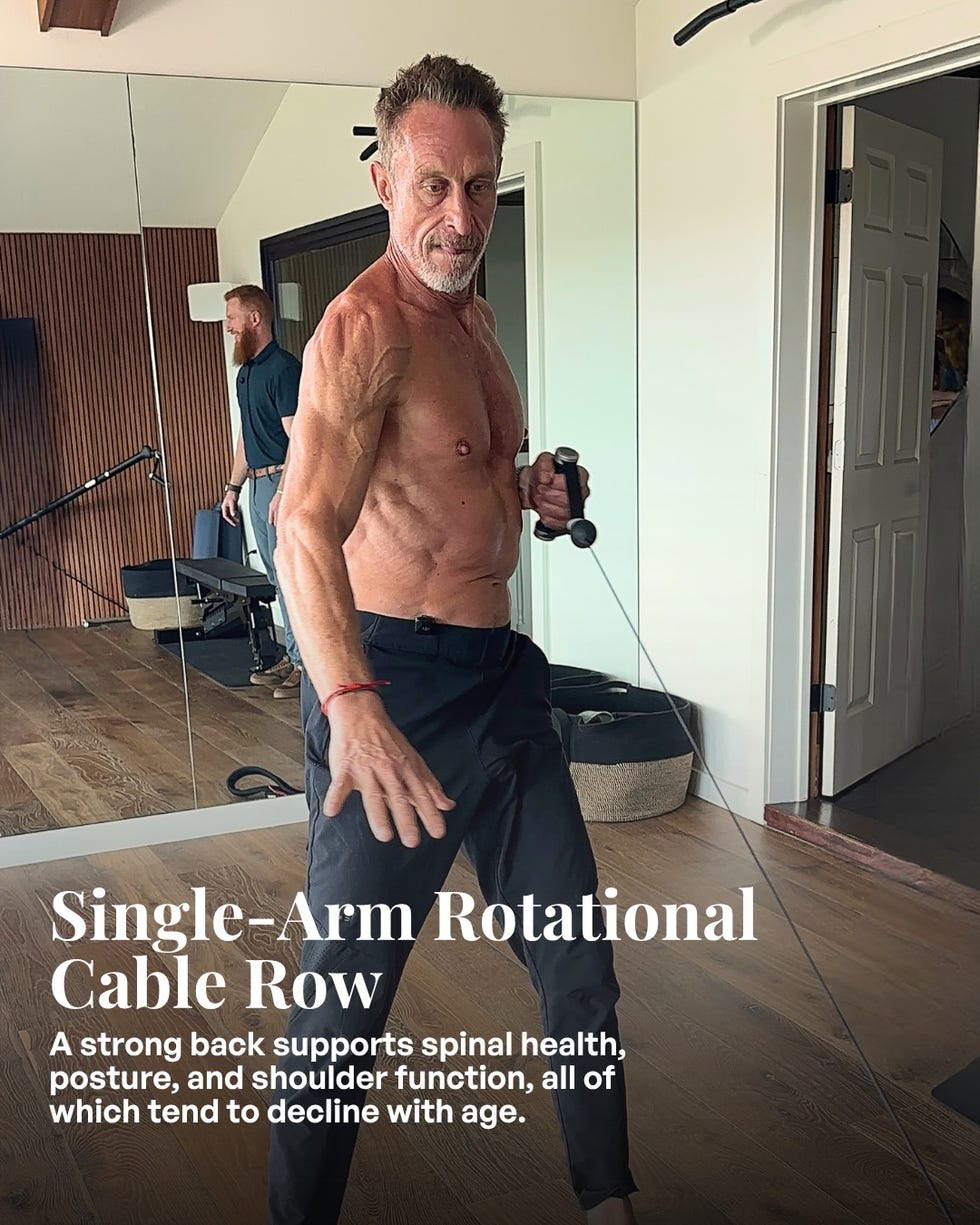
@drmarkhyman//Instagram
‘A strong back supports spinal health, posture and shoulder function – all of which tend to decline with age,’ Dr Hyman explains.
For that reason, he pairs the previous movement with a rotational row. It targets the major back muscles, while your core has to stabilise to stop you being pulled forwards in the lengthened position.
How to do the exercise:
Attach a handle to a cable machine at about shoulder height.Stand facing the machine in a split stance – if your left hand is gripping the handle, your right foot should be forward. Step back until there’s tension on the cable throughout the movement.Engage your core and fully extend your working arm towards the machine. Rotate your torso slightly while maintaining tension throughout your body.Pull your arm back towards your midsection while rotating your body away from the machine to emphasise the rotational element.Squeeze your back before returning the cable to the starting position. Repeat.Bear Crawl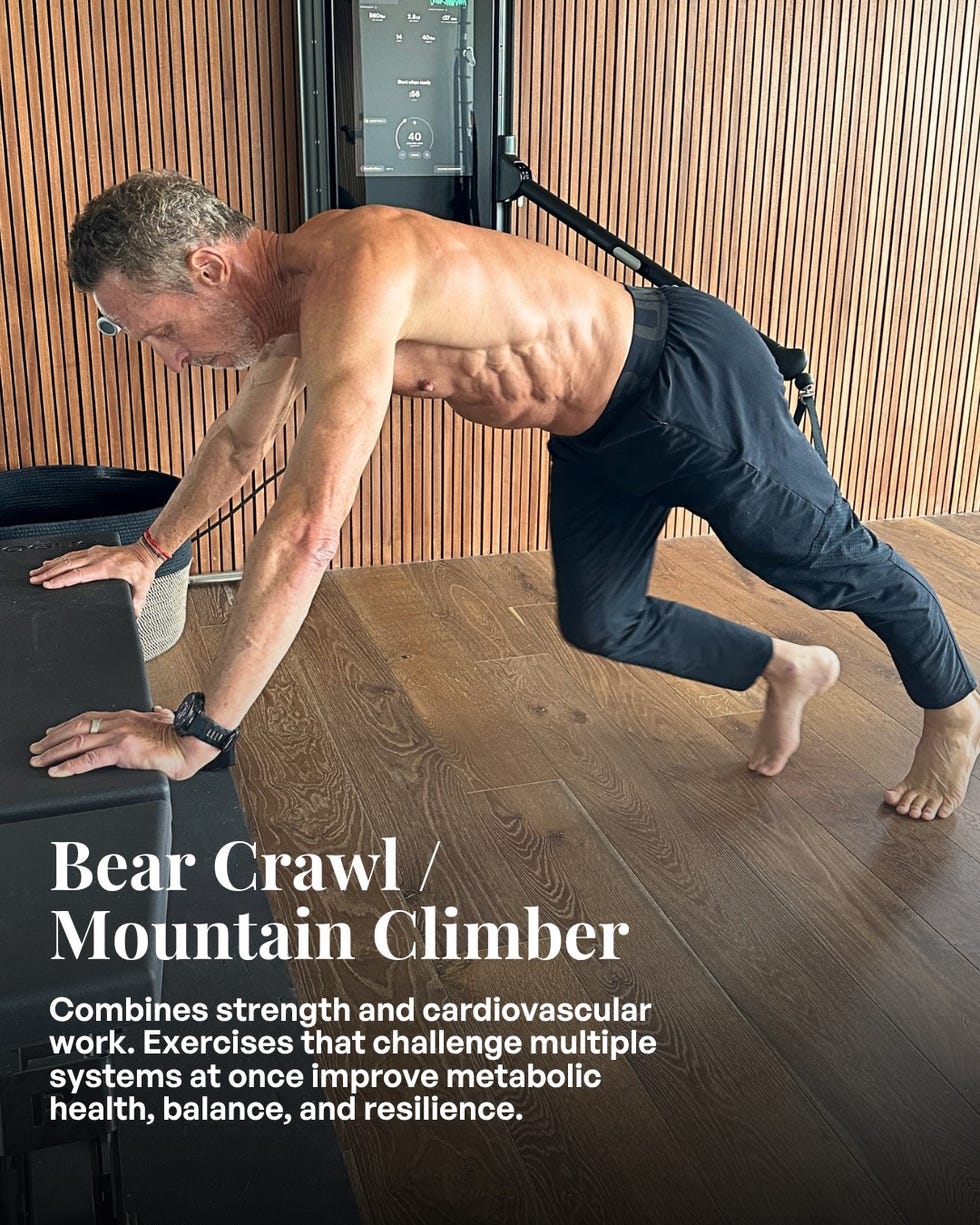
@drmarkhyman//Instagram
Staying dynamic in your training becomes increasingly important as you age, especially with full-body movements. The bear crawl not only builds core strength and shoulder stability, but also improves coordination as you move opposite limbs together.
‘Exercises that challenge multiple systems at once improve metabolic health, balance and resilience,’ Dr Hyman says.
How to do the exercise:
Assume a push-up position with your knees bent to roughly 90 degrees directly beneath your hips. Your knees should be hovering just off the floor.Brace your core as though you’re about to be punched in the stomach.Maintain this tension throughout the exercise.Walk your right hand and left foot forwards a few inches, then repeat with your left hand and right foot.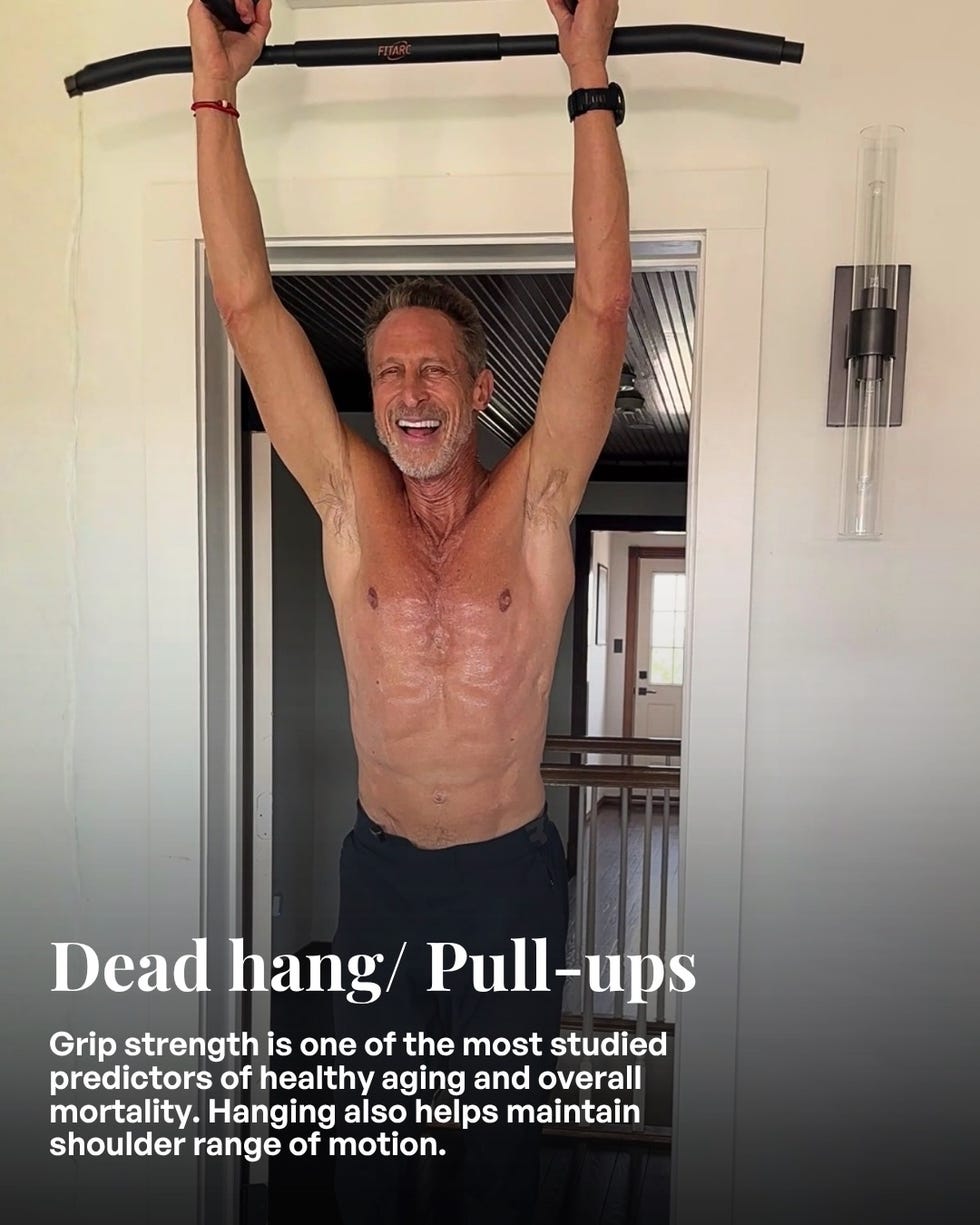
@drmarkhyman//Instagram
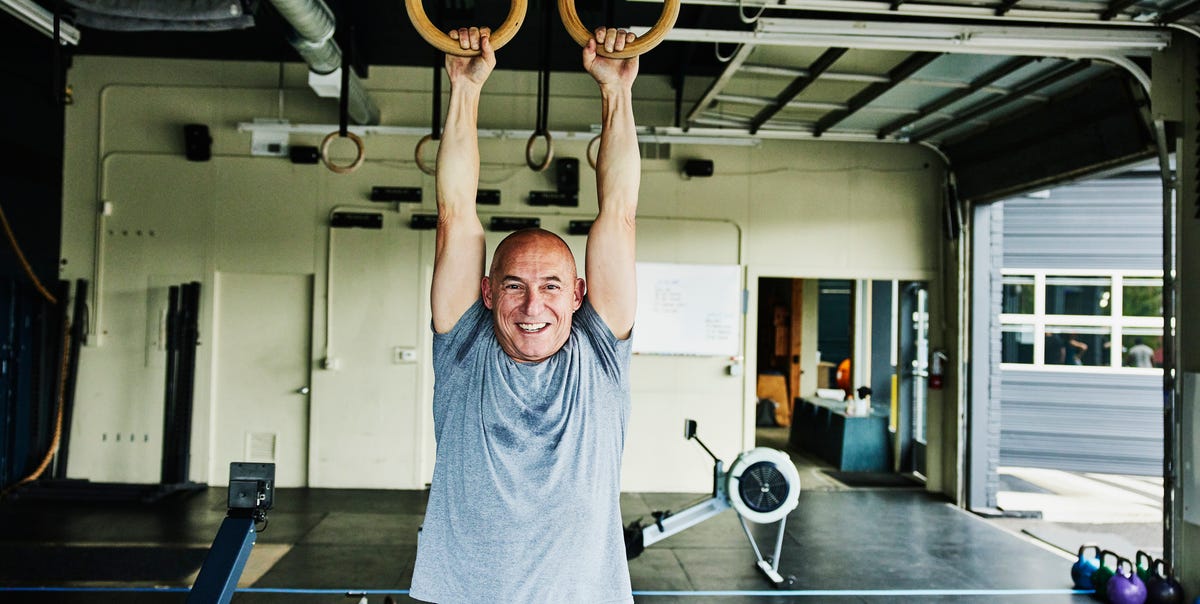
There’s a lot to love about the dead hang. It improves grip strength, enhances shoulder stability, builds core strength, decompresses the spine and develops upper-body muscular endurance. All are important as you age, particularly grip strength and maintaining shoulder function.
‘Grip strength is one of the most studied predictors of healthy ageing and overall mortality. Hanging also helps maintain shoulder range of motion,’ Dr Hyman adds.
How to do the exercise:
Use an overhand grip (palms facing away from you) slightly wider than shoulder-width apart. If this is too challenging or uncomfortable, try gymnastics rings.Engage your shoulders by pulling your shoulder blades down and back into an active hang.Keep your body straight with your legs together and avoid swinging. Brace your core and point your toes slightly in front of you.Start with short holds (10–20 seconds) and gradually increase the duration. You can also progress to active-hang reps or one-arm dead hangs.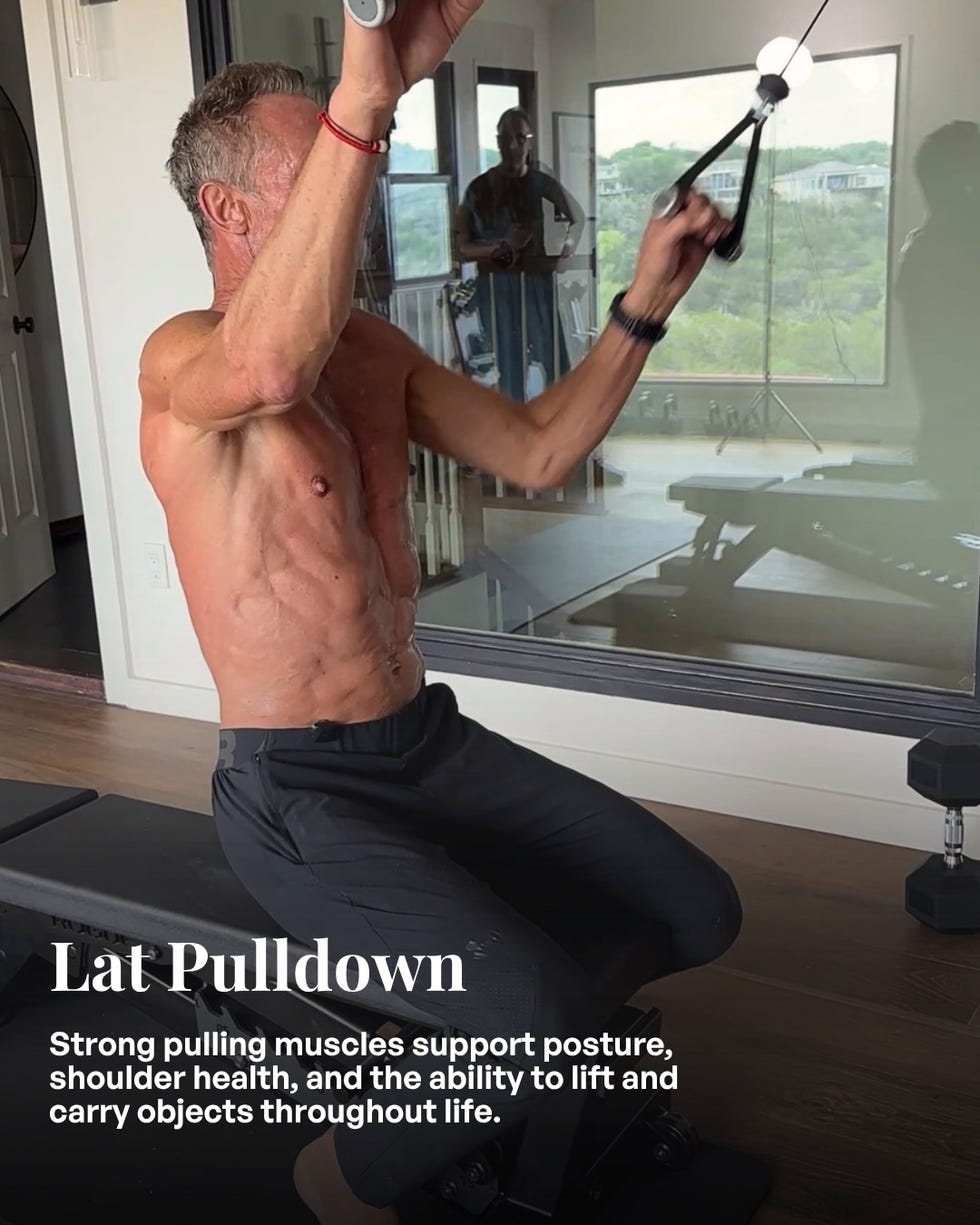
@drmarkhyman//Instagram
‘Strong pulling muscles support posture, shoulder health and the ability to lift and carry objects throughout life,’ Dr Hyman explains.
How to do the exercise:
Kneel in front of a cable machine and face away from it, or use a lat-pulldown machine.Grip the bar with your palms facing away from you, shoulder-width apart.Lean back slightly and lift your chest.Pull the bar down towards your chest before slowly returning to the starting position. Keep your torso still throughout.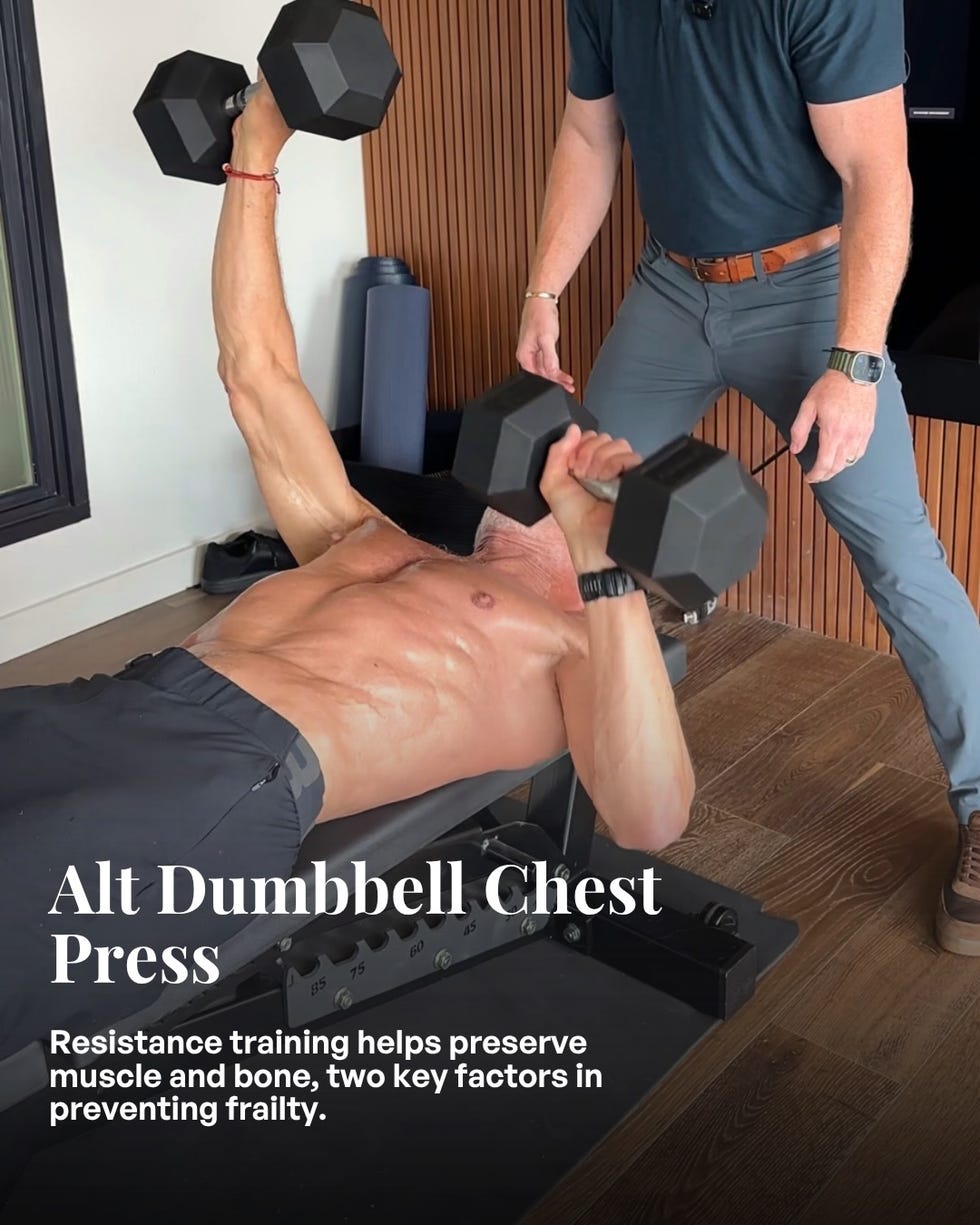
@drmarkhyman//Instagram
The unilateral element is key here. Because you’re lowering one weight at a time, your core has to work harder to keep your body stable on the bench. Combined with the pressing movement, it helps build upper-body strength and control.
How to do the exercise:
Lie on a bench set to roughly a 45-degree incline and press the dumbbells over your chest, palms facing away from you.Slowly lower one weight before driving it back up and squeezing your chest at the top.Repeat on the opposite side. That’s one rep.
If there’s one thing Kori Sampson knows, it’s how to optimise your body composition for performance. To tap into his knowledge as an elite athlete and coach, we asked him to create a 4-week plan to help you move faster, recover quicker and keep pushing when the fatigue sets in – all while improving your muscle-to-fat ratio.
Ready to build muscle, burn fat and come out the other side looking, feeling and performing better? Click here to get 14 days of free access to the plan via the Men’s Health app.