
Updated July 16, 2026 08:28AM
So you thought the high-carbohydrate Tour de France is powered by highly researched, scientifically formulated sport nutrition?
You’re right – but only to a certain point.
One humble snack is bucking the trend, and it’s krispie.
Yup.
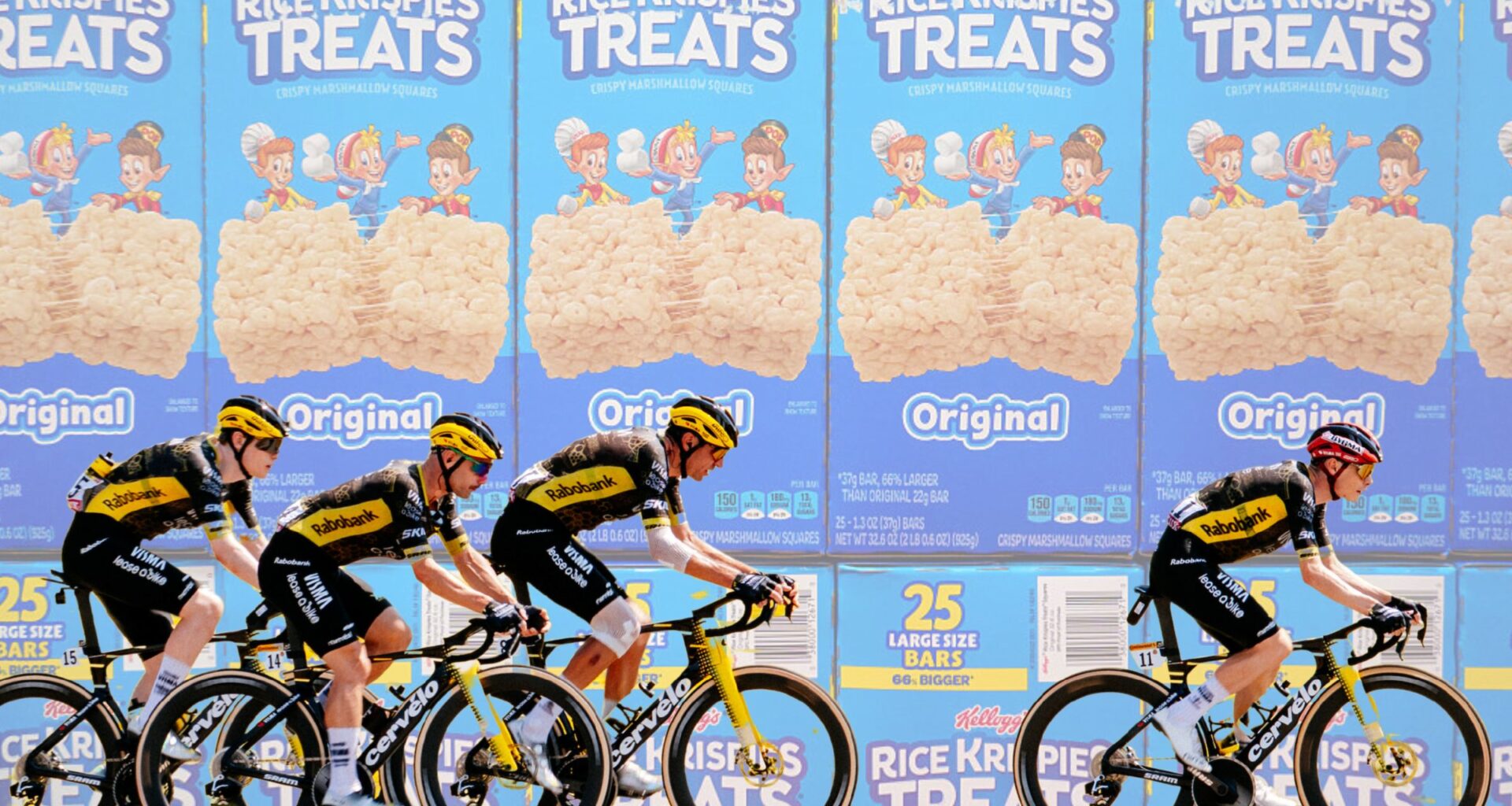
Home-made takes on Rice Krispie Treats [Krispies Squares for us in the UK – ed] have become a stubborn outlier in a precision-dialed race fueled by super-strength gels and drinks.
Sticky cubes of puffed rice and marshmallow are being wrapped in foil and slipped into the jersey pockets of superstar riders all across the Tour de France peloton.
UAE Emirates-XRG and Red Bull-Bora-Hansgrohe – the superteams of Tadej Pogačar and Remco Evenepoel – are among more than a dozen squads whose racers are getting their teeth into the humble treat.
“Krispies bars are everywhere at the Tour now. I know of so many teams that use them,” Red Bull nutritionist Will Girling told Velo. “They’re perfect for racing.”
And it’s not just the Tour de France – these crunchy cubes are being raided from kiddies’ lunchboxes and gorged on by skimo stars, runners, and triathletes all over the world.
U.S. Olympic runners Molly Huddle and Hobbs Kessler are among the krispies fiends of world sport.
Carbs, crunch, and an escape from fueling monotony
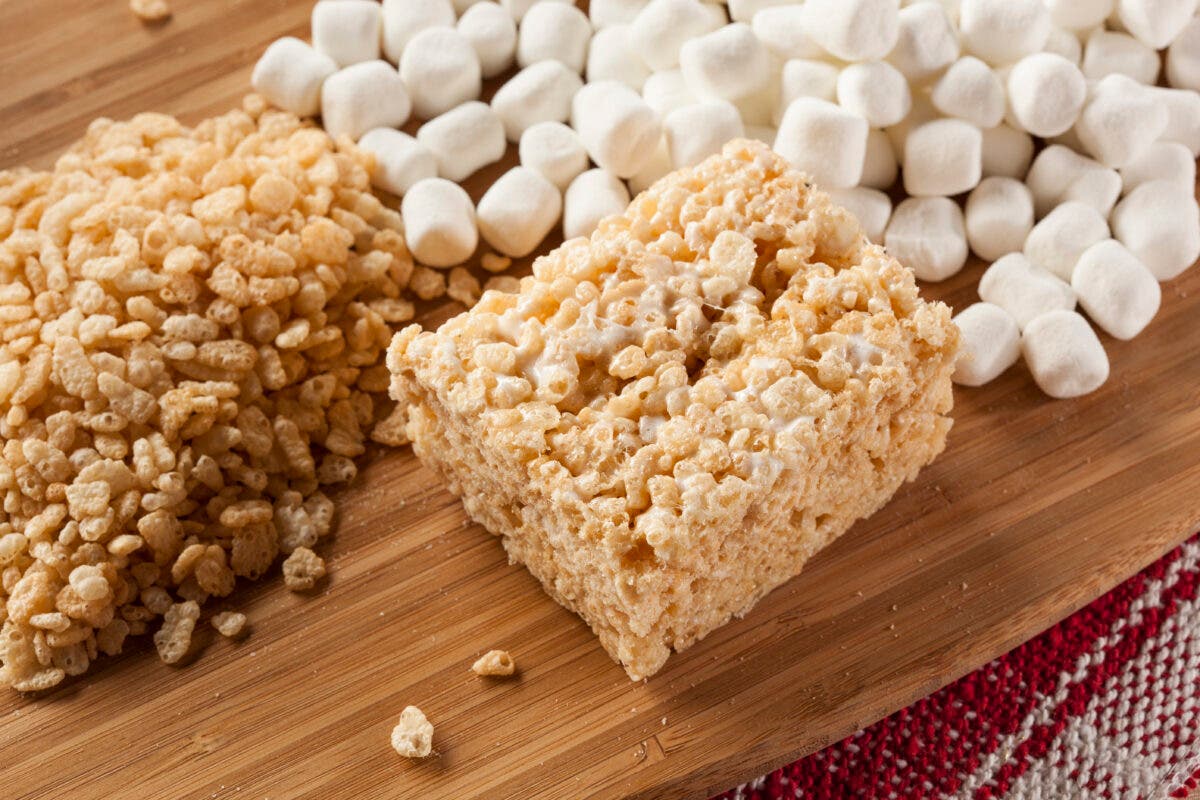 Puffed rice and marshmallow bars are the new go-to fuel alternative of the Tour de France. (Photo: Getty Images)
But how have krispies bars – a basic blend of marshmallow and cereal – gained so much kudos?
The sport nutrition market is at an absolute peak – the energy gel market alone was thought to be north of $640 million in 2025.
The range of gels, drinks, and chews has never been greater for pro cyclists who eat more than 500 calories of carbs per hour on the bike.
Santi Fernandez is a nutritionist at Team Jayco-AlUla.
He explained the unique trifecta that’s elevated krispies above the endless sludge of sports nutrition that fuels the Tour.
“Krispies are a great alternative to gels and carb bottles,” Fernandez told Velo. “They deliver almost the same amount of carbohydrate but in a different format. And the properties of the bars are ideal – they’re carb-rich, but low in fiber, proteins, and fats.
“But we find that it’s the crispiness and texture that makes the difference,” he continued. “The ‘crunch’ sensation can’t be found in other products our riders usually consume.”
High-carb, low-fiber, maximum crunch.
Kids go wild for it, and the world’s best cyclists do, too.
Velo understands that more than half the teams in the Tour de France peloton are getting thir fix.
Your kid’s favorite snack is basically an energy gel
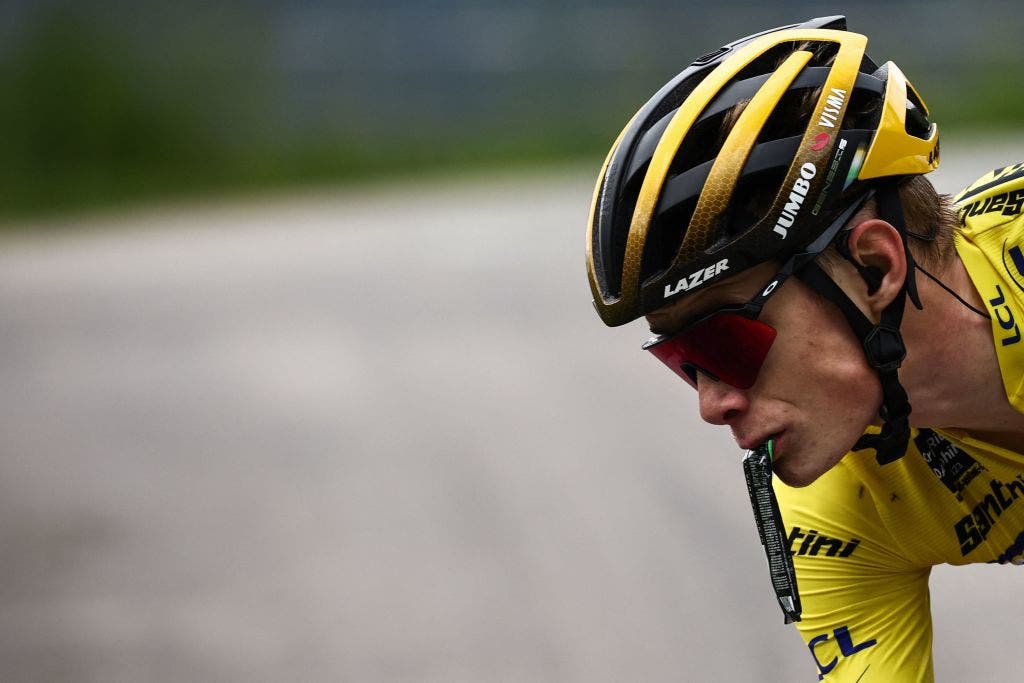 Vingegaard will eat the equivalent of 3-4 gels per hour on the hardest mountain stages of the Tour. (Photo: ANNE-CHRISTINE POUJOULAT/AFP via Getty Images)
High-carbohydrate fueling has been the theme of the modern Tour.
The peloton wouldn’t be able to race at the record speeds symptomatic of the Pogačar-era without a gut full of glucose and fructose.
Eating 120 grams of carbohydrate per hour has become an essential norm since the recent “carbohydrate revolution.” That’s approximately 500 calories per hour, and as many as 15 high-sugar energy gels per stage.
Anyone who’s tried eating that many gels during one weekend ride will know – the grossness is real.
Attempting it 21 times over is a broiling gut-bomb of G.I. turmoil, flavor fatigue, and rider revolt.
That’s why alternatives to sport nutrition have become essential.
Riders who can’t stomach another gel risk being dropped by their fully-carbed, 420-watt rivals.
“Riders get bored with the race fueling requirement pretty easily,” Fernandez said. “Adding other food in addition to regular sports nutrition is important. Riders will get sick of it otherwise and not eat enough.
“Krispie bars have been very well accepted as part of the plan since we started using them. And we made them ourselves, so we can make infinite different flavors to keep things different.”
And better still, krispies snacks aren’t just some inferior alternative to sports food.
They’re no amuse-bouche between gels.
These cereal-and-mallow sticks basically are sports food. They’re zero fat, zero fiber, and zero protein – and of course, they’re crammed with carbs.
A krispie bar made using the WorldTour-approved “Pock-It Fuel” recipe created by NSN racer Nick Schultz and his partner Lizzie Holden contains 30 grams of carbs in a 150-calorie cube.
A standard energy gel provides 30-40 grams of carbs at 120-160 calories.
The numbers don’t lie.
Your kid’s favorite afternoon snacks are basically energy gels.
Krispies survived the extinction of real food from the Tour de France
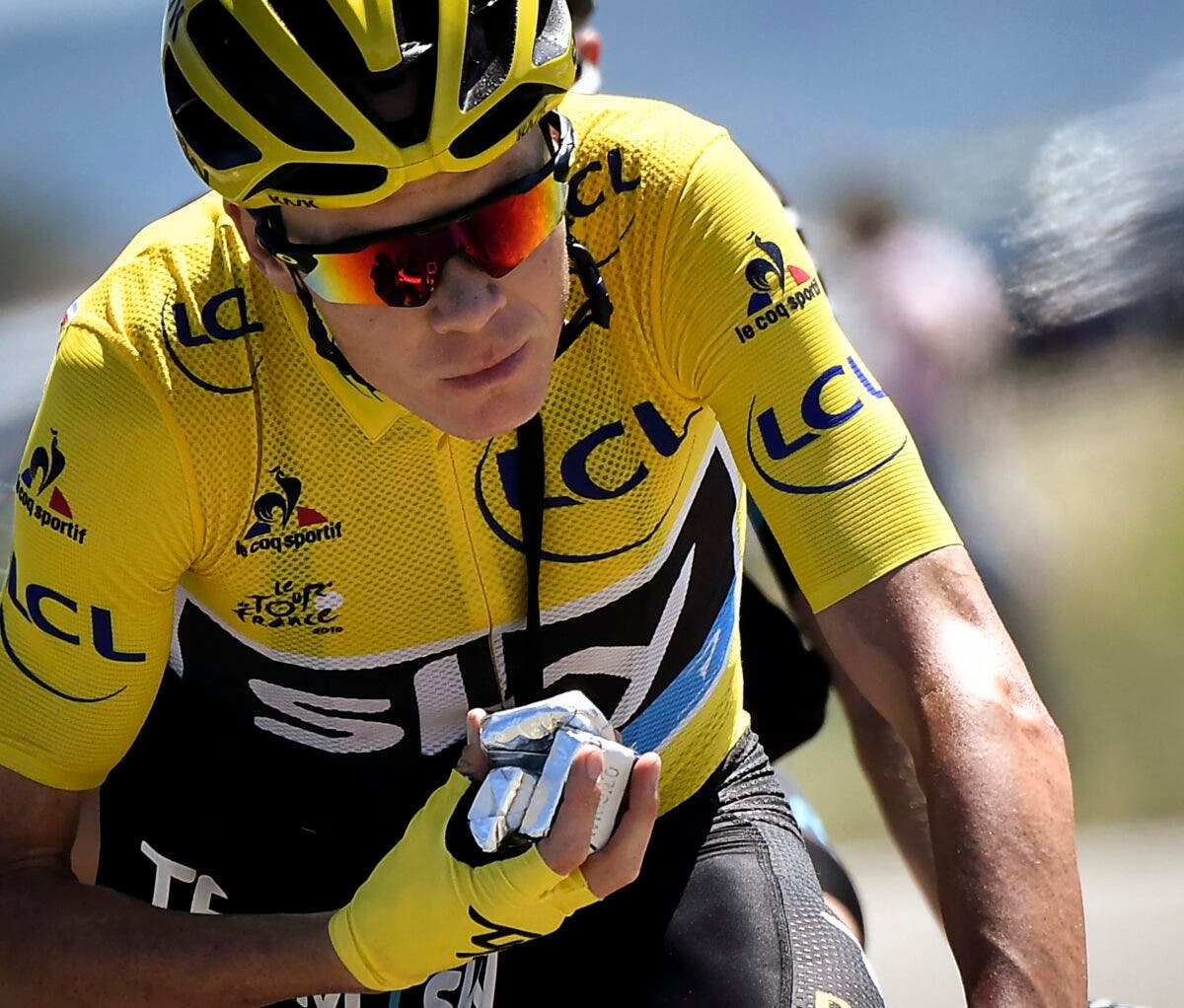 ‘Real food’ and particularly rice cakes were still popular in the Team Sky-era Tour de France. (Photo: JEFF PACHOUD / AFP / Getty Images)
The sugar punch of krispies bars has given them staying power in a Tour de France peloton increasingly powered by sports nutrition.
Old-school wraps, sandwiches, and rice cakes have been exiled now that carbohydrate requirements are through the roof. The snacks of the Chris Froome era contain either too much fat or protein, or the carbs are too complex and “slow.”
Staffers from Red Bull-Bora Hansgrohe, Visma-Lease a Bike, and Tudor Pro Cycling all told Velo krispies bars are now the only “real food” to be found in their racers’ pockets.
Wraps or rice cakes are allowed sparingly, and only for some token variety.
The homemade krispies trade
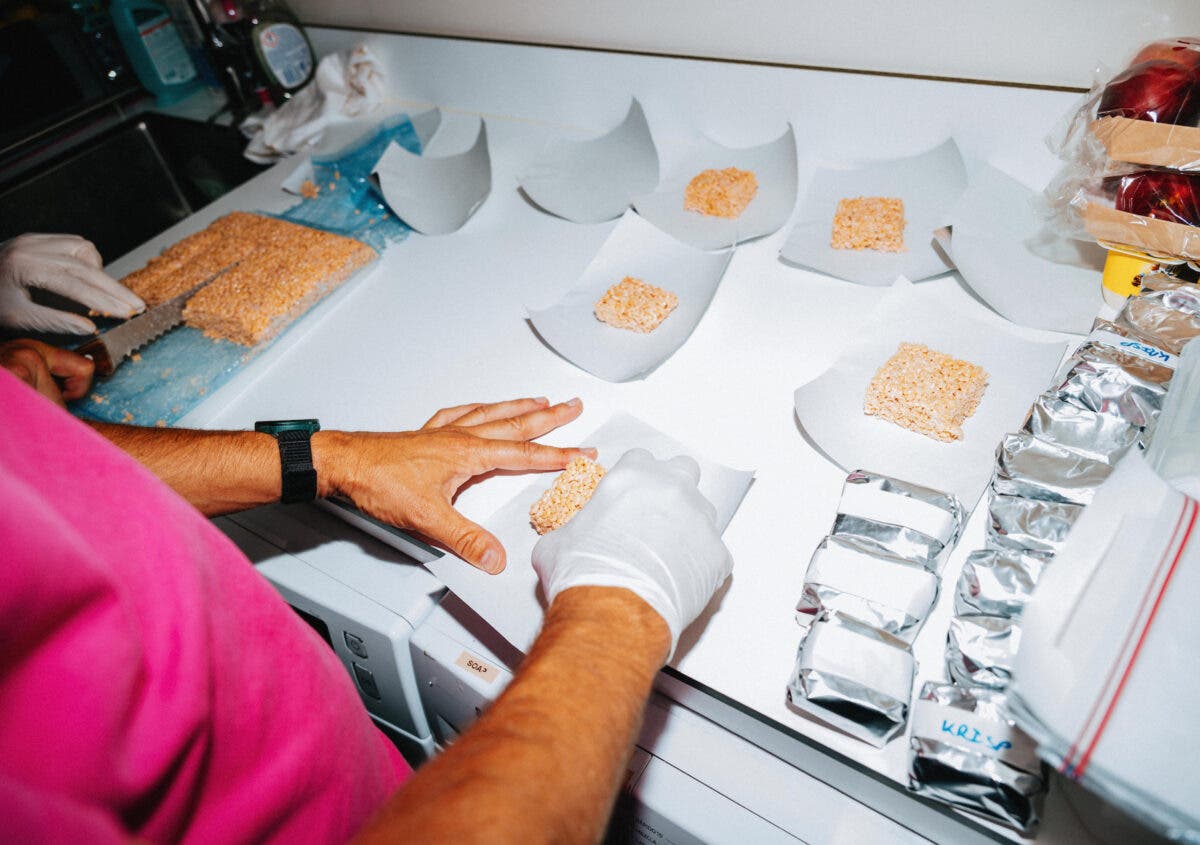 EF Education-EasyPost’s team chef prepares a batch of krispies bars to fuel on the fastest race in the world. (Photo: Gruber Images)
Krispies bars have become a hot property in a Tour de France peloton that needs fuel but can’t face another gel.
So it’s just as well that they’re darn simple to make.
Team chefs turn out tray-loads of sticky treats every morning while they multitask making breakfasts, recovery meals, and planning dinner.
All they need is a box of cereal, some marshmallows, and a dollop of coconut oil – ingredients that can be bought in advance and stored in the back of the food truck.
This humble base can then be blinged up with Biscoff, Kit Kat, Oreo, or, if someone’s feeling sophisticated, cinnamon or pistachio.
It seems the daily churn of fresh bars in fresh flavors has put the Tour de France into a krispies frenzy.
Team chefs and riders told Velo that the pre-stage start paddock is a busy market of krispie bar trade and barter. Every team has its special flavor, and every rival rider wants a sample.
An alternative, but not a replacement
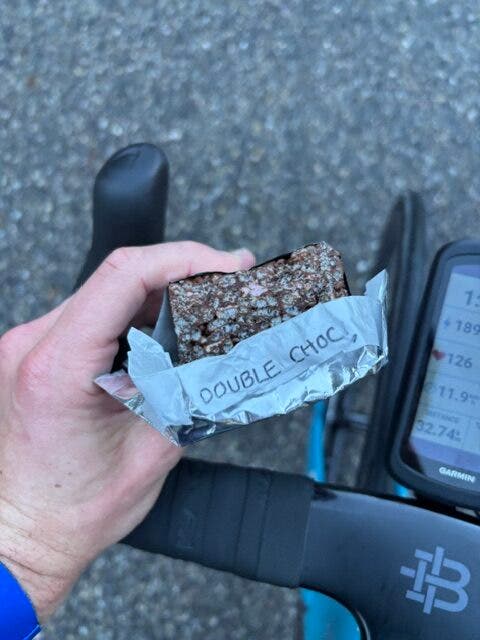 Krispies bars made to the ‘Pock-It Fuel’ recipe are all the rage in the Tour de France peloton. (Photo: Courtesy Lizzie Holden / Pock-It Fuel)
Krispies are all the rage in modern endurance.
So it’s no surprise that several leading sport nutrition brands have recently launched their own takes on the bars, boosted up by sugar syrups, maltodextrin, and more.
But that’s not to say the recent kraze for krispies will kick energy gels out of the Tour de France.
A chewy cereal bar is not going to be the first choice for riders as they suffer on Pogačar’s wheel in the Alps.
Unwrapping a foil packet while pushing a billion watts isn’t so straightforward. The choking hazard of puffed rice awaits those with the dexterity to do it.
But still – there’s no denying that the peloton has a new favorite carb source, and it’s krisp.