
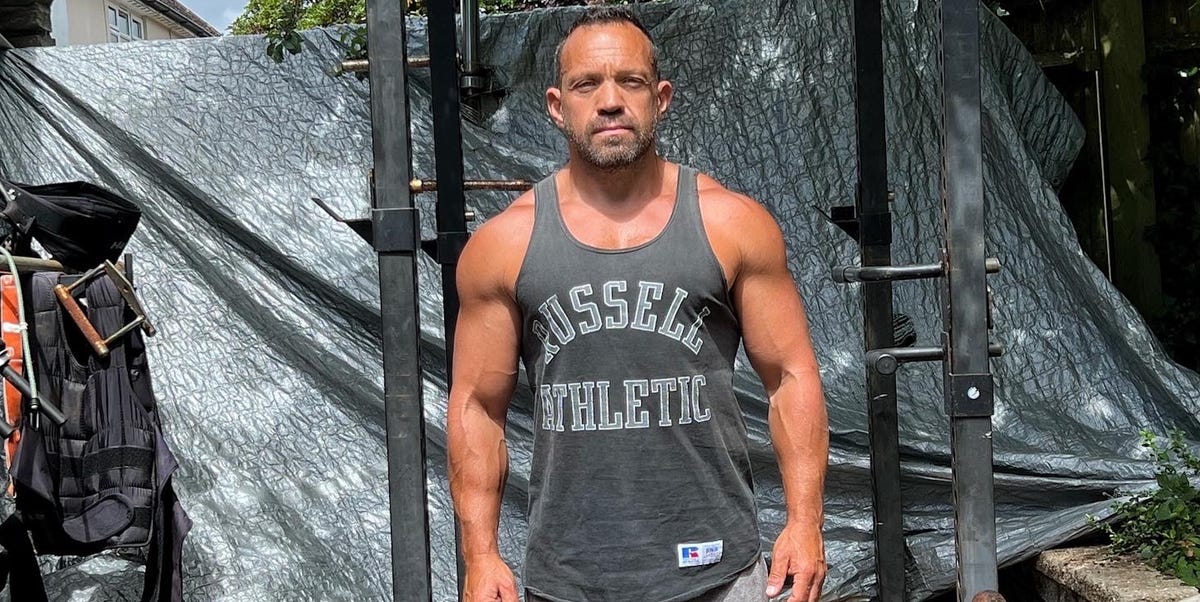
Scroll through Michael Mason‘s Instagram and you’ll spot rusty barbells, weather-beaten kettlebells, homemade kit – and a Czechoslovakian Wolfdog called Noodle…
It’s about as far removed from the polished world of biohacking and boutique gyms as you can get. At 62, the martial artist and coach still trains with an intensity that most men abandon decades earlier. But behind the hard-edged aesthetic is a surprisingly simple philosophy.
Speaking to Men’s Health, Mason explains why all men – but particularly those over 50 – should stop chasing the perfect programme, ignore the latest fitness fads and focus on the basics that really matter.
Men’s Health: You’re 62 and in better shape than most people half your age. What’s the biggest mistake men make when they’re trying to stay in shape?
Michael Mason: I think, like anything you want to do for a long time, there has to be consistency. But it has to be consistency of something you can repeat.
As we go through life, things change. There are more curveballs, there’s work, family, pressure – everyone’s got something. So it’s having that mindset that allows you to focus on what’s important.
‘Just move. Squat. Pick something up. Push something’
Longevity is one of those things people don’t really think about until they’re older. But it’s actually very simple. Just move. Don’t try to complicate it.
I was lucky because I grew up in an era before the internet and social media. You went to a gym, you had a coach and it was fairly straightforward. Now you read one thing about training or diet, then another that’s the complete opposite. You have experts on every side saying, ‘This is why you shouldn’t do that,’ or, ‘This is why you should do this.’
They’re all arguing with each other, so having consistency becomes really difficult. Eventually people just think, ‘It’s too difficult,’ life gets in the way and they stop.
Honestly, it doesn’t matter. Just move. Do the basic things we all know. Squat. Pick something up. Push something. Do that in a way that allows you to repeat it. Have a goal, have some accountability and keep it simple.
People don’t want to hear ‘keep it simple’. They want the exercise that’s going to do everything. They want to hear you only need three minutes a day, or you don’t have to lift heavy, or you only need three reps. It’s not working.
Why do you think so many people struggle to keep fitness simple today?
There’s just too much information.
I’m on Instagram all the time because of work and, especially since Covid, there’s been so much information. A lot of it is rubbish, but a lot of it is backed up as well.
So where does someone go if they haven’t got time to research everything?
That’s why I come back to the basics. Cut through all the information and just do something. Have a focus, whether that’s something you want to achieve in two weeks or two months, but don’t put it off.
We only have now. People say they’ll start tomorrow, next week or on January 1. Then by January 6 they’ve stopped.
Bring everything back to this moment. If you’ve finished work today, do something today. Go for a walk if that’s all you’ve got time for. Don’t wait.
I think social media has taken us away from the present. People are either looking back at what they could do 30 years ago or waiting until some perfect point in the future.
For me, everything is a head game. It’s not about finding some special exercise.
Has your own approach to training changed as you’ve got older?
Not really.
I’ve always had two focuses. One was martial arts. I needed to be strong and resilient because you’re getting thrown around all the time. It helps to have muscle mass because it cushions the impact. Your joints need to be resilient because you’re dealing with wrist locks, arm bars and everything else.
The other was skiing. I was a professional ski instructor, so again training was about being strong and resilient. However good a skier you are, you’re going to crash. The stronger you are, the more resilient you’re going to be.
Training has always been focused around those things.
The best movements? Squat in whatever form, pick something up and press something.
I’ve done CrossFit, and I loved it when it first came over because the community was brilliant. But even then I thought people were getting injured because they were trying to do advanced movements before they’d built the resilience to do them.
In martial arts it’s all about understanding the basics. If you understand the basics, you can do anything else because you’ve built the foundation.
Weight training is the same. Learn how to squat. Learn how to pick something up. Learn how to press it. Then you can start adding the variations.
Sometimes people look at my training videos and say they’ve never seen anything like it. But to me they’re just basic movements done in different positions. It’s no different to doing a squat.
So for me it’s simplicity, accountability and having a focus.
Do you think consistency matters more than having the perfect programme?
Absolutely.
You have to temper your ego, especially if someone says, ‘I used to do this when I was 22 and now I’m 52.’
People see influencers on Instagram and try to copy them. Some get injured and some don’t even try because they think they can’t do it. That’s what makes it interesting to me – what the mind is doing through all of this.
Doing something a few times a week is far better than lifting really heavy once every three weeks. I’m not saying little and often, but getting into the habit of doing something regularly programmes your mind. That’s far more valuable than chasing the perfect workout.
‘I still think it’s important to lift something that makes you think, “Blimey, that’s heavy”‘
If someone has the money, get a good personal trainer because you’ve immediately got accountability.
People message me all the time asking, ‘How do I start?’
There’s no magic. Go to a gym. People want something almost mystically magical.
‘It’s 15 minutes away.’
Well, that’s the sacrifice.
We all have to make sacrifices, but people don’t want to because life gets in the way. It all comes back to taking responsibility for yourself and deciding what you actually want.
You still train with heavy weights. Do you think that’s important as men get older?
Yes, but I’m not chasing numbers anymore. I’m not trying to do a powerlifting competition or anything like that.
I do think it’s important to have an element of lifting weights that genuinely impacts the central nervous system. Maybe not all the time, but to have something where you think, ‘Blimey, that’s heavy.’
I think that’s really important because, as we get older, hormonally we start to change.
People ask if I’m on TRT. I’m not. I don’t take anything apart from creatine.
I’m not trying to be the biggest bloke in the gym. I’m just trying to keep asking something of my body.
What does resilience mean to you now?
Physical resilience matters, but mental resilience is what underpins everything.
I’ve broken just about everything over the years. I ruptured my shoulder in a skiing accident in 2017, I broke my back as a kid and I’ve had plenty of injuries.
But I’ve never allowed those things to become barriers.
When I worked in security I used to think, if I’ve hurt my arm, is the bloke who’s trying to mug me going to think, ‘Oh, I won’t bother because he’s only got one arm today?’ Of course not.
So whatever was wrong with me, I still had to perform. That became part of my mindset.
We get pulled away from what’s important by outside influences and social media, but you’ve got to bring it back to simple things.
Spend five minutes a day doing some breathwork. Please don’t tell me you don’t have five minutes. If you don’t have five minutes, then something’s wrong.
I’ve heard every excuse over the years. I’ve nearly gone bankrupt. I’ve had injuries. I’ve been through all of that. But I never let those things become reasons not to keep moving forward.
If you could recommend just one supplement, what would it be?
Creatine.
The evidence is there. Not just for strength, but mitochondrial health and healthy ageing as well. But you still have to have the basics.
You can’t have a terrible lifestyle and hope creatine fixes everything. You still need a good training plan, a decent diet and proper sleep.
It’s not a magic bullet.
Is there a fitness trend you’d happily see disappear?
Not really.
Sometimes I’ll look at something and think it’s a bit daft, but if it gets someone moving then that’s probably a good thing.
I haven’t seen anything where I’ve thought, ‘That absolutely needs to disappear.’
If something gets people through the gym door and encourages them to exercise, then why not?
‘Get outside. Lift weights. Sleep well. Get some sunlight’Is there one health metric every man should track?
I don’t really track anything.
People ask what the most important metric is, but I think it’s the wrong question.
Get outside. Move. Lift weights. Get some sunlight.
If you’re overweight, you probably already know there’s something you need to address.
I think we’ve become obsessed with measuring everything instead of actually doing the work.
What’s your favourite exercise?
I just think it’s a brilliant movement because it has a bit of everything.
I still love deadlifts as well, but I’m not chasing numbers anymore.
I think it’s important to keep lifting weights that genuinely challenge you.
Finally, what’s the biggest lesson you’ve learnt about staying strong into your 60s?
I’m not trying to be the strongest man in the gym anymore. But I do think it’s important to lift something that makes you think, ‘Blimey, that’s heavy.’ Not every session, but regularly.
As we get older our hormones change and I think it’s important to keep asking something of your body. I’m not interested in excuses and I’m not interested in magic solutions.
Just keep moving. Keep lifting. Keep doing the basics.
It doesn’t have to be complicated – it just has to be consistent.
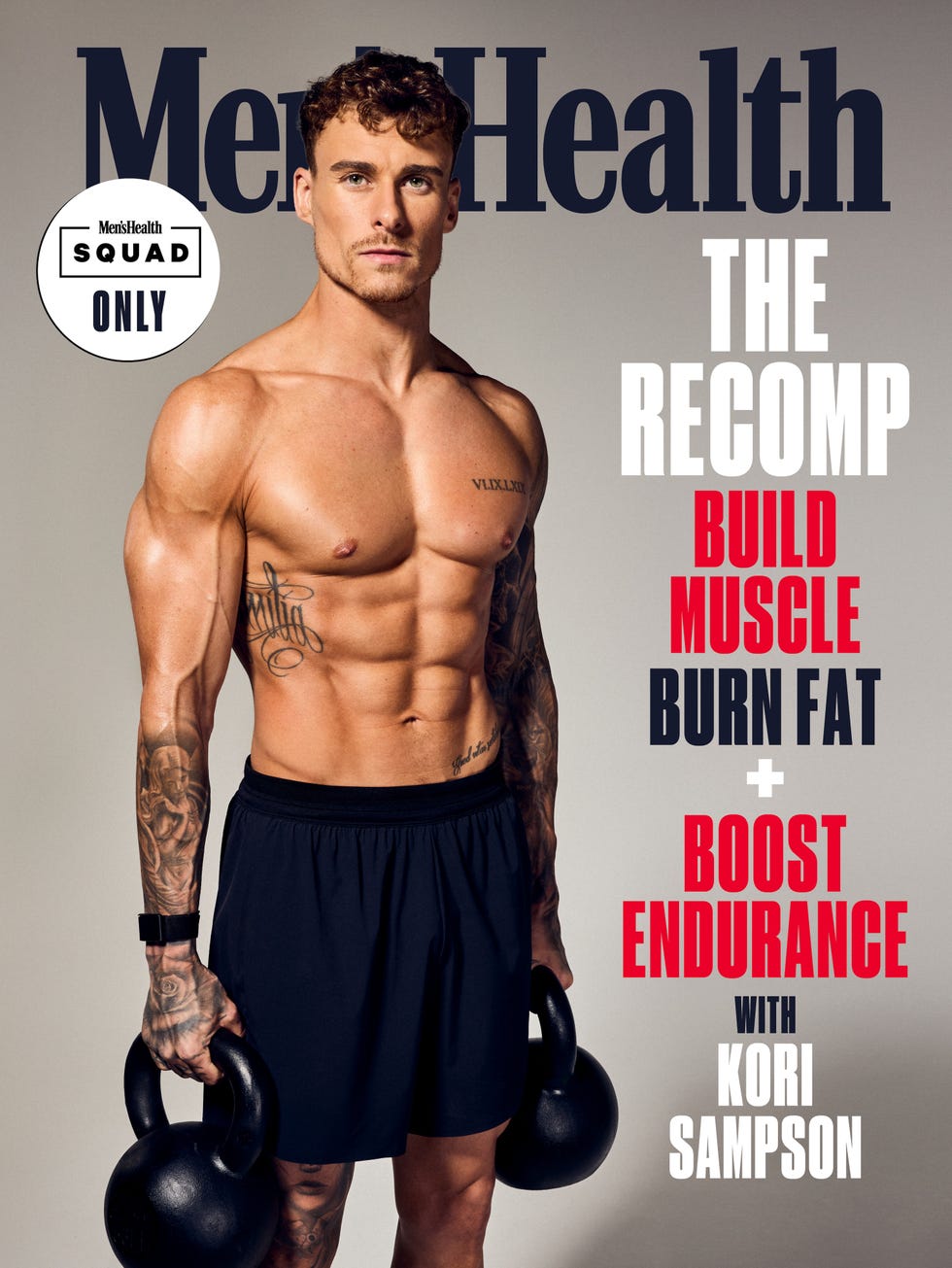
If there’s one thing Kori Sampson knows, it’s how to optimise your body composition for performance. To tap into his knowledge as an elite athlete and coach, we asked him to create a 4-week plan to help you move faster, recover quicker and keep pushing when the fatigue sets in – all while improving your muscle-to-fat ratio.
Ready to build muscle, burn fat and come out the other side looking, feeling and performing better? Click here to get 14 days of free access to the plan via the Men’s Health app.