
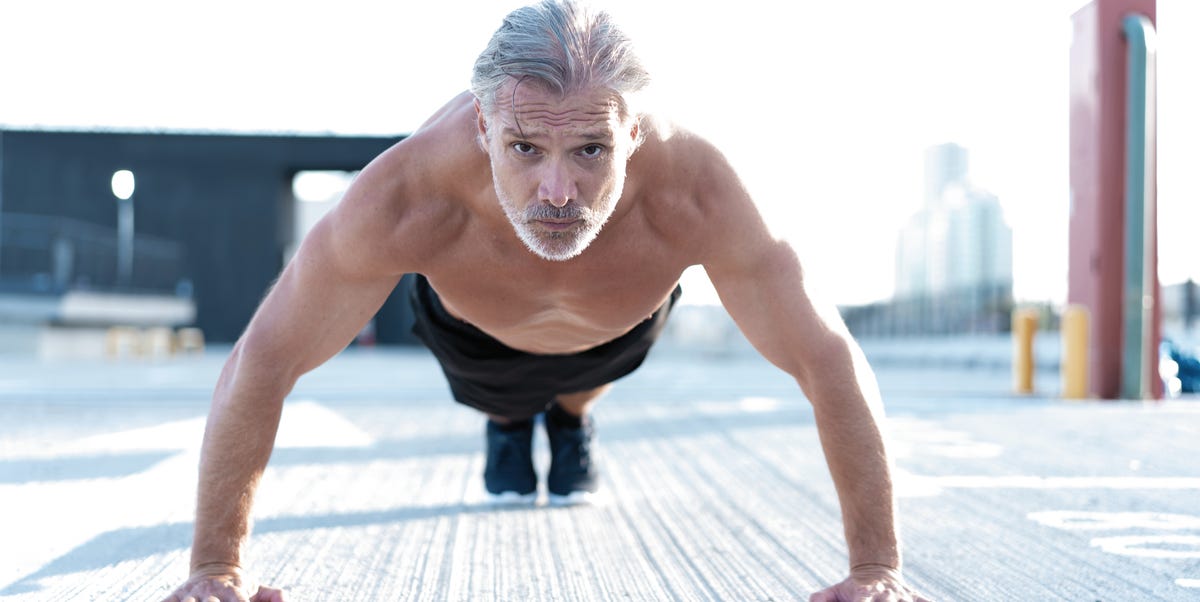
People love the idea of taking their training outdoors – perhaps inspired by thoughts of Rocky-style training montages. But the real question isn’t, ‘Can I train outdoors?’ It’s: ‘Can I really push my fitness on outside the confines of a purpose-built gym?’
I’m pleased to report that you absolutely can.
But before we get into how, let’s look at why you might want to. Because the benefits of outdoor training extend well beyond feeling like prime Stallone.
Why Outdoor Training Is Better Than You Think
First up: vitamin D. Obviously. Around 40% of people in the UK are deficient, which can negatively affect muscle function, strength and immune health. A 2011 study, meanwhile, found that men with higher vitamin D levels also had significantly higher testosterone than their deficient counterparts. Then there’s heat adaptation. Training in warmer outdoor conditions can increase plasma volume, improve your body’s cooling response and lower your heart rate at the same workload.
Next comes adherence, effort and enjoyment. Yes, training in the sun is more enjoyable, but you’re also more likely to train harder and stick with it. Studies suggest people who exercise outdoors are more likely to maintain the habit long term – and consistency is often the missing ingredient when it comes to making real progress.
The physical benefits aside, training outdoors can also provide a psychological upgrade. Exposure to natural environments has been shown to improve attention, cognition and creativity. One study found a 50% improvement in creative problem-solving after time spent in nature. A meta-analysis on green exercise also concluded that just five minutes of outdoor activity improved mood and self-esteem, while regular exercise in natural environments is associated with lower cortisol levels and fewer symptoms of anxiety and depression.
Can You Build Muscle Without a Gym?
That’s all well and good, but perhaps a little woolly if we’re talking about genuinely improving strength and muscle. Surely ditching the gym means your gains are about to fall off a cliff?
Maybe not.
Multiple studies have shown that bodyweight training can match weight training for muscle activation when intensity is comparable. In fact, a 2017 study found that low-load training to failure – including bodyweight exercises – produced similar hypertrophy to heavy lifting. The key phrases there are ‘matched intensity’ and ‘to failure’.
If you want to make progress, you can’t treat outdoor training like a holiday. You have to attack sets of press-ups, pull-ups, dips, jumps and sprints with the same intent you would in the gym.
Without external load, intensity becomes your overload.
In the absence of barbells and machines, that means pushing your sets to failure, then squeezing out another rep or two if you can do so safely. And it means doing so consistently. Think ‘daily practice’ rather than ‘chest day followed by two days off’.
If you’re willing to invest in even a small amount of kit, the possibilities expand dramatically. A heavy kettlebell or a couple of dumbbells are more than enough to build serious strength. In fact, without an entire gym full of machines to distract you, you’re left with the basics – and very little to hide behind.
Again, though, one caveat: outdoor training isn’t a sojourn. Great results still require great effort. Buy weights that challenge you. Master gymnastic rings. Chase more pull-ups than you ever thought possible. Hard bodies are still built through hard work.
Personally, I like the idea of a seasonal approach: heavy winters spent chasing strength indoors, followed by summers built around outdoor conditioning, bodyweight skills and endurance. On average, we get around 80 summers in our lives. Surely one of them is worth dedicating to seeing what your body is really capable of?
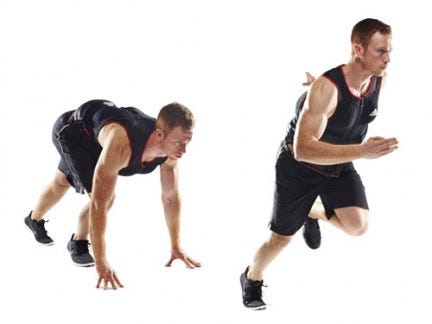 Try This Outdoor Workout
Start your outside training regimen with this spicy sprint session
Every minute on the minute perform:
50m max effort sprint (or 2 x 25m shuttles)1 x pull-up2 x push-upRest for the remainder of the minute.Each minute add an additional rep to the pull-ups and 2 reps to the push-ups. Workout ends when you can no longer fit the prescribed reps into 60s.
If there’s one thing Kori Sampson knows, it’s how to optimise your body composition for performance. To tap into his knowledge as an elite athlete and coach, we asked him to create a 4-week plan to help you move faster, recover quicker and keep pushing when the fatigue sets in – all while improving your muscle-to-fat ratio.
Ready to build muscle, burn fat and come out the other side looking, feeling and performing better? Click here to get 14 days of free access to the plan via the Men’s Health app.