Long gone are the days when social media was dominated solely by incredibly jacked 20-somethings sweating it out in the gym. These days, influencers of all ages are proving that building muscle isn’t just a young man’s game.
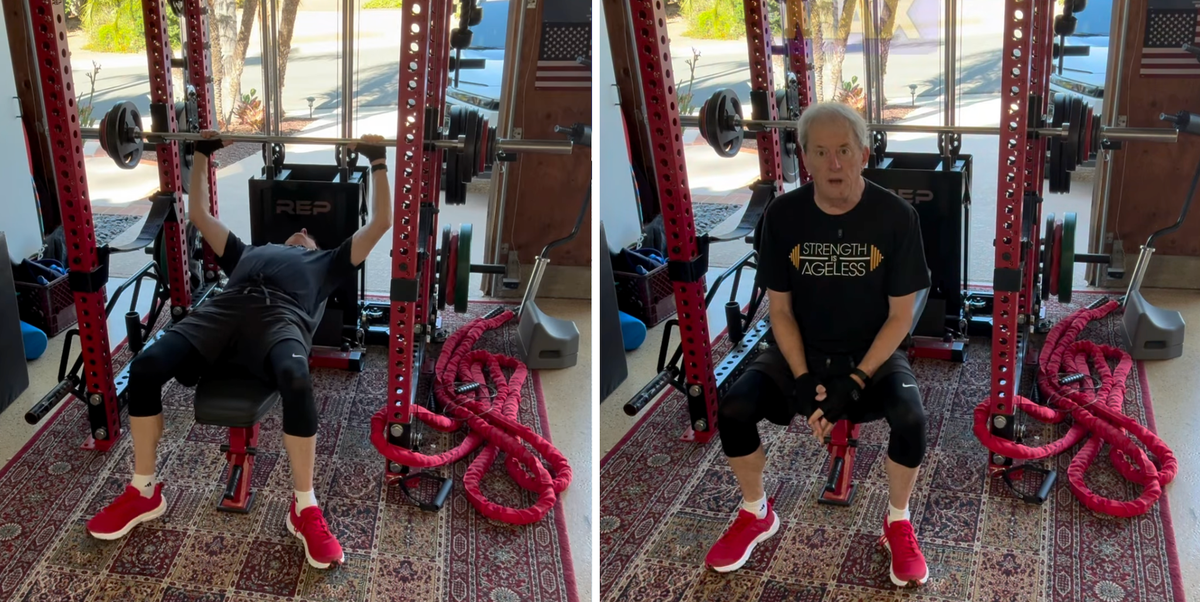
At 75, Bernie Rhinerson is leading the way. On Instagram, he regularly shares how he trains to stay fit, active and healthy – both now and for the years ahead – along with the techniques he uses to keep making progress.
In a recent post, he highlighted the five things he focuses on when bench pressing to continue building muscle in his seventies.
‘Building muscle in your 70s is a challenge, but it’s possible,’ he wrote. ‘I do three to four weightlifting sessions a week, including one bench press session. I have an online coach and I’ve learned the cues that help me make progress.
‘Pushing my body at age 75 to maintain and grow muscle is how I’m preparing for the tougher years ahead.’
Bernie Rhinerson’s 5 Bench Press Rules1. Attack Each Set with Intensity
Intensity is the first thing Rhinerson focuses on, particularly his tempo during each set.
‘I try to attack each set with intensity,’ he wrote. ‘I maintain a faster tempo in the early reps then slow as I focus to end the set.’
Explosive reps can help develop power, while slowing down towards the end of a challenging set increases time under tension and helps you maintain good technique as fatigue builds.
2. Use a Full Range of Motion
To get the most from every rep, Rhinerson makes sure he lowers the bar all the way to his chest before pressing back to lockout.
‘Each rep is a full range down to touch my chest then push to the top,’ he explained.
3. Drive Through Your Legs
Leg drive is one of the simplest ways to improve your bench press while creating more full-body tension.
It’s also one of the cues that helped Men’s Health cover star Brett Goldstein add kilos to his bench press.
‘Bench press is a full-body compound movement requiring more than just arms and chest,’ Rhinerson said. ‘I push my feet to the floor and use my legs to help me drive the bar up.’
4. Put in Serious Effort
As we get older, it’s tempting to assume we should automatically lift lighter weights. Rhinerson doesn’t subscribe to that idea.
‘In the later reps I put in full effort to complete the set goal,’ he explained, suggesting he’s using a weight that’s challenging enough to make the final reps count.
5. Stop Just Short of Failure
Although Rhinerson trains hard, he also knows when to stop.
‘I end my set at near failure when I know I don’t have another rep in me,’ he said. ‘That will create the muscle stimulus for growth.’
Research suggests that training close to failure – stopping with around one to three reps left in the tank – can produce similar muscle-building results to training to complete failure.
Leaving that small buffer can also help reduce fatigue and potentially lower your injury risk, which becomes increasingly important as recovery slows with age.
If there’s one thing Kori Sampson knows, it’s how to optimise your body composition for performance. To tap into his knowledge as an elite athlete and coach, we asked him to create a 4-week plan to help you move faster, recover quicker and keep pushing when the fatigue sets in – all while improving your muscle-to-fat ratio.
Ready to build muscle, burn fat and come out the other side looking, feeling and performing better? Click here to get 14 days of free access to the plan via the Men’s Health app.