
 2 min read
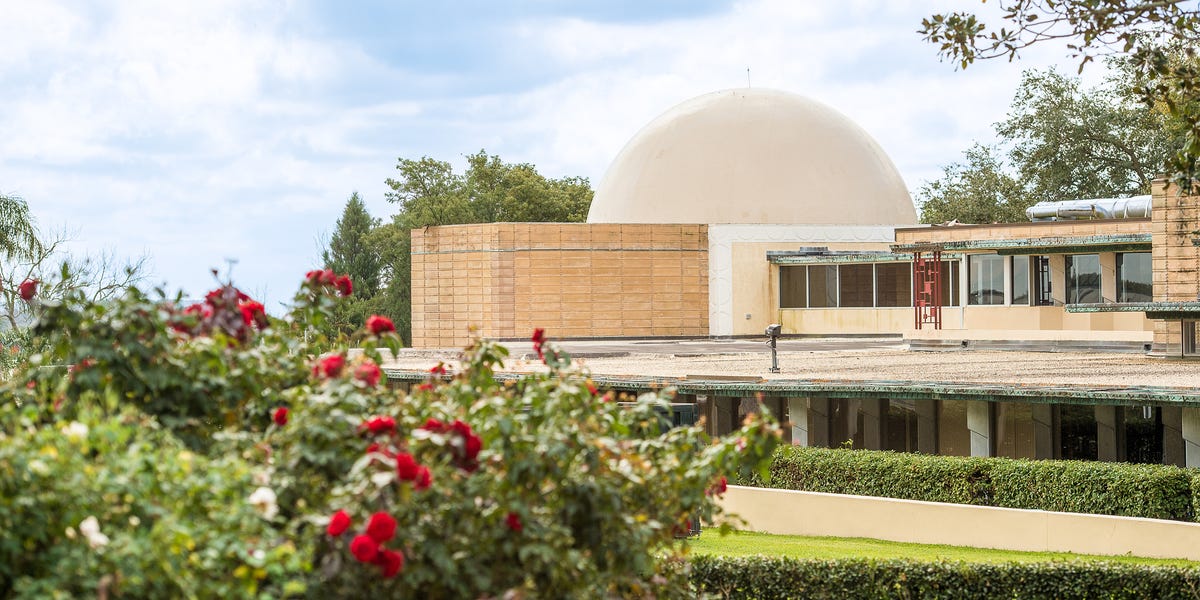
The only planetarium that Frank Lloyd Wright ever built shut down in 2004, more than four decades after the famous American architect completed the dome-topped structure on the grounds of Florida Southern College (FSC). The projector died, according to the Lakeland-based school, rendering the building functionally obsolete.
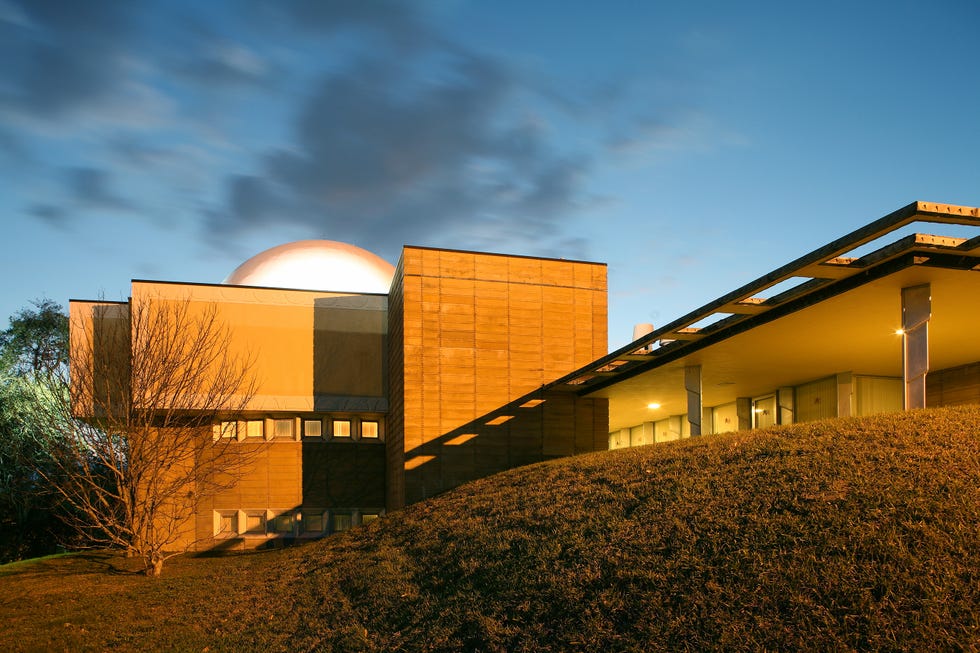
Now, the entire planetarium—with a new, state-of-the-art projector—just emerged from a six-year restoration and is once again welcoming students and the public.
 Florida Southern College/Robin C. Hill
The newly restored Planetarium at Florida Southern College.
Led by campus architect Jeff Baker of MCWB Architects, the long-awaited project is part of a larger effort by FSC to revive all 13 of its buildings by Wright, who conceived a master plan called “Child of the Sun” for the Lakeland college between 1938 and 1958. Complete with academic buildings, esplanades, chapels, and a library, the 113-acre campus is home to the largest collection of Wright-designed buildings anywhere in the world. In 2012, the National Park Service granted National Historic Landmark status to the school.
 Florida Southern College
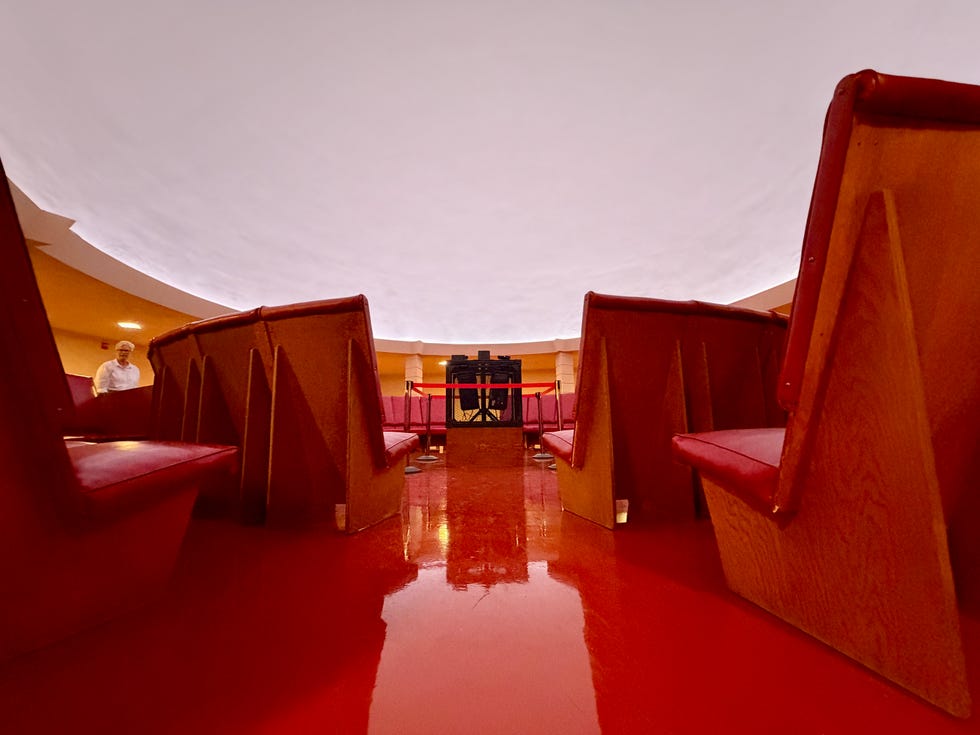
The project restored Wright’s “Cherokee red” flooring and original seating arrangement.
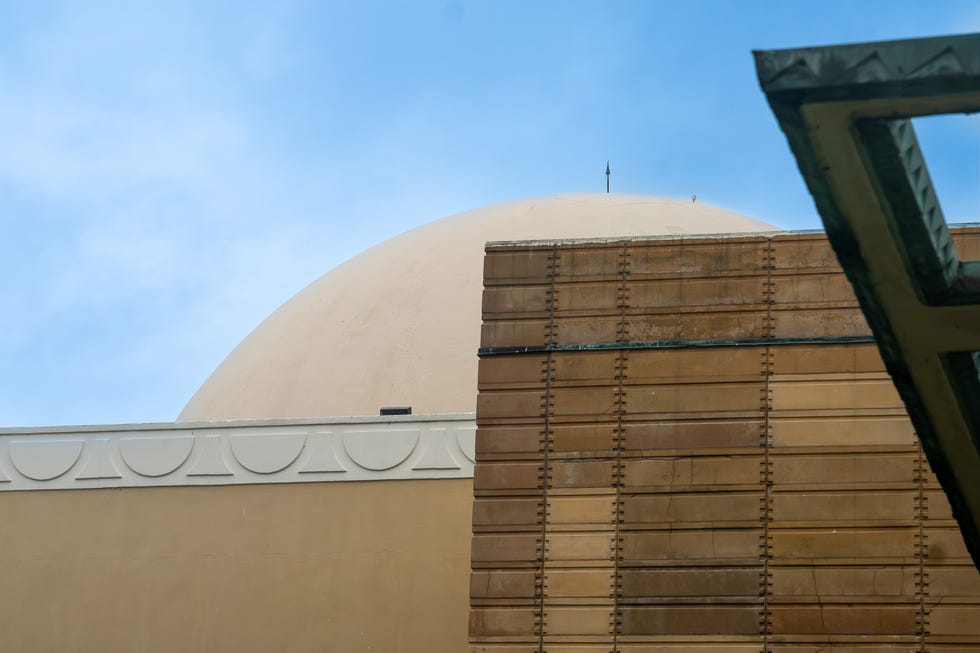
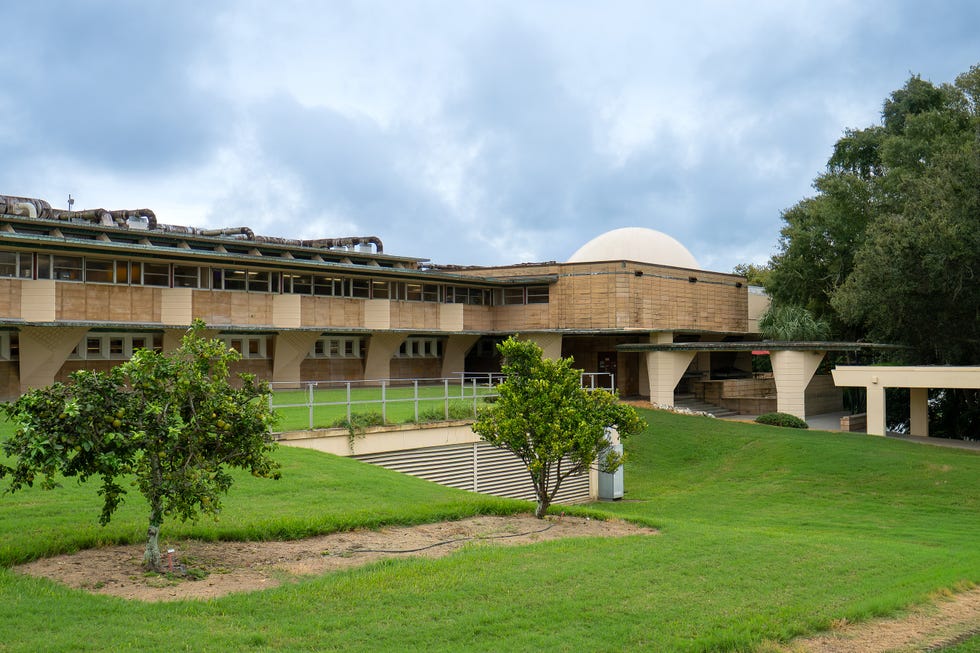
The two-phase renovation of the planetarium, which is located in the Polk Science Building, began in 2021 with the exterior. The team updated the roof, flashing (weatherproofing), and stucco cladding, and replaced 280 custom textile-block tiles on the facade. Wright developed his signature textile-block system in the 1920s, applying geometric patterns to hand-cast concrete tiles and then sheathing both exteriors and interiors of his buildings to create a tactile, woven look. The planetarium’s tiles are among the architect’s most straightforward, defined by simple horizontal bands and a vertical “stitching” motif.
 Florida Southern College
A detail shot of the textile-block tiles.
By 2023, the project moved indoors. The main objective with the interior was to restore Wright’s original vision, which had been augmented through the years with awkward additions, like a computer closet from the 1980s.
Now, formerly deep-blue walls are a calming neutral hue, while the flooring is back to “Cherokee Red,” another Wright signature found throughout many of his Usonian designs. Local artisans also collaborated on restoring the structure’s 60-seat theater, reviving the original circular floor plan with a seating system crafted out of plywood and red vinyl upholstery.
 Florida Southern College
The Polk Science Building at Florida Southern College.
Capping off the project is the addition of a new Cosm projector and Bowens sound system, both of which provide state-of-the-art functionality befitting a modern planetarium. Perhaps best of all, it’s not just FSC students who will benefit: The public can experience the planetarium as intended through a series of four rotating shows each week. Among the scheduled offerings is “Destination Mars: The New Frontier,” which focuses on humanity’s epic endeavors to the Red Planet.
“Reopening the planetarium allows us to bring an important part of Florida Southern’s history back to life while creating new opportunities for our students and the community,” said Tory King, director of tourism operations and visitor experience at FSC, in a statement. “The architectural restoration brought the space back, and the new technology now allows us to return it to active educational and public use.”
Tickets are $20 per person and $15 per person for families and groups of four or more.

Geoffrey Montes is an associate editor at ELLE Decor with a serious love for all things real estate and design. Before that, he worked at Architectural Digest, Galerie, and Preservation magazines, covering everything from jaw-dropping listings to world-famous architects and design events like Salone del Mobile and Homo Faber.