
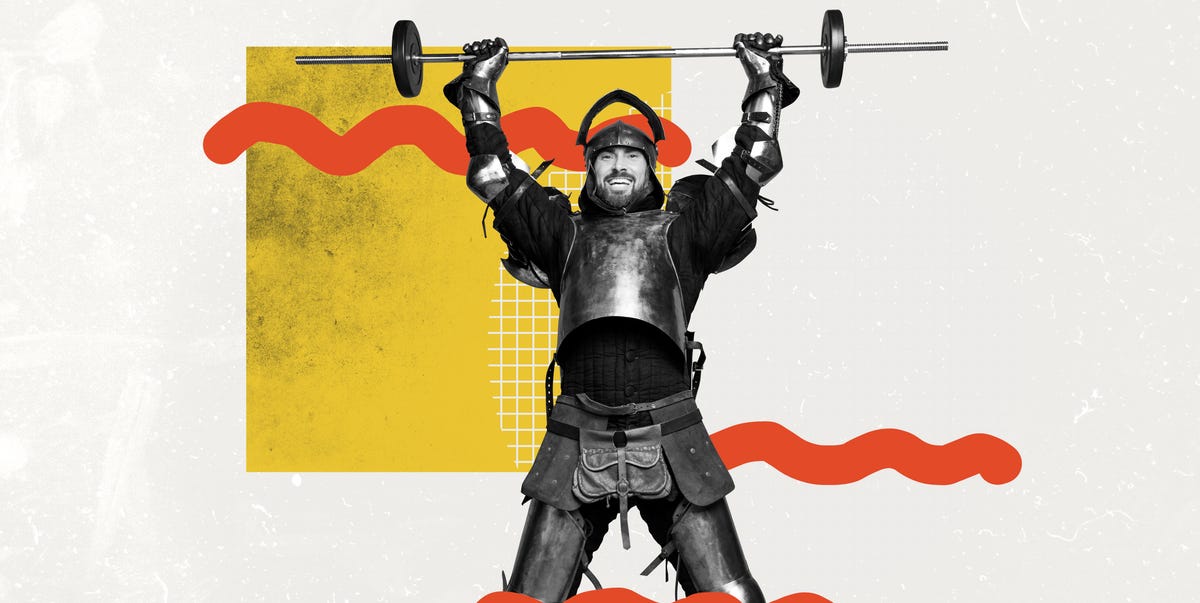
While we might be spending extortionate amounts of money on memberships in dark, bougie basement gyms, medieval knights were building strength and muscle long before the modern gym existed. Weighed down by heavy suits of armour, they needed the strength and endurance to ride into battle on horseback, wield swords and fight at close range.
Their physical preparation ranged from lifting cumbersome stones to wrestling, jumping and climbing walls. In fact, their training wouldn’t look wildly out of place in a modern-day strength and conditioning programme, with a bit of parkour thrown in.
Ultramarathon runner and historical researcher James Pieratt, founder of Wild Hunt Conditioning, recently explored six training methods used by medieval knights in a YouTube video, explaining how these practices helped develop strength, build muscle and improve athleticism for the battlefield. And better yet, no swords or horses are needed to give them a go.
6 Medieval Knight Training Methods That Still Work Today
Anthony Blasko
According to Pieratt, knights were practising movements similar to those used in modern plyometric training centuries ago.
‘It may seem strange to picture medieval knights training like an NFL player or an Olympic sprinter, but plyos were a huge staple of knightly training.’
‘This ranged from performing jumps and skips in full armor to doing explosive throws and performing shot puts with stones. Just like the medicine balls we see used today by professional athletes and fighters,’ he says.
Pieratt also references 15th-century swordmaster Hans Talhoffer, who encouraged knights to practise a variety of physical pursuits, including throwing stones, jumping, fencing and wrestling. These movements share similarities with modern plyometric exercises, which are used to develop explosive power and athletic performance.
Try it today: Box jumps, broad jumps, squat jumps and medicine ball throws are all effective ways to develop explosive power. Focus on moving explosively and powerfully rather than accumulating high reps.
2. Wrestling and Martial Arts
Knights needed to be capable fighters even when they weren’t holding a weapon. Pieratt says one of the martial arts practised in medieval Europe was known as ‘Ringen’, a form of grappling incorporating throws, trips, joint locks and close-contact fighting.
‘Knights also practiced martial arts with their martial art of choice being something called Ringen,’ says Pieratt. ‘To modernise Ringen would look almost exactly like a combination of wrestling and jiu-jitsu with throws, trips, joint locks, chokes, and head control and clinch fighting.’
Pieratt draws comparisons with Japanese jiu-jitsu, which also developed techniques for fighting at close quarters, including against armoured opponents.
Try it today: Wrestling, judo or Brazilian jiu-jitsu classes can develop similar qualities. Alternatively, exercises such as farmer’s carries and kettlebell holds can help develop the grip strength and full-body conditioning required for grappling.
Gymnastics might not be the first thing that comes to mind when imagining a medieval knight, but agility and coordination were essential qualities for navigating obstacles and moving effectively in armour.
‘They also did gymnastics in full armor, particularly vaulting over or onto a wooden horse,’ explains Pieratt.
He jokes that this ‘makes me really want to see what would happen at the next Olympic Games if gymnasts came out dressed in full armor and tried to do the same thing.’
Although the idea might seem unusual, vaulting demands considerable upper-body strength, explosive power, balance and coordination, all qualities that remain relevant to athletic performance today.
Try it today: You can incorporate dips, pull-ups, bear crawls, hanging knee raises and other calisthenic movements into your training. These can help develop coordination and strength across multiple muscle groups.
4. Weighted Vest Training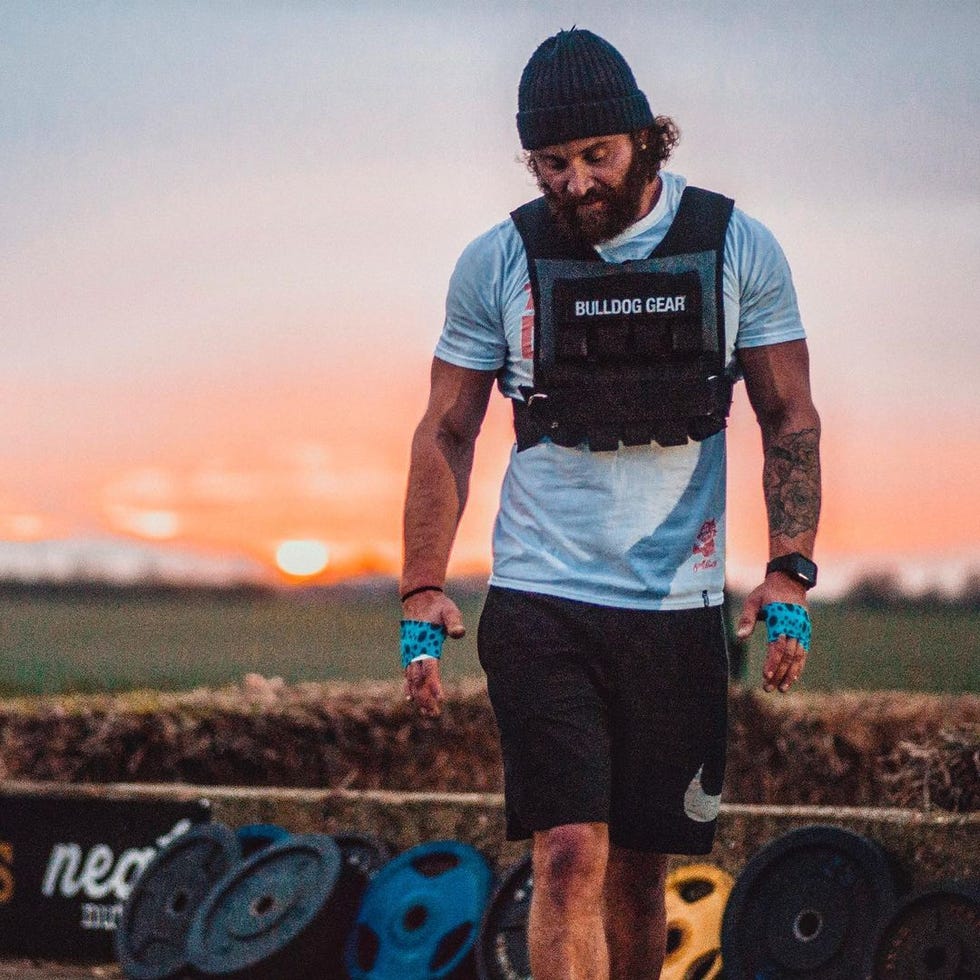
Long before weighted vests became a kit-bag staple, knights were performing bodyweight exercises while wearing heavy armour.
‘And of course, they also did basic calisthenics like we use today. The only difference is they performed theirs in full armor,’ says Pieratt.
‘Elite modern strength coaches like Jim Wendler are huge proponents of doing calisthenics like push-ups, pull-ups, and squats wearing weighted vests. And I personally think that these are an amazing way to build all round real world strength,’ he says. ‘If you’re someone who does calisthenics, this is an incredible way to up your game.’
Adding weight to familiar bodyweight movements increases the resistance your muscles must overcome, providing a straightforward way to progressively overload exercises as you get stronger.
Try it today: Once you’ve mastered standard push-ups, pull-ups and squats, consider introducing a weighted vest or other suitable external resistance. Start light and gradually increase the load while maintaining good technique.
5. Strongman Training
‘Now, for building raw brute strength, knights used the tried-and-true method of training like strongmen, lifting large stones and logs by performing deadlifts, presses, and weighted shoulder or Zercher-style carries,’ explains Pieratt.
These movements required full-body strength, particularly through the legs, back, shoulders and core. Lifting awkwardly shaped objects also challenges stability and grip strength, making them useful for developing practical strength beyond conventional gym exercises.
Try it today: Atlas carries, deadlifts, sandbag lifts, overhead presses and Zercher carries are modern alternatives. Loaded carries are particularly useful for developing grip strength and trunk stability.
6. Wall Running and Climbing
According to Pieratt, knights also practised a form of obstacle climbing known as Wandlaufen, which he likens to modern parkour.
‘Surprisingly, knights also did parkour. Back then, it was called wall running, known in medieval German training manuals as Wandlaufen.’
He describes the training as consisting of ‘exercise like running up a wall and grabbing the top edge, climbing two narrow walls using pressure from your hands and your feet, climbing up a corner where two walls meet, or climbing over walls and obstacles, often wearing heavy plate armor.’
These activities demanded agility, coordination and the ability to move your own bodyweight efficiently, particularly when negotiating difficult terrain.
Try it today: Rope climbs, assisted pull-ups, dead hangs and obstacle-course training can develop some of the same physical qualities. You can also incorporate step-ups to improve lower-body strength and coordination.
If there’s one thing Kori Sampson knows, it’s how to optimise your body composition for performance. To tap into his knowledge as an elite athlete and coach, we asked him to create a 4-week plan to help you move faster, recover quicker and keep pushing when the fatigue sets in – all while improving your muscle-to-fat ratio.
Ready to build muscle, burn fat and come out the other side looking, feeling and performing better? Click here to get 14 days of free access to the plan via the Men’s Health app.