

January 19, 2026 — 4:00am
Save
You have reached your maximum number of saved items.
Remove items from your saved list to add more.
Save this article for later
Add articles to your saved list and come back to them anytime.
Got it
AAA
There’s a basic paradox at the heart of our biology that we press on every time we cross the threshold into the gym.
Mammals are hard-wired energy-minimisers. We evolved in a time of caloric scarcity. Wasting it on unnecessary movement was unwise. Modern hunter-gatherers, those paragons of a healthy, active life in nature, spend more time idle than us westerners.
 Why is exercise so good for you? It’s complicated.Nicolas Walker
Yet the sin of sloth is strongly correlated with poor health; adding exercise to your life cuts your risk of death from any cause by 33 per cent, per a 2008 meta-analysis that included data from 883,372 people.
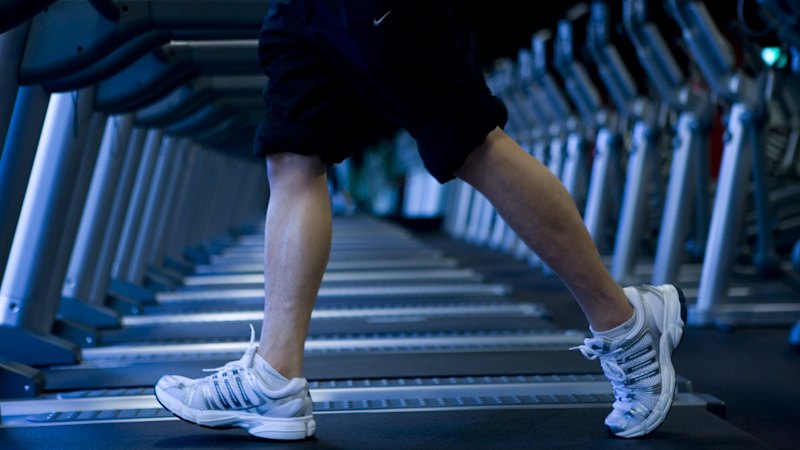
In contrast to our natural sloth, that data suggests we should deliberately do meaningless exercise, like running on a treadmill to nowhere. Why?
Related Article
One explanation is beginning to emerge from an unexpected field of study: the molecular biology of exercise, which focuses on the cascade of molecules that emerges from our muscles and courses through our bodies as we work out.
“It’s a relatively new field,” says Professor John Hawley, director of the Centre for Human Performance and Metabolism at the Australian Catholic University.
“When I trained many, many years ago, we did not really know anywhere near what we know now.”
But what they are seeing now is “revolutionary”, he says. “It’s literally every tissue, including the brain, that’s getting a benefit.”
Muscle crosstalk
It is easy to imagine our muscles as dumb doers, arranging our joints at the command of our nervous system. This, it turns out, is wrong. In lean people, the muscles are the largest organ by weight, and they have a lot to say.
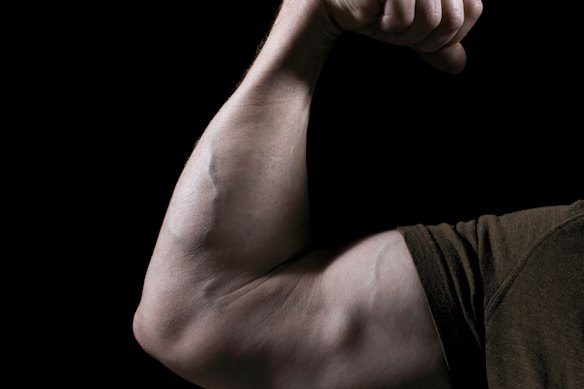 Muscles are more than just dumb doers.Alamy Stock Photo
Initially, scientists focused on what muscles were doing during exercise, rather than what they were saying or the signals they were sending. This changed 25 years ago with an Australian breakthrough.
Professor Mark Febbraio’s team was interested in IL-6, an inflammatory protein that spikes when the immune system spots an invader and, for reasons no one understood at the time, when we exercise.
Related Article
“People just thought this was because exercise was putting a stress on immune cells,” says Febbraio, head of the Cellular and Molecular Metabolism Laboratory at Monash University. When they looked at the immune cells during exercise, they discovered they were producing less IL-6, not more.
Where was it coming from? The muscles, Febbraio’s team discovered, pushed it out during each contraction. The team followed the protein’s journey and found it in the liver, triggering the release of glucose to fuel the muscles.
“It was acting as a metabolic crosstalk messenger,” says Febbraio. They called it a ‘myokine’ – a hormone released by the muscle. “There are now hundreds that have been identified.”
Some of the chemicals released are part of the muscle adapting to the stimulus, getting bigger and stronger. But the muscle “also needs to tell other tissues around the body it is exercising,” says Dr Nolan Hoffman, a researcher and colleague of Hawley’s at the Australian Catholic University.
Myokines that talk directly to the heart, liver, fat cells, bones, and the nervous system itself have now been found. Scientists call this inter-organ communication – or, more poetically, muscle crosstalk.
They are released in all sorts of ways: directly into the bloodstream, but also packaged into small bubbles, known as vesicles, that transit through the circulation to their target organ. These packets contain all sorts of cargo, from proteins and signalling molecules to strips of genetic information, able to directly alter gene expression in the target cell.
In one study of men asked to cycle for an hour and then spend four hours resting, covered by Hawley and Hoffman in a newly-published review of the field, levels of more than 300 proteins jumped. Another study, looking at a wider range of molecules beyond just proteins, found close to 10,000 chemicals significantly up-or-down regulated after exercise – a flurry of activity the researchers termed “molecular choreography”.
The choreography appears to be good for us. Years after discovering IL-6 levels jumped after exercise, Febbraio was able to show it was a potent anti-inflammatory.
Related Article
He had half a group of volunteers spend three hours cycling before everyone received a shot of E.coli toxin. The half who had done nothing had a strong inflammatory reaction. The cyclists did not.
More recently, scientists have been studying cathepsin B, a protein released by the muscles that facilitates the creation of new neurons in the brain.
These molecules released during exercise can provide systemic benefits in reducing inflammation, triggering new blood vessel growth and regeneration, turning white fat into healthier brown fat, increasing insulin sensitivity, or the release of factors known to protect cells from stress. IL-6 itself was later shown to slow stomach emptying time and cut insulin levels and blood sugar spikes – similar effects to GLP-1 drugs like Ozempic.
“Ultimately, I think the connection of all these packages around the body, these switches, are why we are getting all these benefits,” says Hoffman.
How do we use this information?Editor’s pick
Let’s consider again the sloth paradox. We are healthiest when we are moving, but we are hard-wired for laziness. What’s really going on here?
Evidence from muscle crosstalk suggests we are thinking about the problem backwards. It is not that we are adding exercise.
“In caveman’s days, there were no gyms. Fitness, exercise, it wasn’t even exercise– it was for survival and food,” says Hawley. “We’ve engineered it out of our society.”
Exercise is just replicating our natural state, as movers, he says.
“I work in a lab with a bunch of exercise freaks, but I’m not one of them,” says Hoffman. His takeaway message: “Any form of exercise is good for you. As long as it’s safe. It’s about what you enjoy.
“People think of it too much as a job. If you like nature, get out for a hike. Gardening – that might get your body moving, and you might get health benefits, even if you’re not doing very intense exercise.”
Start the day with a summary of the day’s most important and interesting stories, analysis and insights. Sign up for our Morning Edition newsletter.
Save
You have reached your maximum number of saved items.
Remove items from your saved list to add more.
From our partners