
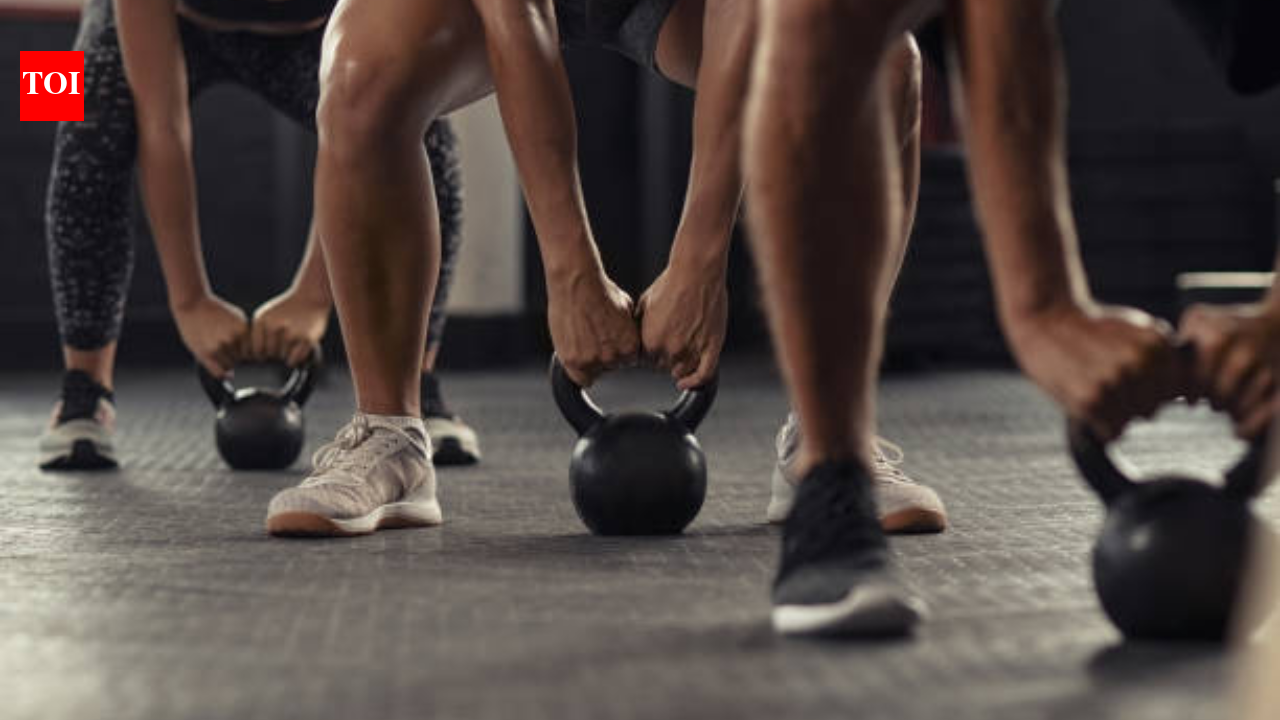
 Walk into most gyms these days and you’ll notice something. Fewer people are hopping onto the treadmills, ellipticals, or those intimidating weight machines that line the walls. Instead, they’re moving in ways that look… different. Kettlebells swing. Medicine balls thud against the floor. Bodies twist, bend, squat, and lunge in patterns that seem oddly natural. So what is functional fitness anyway? “Functional fitness focuses on training the body to perform everyday movements more efficiently and safely. Unlike traditional gym workouts that often isolate individual muscles using machines, functional training uses compound, multi-joint movements such as squatting, pushing, pulling, twisting and lifting. These exercises mimic real-life activities and improve balance, coordination, flexibility and joint stability, making the body stronger for daily tasks rather than just aesthetic goals,” Dr. Rakesh Rajput, Director & HOD, Orthopaedics, CK Birla Hospitals, CMRI told TOI Health.
No Gym Needed: Try This Effective Home Workout To Get Fit Quickly
And that’s exactly why so many people are ditching machines. Machines are… well, kind of one-dimensional. You push, pull, or press in a single plane of motion, usually sitting down, while your body’s other muscles mostly hang out. Functional exercises, on the other hand, force your whole body to coordinate. Your core has to stabilize. Your arms and legs have to work together. Even balance comes into play. It’s tiring, yes, but also strangely satisfying. You feel like you’re actually doing something that matters.We spoke to Dr. Rakesh Rajput to answer some of the most common questions about functional training, from weight loss to joint health.
How effective is functional fitness for weight loss or muscle building compared to machines?
Dr Rakesh: It can be effective, but it does not work in the same way as machine training. Functional workouts generally involve more muscles at once, which increases overall effort. That matters for energy use.Machines are useful for targeted muscle strengthening. Functional training builds strength that supports movement and endurance. The changes are not always obvious early on. Often people notice stamina or control improving first. Muscle gain may be less visible, but it tends to be more usable. For many individuals, that makes it easier to continue.
Are there age or health limitations for people wanting to start functional training?
Dr Rakesh: There is no strict age limit. Age alone is not the deciding factor.What matters more is health status and activity history. Someone who has not exercised for years, or who has medical conditions, should not start aggressively. That is where problems occur. Exercises need to be adjusted. Progression needs time. Technique matters more than load. When those things are respected, functional training can work across age groups.
Can someone with back, knee, or joint issues still benefit from functional fitness?
Dr Rakesh: Yes, often they can.Strengthening the muscles around joints can improve support. That is generally helpful. Issues tend to arise when movements are rushed or poorly supervised. For people with back or joint concerns, low-impact movements, slower pace, and attention to posture are important. Core engagement matters here. So does control. In many cases, guidance makes a difference.
What are the most common mistakes people make when switching from machines to functional workouts, and how can they avoid them?
Dr Rakesh: The most common issue is doing too much too early. Complex movements are attempted before basic strength or mobility is established.Warm-ups are often skipped. Alignment is ignored. Speed becomes the focus instead of control. These things increase injury risk. Starting with simple movements and allowing time to adapt is important. Functional training is not meant to be rushed. It works better when capacity is built gradually.People are tired of “exercise for exercise’s sake.” They want strength that matters. They want workouts that feel alive, that challenge their brain and body together, that leave them exhausted but empowered. And they’re finding it in functional fitness.