
Anthony Albanese has pledged emergency action to protect Australian households and businesses from escalating global instability, as fuel shortages hit regional communities and the Reserve Bank raises interest rates for the second consecutive month.
The Prime Minister said that the government would move before the May budget but stopped short of detailing what measures were being considered.
‘We want to make sure that we do everything we can to shield the Australian economy, households and businesses from the worst of global uncertainty,’ Albanese told an Australian Automotive Dealer Association breakfast on Wednesday.
‘We won’t be waiting until the budget. We will have more to say about the actions we are taking in the days ahead.’
Albanese’s comments come after Iran effectively shut down the Strait of Hormuz, one of the world’s most important oil shipping corridors, causing global oil prices to surge after US strikes.
‘This new global challenge demonstrates that we must keep building Australia’s self-reliance and our economic resilience,’ Albanese said.
‘At a time of rapid globalisation, trade barriers coming down, new markets opening and exponential growth in the economies of our region, in particular. We cannot wait around hoping for those days to return.’
Albanese also said Australia must reduce its reliance on global supply chains and build domestic manufacturing capacity in critical minerals, clean energy and technology.

Anthony Albanese has pledged urgent action to shield Australian households from global turmoil as fuel shortages hit regional areas, petrol prices soar and the Reserve Bank delivers a second straight interest rate rise
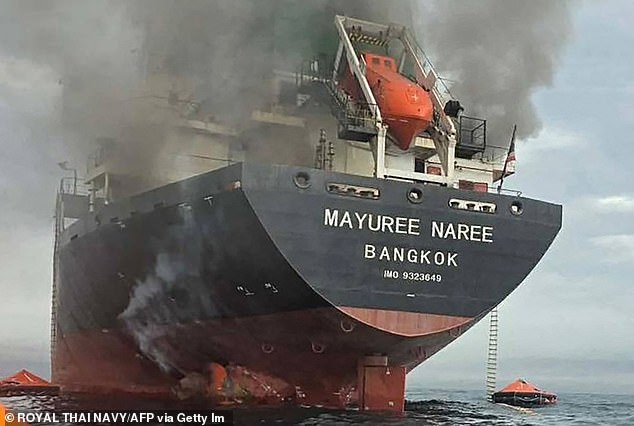
The Prime Minister will convene National Cabinet on the worsening fuel crisis after the Strait of Hormuz shutdown sent global oil prices surging
‘For Australia to compete, succeed and prosper in this decade – we have to upgrade to a new economic model,’ he said.
‘We have to build an economy that is more resilient, more self-reliant and geared to our national strengths. This is about making more things here.
‘Making the most of our traditional resources, critical minerals, clean energy – and our services, our skills and research, our digital and tech sector.
‘Areas where we can, and often do, lead the world. That’s the way forward for Australia, our own way.
‘Not trying to compete by copying from other countries. Backing our people and ourselves to succeed on our terms.’
The Prime Minister is due to meet with National Cabinet on Thursday to discuss the fuel crisis, as shortages in rural and regional areas fuel panic buying.
The crisis has pushed petrol prices to well over $2.20 a litre and diesel to more than $2.60 a litre in the cities – and even higher in regional areas.
Energy Minister Chris Bowen said fuel rationing was not being considered at the moment, but warned the government would respond if the situation worsened.
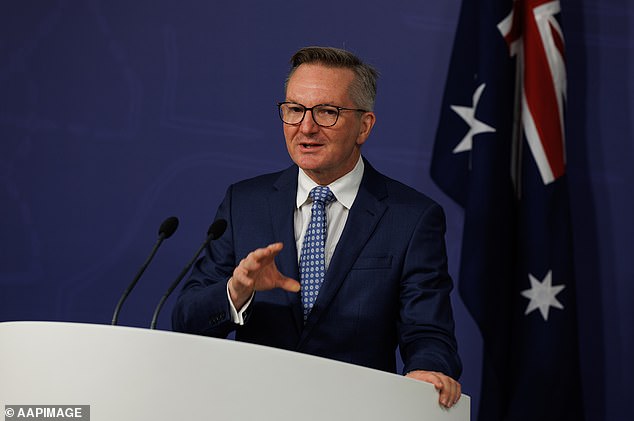
Energy minister Chris Bowen (pictured) said that fuel rationing was not being considered ‘at this point’
‘It is not rocket science to know it is a difficult international environment and that energy security is under pressure around the world,’ Bowen said.
‘Also we are very clear, our fuel supplies remain solid, in terms of what is coming in and what is being produced.
‘Rationing not a conversation that we need to have at this point. Governments will respond to emerging circumstances over coming months and we will work together on it.’
Bowen urged motorists not to panic buy.
‘Let’s focus on what we are dealing with now which is real, unacceptable shortages in rural and regional areas and rationing is not the answer to.
‘The answer is getting supply to where it is needed and people buying as much fuel as they need, not more or less.
‘There is no case for panic-buying, there is no case for not buying the fuel you need. Normal behaviour will see us return to normal supply and demand equilibrium.’
The fuel crunch is not the only pressure bearing down on households.

Aussies could face even more interest rate hikes if inflation continues to soar. Pictured: Reserve Bank governor Michele Bullock
The Reserve Bank raised interest rates for the second consecutive month by 0.25 to 4.10 per cent on Tuesday, adding roughly $90 to monthly repayments on an average mortgage, and warned the Middle East conflict could push inflation even higher and risk tipping the economy into recession.
Governor Michele Bullock said inflation was already running too hot before the war caused higher petrol prices.
‘Higher petrol prices will add to inflation, but they’re not the reason for today’s decision,’ she said.
‘Inflation was already too high, reflecting the fact that demand is outstripping supply. High fuel costs will not slow demand enough on their own to address this.’
If the conflict worsened and fuel costs kept rising, she said, inflationary pressure could cause a recession.
‘It’s still possible that if the conflict resolves, everything will turn out okay,’ she said.
‘Having said that, the board is alert to recession risks. If it does look like the world economy is in serious trouble, that will have different implications for inflation – and we will be looking very hard at what we need to do.
‘The board is going to be monitoring this very closely.
‘If we have to change tack, we will.’