
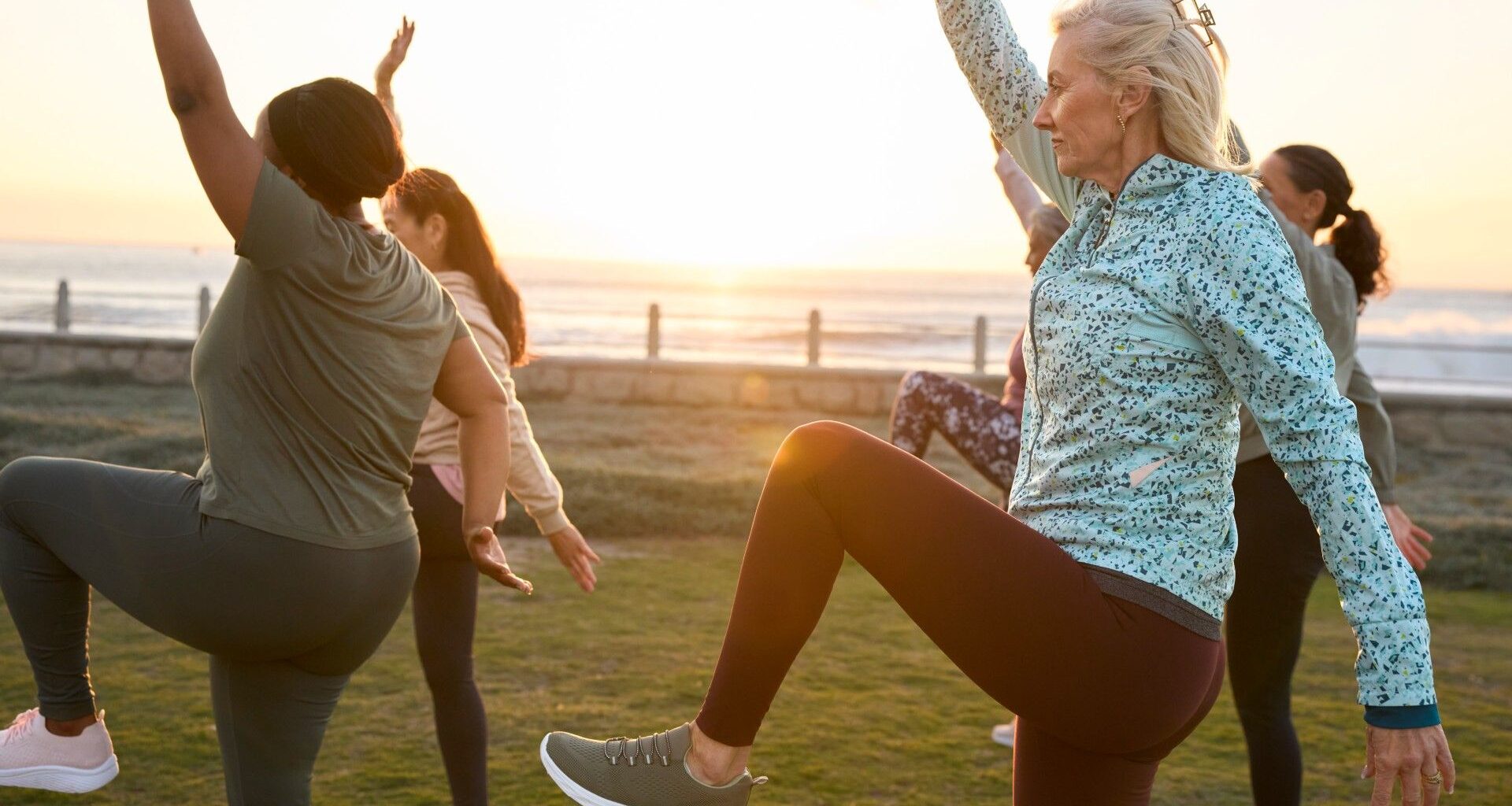
Let’s be really honest about this: How often do you think about your balance? Perhaps more often if you’re over 60, but otherwise, it doesn’t really feature in the day-to-day for many people.
As you age, and with the natural acceleration of lean muscle mass loss and bone density (especially for women transitioning through perimenopause and menopause), you might notice changes to your gait and balance. You’re not alone. And if you want to stay independent and reduce your risk of injuries or falls, you’ll need to address it eventually.
You may like
How to do the 5 balance exercises
Before we begin, it’s important to note that there’s no one-size-fits-all approach to exercise. If these exercises don’t work for you or your body, don’t do them. If you’re unsure, dealing with injury, or have a specific health condition you’re concerned about, speak with a qualified medical professional before trying a new regimen.
I like to work preventively with my clients rather than waiting until we’re trying to fix avoidable things. But it’s never too early to work on your balance, and something is better than nothing.
In fact, the approach to balance work is changing, and elite athletes and sportspeople use balance training as a major part of their regimes, including soccer player Erling Haaland, who credits BOSU balls with improving his ankle stability and proprioception.
Check out the video below, where I demonstrate each exercise, and you can find a summary of each move, too. If you’re looking for more inspiration, check out our Instagram page.
Follow Tom’s Guide fitness on Instagram for more workouts, routines, tips, and tricks.
1. Grounding technique
The idea of this is to improve your foot-ground connection. You’ll start by connecting all parts of your feet with the ground or the mat beneath you, and roll through your heels and toes, plus the outer and medial parts of your feet to establish grounding, balance and stability.
What to read next
This is designed to improve your proprioception (your body’s awareness in space) and establish your grounding technique, emotionally and physically.
Stand with your feet hip-width apart, arms by your sidesSlightly tuck your tailbone under, stand tall with a neutral spine, gaze ahead, core lightly engaged. Your shoulders should be drawn back and downBegin by pressing your little toes into the mat first, then move through the toes to your big toe, lifting, lowering and pressing each one into the mat below. Do this a few times in both directionsNext, roll from the medial to the outer parts of your feet using a gentle rocking from side to side. There’s no right or wrong, so move intuitively and change directionsFinally, roll from the heels to the tiptoes and back again. Focus on slightly lifting your heels to transfer your weight forward, then shift back to lift your toesMove between these exercises for as long as you wish.2. Calf raises
Your calf muscles assist in balance, stability, walking and running. Which is unsurprising given they connect between the knees and ankles. They’re also crucial muscles for circulation, as they act as a second heart to help pump blood back up the body and prevent pooling.
Control is everything for activation; focus on counting for three to four seconds up and down.
Stand with your feet hip-width apartKeep your arms by your sides or your hands on your hipsLean forward onto the balls of your feet and raise your heels away from the matReach as tall as you can with full controlPause at the top and squeeze your calvesSlowly lower your heels to the mat againFor an extra challenge, stand on the edge of a stable ledge or staircase with your heels off the edge so that you can drop deeper and increase the range of motion, time under tension and stretch.3. Cossack squats
Cossack squats build strength in the lower body, including the muscles and joints that assist with all lower-body movement. Think strong hips, glutes, quads, hamstrings, calves, ankles, knees and core muscles.
You can add weight to the exercise over time, but I recommend focusing on your range of motion and depth as a priority, testing overall mobility, especially in the ankles.
As you move from side to side, you’ll test balance and your ability to push through one leg to stand, then transfer your weight to the other side, which makes this a very functional movement, too.
Stand with legs wide, and toes pointed forwardEngage your core. Extend your arms in front of you, or bring your hands to your hips or chestBend your left knee and shift your weight to the left, lowering into a side lunge and straightening your right leg. Lift your right toes toward the ceiling for external rotation of the hip, or keep them facing forward to stretch the inner thighKeep your chest lifted, back straight and left heel planted. Sit your hips back as far as you canPause, then push through your left heel to stand and move straight over to the other side.4. Stiletto squats
I adore a stiletto, and even more so when you give me a stiletto squat. Sure, you can wear heels if you want to, but really, this is just supposed to mimic the position of wearing a heeled shoe.
Your ankles and feet work hard during this exercise, as do your quads. Keep your core engaged and chest lifted without leaning forward, as you’re more likely to fall forward. You can always practice by holding on to something the first time you try it, until you feel ready to go unsupported.
Add weight when you feel ready (that might be never, and this is also fine!)
Roll onto the balls of your feet as if you’re wearing high heelsSit your hips back and perform a squat, lowering slowly and with control with a straight back and proud chestPause at the bottom of the squat, then drive up to stand. Try to keep your knees tracking behind your toes and avoid rounding your back.5. Stork
The stork pose is a yoga balance that tests your stability and unilateral balance. Standing on one leg crops up in daily life, like when climbing the stairs, putting on a sock, or tying your sneaker laces.
Your hip flexibility and strength may play a role in how far you can draw your knee up, so don’t worry if you can’t move too far to begin with. You can also hold onto something until you feel more comfortable. Focus your eyegaze on an anchor point, which is anything unmoving you can see, like a couch.
Stand with your feet hip-width apart, core engagedShift your weight into your right leg, then lift your left leg away from the matDraw your left knee upward to roughly hip height with a 90-degree bend in the legPlace your hands on your hips and spread your weight through your right foot to hold the position. Avoid arching your lower back and try to stay as still as possibleSlowly, with control, lower the left legReset, then switch legs.Benefits of these exercises
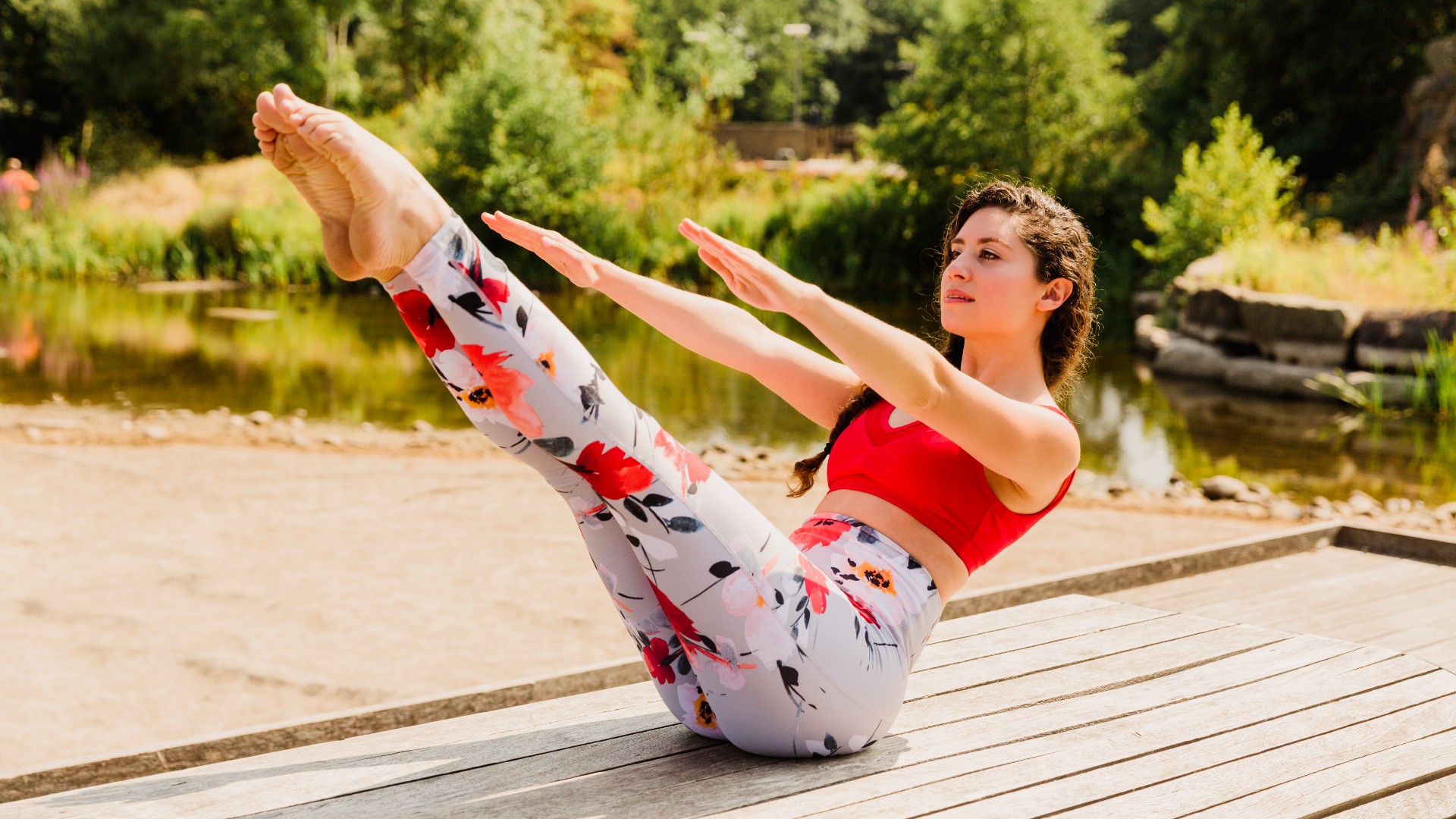
(Image credit: Getty images)
Four of the five exercises are examples of dynamic balance: the ability to stabilize while moving or changing positions. This is crucial because we rarely fall when standing or sitting still.
Notice how your center of gravity shifts as you move, especially for the stork pose.
Notice how your center of gravity shifts as you move, especially for the stork pose. Your body must realign and stabilize while dealing with this shift, which works multiple stabilizing muscles all over the body, including the glutes, hips and core.
Try to control as much of your motion as you can, which is how you can build true balance and stability. Rushing through the reps won’t really challenge the body to work hard, as momentum takes over. Even if you fall, try to keep practising with slow movements. It gets easier, I promise. You can add weight if you’d like to, but these work just as well as bodyweight exercises.
Balance work in general will help strengthen your ankles and core, which can contribute to better sports performance, like improving explosive power, agility and injury prevention.
Try a few minutes of your first exercise, then move into 8-12 reps of your calf raises, Cossack squats and stiletto squats. Take a brief rest between moves. Next, set a timer for 20-30 seconds and hold your stork pose on both sides. If you can, aim to increase the time to beyond 60 seconds (this can be over time). Aim to complete a few sets of each, if you can.
Follow Tom’s Guide fitness on Instagram for more workouts, routines, tips, and tricks.

More from Tom’s Guide