
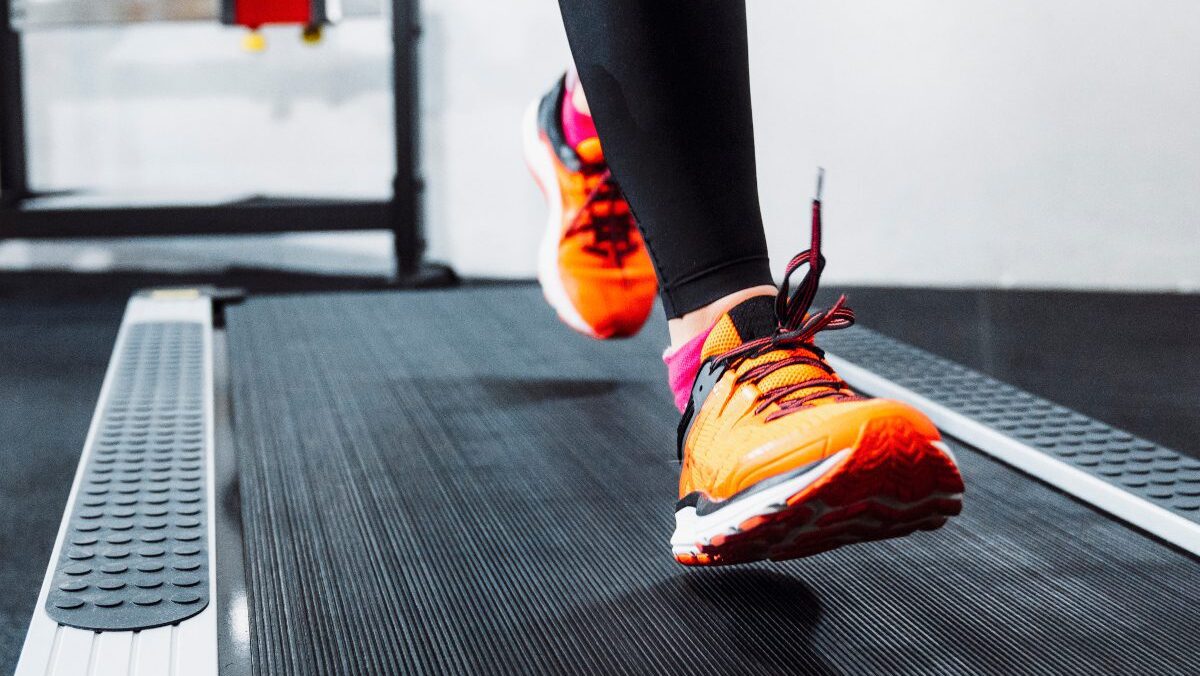
U.S. marathoner Vinny Mauri nearly made history in his sophomore marathon, and he did it with a treadmill training block. Many runners turn to the treadmill to avoid adverse weather, but for injury-prone runners, should we prioritize treadmill runs to create a controlled environment? Is it placebo? Regardless, conveyor belt running has become increasingly popular among elites and everyday athletes, and it is even drawing attention from World Athletics, which created the inaugural Treadmill World Championships. So what’s the draw to the treadmill over the road?

Controlled environment
The main draw of treadmill running is that you can set your training conditions to your exact specifications; you can set a strict pace to focus on, whether that’s easy running or tempo sessions, and you won’t accidentally run too fast or too slow. For those of us who struggle to control zone two runs, switching to a treadmill to avoid overexerting your body offers a lot of potential. On the performance side, running at your target marathon pace without disruptions, turns or added weight on one side (due to uneven surfaces) is ideal for runners who struggle to stick to their pacing.
In that lens, a completely straight route with no stoplights is quite rare. When you live in the city, you can’t run without stepping off the sidewalk, dodging pedestrians or constantly altering your pace. If you think the solution is the track, most rubberized tracks in cities like Toronto are either inaccessible or overcrowded. Publicly accessible ones also tend to keep runners moving counter-clockwise, but many pros switch directions to avoid putting too much load on the inside of the right knee and the outside of the left knee.
The controlled environment and pacing of indoor running are major reasons Mauri spends so much time at Planet Fitness. If you haven’t heard of him, he set the fastest debut in American marathoning history at the Glass City Marathon in the spring, clocking 2:05:54. At the Chicago Marathon on Oct. 11, he was on pace to crush the American record in only his second marathon, before cramps derailed his race. He records most of his training on a treadmill, especially in the wintertime.
Can it actually reduce injury?
Most studies comparing road and treadmill running are inconclusive or use small sample groups, but they share a few common denominators.
Running on a treadmill helps because it offers consistent pacing and a controlled environment. But if you are particularly injury-prone, “pounding pavement” and inconsistent terrain can make reducing inflammation and strain-related issues much more difficult to manage. Treadmill belts tend to offer extra cushioning and shock absorption that is significantly easier on the joints than pavement. With a stable platform (and by following the 1% rule), you can significantly reduce impact while still getting a good workout.
That said, even Mauri doesn’t run exclusively on a treadmill. He does most of his treadmill running on workout and long-run days, when pacing matters most and his body is under the most stress. Your body adapts to different surfaces and uneven terrain by strengthening muscles around tendons that may shift. So if you run exclusively on a controlled surface, your tendons and muscles may lose some resilience to changing surfaces, and you could risk injury on race day.

Verdict
As annoying as it is, whether you should treadmill run is quite subjective. You should consider your body, injury history and goals as you balance treadmill and road running. As someone who has a hard time safely increasing km (even when I follow the 10 per cent rule), the reduced impact for longer runs is very attractive. So, as I enter a marathon build and need to increase my base weekly km, mixing in a few treadmill sessions when I increase my easy or long-run mileage has been great for reducing impact on my ankles and shins.
The key is not to do too much. You can’t do all your training on a treadmill because you need to train your body to run on uneven surfaces, such as the road, if that’s where you are going to race. If you don’t care about racing and are running for fitness, you can realistically do whatever you want; the treadmill’s only draw then is reduced impact and winter convenience.

As I enter a marathon build and winter starts in Canada, I’ll mix in incline treadmill sessions to get my work in. For performance, it’s still crucial to run outdoors, but treadmill training can be a good way to log heavy mileage—though you may go insane.