
With Christmas drawing closer, the riverside walk in Kingston has been fitted with a suitably festive new mural.
The massive display, which has appeared above the Côte Brasserie restaurant and several others, appears to show a large merry crowd happily celebrating the holidays.
But on a closer inspection, the reality is far more disturbing.
The display appears to have been hastily generated using artificial intelligence (AI), resulting in horribly disfigured people and animals.
Baffled Londoners have flocked to social media to ridicule the bizarre scene.
On Reddit, one Kingston resident likened the mural to witnessing ‘scenes of Lovecraftian horror,’ adding ‘what in the AI is going on here and just HOW did this carnage get approved?’
Another viewer pointedly wrote: ‘So they didn’t even look at it once before printing it.’
So, how many glaring errors can you spot in the Christmas mural?
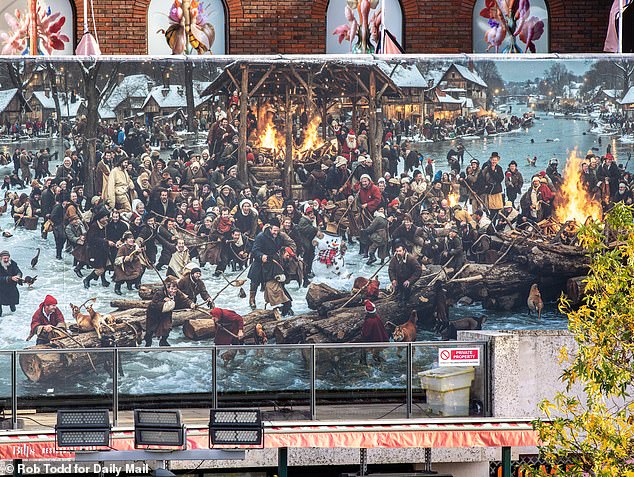
A seemingly festive mural has appeared over the Côte Brasserie and several other restaurants on the Kingston Riverside Walk, but all is not as it seems
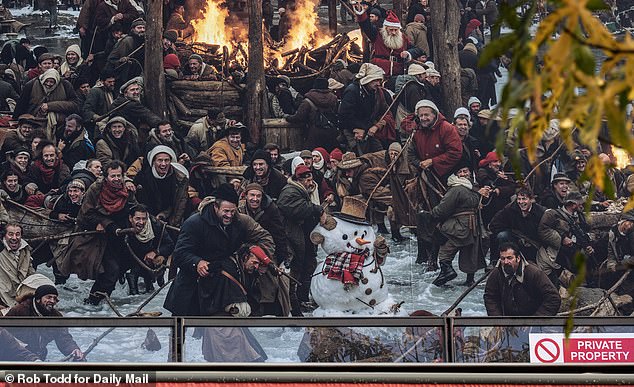
Upon closer inspection, the mural appears to have been hastily generated using AI, leading to some disturbing distortions
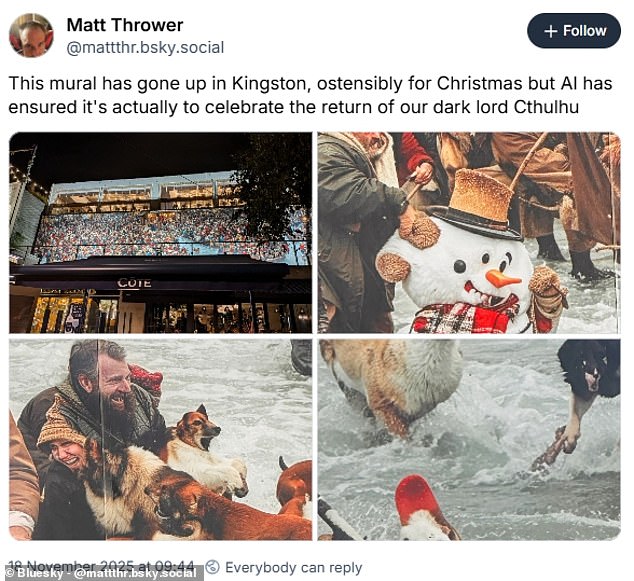
One commenter on Bluesky joked that the scene might seem festive, but thanks to the involvement of AI, it appeared to ‘celebrate the return of our dark lord Cthulhu’
The ‘100 feet wide’ mural above the Côte Brasserie restaurant appears to be just one of several huge illustrations that have been erected on the Kingston Riverside Walk.
This is a popular walking area hosting six restaurants, many of which, including Côte Brasserie and Bill’s, now have large murals overhead.
However, it isn’t known whether Côte Brasserie, Bill’s, or Kingston upon Thames council approved the mural – and Côte Brasserie declined Daily Mail’s request for comment.
Nor is it clear how anyone could have approved or put up the image without noticing any of the AI–generated horrors.
In one section of the image, dogs with the heads of birds run through a partially frozen body of water.
Another section shows a group of warped and disfigured humans paddling a raft using what appears to be a dog’s leg on a stick.
While one particularly haunting image depicts something resembling a snowman with human eyes and teeth wading through the water.
This is particularly surprising given how sophisticated current AI image generation tools can be.
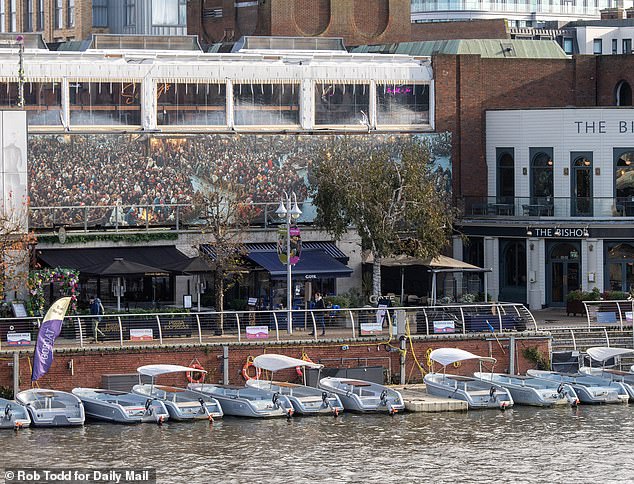
The mural has appeared above several restaurants in the area, but none have confirmed whether they approved the imagery
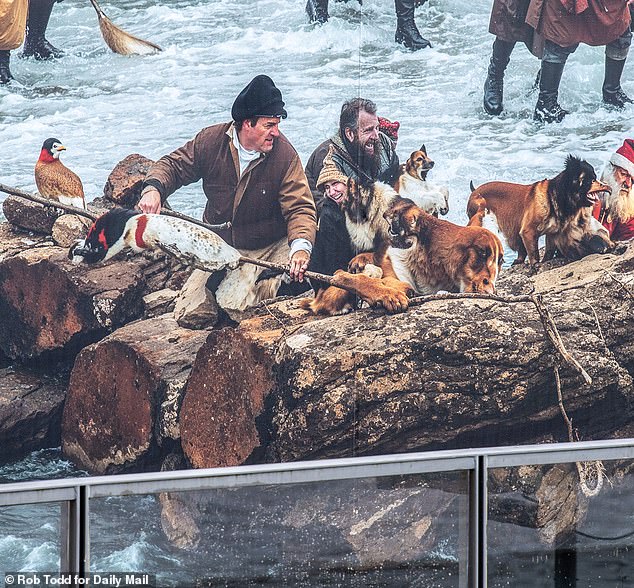
In one section of the mural, distorted people appear to paddle a raft using a dog’s paw attached to a stick
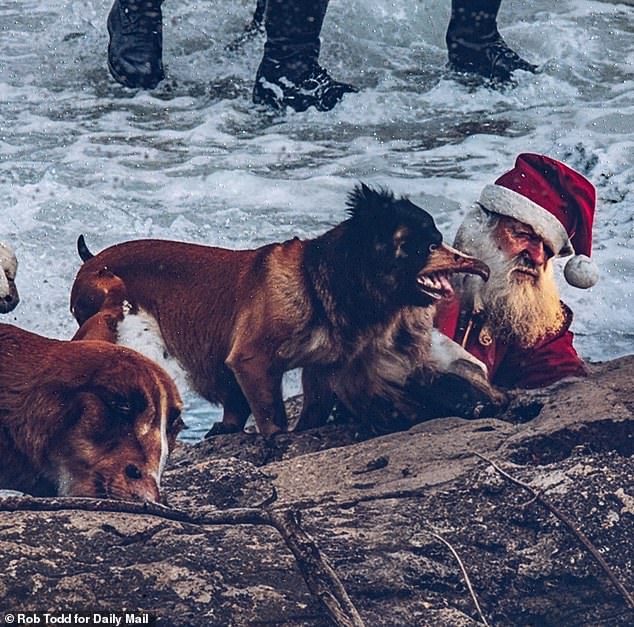
In other sections of the bizarre mural, dogs with the heads of birds run through partially frozen water
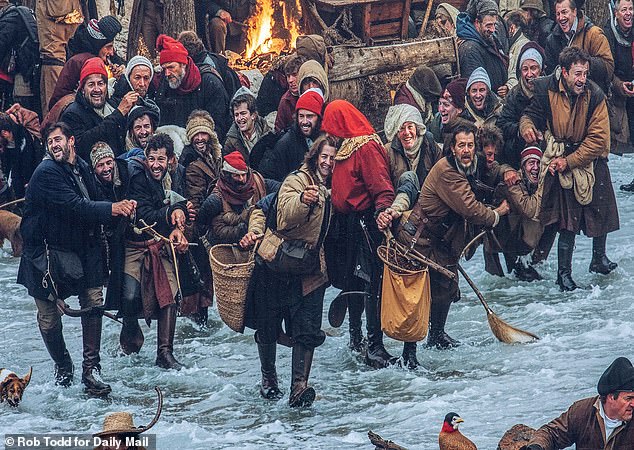
Baffled Londoners are not sure what the confusing scene is meant to represent, or why it is associated with Christmas
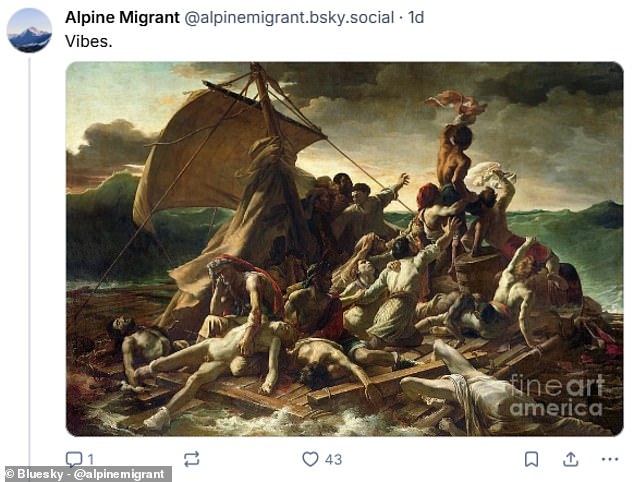
One baffled user on Bluesky compared the mural to Géricault’s Raft of the Medusa
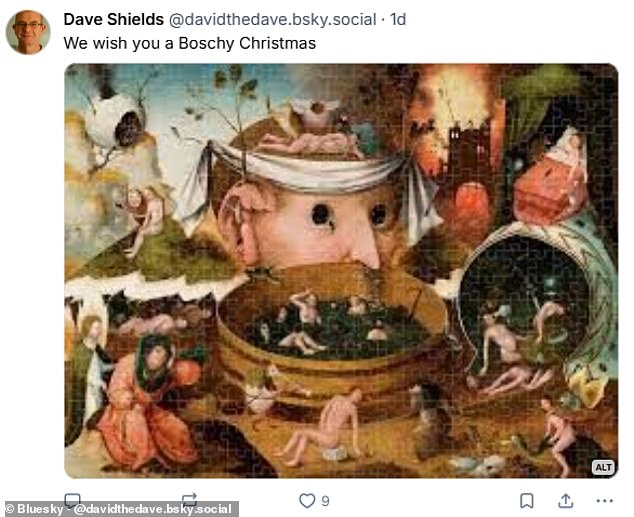
Another commenter joked that it looked more like a painting by Hieronymus Bosch than something from a Christmas card
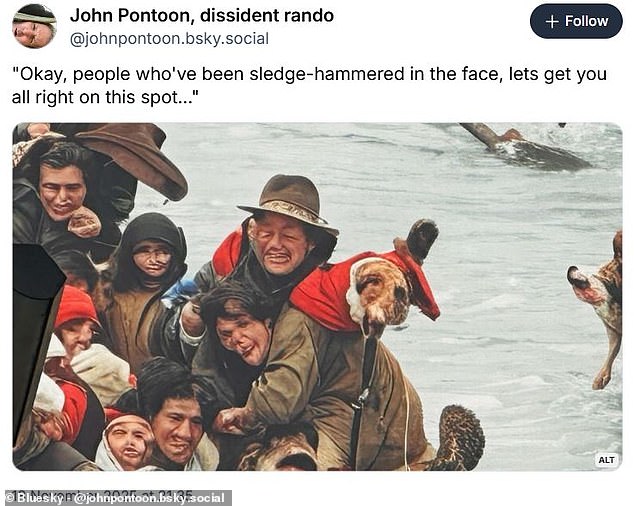
Social media users pointed out that some of the faces in the mural looked like they had been ‘sledge-hammered’
Recent studies have suggested that people can only spot faces generated by AI a third of the time, meaning the average person is worse than chance at finding fakes.
On social media, commenters have been absolutely baffled by the mural’s twisted features.
One commenter jokingly wrote: ‘You know what’s Christmassy? A snowman with a f****** eye on his cheek.’
Another chimed in: ‘I mean, WTF is it even supposed to be? What did they type into AI to get this? “Acid–trip for the holidays”?’
‘After you take in the horror you can’t help but wonder what prompt could have been used to create it, and that’s possibly even worse,’ wrote another.
While one joked: ‘And above a Cote too!’
Meanwhile, some Londoners have been outraged to see such apparently lazy use of AI in public art.
One furious commenter wrote: ‘It beggars belief that if you’re going to use AI, you wouldn’t even take a fraction of the time you’ve allegedly saved in producing whatever this is to at least check it a bit.
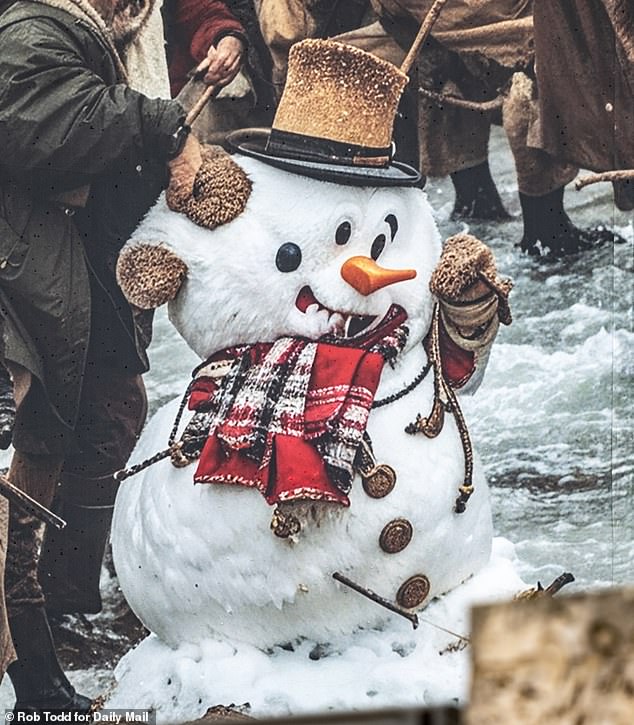
One particularly bizarre image seems to show a furry snowman with human–like eyes and teeth wading through the water
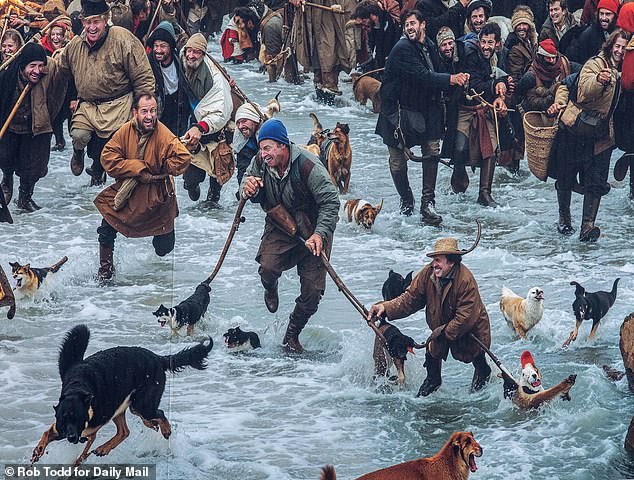
One commenter wrote on social media: ‘I can’t believe someone would hit go on the production of this, and not feel any kind of worry or shame’
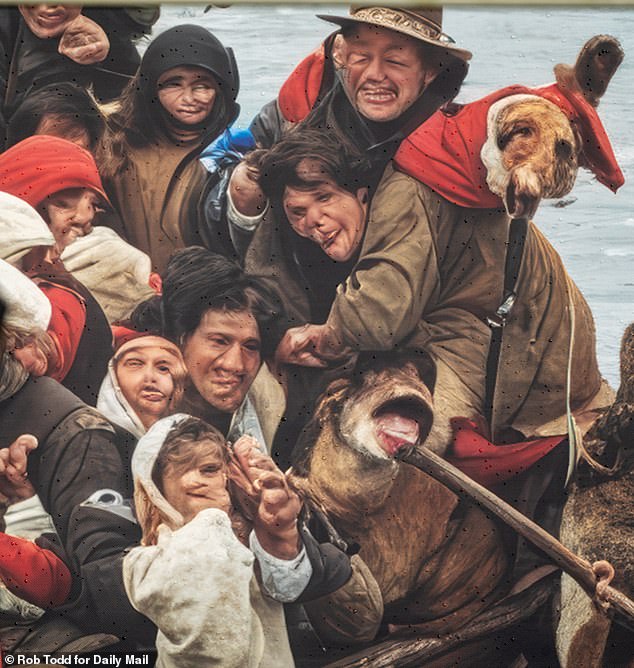
Currently, the identity of the artist behind the strange mural is unknown and it has not been confirmed whether it was approved by Kingston Council or any of the restaurants below
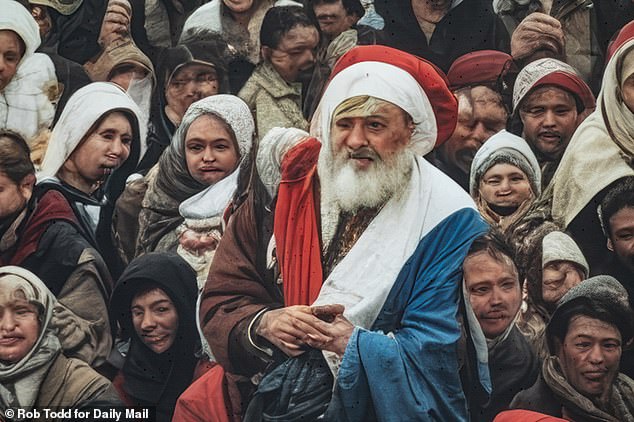
Some sections of the mural appear show crowds of people with grotesquely distorted faces
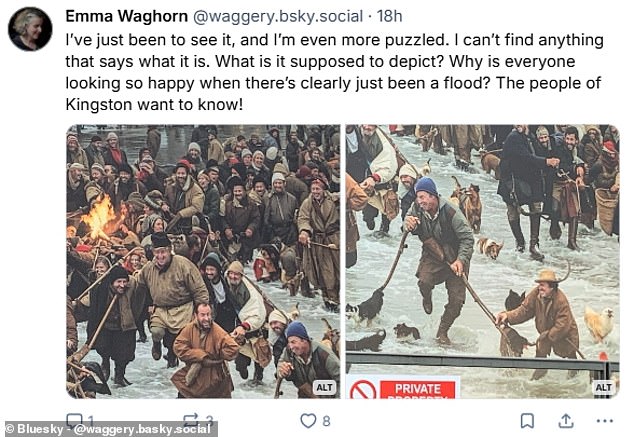
One social media user who trekked out to see the mural was confused to find no information to suggest what the strange scenes might be showing
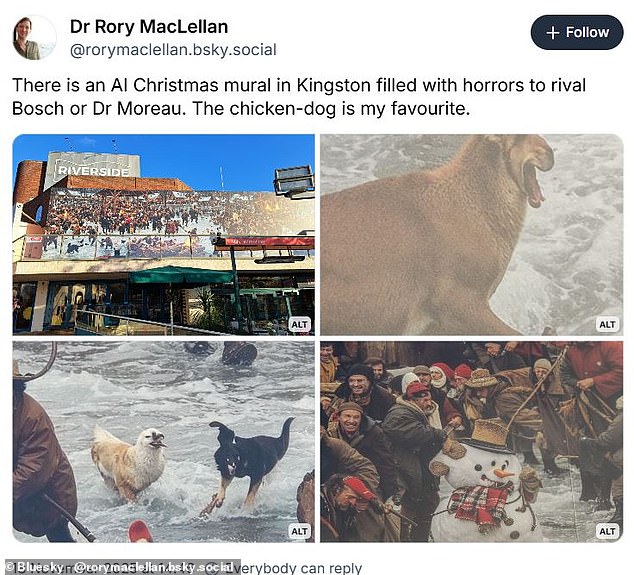
One commenter joked that the mural showed horrors to rival the Island of Dr Moreau
‘I can’t believe someone would hit go on the production of this, and not feel any kind of worry or shame,’ another commenter wrote.
While another added: ‘Oh dear god just pay a graphic designer for god’s sake. This Boschian nightmare will haunt my dreams.’
But while many people were shocked by the strange mural, some expressed a morbid fascination with the AI–generated mess.
‘I’m equal parts delighted and horrified,’ one Londoner wrote on social media.
Another wrote: ‘Where in Kingston is this? I might have to take a trip over this week just for this.
One commenter joked: ‘This is absolutely phenomenal. Would love to see the entire thing. I’m pretty sure I’ve had nightmares like this.’
This is not the first time that AI has ruined the festive celebrations as Coca–Cola has been blasted online after confirming that it has used AI in its much–loved Christmas advert for the second year in a row.
The advert has faced enormous backlash online, with one commenter dubbing it ‘the best ad I’ve ever seen for Pepsi.’
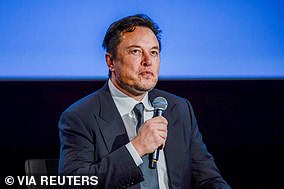
Elon Musk pictured in 2022
Elon Musk wants to push technology to its absolute limit, from space travel to self-driving cars — but he draws the line at artificial intelligence.
The billionaire first shared his distaste for AI in 2014, calling it humanity’s ‘biggest existential threat’ and comparing it to ‘summoning the demon’.
At the time, Musk also revealed he was investing in AI companies not to make money but to keep an eye on the technology in case it gets out of hand.
His main fear is that in the wrong hands, if AI becomes advanced, it could overtake humans and spell the end of mankind, which is known as The Singularity.
That concern is shared among many brilliant minds, including the late Stephen Hawking, who told the BBC in 2014: ‘The development of full artificial intelligence could spell the end of the human race.
‘It would take off on its own and redesign itself at an ever-increasing rate.’
Despite his fear of AI, Musk has invested in the San Francisco-based AI group Vicarious, in DeepMind – which has since been acquired by Google – and OpenAI, creating the popular ChatGPT program that has taken the world by storm in recent months.
During a 2016 interview, Musk noted that he and OpenAI created the company to ‘have democratisation of AI technology to make it widely available’.
Musk founded OpenAI with Sam Altman, the company’s CEO, but in 2018 the billionaire attempted to take control of the start-up.
His request was rejected, forcing him to quit OpenAI and move on with his other projects.
In November, OpenAI launched ChatGPT, which became an instant success worldwide.
The chatbot uses ‘large language model’ software to train itself by scouring a massive amount of text data so it can learn to generate eerily human-like text in response to a given prompt.
ChatGPT is used to write research papers, books, news articles, emails and more.
But while Altman is basking in its glory, Musk is attacking ChatGPT.
He says the AI is ‘woke’ and deviates from OpenAI’s original non-profit mission.
‘OpenAI was created as an open source (which is why I named it ‘Open’ AI), non-profit company to serve as a counterweight to Google, but now it has become a closed source, maximum-profit company effectively controlled by Microsoft, Musk tweeted in February.
The Singularity is making waves worldwide as artificial intelligence advances in ways only seen in science fiction – but what does it actually mean?
In simple terms, it describes a hypothetical future where technology surpasses human intelligence and changes the path of our evolution.
Experts have said that once AI reaches this point, it will be able to innovate much faster than humans.
There are two ways the advancement could play out, with the first leading to humans and machines working together to create a world better suited for humanity.
For example, humans could scan their consciousness and store it in a computer in which they will live forever.
The second scenario is that AI becomes more powerful than humans, taking control and making humans its slaves – but if this is true, it is far off in the distant future.
Researchers are now looking for signs of AI reaching The Singularity, such as the technology’s ability to translate speech with the accuracy of a human and perform tasks faster.
Former Google engineer Ray Kurzweil predicts it will be reached by 2045.
He has made 147 predictions about technology advancements since the early 1990s – and 86 per cent have been correct.