
Updated November 30, 2025 02:47PM
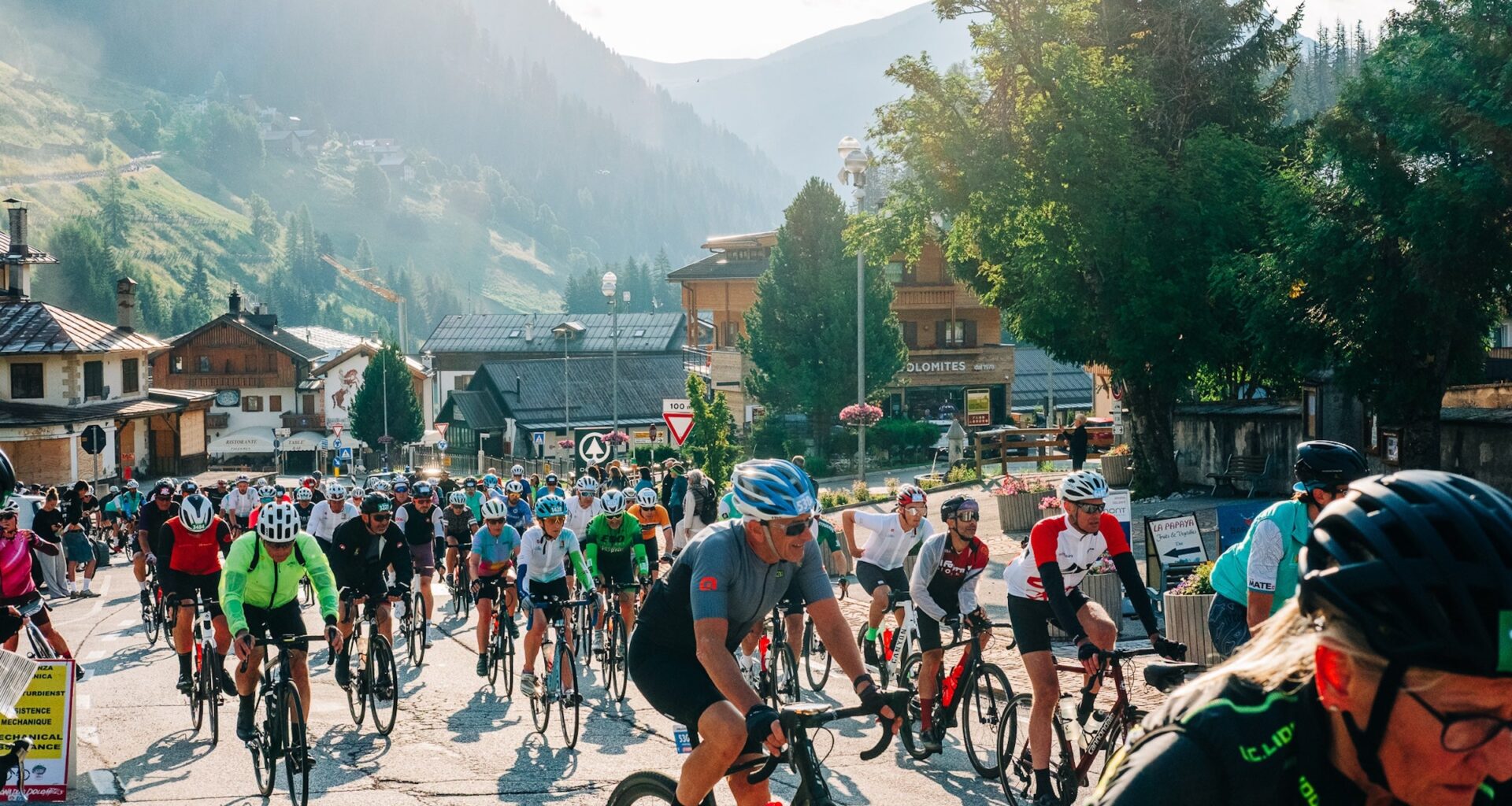
Coming out of a hairpin turn above the Italian village of Varda, near the bottom of the iconic Passo Campolongo, I tried to hold onto my race line and my nerves as cyclists passed me on both sides at eye-watering velocities.
Suddenly, a water bottle rolled across the pavement, and the peloton parted like it was a live grenade. As it intersected my path, I had time to think, “So this is how my once-in-a-lifetime race in the Dolomites, and maybe the rest of my cycling life, ends.” I flicked the drops, barely clearing my front wheel of the water bottle.
But my rear wheel clipped it, and both my bike and my heart skipped a few beats before I got them under control.
I rolled into Varda with relief. Only six more mountain passes to go.
In road cycling, the mountain passes of the Sellaronda, under the daunting crags of the Northern Italian Dolomites, inspire something akin to religious reverence, with climbs such as the Passo Pordoi appearing regularly on both the Giro d’Italia and cyclists’ life lists and chiseled into the history of Italian cycling—quite literally, in the case of Passo de Pordoi, which hosts a monument to Fausto Coppi.
For nearly thirty years, the annual Maratona dles Dolomites has drawn thousands of cyclists to tackle seven Sellaronda passes in one of the premier cycling events in the world.
A grueling Gran Fondo
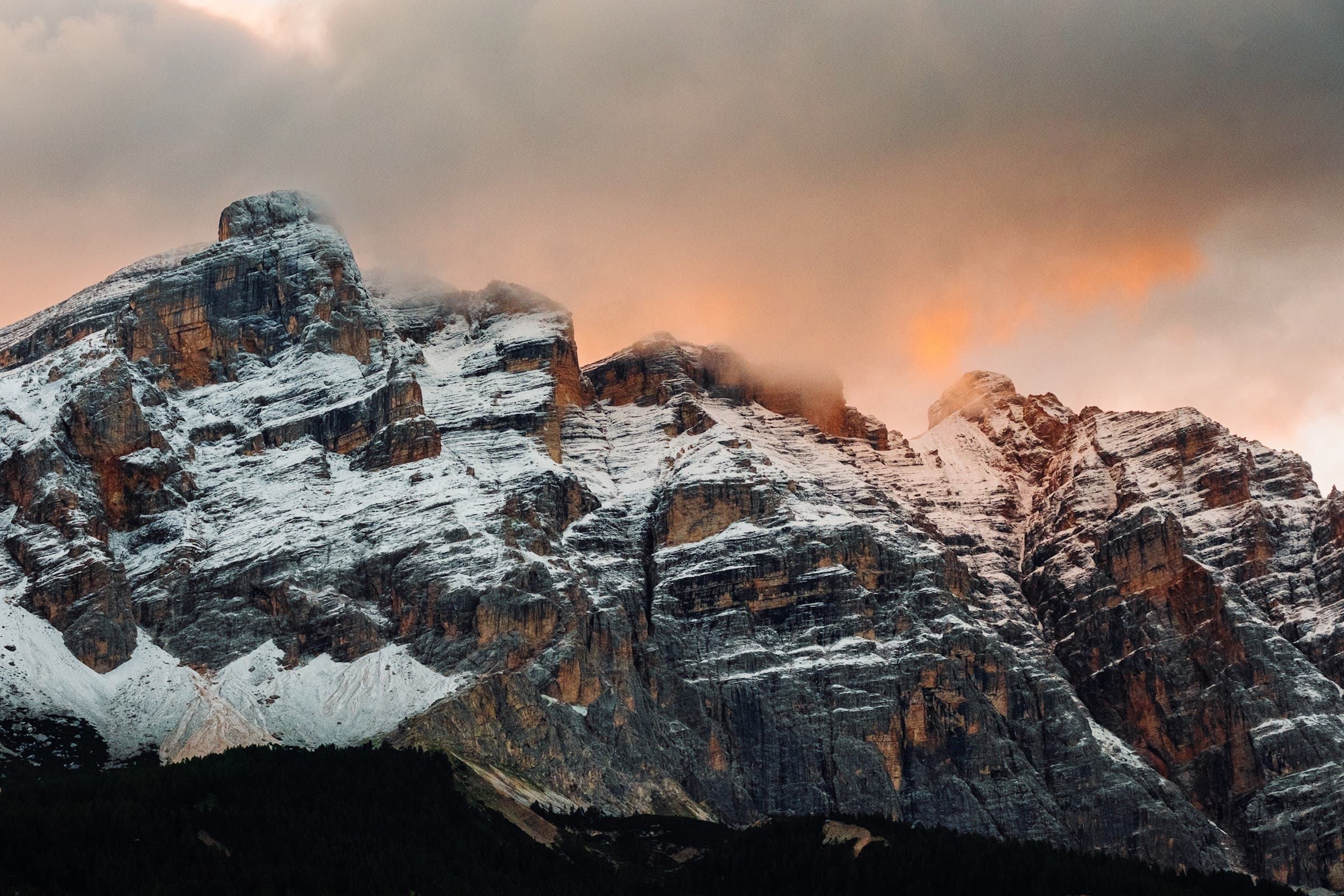 A stunning backdrop view seen at the Maratona Dles Dolomites (Photo: Aaron Theisen)
The Maratona dles Dolomites—in the local Ladin language spoken by some 30,000 Dolomites valley inhabitants, it means “Dolomites Marathon”— encompasses three courses that all begin and end in the village of Corvara, allowing riders to make on-the-fly decisions about which length they’d like to tackle. The Sellaronda course climbs four passes and an elevation gain of 1780m over 55km. The medium course tackles six passes and 3130m of climbing over its 106 km length.
But it’s the Maratona course that has earned a reputation as one of Italy’s most grueling Gran Fondos. The route measures 138 kilometers, with a quad-cramping 4,230m (13,878ft) of climbing over Passos Campolongo, Pordoi, Sella, Gardena, Campolongo (a second time), Giau, Falzarego and Valparola.
What distinguishes the Maratona from the medium course, and from Italy’s other Gran Fondos, is the legendary Passo Giau. The most iconic and feared climb in the Dolomites, the Giro d’Italia staple punishes cyclists with a 10km climb at an unrelenting nearly 10% average incline, with some stretches at 14%. It’s the sort of ascent that cyclists travel across the globe to test themselves against; on the Maratona, it’s merely one in a string of challenges.
It’s a race as beautiful as it is grueling. The Sellaronda Massif, a UNESCO World Heritage Site, comprises a tight grouping of limestone spires scored by steep couloirs, ringed by impossibly green hills that contrast with the craggy near-vertical relief of the Dolomites towering above. The white steeples of centuries-old churches cling to steep hillsides like mountain goats. The painterly strokes of pavement, closed to motor vehicles for the race, swirls its way up to alpine passes lined with wildflowers.
‘One of the most chaotic races on earth’
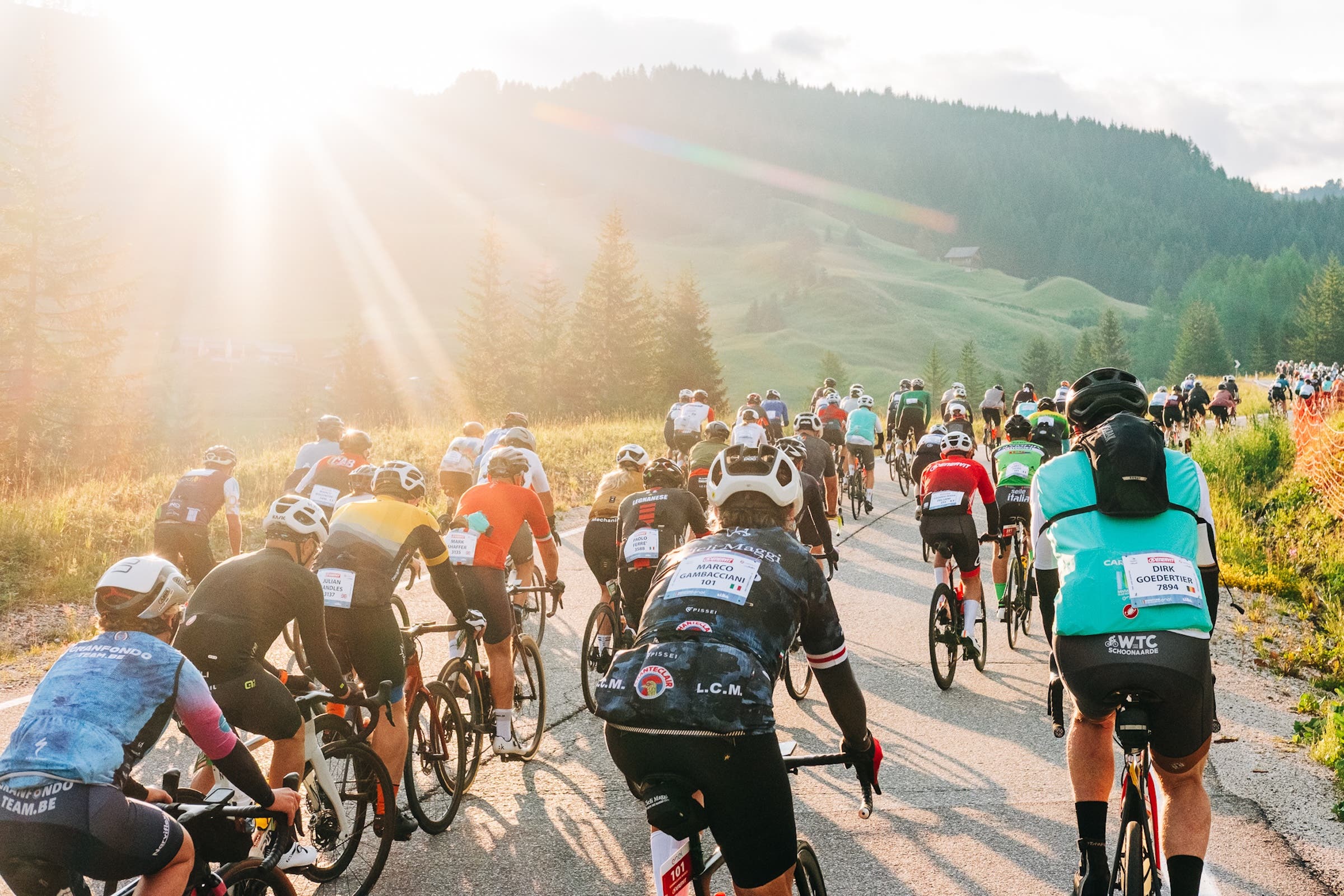 There are a lot of riders in the Maratona Dles Dolomites (Photo: Aaron Theisen)
The Maratona epitomizes the storied Italian sporting dichotomy of being laid-back about many aspects of life but absolutely and singularly focused about a few—chiefly, going fast. The country of mid-day naps and apéritifs is also the country of Ferrari and Fausto. My own travel to Italy had been chaotic, with days of delays and cancelations meaning I’d arrive in the area 12 hours before the race start after nearly 30 hours of travel, and my Italian hosts reassured me with repeated “no worries!” even as I was becoming more frantic and nerve-frayed with the mounting complications. But that laid-back manner vanished during the Maratona, with cyclists making bar-tape-buzzing passes while straight-lining the descents at more than 80kph.
“You have to remember, cycling is Italy’s national sport,” says Claudia Rier, a local guide and regular entrant in the race.
National Geographic once described the Maratona dles Dolomites as “one of the biggest, most passionate and most chaotic races on Earth.” Pedaling through Corvara and up Passo Campolongo, scores of cheering spectators line the winding street, while musicians with accordions and long wooden alphorns bounce out a rhythm that nearly matches that of the brisk pedal cadence of the peloton. Helicopters circle overhead; the Italian national sports broadcaster RAI 3 broadcasts the race live. For the locals, it’s both a celebration and a source of local Ladin pride. Some 1500 race volunteers, all of them from the valley, drape medals over the finishers and quickly sweep up the ticker-tape-parade of empty gel packets at the top of every pass.
The combination of scenery and storied ascents has etched the Maratona into legend: Since its inception in 1987, the race has become one of the most sought-after Gran Fondos in Europe, with 30,000 applicants from around the world vying for one of 8,000 spots on the starting line. Race organizers allocate half the highly coveted bibs to Italians and half to international guests; in recent years, participants from over 70 different nations have composed the polyglot peloton.
The varied reasons for signing up
 There is plenty to see at the Maratona Dles Dolomites (Photo: Aaron Theisen)
This year 55% of entrants opted for the full Maratona course. And although a couple hundred of that number are pedigreed pros chasing a podium, the vast majority are simply cycling-mad amateurs basking in Italy’s storied bike culture.
“There are just a few people really doing it just to race,” says Nicole Dorigo of the Alta Badia Brand, which represents the host region of the Maratona. “Most of the entrants are just normal cyclists who want to enjoy the atmosphere, the climbs, the Dolomites.”
(That’s to say nothing of the region’s esteemed food and wine; this is a race, after all, where aid-station volunteers in traditional Dolomites dress serve strudel and shots of espresso.)
Ultimately it wasn’t an errant water bottle that laid me low, but the combination of jet lag, sleep deprivation and altitude. On one of the endless switchbacks of Passo Sella, I opted for the short course.
The legendary climbs of the Dolomites humble cyclists. But they also inspire. Back in Corvara, under a sudden early-summer downpour and soundtracked by the sizzle of slicks on rain-drenched pavement, I tucked into a second helping of pasta as cyclists high-fived while crossing the finish line for the Maratona course.
“For many of these cyclists, [the Maratona] is a once in a lifetime opportunity,” says Dorigo. “Most of the people are not here to be competitive, they are here to enjoy the atmosphere.”