
Published December 4, 2025 05:05AM
From injuries to general wear and tear, hiking is hard on the body. More miles often means more pain, especially when carrying a loaded pack or traveling over rough terrain. Training exercises with a focus on injury prevention should be a part of every hiker’s routine—and when aches arise, physical therapy is a useful tool to get back to the trail stronger than ever.
Dr. Morgan Brosnihan, a thru-hiker and doctor of physical therapy, founded Blaze Physio in 2021, a mobile and telehealth practice that she runs out of her van to cater to long-distance hikers. Every season since 2022, Brosnihan has followed the PCT bubble in her van, offering consultation and treatment to thru-hikers on the trail and in town. She’s seen and treated every manner of backpacking injury and has helped more than 2,000 hikers walk over a million collective miles. Here are the exercises and practices Brosnihan wishes every hiker would do.
Ankle Mobility
Most people need better ankle mobility, according to Brosnihan.
“When you just walk, like your normal day-to-day activities, it’s a very mid-range activity for your ankles, so it’s never really challenging its full capacity,” she says. Plus, most footwear that we wear to work, around town, or even on the trail fosters limited ankle movement (gradually transitioning to zero-drop shoes can help).
When you hit the trail, though, that becomes a problem. Tight ankles can lead to an inefficient stride and overcompensation in other parts of the body, creating a chain reaction that can cause issues like plantar fasciitis, Achilles pain, and knee and hip pain.
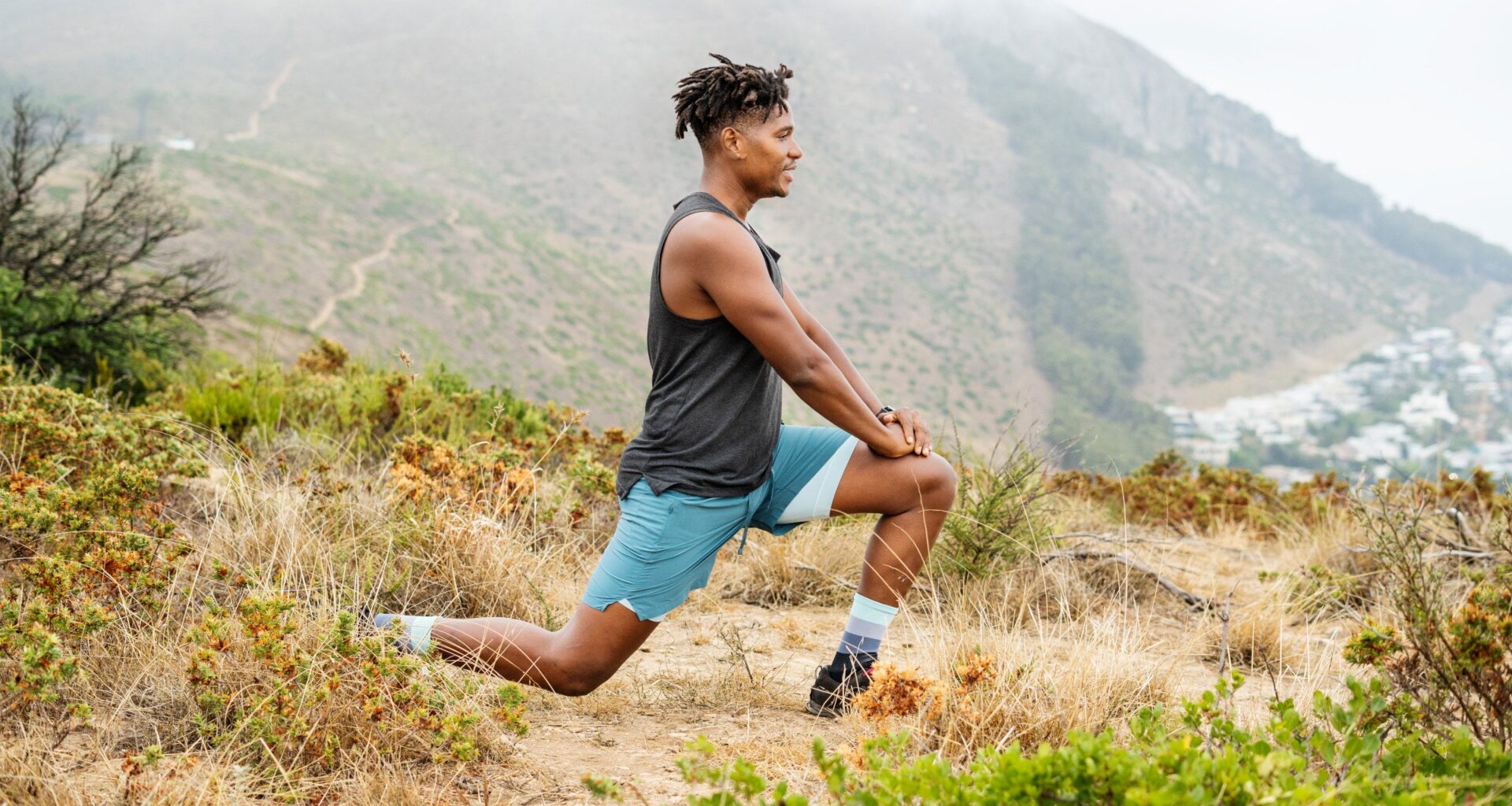
Ankle mobilization exercises can help. Here’s a basic one: Get in a half-kneeling position with one leg in front at a 90-degree angle. Keeping your front heel down, drive your knee over your front ankle with the center of your knee pointing to your big toe. Stop where your heel begins to lift and press your knee over your toe. Rock back and come forward again over each of your toes. If you feel any pinching, stop immediately, says Brosnihan.
Heel raises are another good exercise for your ankles. Stand on a ledge or step with your heels hanging off the edge. You can use a wall or rail for support if needed. Keeping your knees straight, engage your calves to lift your heels, then lower them in a controlled manner.
Hip Extension and Strength
While a lot of hikers can benefit from improving hip mobility, stretching isn’t a catch-all solution.
“Not everybody needs to work on mobility,” Brosnihan says. “Some people … need a lot more focus on stability. Arguably, if you’re tight in places, a lot of times it’s because the area is weak.”
Strengthening your hips can help improve both stability and mobility. “A good bang for your buck is the side plank clam,” says Brosnihan.
Lie on your side, propped on your forearm with your elbow under your shoulder. Stack your knees in line with your shoulders at a right angle. Without rotating your pelvis backward, lift your hips off the ground and open your knees in a clamshell motion.
Weight Training
“Longevity in the outdoors can be so much more guaranteed by just basically sucking it up and going to the gym twice a week,” Brosnihan says. “Body weight stuff isn’t enough.”
It’s impossible to build up injury resistance, healthy bone density, and an adventure-ready body by hiking alone, according to Brosnihan. Training with external load—think heavier than a loaded backpack—strengthens tendons and bones, which makes you more resistant to joint problems, fractures, and other hiking injuries.
“We have some muscles in our feet and ankles that take eight times our body weight in force as we just walk or run. It takes a lot to actually make those significantly stronger,” Brosnihan says.
She recommends working twice-weekly strength regimens into your exercise routine, focusing on challenging compound movements such as lunges, step-ups, squats, and deadlifts. Aim for three sets of eight to 12 reps with a weight that feels challenging. You should be able to complete each rep with good form, but be in need of a good rest break in between sets.
Toe Splay
According to Brosnihan, the majority of modern footwear squishes our toes together in a way that’s detrimental to foot strength and stability. Working on toe splay helps us move more easily and safely over rocky, uneven trails.
“Think about trying to do a push up with your fingers together and how weird that feels,” she says. “Toe spacers can be a great place to start to improve your ability to access your foot strength and your toe mobility.”
Begin by wearing toe spacers when you’re relaxing at home and build your way up to wearing them during exercise, daily activities, and hikes.
In addition, Brosnihan encourages hikers to evaluate their footwear: Look for a wide toe box (like the classic Altra Lone Peak) for both hiking shoes and daily wear. Working out barefoot can also help strengthen your feet.
Recover Well
To maximize recovery, Brosnihan says hikers should focus on sleep, hydration, and fueling as much as stretching.
“Any loading activity is only going to be as good as your recovery that supplements it,”she says. “So if you’re just constantly beating yourself down and there’s never good hydration, sleep, and nutrition, it just won’t give you the same returns.”
Stick With It!
If gym training or regular PT isn’t part of your routine, Brosnihan says that starting small can have immense benefits, especially if you continue to build on your progress over time. Consistency is key. If you’re not in a regular training routine but want to prepare for a big trip, Brosnihan recommends training diligently for at least three to four months ahead of time in order to avoid injury and maximize enjoyment, “but any training before a trip is going to increase your odds, even if it’s like two weeks.”