
Conclusion
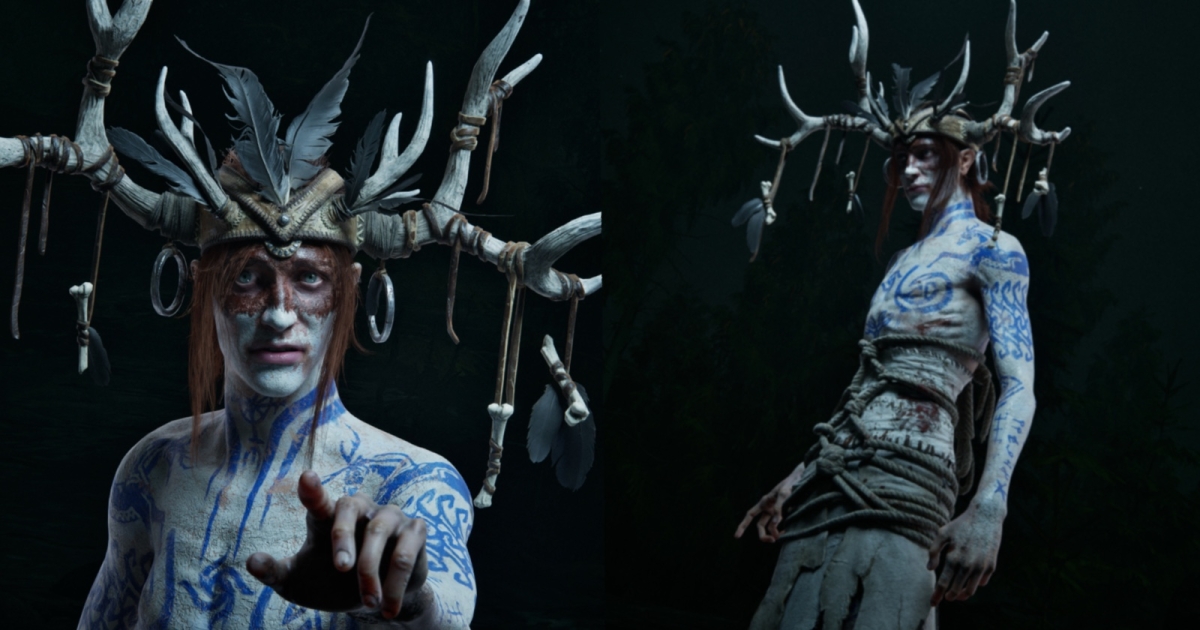
I faced quite a few challenges on this project, but the hardest was definitely the anatomy, as I expected and hoped for with my concept choice. Sculpting a face and body is never easy, but on an extremely skinny character, there is nowhere to hide because every mistake is obvious.
Much of the time, this means returning to basics, checking references constantly, and sculpting tiny regions one by one until they look correct. But I’ve also found that it can lead you into a spiral of guessing (and second-guessing) yourself, with there always being another region to refine or another detail that isn’t quite right.
To combat this, I had to unlearn the beginner mindset of wanting to perfect everything in ZBrush or Maya before bringing it into the engine, where I’d treat that as one big reveal or payoff that I was waiting to be ready for. The truth is, no matter whether this is your first or tenth character (in my case, fourth), there will never be a “done” checkmark that appears at the top of your viewport.
So with this project, I avoided that loop by bringing my character into UE5 as early as possible, even at its roughest stage. Fortunately, since the topology and UVs were already set thanks to this pipeline, switching between ZBrush and Unreal was seamless, and the engine was able to become another helpful context for seeing my work in, rather than an output destination.
My advice for Beginners (and the Ana of two years ago): Trust the process, even when progress feels slow. Return to basics when you’re stuck. And get your work into context early because the viewport in your ZBrush will never tell you the full story.