
Updated February 4, 2026 01:21AM
Iliac artery endofibrosis was recently deemed by top medics as an “occupational hazard” of pro cycling.
But despite being considered one of the inescapable risks of the sport, it remains one of the most mysterious and misdiagnosed conditions in the peloton.
Indeed, iliac artery endofibrosis can be so problematic that cyclocross prodigy Eli Iserbyt spent months struggling for a diagnosis before he suffered four unsuccessful surgeries in 12 months.
Iserbyt was ultimately forced to retire aged 28 after he was advised “the medical trajectory was exhausted” in his battle with the condition.
Other notable or recent victims of this vicious “occupational hazard” include multi-discipline GOATs Pauline Ferrand-Prévot and Marianne Vos, former Tour de France sprint king Fabio Jakobsen, and climbing sensation Sarah Gigante.
And iliac artery endofibrosis isn’t only for the pros.
It could come for you too.
Here’s what you need to know about iliac artery flow limitations and endofibrosis.
Flow limitation in the iliac artery: Shutting a lane in the oxygen superhighway
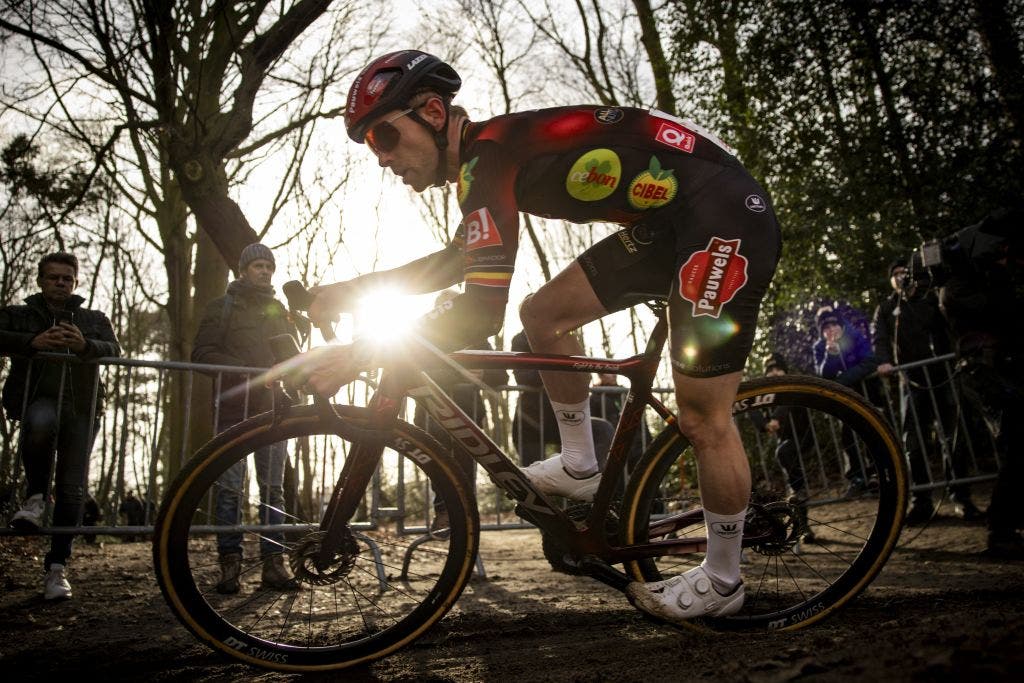 Iliac artery conditions shot to the cycling world’s conscience this winter when Iserbyt was forced to retire. (Photo: DAVID PINTENS/BELGA MAG/AFP via Getty Images)
The iliac artery is a large blood vessel deep in the abdomen that shuttles blood from the heart down into the legs.
For cyclists, it’s a superhighway of watt-producing oxygen.
Extreme and repeated hip flexion can effectively block the road in this energy expressway. An acute angle at the hip flexor compresses the area around the iliac artery and can create a “kink” in the vessel that inhibits blood flow to the legs.
Over time and thousands of pedal revs, the wall of a kink-prone vessel thickens to withstand the pressure of the gallons of blood that batter at the point of compression.
This thickening of the artery wall protects, but also narrows the blood vessel’s passage.
The superhighway slows even further.
This is when the issue becomes an “endofibrosis.”
In the medical world, the umbrella term for the condition – endofibrosis or not – is FLIA, or “Flow Limitations in the Iliac Artery.”
Iliac artery conditions are mostly, but not only, for the pros
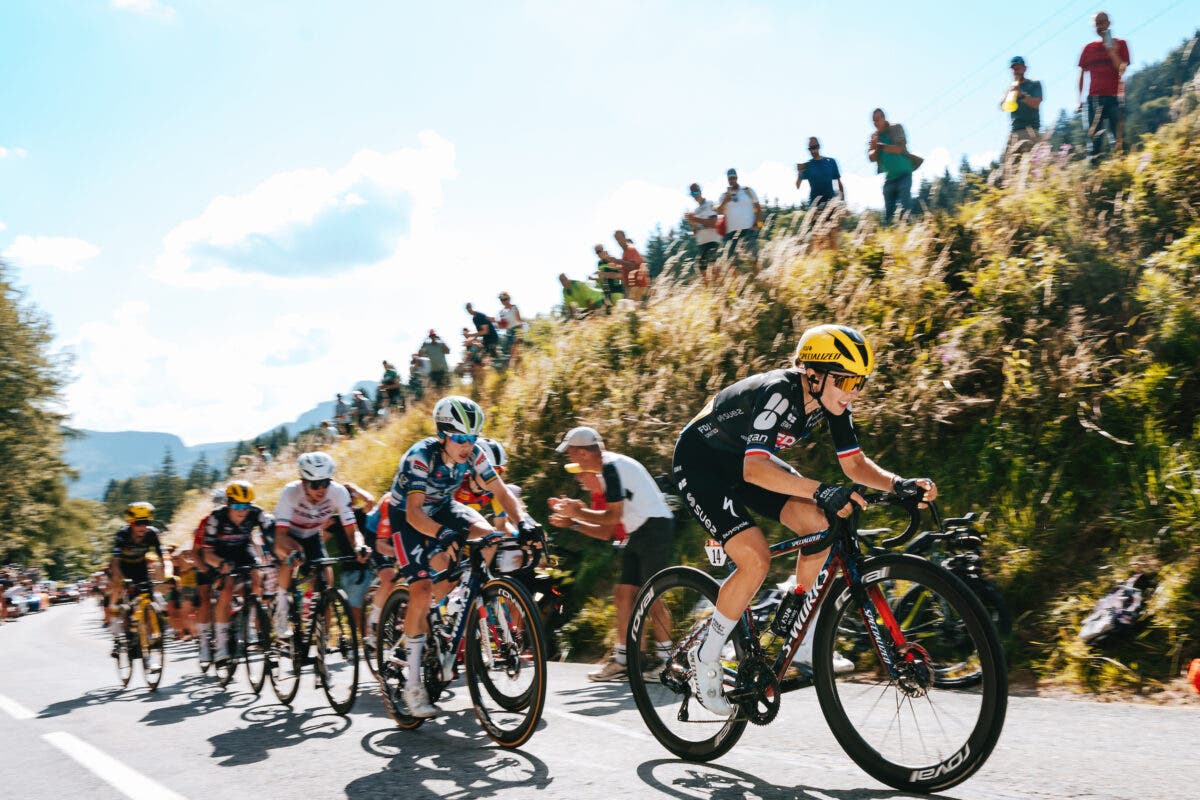
 Amateurs with high training volume and an aggressive position can be at increased risk of IAE. (Photo: Gruber Images)
Pro cyclists are prime candidates for FLIA.
The low aero tuck that gives them free speed requires extreme hip flexion and all the potential downstream issues that come with it. That risk is amplified by the 30-hour weeks and 500-watt intervals of a pro training schedule.
Jem Arnold is a lead researcher in FLIA. He explained to Velo that the risk factors that make pros easy prey for the condition apply only to the strongest and most devout weekend warrior.
“This condition is essentially a supply-demand mismatch,” Arnold told Velo. “A less fit rider will never reach the point of limitation in the iliac artery. They won’t have the muscle power to create the necessary metabolic demand that promotes the blood flow increase.
“Likewise, it doesn’t affect people at rest, when the demand for oxygen and blood flow is very low,” Arnold continued. “It’s only when we increase the demand and blood supply that we see restriction at this section of the artery.”
But Arnold cautioned that while there’s a relatively low incidence of FLIA in amateur riders, we’re not off the hook entirely.
“This could come up for an amateur with a high training volume or intensity, but there’s less risk,” he said.
“It’s more prevalent in pros precisely because of the amount of time they spend in those provocative positions and the accumulation of training volume and intensity.”
Well, that’s one good excuse to only ever do coffee rides.
The difficulties of diagnosis
 Dombrowski’s early years as a pro before he joined Team Cannondale were hampered by his iliac artery endofibrosis. (Photo: Gruber Images)
Iserbyt’s failed battle with FLIA stood out not only because of his heart-wrenching retirement message.
That he struggled with the condition for months before diagnosis and underwent four procedures in 12 months made his tale all the more harrowing.
Iserbyt’s story exemplifies exactly why FLIA is a scourge of pro cycling. Unlike a broken bone, tendinopathy, or muscle tear, it’s incredibly hard to diagnose, and can be the product of multiple problems.
Retired U.S. climber Joe Dombrowski suffered with symptoms for 18 months before he was properly diagnosed in 2014 during his sophomore season with Team Sky.
“There was a numbness and lack of power in the affected leg,” Dombrowski told Velo.
“I spoke at length to the doctors at Team Sky, and they didn’t have a lot of experience with it. That led to it being a long time before we arrived at what the problem actually was.”
Dombrowski’s early years in the WorldTour were derailed by blood flow limitations and the difficulty of its diagnosis.
Fast-forward through more than a decade of medical progress, and FLIA is still a painstaking puzzle.
It’s rare to see a rider in the headlines only once if they’re suffering a flow limitation. A victim might suffer a long period of piecing together symptoms, clues, and misdiagnoses.
Flow limitation in the iliac artery? Or just a bad day on the bike?
 Symptoms of iliac artery conditions can be similar to the pain of a top-end effort. (Photo: Gruber Images)
In the early stages, an athlete who’s experiencing a flow limitation might not even realise there’s a deeper issue.
“Earlier in the condition when there’s not so much endofibrosis and it’s just an acute kink, the symptoms might only appear at maximal intensity,” Arnold said. “So it’s hard to differentiate from normal exercise discomfort.”
Who doesn’t feel burning, heaviness, or weakness in their legs when they’re red-lining their final set of VO2 Max intervals?
Athletes might at first suspect simple training fatigue or underlying sickness.
“If you have a flow limitation, you can’t deliver enough oxygen through blood flow to meet the demand of the effort,” Arnold told Velo. “So it’s like an exaggeration of how you might feel at intensity.”
But symptoms worsen over time.
Lidl-Trek’s rising star Shirin Van Anrooij said she “felt an enormous burning sensation” and suffered unexpected drops in form during the early stages of her struggle with FLIA.
Van Anrooij and Dombrowski both described how things became more alarming – and in need of deeper explanation – when the lack of oxygen and strength in the affected leg made itself brutally clear in their power files.
“I had some atrophy in the leg that was affected. It wasn’t an issue at aerobic power, but I could see the difference,” Dombrowski said. “I also developed a significant asymmetry between my left and right power.
“I noticed that the difference got bigger over long rides, or even during efforts. It was like a cumulative effect,” Dombrowski said.
Van Anrooij’s power tilted to a dizzying 70/30 left-right imbalance before she realized something was seriously wrong.
An aggressive position, high training volume … and bad genes
 Experts are still struggling to understand all the risk factors of iliac artery flow limitations and endofibrosis. (Photo: Gruber Images)
But how is it possible that FLIA can develop so far before it’s diagnosed?
Just like the symptoms are hard to detect, the medical world still doesn’t fully understand the cause.
If extreme hip flexion and 30-hour training weeks were the sole factors, the entire WorldTour would have jammed up arteries.
“We know that it takes more than just an aggressive position to cause FLIA,” Arnold said. “But we don’t actually know what the other risk factors are.”
Arnold theorized that those unexplained additional risk factors could be the product of “biological variability or anatomical variability.”
Rolling a 1 on the genetic dice might cause the iliac artery to take a kink-prone pathway through the hip or be restricted by its interplay with ligaments in the groin.
And none of those things are simple to detect.
“Diagnosing FLIA typically comes down to a combination of clinical interpretation of a number of different tests and measurements,” Arnold said.
“The big problem is there’s no single gold standard test for the condition and no binary yes/no answer,” he continued. “We can’t just put an X-Ray up on screen or have a blood test that raises a red flag.”
But fear not – it’s not like FLIA is at the center of a diagnostic black hole.
We see more and more pros undergoing surgery to fix arterial problems not because it’s become more prevalent, but because there’s a better awareness and understanding of the condition than in Dombrowski’s day.
A dozen years ago, an athlete may have suffered massive endofibrosis and never been diagnosed.
Iliac artery endofibrosis is not the end
 Ferrand-Prévot and Vos both proved that it’s possible to have wildly successful cycling careers after undergoing surgeries to fix iliac artery issues. (Photo: Gruber Images)
And while surgery didn’t solve Iserbyt’s iliac artery issues, corrective procedures are largely successful.
Surgery might involve a loosening of tissue around the blood vessel to reduce the chance of compression, or a shortening of the artery to prevent it looping into a kink. Angioplasty – the widening of the artery with a patch harvested from another blood vessel – is the last resort.
Whatever the required procedure, recovery will require several months of inactivity and a slow rehab. It can write half a year off of a pro’s already short career.
But it might not always be so dramatic.
“If there are symptoms, treatment can start with looking at bike fit,” Arnold said.
“We advise athletes with symptoms that make us suspect FLIA to trial a less aggressive position, especially during high-intensity sessions. And then for competition, they could maybe switch back to the more aggressive fit,” Arnold said.
“That will allow them to get the full physiological benefits from training and then the faster position in racing.”
Opening the hip angle by tweaking saddle height, handlebar reach, or switching to oh-so-trendy short cranks can help riders manage symptoms.
And let’s face it, if you’re an amateur, a more relaxed position will be way more comfortable, too.
And if you are one of the few weekend warriors to be diagnosed with a flow limitation or endofibrosis that requires surgery, don’t worry. Your Zwift racing and town sprinting days aren’t over.
Just look at what Ferrand-Prévot and Vos went on to do after they had their arteries fixed.