
When you buy through links on our articles, Future and its syndication partners may earn a commission.
Credit: Shutterstock
Far from sculpting a six-pack, after the age of 40, strengthening your abdominal muscles is a non-negotiable when it comes to protecting your lower back from injury.
By the time we hit 40, most of us will have spent decades sitting down, often leaving us with tight hip flexors and lazy glutes. This can pull your pelvis out of alignment during everyday tasks, putting your lower back at risk of injury. One of the best ways to bulletproof your body is to strengthen your deep abdominals, specifically the transverse abdominis, which acts as the body’s corset.
Yet if you’re unsure where to start, you’ve come to the right place. Below, Pilates instructor and strength trainer, Nataša Boucher, shares the ab and core exercises she never skips. As a reminder, these might not be right for you and your body. If you’re a complete beginner or you’re dealing with a specific injury, it’s always best to seek personalized advice from a qualified professional.
What are the exercises?1. Knee taps
This exercise forces your core to stabilize while your body is under tension, as you hold in the hover position, keeping your abs braced and your knees a few inches off the floor. Your deep transverse abdominis muscles are firing to protect your lower back from injury, as they hold your torso steady while you drop your knees towards the floor. Your upper body will also be getting a workout during this exercise, as the muscles around your shoulder blades will be under tension as you hold the bear plank.
2. Walkouts
These are a progression of the bear plank, so again, you’ll feel this exercise in your upper body as well as your core. The key is to really keep your core engaged as you step one foot out, then back in. Focus on sucking your belly button into your spine and think about keeping your hips level — don’t let your hip sag towards the floor as you step your leg back. You’ll also be building strength and flexibility in your wrists holding this position.
3. Knee to elbows
Also known as a mountain climber, this exercise targets all of the muscles in your midsection. As well as the deep core, your outer six-pack muscles (the rectus abdominis) and obliques will be firing as your legs move dynamically. The climbing motion in this move will also strengthen your hip flexor muscles and improve the range of motion in the hip sockets, so this is a great one for those of us who spend a lot of time sitting down. For this Pilates-style mountain climber, the focus is less on speed and more on moving with complete control and getting your knee to tap the opposite elbow.
4. Side plank 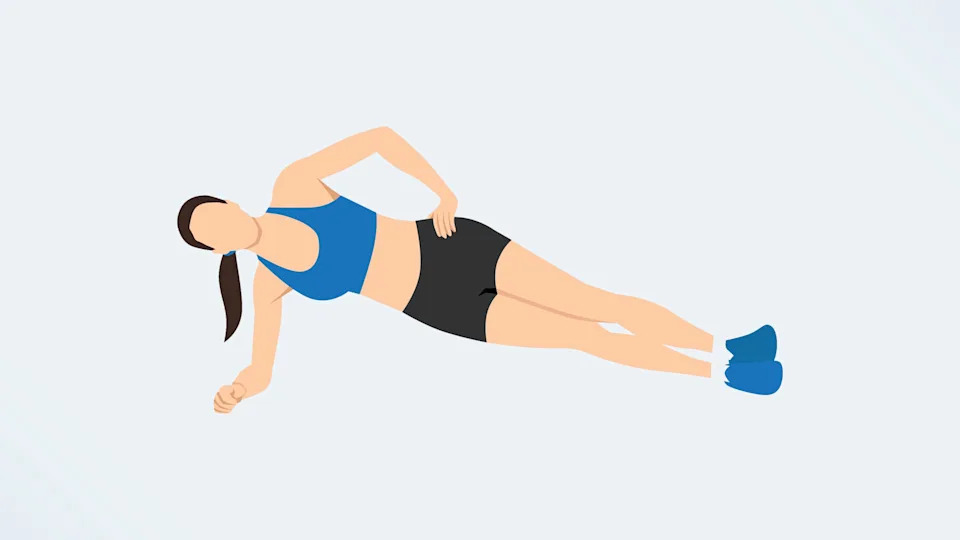
Credit: shutterstock
This side plank includes a knee to elbow crunch, really blasting your obliques, which run down the side of your torso. This helps build rotational power in your midsection, which you’ll need for everyday activities like getting a child out a carseat, but also for sports like golf and tennis. You’ll also be working your glutes during this exercise to keep your hips from sagging.
5. Plank swings
By moving forward and backwards, you’re adding intensity to the standard, static plank. This forces your deep core to work hard to prevent your chest from sagging. Keep squeezing your abs as you rock forward and back.
6. Leg circles
Like all Pilates exercises, the key with leg circles is to move slowly and with control. Don’t let your legs slam down to the mat, and try to keep your pelvis as still as possible during this exercise. The movement should be coming from your core, not your legs.
7. Heel taps
Keep thinking about zipping your abs up and in as you tap one foot down to the floor, then the other during this exercise. If you find it easier to lie with your back flat on the floor as you typically would during Pilates toe taps, this will remove any strain on your neck.
8. Dead bug 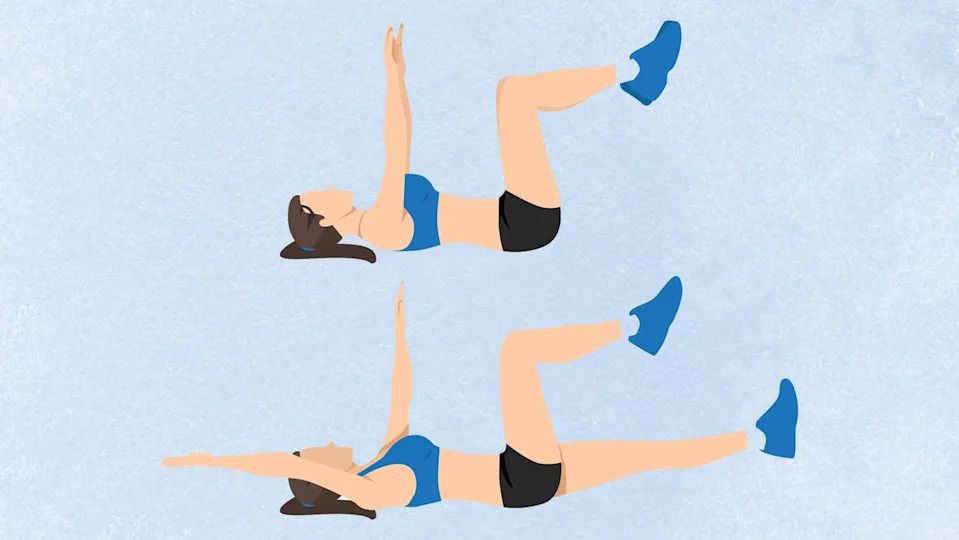
Credit: Shutterstock
For this dead bug variation, Boucher keeps the hand that isn’t moving pressed into the opposite knee. This increases the tension on the core and forces the deep stabilizer muscles in your abs to fire up. You’ll also be strengthening your pelvic floor during this exercise — something that’s important as we get older.
More from Tom’s Guide