
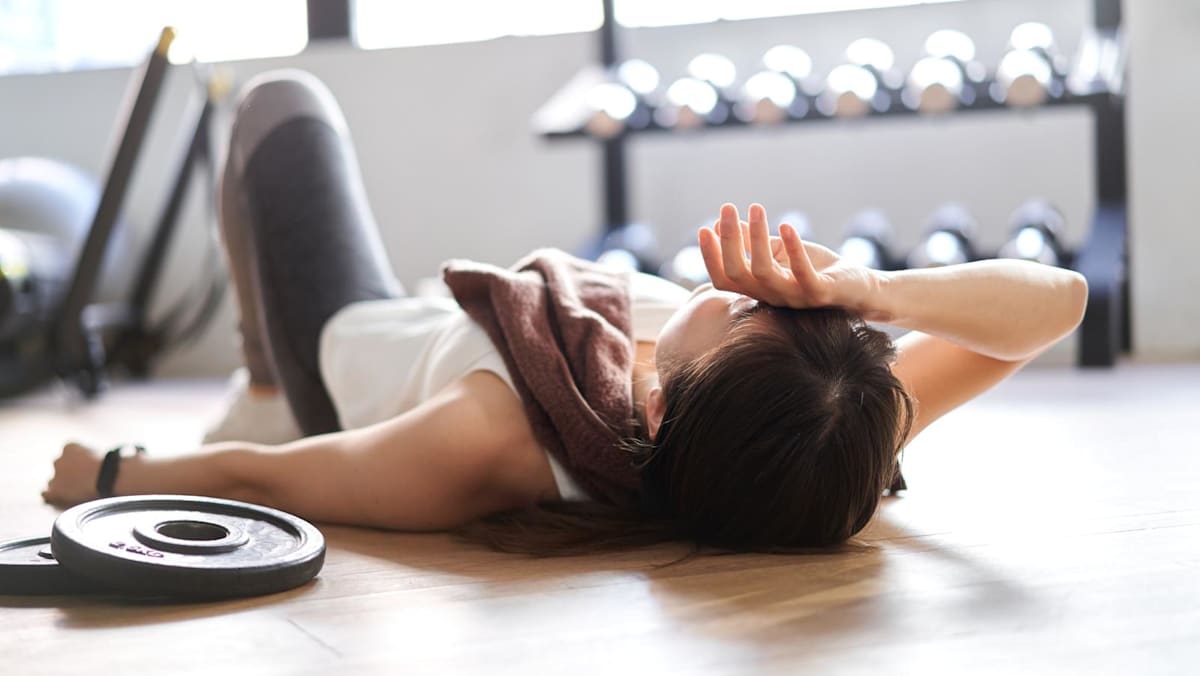
Moreover, your body’s “ability to regulate heat may be affected during an illness”, said Dr Chiang, “hence, exercising may lead to a higher risk of heat injury”. Also, “our immune system is weakened when we are ill, and exercise is a physical stressor that can prevent the immune system from recovering”.
HOW LONG SHOULD YOU STAY OFF EXERCISE FOR?
The symptoms of common, self-resolving ailments (such as a cold, migraine or diarrhoea), along with your energy level are expected to improve or resolve within a few days, said Dr Tan. But if you’re still “feeling significantly fatigued and discomfort or pain”, prioritise rest. “Medical evaluation may also be required if the symptoms do not improve or are severe,” she said.
If you’re not sure, listen to your body, said Dr Chiang. “Taking a few days off from exercise when you are sick shouldn’t affect your performance too much. You can resume your normal workout routine gradually as you start to feel better.”
SHOULD YOU CONTINUE OR SKIP EXERCISE IN THESE SITUATIONS?
Generally, light training is fine if you have mild symptoms above the neck, including a runny nose, mild sore throat or light congestion, according to Poh. “Gentle movement at this stage can actually help. It promotes circulation, keeps energy from dropping too low, and helps maintain your routine and mental state that make recovery feel more normal.”
But once the symptoms move below the neck (such as chest congestion, heavy cough, body aches, stomach upset, strong fatigue or even a fever), the default answer becomes rest. “A simple way I explain it to my students is this: if you would not send your child to school with those symptoms, you probably should not be in the gym either,” he said.
Here’s a look at some common scenarios that are very tempting to leave your gym bag behind. But should you? Here’s what the experts said:
1. AFTER A BAD NIGHT’S SLEEP
Your muscles are usually more fatigued after poor sleep, which may affect your balance, said Dr Chiang. “It is recommended to avoid lifting heavy weights and intense interval workouts. Physical activities that are low intensity, on the other hand, may help to reduce injury risk and improve sleep.”