

Following news that the number of new melanoma cases – the deadliest form of skin cancer – diagnosed in a year has reached a record high (above 20,000) in the UK, WH spoke to consultant dermatologist and spokesperson for The British Skin Foundation, Dr Derrick Phillips, about the most common forms of skin cancer and the key signs to look out for.
What are the different types of skin cancer?
‘The three most common forms of skin cancer are basal cell carcinoma, squamous cell carcinoma and melanoma – and they can all look quite different,’ says Dr Phillips. ‘Basal cell carcinoma is the most common form of skin cancer worldwide. It’s strongly linked to cumulative sun exposure and sunburn, and is more common in fair skin types.’
Key symptoms, he notes, include:
‘A pearly pink bump or patch on sun-exposed areas – sometimes with visible blood vessels running through it.’‘Lesions that crust, bleed or present as a sore that simply doesn’t heal.’‘Some basal cell carcinomas can also contain pigment [colour], which occasionally leads them to be mistaken for melanoma.’
‘Although basal cell carcinomas very rarely spread elsewhere in the body, they can continue to grow slowly over time and cause significant local tissue damage if left untreated,’ adds Dr Phillips. ‘They are traditionally more common from the third and fourth decades onwards, although I’m increasingly seeing them in younger patients – including people in their twenties.’
‘I’m increasingly seeing them in younger patients – including people in their twenties’
Squamous cell carcinoma – the second most common form of skin cancer – tends ‘to occur in older individuals and on chronically sun-exposed skin, and unlike basal cell carcinoma, squamous cell carcinoma carries a small but important risk of spreading to other parts of the body.’
This type of skin cancer can present as:
‘Rapidly enlarging scaly or crusted growths that may become tender, painful or bleed easily.’‘Arise within chronic wounds, long-standing scars or burn scars, and may appear as a non-healing, painful or enlarging scaly area.’‘They can also develop on the lip – particularly in smokers – where they may present as a tender, crusted or persistent lump.’
‘Melanoma is the most serious form of skin cancer because of its potential to spread,’ says Dr Phillips. ‘It can develop within an existing mole or arise as a completely new lesion. Melanomas are often irregular in shape or colour and may change over time – although some can look surprisingly subtle.’
He flags the ABCDE checklist as a helpful tool for spotting potentially concerning changes.
A = Asymmetry. Where one half of the mole doesn’t match the other.
B = Irregular borders. Notched, irregular or scalloped borders.
C = Colour. The presence of multiple or uneven colours.
D = Diameter greater than 6mm.
E = Evolving. A mole that changes in size, shape and colour or starts to bleed or causes symptoms.
‘If a mole shows two or more of these features, it’s best to have it reviewed by your GP or dermatologist,’ says Dr Phillips, adding that any mole that ‘looks noticeably different to your other moles’ warrants medical assessment.
Other signs of skin cancer that aren’t just moles
As Dr Phillips has already mentioned, skin cancer doesn’t just present as moles. ‘When people think about skin cancer, they often think about dark or changing moles, but some of the more concerning signs can actually be far less obvious,’ he notes.
‘Melanoma can occasionally develop in unusual locations, including on the soles of the feet or palms and underneath the nail – known as subungual melanoma – where it may appear as a broad or irregular dark streak running through the nail. Warning signs include: pigment spreading onto the surrounding skin, nail distortion or splitting.’
Not all melanomas are dark, either. ‘Some melanomas – known as amelanotic melanomas – have little to no pigment and can instead look pink, red or skin-coloured, which means they are sometimes mistaken for harmless skin lesions and diagnosed later,’ explains Dr Phillips.
‘The vast majority of skin cancers are highly treatable when detected early, which is why monitoring your skin and seeking assessment for any new, changing or non-healing lesions is so important.’
How to reduce skin cancer risk 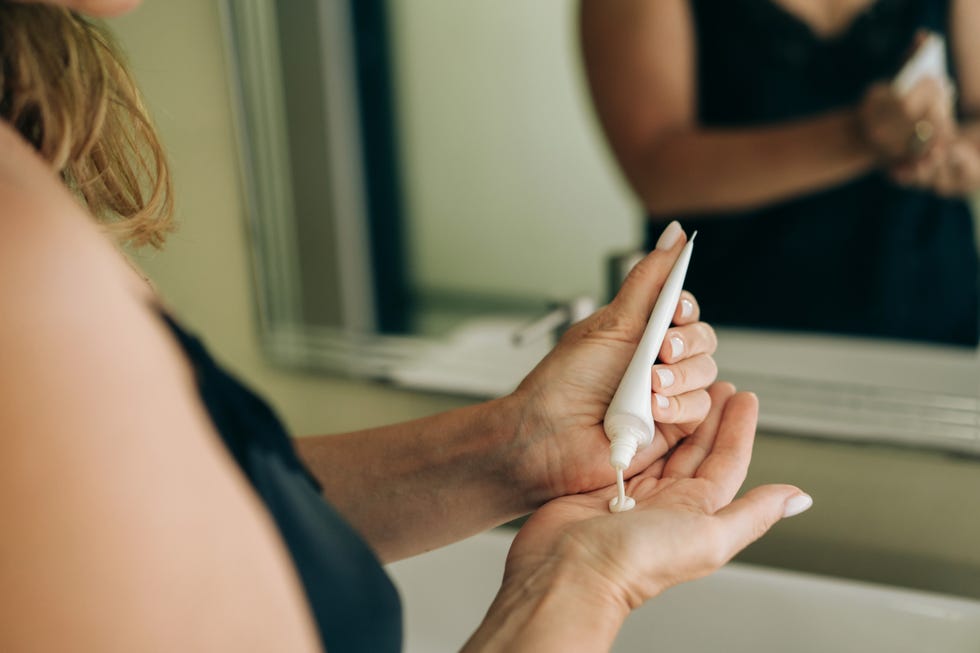 Fiordaliso//Getty Images
Protecting your skin from excessive UV exposure is crucial
And there’s a lot we can do to reduce risk, too. ‘The most effective way to reduce your risk of skin cancer is to protect your skin from excessive UV exposure over time. That means taking a consistent, everyday approach to sun protection rather than only thinking about it on holiday,’ says Dr Phillips. He recommends:
‘Using a broad spectrum SPF50+ sunscreen daily and reapplying it every two hours when outdoors, particularly during prolonged sun exposure – as a guide, you need approximately half a teaspoon for the face and neck.’‘Reapplying suncream more frequently after swimming, excessive sweating or towel drying.’‘Wearing wide-brimmed hats, UV protective sunglasses and protective clothing.’‘Seeking shade on days when the UV index is 3 or above.’‘Using an antioxidant serum within your skincare routine can also help to reduce oxidative stress caused by reactive oxygen species generated by UVA exposure. While antioxidants are not a replacement for sunscreen, they can work alongside broad spectrum SPF as part of a more comprehensive photoprotection strategy.’‘Avoiding sunburn, as episodes of intense UV exposure and blistering sunburns increase the risk of developing skin cancer, including melanoma.’‘Avoiding indoor tanning beds altogether, as they expose the skin to concentrated UV radiation and significantly increase skin cancer risk.’
Hannah Bradfield is a Senior Health and Fitness Writer for Women’s Health UK. An NCTJ-accredited journalist, Hannah graduated from Loughborough University with a BA in English and Sport Science and an MA in Media and Cultural Analysis. She has been covering sports, health and fitness for the last five years and has created content for outlets including BBC Sport, BBC Sounds, Runner’s World and Stylist. She especially enjoys interviewing those working within the community to improve access to sport, exercise and wellness. Hannah is a 2024 John Schofield Trust Fellow and was also named a 2022 Rising Star in Journalism by The Printing Charity. A keen runner, Hannah was firmly a sprinter growing up (also dabbling in long jump) but has since transitioned to longer-distance running. While 10K is her favoured race distance, she loves running or volunteering at parkrun every Saturday, followed, of course, by pastries. She’s always looking for fun new runs and races to do and brunch spots to try.