
A New Era Begins for Narcolepsy Treatment
For decades, narcolepsy remained one of the most misunderstood neurological disorders. Many patients lived for years without a diagnosis, often being told that their symptoms were related to stress, fatigue, depression, or poor sleep habits. Today, however, advances in sleep medicine, neuroscience, and pharmaceutical research are changing that reality.
The global healthcare community is paying increasing attention to sleep disorders, recognizing their profound impact on physical health, mental well-being, workplace productivity, and quality of life. As awareness grows and diagnostic capabilities improve, the market for narcolepsy treatments is entering a period of sustained expansion.
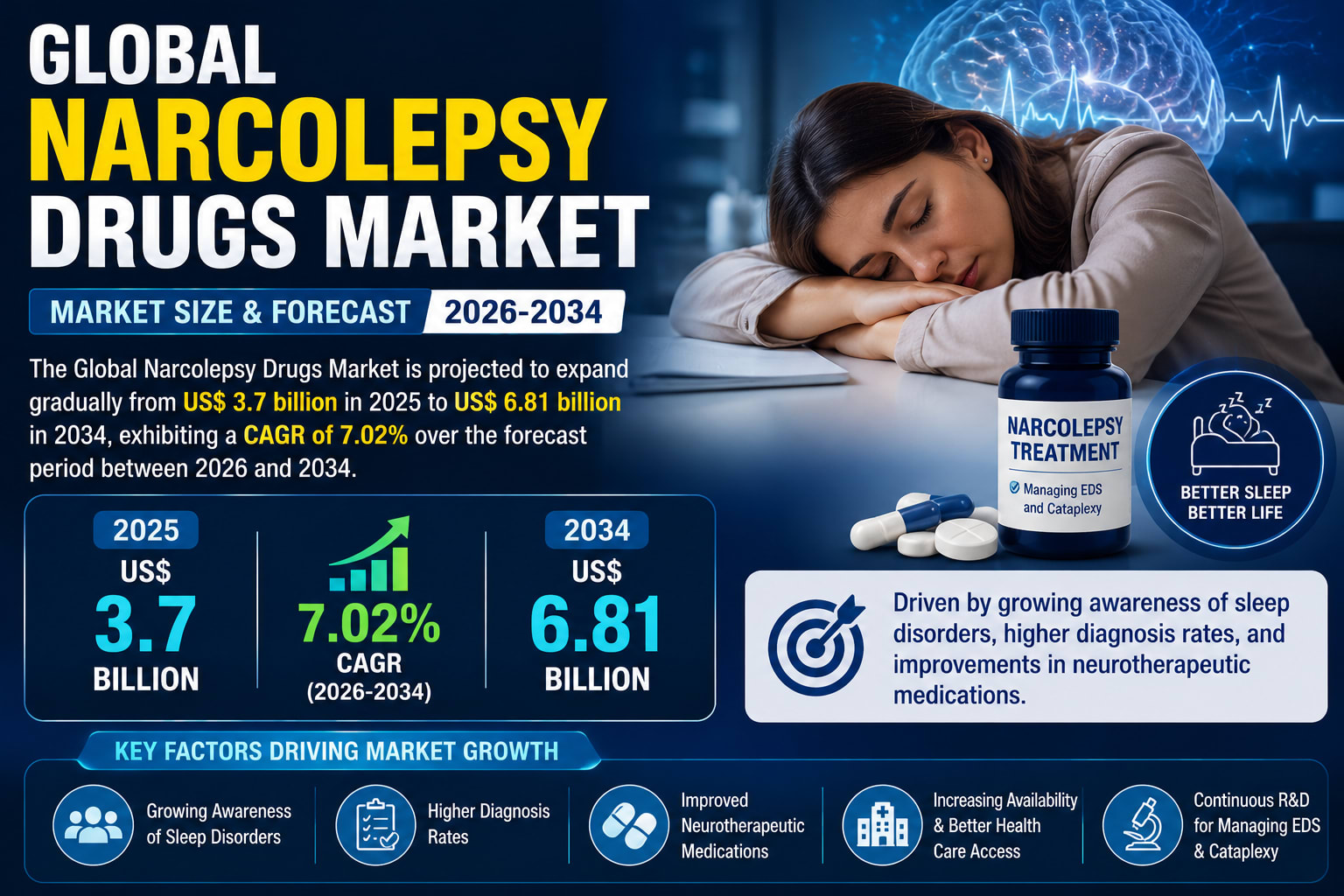
According to Renub Research, the Global Narcolepsy Drugs Market is projected to grow from US$ 3.7 billion in 2025 to US$ 6.81 billion by 2034, registering a compound annual growth rate (CAGR) of 7.02% between 2026 and 2034. This growth is being fueled by rising awareness of sleep disorders, improved diagnosis rates, increasing healthcare access, and significant innovation in neurotherapeutic drug development.
As pharmaceutical companies continue developing next-generation treatments, the future of narcolepsy care appears more promising than ever before.
 Understanding Narcolepsy and Its Impact
Narcolepsy is a chronic neurological disorder that affects the brain’s ability to regulate sleep-wake cycles. People living with narcolepsy often experience excessive daytime sleepiness (EDS), sudden sleep attacks, disrupted nighttime sleep, sleep paralysis, hallucinations, and in some cases, cataplexy—a sudden loss of muscle control triggered by emotions.
Unlike ordinary fatigue, narcolepsy significantly affects daily functioning. Patients may struggle with education, employment, driving, and maintaining social relationships.
Although there is currently no cure for narcolepsy, available medications help manage symptoms by promoting wakefulness, improving nighttime sleep quality, and reducing cataplexy episodes.
Common treatment categories include:
Wake-promoting agentsCentral nervous system stimulantsSodium oxybate therapiesAntidepressantsOrexin receptor agonists
These medications allow patients to lead more productive and independent lives while minimizing the impact of uncontrollable sleep episodes.
Growing Diagnosis Rates Are Expanding Market Opportunities
One of the most significant drivers of the narcolepsy drugs market is the increasing rate of diagnosis worldwide.
Historically, narcolepsy has been heavily underdiagnosed because its symptoms often resemble those of depression, chronic fatigue syndrome, anxiety disorders, or simple sleep deprivation. As awareness among healthcare professionals improves, more patients are receiving accurate diagnoses and appropriate treatment.
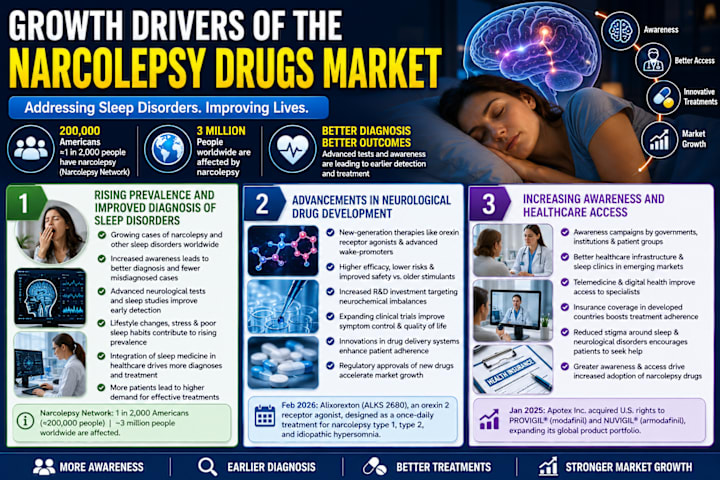
According to Narcolepsy Network estimates, approximately one in every 2,000 Americans lives with narcolepsy, representing around 200,000 people in the United States and nearly three million individuals worldwide.
Modern diagnostic tools such as:
PolysomnographyMultiple Sleep Latency Tests (MSLT)Neurological assessmentsAdvanced sleep studies
have significantly improved diagnostic accuracy.
Healthcare providers are increasingly recognizing excessive daytime sleepiness as a serious medical condition rather than a lifestyle issue, leading more patients to seek specialized treatment.
As diagnostic capabilities continue improving globally, the number of diagnosed patients is expected to rise substantially, creating strong demand for effective pharmaceutical therapies.
Orexin-Based Therapies Are Transforming Treatment Approaches
Perhaps the most exciting development in the narcolepsy market is the emergence of orexin-based therapies.
Orexin is a neurotransmitter responsible for regulating wakefulness. Many individuals with narcolepsy type 1 experience a deficiency of orexin-producing neurons, making orexin-targeted therapies a promising solution for addressing the root cause of the disorder.
Several innovative therapies are currently advancing through clinical development.
Among the most notable candidates is Oveporexton (TAK-861) from Takeda Pharmaceutical, an oral orexin receptor agonist developed for narcolepsy type 1. The therapy reached a major milestone when the company filed a New Drug Application (NDA) in January 2026, with regulatory approval potentially expected in late 2026 or 2027.
Other promising pipeline therapies include:
Alixorexton (ALKS 2680)Cleminorexton (ORX750)TAK-360Danavorexton (TAK-925)
These next-generation treatments are designed to provide more targeted symptom management with improved safety profiles compared to traditional stimulant medications.
The growing pipeline of orexin-based drugs is expected to reshape the competitive landscape of the narcolepsy market over the coming decade.
Pharmaceutical Innovation Is Accelerating Market Growth
Advancements in neuroscience research are contributing significantly to market expansion.
Pharmaceutical companies are investing heavily in developing therapies that address the neurochemical imbalances associated with narcolepsy. These investments are resulting in safer, longer-lasting, and more effective treatment options.
Several trends are driving innovation:
Development of orexin receptor agonistsImproved wake-promoting medicationsLong-acting formulationsBetter drug delivery technologiesPersonalized treatment approaches
Patients increasingly benefit from therapies that require fewer daily doses while providing consistent symptom control.
Moreover, advances in clinical research continue improving understanding of narcolepsy biology, creating opportunities for future therapies that may offer even greater effectiveness.
The pharmaceutical industry’s growing commitment to neurological disorders is expected to remain a major catalyst for market growth.
Awareness Campaigns Are Encouraging Earlier Treatment
Public awareness surrounding sleep health has improved dramatically over the past decade.
Governments, healthcare organizations, advocacy groups, and patient associations are actively educating the public about sleep disorders and their impact on overall health.
As awareness grows, more individuals are recognizing symptoms such as:
Persistent daytime fatigueSudden sleep attacksCataplexy episodesSleep paralysisFragmented nighttime sleep
and seeking medical evaluation.
Healthcare providers are also becoming more familiar with narcolepsy symptoms, reducing the likelihood of misdiagnosis.
The expansion of telemedicine services has further improved access to sleep specialists, particularly for patients living in remote areas.
Combined with improved insurance coverage and broader healthcare access, these developments are increasing treatment adoption worldwide.
Sodium Oxybate Continues to Lead Severe Symptom Management
Among currently available therapies, sodium oxybate remains one of the most effective treatments for severe narcolepsy symptoms.
The medication is widely recognized for its ability to:
Reduce excessive daytime sleepinessImprove nighttime sleep qualityDecrease cataplexy attacksEnhance overall quality of life
Because of its effectiveness, sodium oxybate is often considered a gold-standard treatment for patients experiencing severe symptoms.
Products such as LUMRYZ and lower-sodium oxybate formulations continue expanding their market presence while offering patients greater convenience and safety.
Despite strict monitoring requirements, sodium oxybate remains a cornerstone of narcolepsy management and is expected to maintain strong market demand throughout the forecast period.
Cataplexy Treatments Represent a Key Market Segment
Cataplexy is one of the most disabling symptoms associated with narcolepsy.
Episodes can be triggered by laughter, excitement, surprise, or emotional stress, causing sudden muscle weakness that can range from mild facial drooping to complete collapse.
The growing recognition of cataplexy’s impact on patient quality of life is driving demand for specialized therapies.
Current treatment options include:
Sodium oxybateAntidepressantsSelective serotonin-norepinephrine reuptake inhibitorsEmerging orexin-based therapies
As awareness and diagnosis rates improve, the cataplexy treatment segment is expected to remain a major contributor to overall market growth.
Regional Markets Continue to Expand
United States
The United States remains the largest and most advanced market for narcolepsy treatments.
Strong healthcare infrastructure, widespread access to sleep centers, advanced diagnostic capabilities, and robust pharmaceutical innovation support market growth.
The country is also a global leader in clinical research and drug development, with companies actively pursuing next-generation narcolepsy therapies.
United Kingdom
The United Kingdom benefits from a structured healthcare system through the NHS and increasing awareness of sleep disorders.
Growing investment in neurological research and expanded access to sleep medicine services continue supporting market development across the country.
India
India represents an emerging growth market as healthcare awareness improves and sleep medicine infrastructure expands.
While underdiagnosis remains a challenge, increasing urbanization, growing healthcare access, and expanding pharmaceutical availability are expected to create new opportunities for market growth.
Saudi Arabia
Saudi Arabia’s healthcare modernization efforts under Vision 2030 are contributing to increased diagnosis and treatment of neurological disorders.
Investments in specialized hospitals, sleep clinics, and advanced medical services are expected to support future market expansion.
Challenges Continue to Affect Market Development
Despite strong growth potential, several challenges remain.
Long-Term Safety Concerns
Many currently available narcolepsy medications may cause side effects including:
InsomniaAnxietyCardiovascular complicationsIncreased heart rateDependence risks
These concerns often require careful monitoring and may affect patient adherence to treatment plans.
Underdiagnosis in Emerging Economies
Many patients in developing regions remain undiagnosed due to limited access to specialized sleep clinics and diagnostic technologies.
Lack of awareness among healthcare professionals and social stigma surrounding neurological conditions can delay diagnosis and treatment initiation.
Addressing these barriers will be essential for unlocking the market’s full growth potential.
Future Outlook: A Promising Decade Ahead
The future of the narcolepsy drugs market appears highly promising.
Advances in neuroscience, growing investment in orexin biology, increasing healthcare access, and rising public awareness are creating a favorable environment for innovation and adoption.
Pipeline therapies have the potential to redefine treatment standards by offering more targeted approaches that address underlying disease mechanisms rather than simply controlling symptoms.
As research progresses, patients may gain access to therapies that provide longer-lasting relief, improved safety, and enhanced quality of life.
Final Thoughts
The global narcolepsy drugs market is entering a transformative period marked by scientific innovation, increasing diagnosis rates, and growing recognition of sleep disorders as serious neurological conditions.
According to Renub Research, the market is expected to expand from US$ 3.7 billion in 2025 to US$ 6.81 billion by 2034, reflecting strong demand for more effective treatments and broader healthcare access worldwide.
With groundbreaking orexin-based therapies advancing through clinical development and awareness continuing to rise across global healthcare systems, the narcolepsy treatment landscape is poised for significant change.
For millions of patients living with excessive daytime sleepiness, cataplexy, and other debilitating symptoms, these developments represent more than market growth—they offer renewed hope for a better quality of life and a brighter future.