
Remember life before Ozempic and Mounjaro? It feels like so long ago. Once upon a time, someone’s weight loss wouldn’t be assumed to be down to GLP-1 injections. There was a time when we didn’t discuss whether a friend was ‘on the jab’ and had never heard the term ‘food noise’.
Now, weight loss injections like Wegovy have become so commonplace that you wouldn’t be surprised to see your mum or your neighbour disposing of their sharps bin. A study by UCL found that an estimated 1.6 million adults in England, Wales and Scotland used injectable weight loss medication like Wegovy and Mounjaro in the last year.
When Wegovy became available on the NHS in 2023, experts predicted a surge in usage. Now, another big change is upon us: the arrival of Wegovy in pill form. Again, it’s thought that this will prompt a significant rise in the number of people using these drugs to drop the pounds.
But how do the tablets work? Who should (and shouldn’t) consider using them? And are they as effective as semaglutide injections? We asked the experts for everything you need to know.
How do Wegovy pills work?
Wegovy injections are made of semaglutide, a type of GLP-1 (glucagon-like peptide-1) medication that works by mimicking the natural GLP-1 hormone our bodies release after eating to create a feeling of fullness and reduce appetite. GLP-1s reduce cravings and ‘food noise’, slow down digestion and make users eat fewer calories so they lose weight.
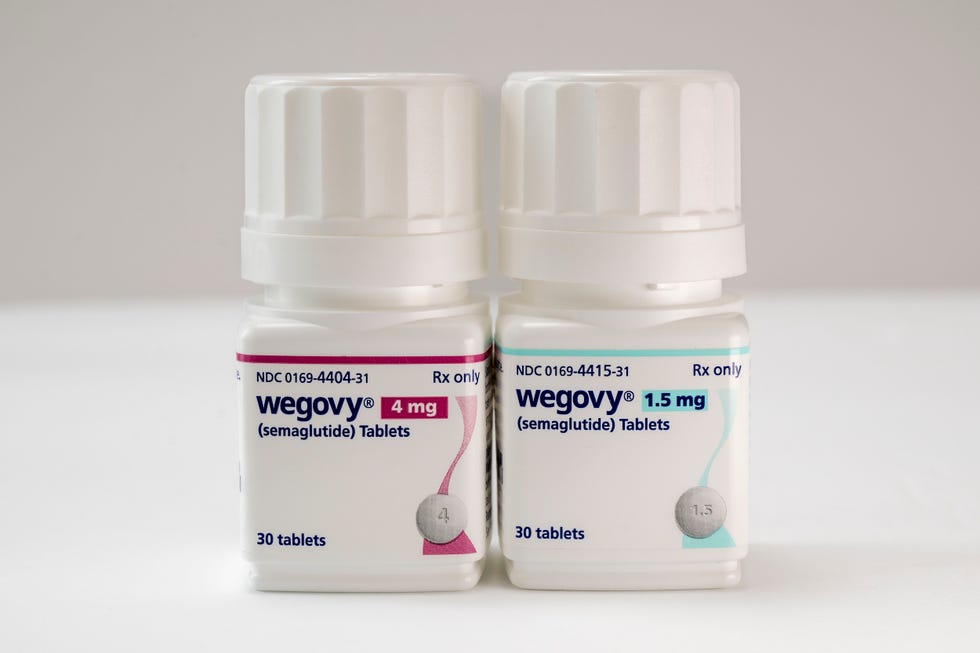
Now, for the first time, Wegovy in a pill form will be available in the UK. These will be once-a-day tablets that function in the same way as the injections, explains Dr Daniel Atkinson: ‘Semaglutide is the ingredient in both Wegovy pills and injections, so they work in the same way by suppressing your appetite, making you feel fuller for longer and reducing food noise. The main difference is that the dose in the pills is a little higher than it is in the injections, because less of the medication is absorbed through the gut than is absorbed into the system with injected treatment.’
Getty Images
Are Wegovy pills as effective as GLP-1 injections?
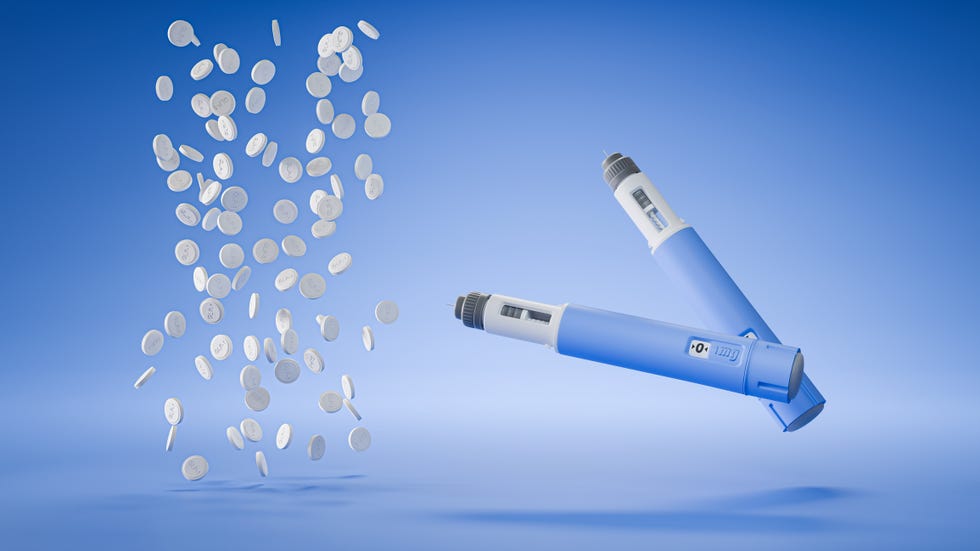
When looking at pills versus injections, you might notice that the pills contain higher doses of up to 25mg, whereas injections have a maximum dose of 2.4mg. Your assumption could be that 10 times the dosage means 10 times the effectiveness, but this isn’t the case. ‘This difference is due to the fact that injections are administered directly into the bloodstream, while pills must be digested and absorbed,’ Dr Atkinson notes. ‘During digestion, some of the medicine is lost – this is why higher concentrations are required in pill form.’
Another common assumption is that taking pills will be a less direct, and thus less effective, method. Dr Janelle Duah, an internal medicine physician at Yale and the associate medical director at the Maven Clinic, says that, ‘From an efficacy standpoint, clinical trial data shows that the oral 25mg tablet and the 2.4mg weekly injection produce comparable weight loss – roughly 13-15% of body weight – so patients are not sacrificing effectiveness by choosing the tablet.’
How do you take Wegovy pills?
While the GLP-1 injections are administered weekly through an injection into the stomach, thigh, or arm, this new format is taken daily on an empty stomach.
‘The tablet must be taken on an empty stomach first thing in the morning with no more than 120 ml of plain water, swallowed whole without crushing or chewing, and then you must wait at least 30 minutes before eating or drinking anything else, or taking other medications,’ explains Dr Duah. ‘If these instructions aren’t followed carefully, the medication may not be properly absorbed and won’t work as well.’
What are the benefits of using Wegovy pills?
The benefits of Wegovy pills will be the same as Wegovy injections – reduced food noise and appetite, weight loss, lower blood sugar levels and treatment of diabetes. There’s also data to suggest other unexpected benefits of GLP-1 medications, including a reduced risk of cardiovascular disease and stroke, reduced cravings for drugs and alcohol, and even a reduced risk of Alzheimer’s disease.
In terms of pros for using the pills over the injections, the main one is that you don’t have to inject yourself – something that understandably makes some people squeamish.
Dr Hector Perez, lead bariatric surgeon at Renew Bariatrics, says: ‘The biggest advantage I see is that it overcomes fear of injections for people who are actually excellent GLP-1 candidates but are simply needle-phobic. I’ve had patients delay effective obesity treatment for years simply because they couldn’t bring themselves to use a weekly pen, so an oral option could dramatically increase treatment uptake for such people.’
Another benefit is that the pills don’t need to be kept as cold as injections, freeing up valuable fridge space.
aprott//Getty Images
For some people, taking a pill is easier than administering an injection, but it’s worth considering the drawbacks. ‘Some people also believe pills are more convenient, but they don’t know how forgiving weekly injections can be; you inject once and move on with your week,’ says Dr Perez. ‘Oral semaglutide, on the other hand, typically needs to be taken on an empty stomach with a small amount of water, followed by waiting before eating or drinking, which can be an inconvenience for many people. So while tablets remove needle anxiety, they demand greater day-to-day adherence.’
What are the side-effects of Wegovy pills?
‘Gastrointestinal side-effects, including nausea, constipation and diarrhoea, are common with GLP-1 treatments,’ says Dr Atkinson. ‘These side-effects are usually mild and should subside as your body adjusts to the medicine. But they might temporarily worsen after each dosage increase. To reduce side-effects, try eating smaller meals throughout the day rather than three large ones, drink plenty of water and opt for bland, less spicy foods to combat nausea.’
Dr Duah adds: ‘If you experience unexpected side-effects, particularly symptoms like severe low blood sugar, dizziness or feeling generally unwell in a way that doesn’t match the known side-effect profile, stop taking the medication and seek medical advice immediately.’
If you experience any side-effect from the medication, you’re advised to talk to your doctor and report it to the MHRA Yellow Card scheme through their website.
How much will Wegovy pills cost?
There are hopes that the pills will be cheaper than the injections, but this remains to be seen. Wegovy tends to be cheaper option compared to Ozempic and Mounjaro, but the pills and injections appear to work out at roughly the same cost – if not more expensive.
On the Asda Online Doctor website, for example, a four-week supply of the starting dose (0.25mg) of Wegovy injections is listed as £88.97, whereas the preorder for four weeks of the starting dose of Wegovy pills (1.5mg) is £98.97. As you increase your dosage, the prices rise, too – the 25mg option on Asda will set you back £188.97, although this is considerably less than the maximum dose (7.2mg) of the injectable version, which costs £248.97.
While Wegovy pills have now been approved as a prescription-only medication, they’re not yet available via the NHS – unlike Mounjaro and Wegovy injections.
In short: anyone expecting to get hold of Wegovy pills for free or extremely cheap will be disappointed.
aprott
Who should (and shouldn’t) consider Wegovy pills?
Dr Nneoma Oparaji, a triple board-certified physician with years of experience in obesity and internal medicine, advises: ‘Wegovy tablets are an excellent option for patients with obesity or who are overweight in addition to type 2 diabetes, high blood pressure, sleep apnoea, who prefer to take a daily pill over injections.’
Dr Neesha Patel, a health psychologist working in the NHS and private practice, notes that ‘The people who tend to benefit most are those who see the medication as one tool within a wider lifestyle change, rather than a quick fix.’
‘In my clinical experience of working with patients, the most successful outcomes occur in weight management when medication is combined with support to build healthier habits, manage emotional eating and develop sustainable routines,’ Dr Patel notes. ‘However, Wegovy may not be the right option for everyone. If someone is looking for medication to do all the work without addressing the underlying behaviours/habits that contributed to weight gain, they’re more likely to struggle in the long term, particularly if treatment is stopped.’
Wegovy pills should not be used by anyone with diabetic ketoacidosis, type 1 diabetes, an elevated risk of thyroid cancer, a history of pancreatic problems, gallbladder disease, liver or kidney disease, or diabetic eye problems. They are also not for those whose BMI is below 27, or with a history of an eating disorder.
But this list of exceptions isn’t exhaustive. It’s vital to let your doctor know you’re considering taking any weight loss pills so they can safely recommend the most suitable treatment for you.
When will Wegovy pills be available in the UK?
Wegovy pills were approved for use from 11 June 2026 and have begun to roll out across online and high street pharmacies. As with the injections, they’re available on prescription only.
What should you eat while taking weight loss pills?
Dr Atkinson advises: ‘It’s important to adopt a calorie-deficit diet that’s high in protein, fibre and whole foods. Protein is crucial during weight loss, as semaglutide can cause muscle loss, which can lead to a condition called sarcopenia.
‘Additionally, avoid highly processed foods and junk foods, such as cakes, pastries and crisps, as these are calorie-dense and will consume a significant portion of your calories without keeping you feeling full.
‘Eating particularly fatty foods while taking Wegovy can also increase the risk or nausea as a side-effect, or make nausea worse – so it’s best to include foods that aren’t fried or high in saturates, and limit ultraprocessed foods.’