
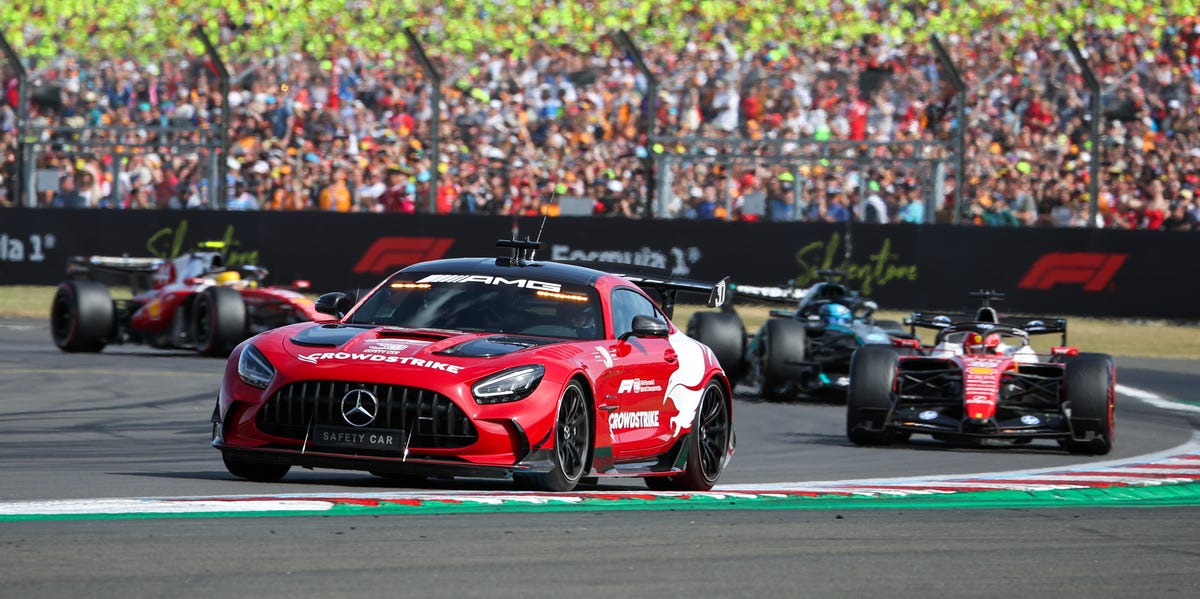
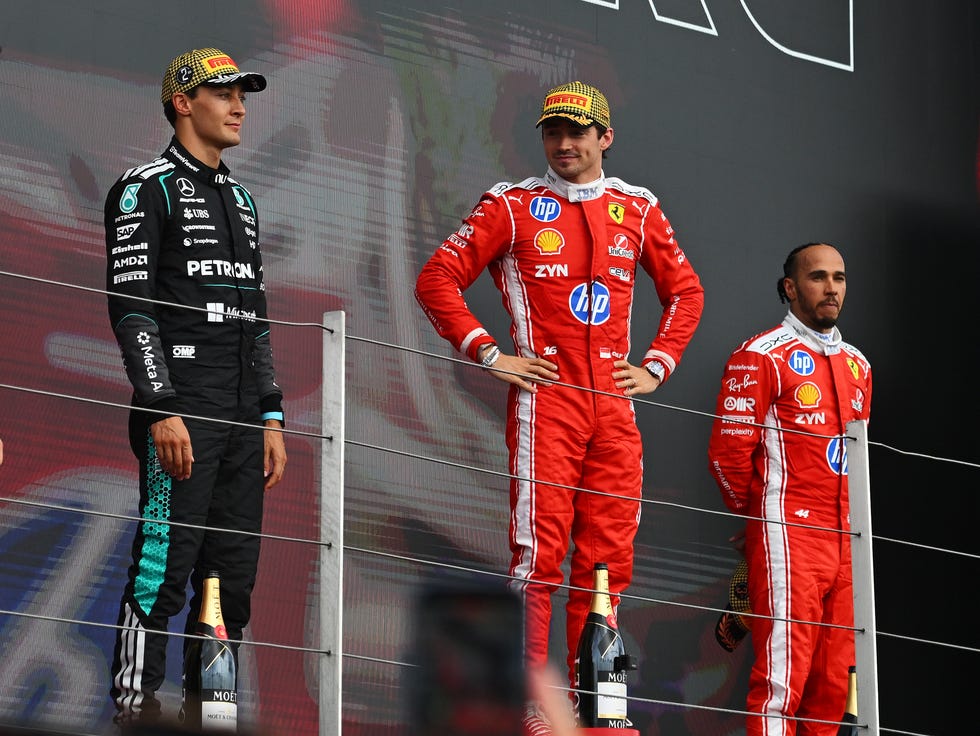
Sunday’s British Grand Prix ended with a familiar controversy. A late crash from Max Verstappen brought out a safety car with four laps remaining, creating a situation that required drivers to gamble on whether or not to give up a spot and stop for tires ahead of a possible one-lap shootout. Lewis Hamilton chose to pit and fall to third—a decision that looked brilliant when a graphic on the broadcast feed suggested a one-lap restart would get him a chance to reverse what happened to him at Abu Dhabi in 2021. Instead, the race ended behind the safety car, and Hamilton gave up second to championship rival George Russell for no reason at all.
Formula 1 blamed the broadcast’s confusion on a software error. An automated procedure requiring that one lap must be completed after the usual unlapping procedure meant that the potential restart was not legal, a direct contrast to the decisions famously made by former race director Michael Masi in 2021. It cost Hamilton a chance to take back second, or perhaps even go for the win … but the problem is bigger than what happened in this one race.
Rudy Carezzevoli//Getty Images
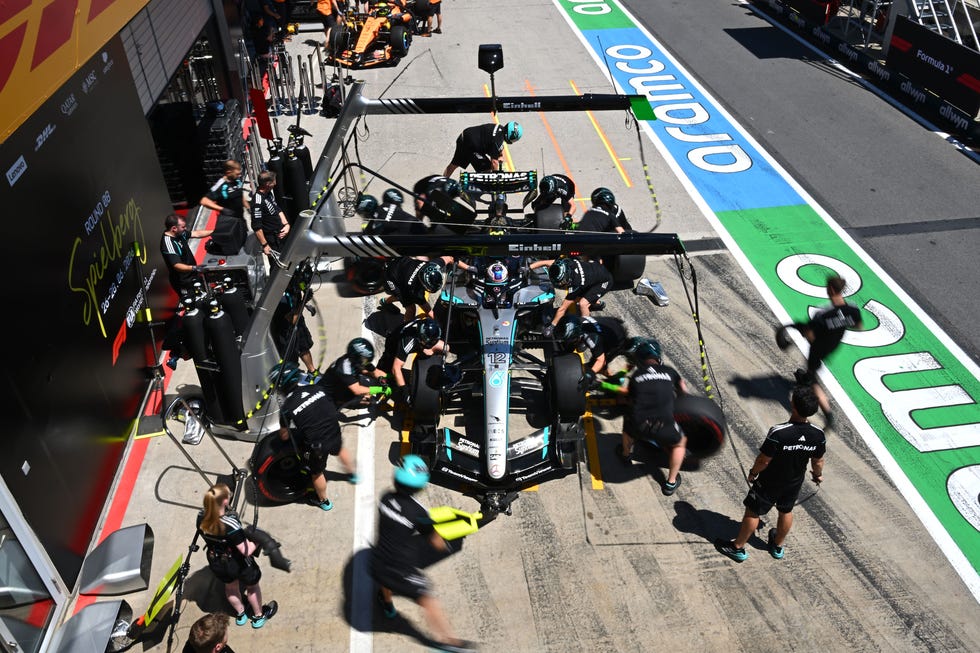
In Formula 1, pit lanes do not close when a safety car comes out as they do in American racing, making a stop under those conditions greatly beneficial. The open pit lane changes who does and does not have the opportunity to stop without penalty, giving drivers with a big gap on the car behind them both the chance to effectively stop without losing a position and the opportunity to react to whether or not the car they are racing has previously stopped for tires.
In typical racing conditions, this actually makes safety car timing more fair, rather than less. By not closing the pit lane, drivers are not punished as heavily if they are “caught out” by a crash that comes between when their competitors have pitted and when they do. But that flips at the end of races, when tire changes are entirely late-strategy pivots rather than part of a planned race-long effort to maximize speed over the course of competition.
In a situation where a race may or may not restart, a driver in second place by five seconds with a big gap to third actually has a major advantage on the leader. If the leader pits, the driver can stay out and be handed the win by pure chance, as Russell was handed a second-place win at Silverstone; if the leader does not, the driver can stop and get on fresh tires for a final sprint, as Verstappen did effectively without penalty at Abu Dhabi. In other words, the safety car creates two new opportunities to win that did not exist before it came out.
Mark Sutton – Formula 1//Getty Images
Rather than play around with any of this any further, Formula 1 can simply close its pit lane under safety car for the final few laps of a race. Exceptions can be made for drivers that need emergency service. Other people who might need to pit, such as drivers that have not yet completed the requirement to run more than one compound over the course of the race, can come in the pit lane after the field forms up behind the safety car, as they would in IndyCar or IMSA. The penalty for doing so would be massive, but Formula 1 is no stranger to massive consequences for mistakes tied to a late safety car; Kimi Antonelli‘s five-second penalty was made crushing by one in Sunday’s British Grand Prix.
There is precedent for safety car rules changing late in races at this level. IMSA uses “fast yellows,” which ignore long safety car pit procedures and get back to racing sooner, at the end of its races. The FIA World Endurance Championship has a complex three-group unlapping and merging procedure at Le Mans, but that goes on hold in the last hour of races for the same reason. F1 can follow those series’ leads and lightly alter its safety car procedures to preserve the strengths and integrity of the show it’s selling.
This would instantly solve the coin flip that teams have to gamble on in these situations. By generally leaving the field on the tires they were racing, it would also make late shootouts more fair and more representative of the racing that was occurring before the safety car came out. Not only would this improve the actual racing product, it would save us from yet another weekend of rehashing the series-altering (and, frankly, embarrassing) events of Abu Dhabi 2021. By addressing the core problem that led to that farce, rather than merely the procedures that were circumvented, Formula 1 can create a more fair series that is closer in line with the spirit of all-out sprint racing it’s meant to embody.
Fred Smith’s love of cars comes from his fascination with auto racing. Unfortunately, that passion led him to daily drive a high-mileage, first-year Porsche Panamera. He is still thinking about the last lap of the 2011 Indianapolis 500.