

While we can’t totally put a stop to age-related decline, there’s a lot we can do to help slow cognitive decline as we age – a message neurologist and headache specialist Dr Mina, known as @migraineswithmina online, is keen to highlight.
In fact, a recent landmark study published in Scientific Reports found that cognitive performance can improved well into old age (we’re talking into your 80s).
And some of the things we can do to help prevent cognitive decline might be simpler than you think. As Dr Mina recently shared on Instagram, these are five of the habits she typically sees adopted by those with healthy brain ageing.
5 habits for healthier brain ageing1. Continuous learning
The first thing that sticks out about people with healthy brain ageing, Dr Mina writes, is that ‘they don’t stop being beginners’.
‘Whether it’s pickleball, piano, gardening, or a new language – they keep learning things they’re bad at,’ she explains.
Indeed, one study published in the Journal of Gerontology found that adults aged 58-86 who spent three months learning several new skills – including Spanish, drawing and photography – improved their memory and executive function (your brain’s ability to process information).
2. Using both hands
‘They intentionally challenge themselves by using their non-dominant hand for simple daily tasks to build new neural connections,’ notes Dr Mina of another common habit she sees linked to healthy brain ageing.
Interestingly, in one study where researchers got right-handed participants to complete six weeks of left-handed chopstick training, their left-hand performance improved to a level similar to that of their dominant right hand. And further research has shown this happens due to strengthened connections in the brain.
3. Regular time outdoors
‘They spend time outside almost every day,’ adds Dr Mina. ‘Regular exposure to daylight and nature supports sleep, mood, and overall brain health.’
Indeed, one review ‘found evidence for associations between nature exposure and improved cognitive function’, while another concluded that as little as 10 minutes spent in nature can tangibly improve mental health and wellbeing.
When, according to Loughborough University, the average UK person spends just 7% of their time – or 86 minutes – outdoors during the work week, this is an important one to note. Try getting outside during your lunch break and opt for outdoor activities during your free time where possible (although always remember that SPF!).
4. Oral health
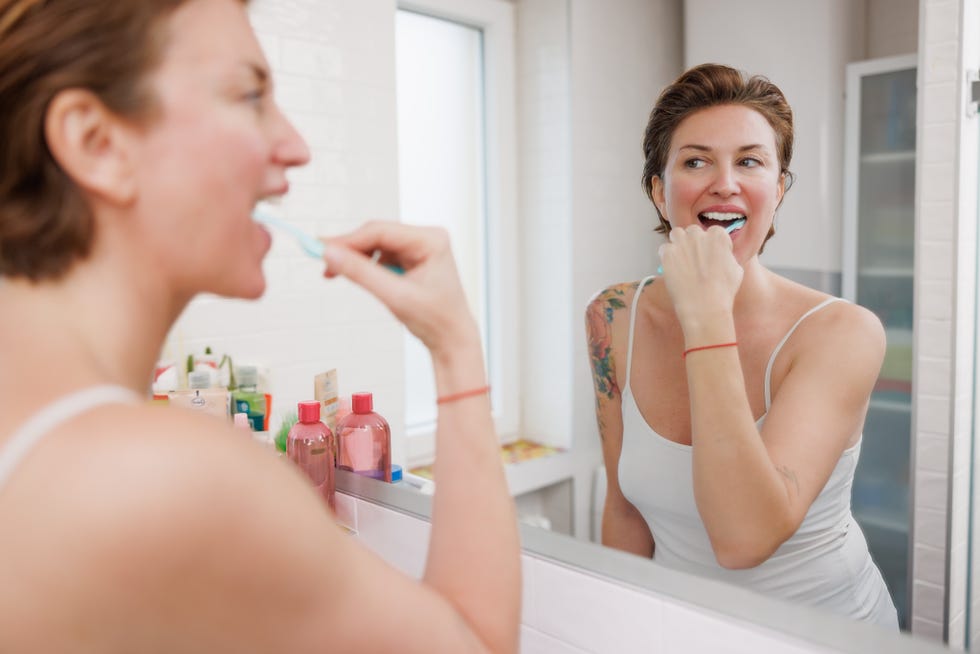
‘They take their oral health seriously. Gum disease has been linked to inflammation and cognitive decline, so they don’t skip dental care,’ notes Dr Mina of a perhaps less expected habit associated with healthier brain ageing.
 zoranm//Getty Images
Gum disease has been linked to cognitive decline, flags Dr Mina
5. Moving little and often
And last but not least, ‘they naturally move all day’, notes Dr Mina. ‘Not just one workout – they walk, take the stairs, garden, cook, and avoid sitting for hours at a time.’
Indeed, one study found that a 6-week exercise snacking programme helped participants process information more quickly without sacrificing accuracy, while another study found doing just one minute of squatting exercises periodically during long periods of sitting may help preserve executive function.

Hannah Bradfield is a Senior Health and Fitness Writer for Women’s Health UK. An NCTJ-accredited journalist, Hannah graduated from Loughborough University with a BA in English and Sport Science and an MA in Media and Cultural Analysis. She has been covering sports, health and fitness for the last five years and has created content for outlets including BBC Sport, BBC Sounds, Runner’s World and Stylist. She especially enjoys interviewing those working within the community to improve access to sport, exercise and wellness. Hannah is a 2024 John Schofield Trust Fellow and was also named a 2022 Rising Star in Journalism by The Printing Charity. A keen runner, Hannah was firmly a sprinter growing up (also dabbling in long jump) but has since transitioned to longer-distance running. While 10K is her favoured race distance, she loves running or volunteering at parkrun every Saturday, followed, of course, by pastries. She’s always looking for fun new runs and races to do and brunch spots to try.