
You know that strong muscles are key for logging faster miles and preventing injuries. Your hamstrings, quads, glutes and calves all work together to propel you forwards. Even your upper body and core play a role in an efficient stride, powering your arm swing, keeping you upright and helping with the transfer of power.
But what’s often forgotten about during gym workouts are your tendons, or the connective tissues that connect muscle to bone. If you’ve ever had to take a few weeks off for a nagging case of Achilles tendinitis or knee pain, you already know how important healthy tendons are when it comes to running.
And not even the elites are immune to tendon issues. At the 2026 Berlin Marathon, Tigist Assefa missed out on a probable world record when an apparent injury in her lower leg – which was later diagnosed as a partial Achilles rupture – forced her to slow down in the final couple of
So how exactly do you train your tendons to make them more resilient, just like your muscles? We asked three physiotherapists for the best strategies to help you run strong and ache-free.
What are tendons – and what role do they play in running?
While many people think of tendons simply as the attachment point between muscle and bone, they are very important in transferring force and storing energy, Kassandra Reagan, PT, DPT, OCS, CSCS, physiotherapist at the Hospital for Special Surgery in New York City, tells Runner’s World.
“During running, tendons act like springs, storing energy when the foot hits the ground and returning that energy during push-off,” she says. “Healthy tendons help runners run efficiently and more powerfully. [Tendons] need to stay as healthy as possible to tolerate the repetitive impact of running, since when you’re running, you’re jumping from each single leg over and over and over.”
These are the most important tendons when it comes to running, according to Kimberly Melvan, DPT, CSCS, a run coach and physical therapist who specialises in running-related injury prevention and treatment:
Achilles tendon
This tendon stores and returns a large amount of energy during running – and it’s important for running economy and propulsion, says Melvan. It runs down the lower half of your calf to connect your calf muscles to your heel bone.
Patellar tendon
This tendon transfers force from the quads to the lower leg and helps with knee extension and absorbing forces when landing, says Melvan. It starts at the bottom of your kneecap and runs down to the top of your shinbone.
Hamstring tendon
This tendon is important for stride mechanics, hip extension and controlling the leg during the swing phase, says Melvan. It runs from the bottom of your bum to the top of the back of your knee.
Weak tendons can lead to injuries like Achilles tendinitis (pain in the heel or ankle), patellar tendinitis (pain at the front of your knee or just below your kneecap), posterior tibial tendinitis (pain and swelling in your inner ankle), peroneal tendinitis (ankle pain), hamstring tendinitis (a dull ache around the back of your thigh, knee, lower leg or bum) and plantar fasciitis (pain in the heel and/or arch of the foot), according to physiotherapist and running coach Emmi Aguillard, DPT. (Tendinitis is a breakdown of a tendon’s collagen fibre structure, she explains, which leads to inflammation and pain.)
“Tendons take much longer to adapt to training stimulus than your muscles and cardiovascular system, which contributes to injury risk,” says Aguillard. “Tendons are built like rope – they’re strong, but they have far less blood supply than muscle. Since adaptation and recovery depend on blood flow, this is part of what limits how fast tendons can strengthen.”
The biggest risk factor for tendon injuries includes rapid increases in mileage or intensity that outpaces the tendon’s ability to adapt, adds Aguillard.
Should you train your tendons and your muscles differently?
All three experts agree that tendon-specific training is not the same as muscle-specific training. “Muscle strength training does not equate to stronger tendons,” says Melvan. “You need to train the tendon for the type of load that it experiences during running.”
The goal, adds Melvan, is to build your tendons to be able to tolerate high repetitive loads and efficiently store and release energy. This means that your tendons need to be strong and stiff, continues Reagan.
In order to achieve this, you need to do exercises at slow speeds with heavy loads, says Melvan. This means slowing down the lowering phase and lifting phase of a movement, moving on a count of three seconds each way, adds Aguillard. For example, if you’re doing a squat, you’d lower down for a count of three and lift back up for a count of three. According to the American College of Sports Medicine, you should do this with a heavy load, defined as 80% of your one-rep max.
Research backs this up, too. A systematic review and meta-analysis published in Sports Medicine Open, for instance, which looked at 27 studies involving more than 260 participants, found that lifting heavy weights is the best way to make your tendons stronger.
Because tendons act like springs, doing plyometric exercises – fast, explosive movements – is also a good idea, says Reagan. In fact, a small study of 11 participants, published in Physiological Reports in 2021, found that a 12-week plyometrics routine improved tendon efficiency and resilience.
5 tendon exercises to add to your workouts
For non-injured runners who don’t have tendon pain, Reagan recommends strength training two to three days per week using the slow and heavy strategy. She also recommends doing plyometric exercises one or two days per week. Here are five exercises to do for healthy tendons.
1. Calf raise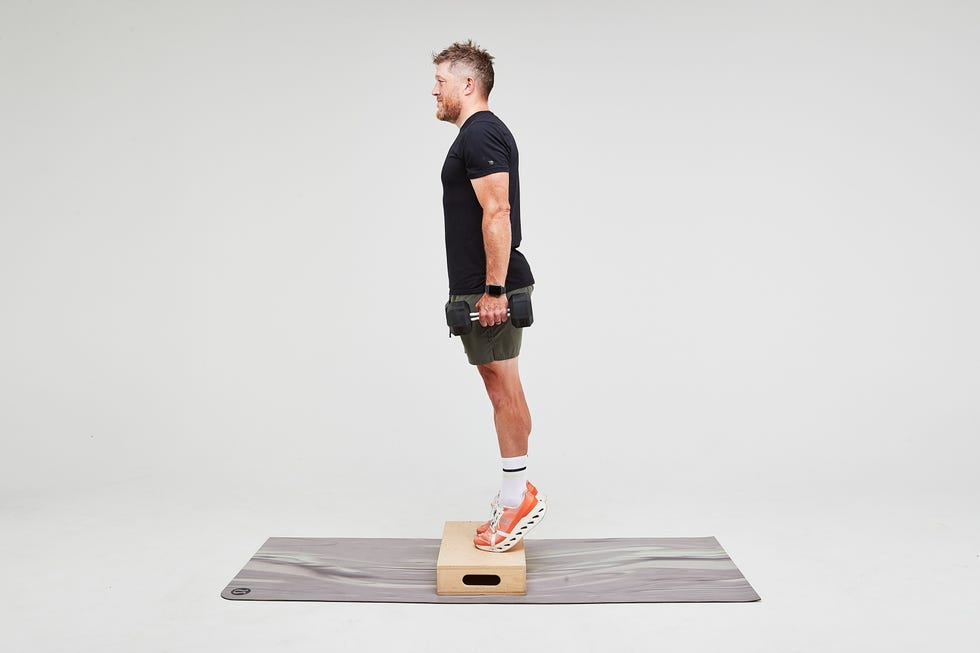
Trevor Raab
Why it works
Aguillard recommends this move for stronger Achilles tendons and says that if you really want the most bang for your buck, do them on a slant board for a slight incline. If you don’t have a slant board, doing them on a step would work.
How to do itStand on a slant board or the edge of a step with your feet a few inches apart. Hold a heavy dumbbell in each hand, with your palms facing inwards.Press through the balls of your feet and slowly raise your heels as high as possible onto your toes for a count of three seconds. Keep your knees straight but not locked.Pause for a second at the top of the movement to contract calf muscles.Slowly lower your heels back down for a count of three seconds.Repeat for three sets of six reps. 2. Deadlift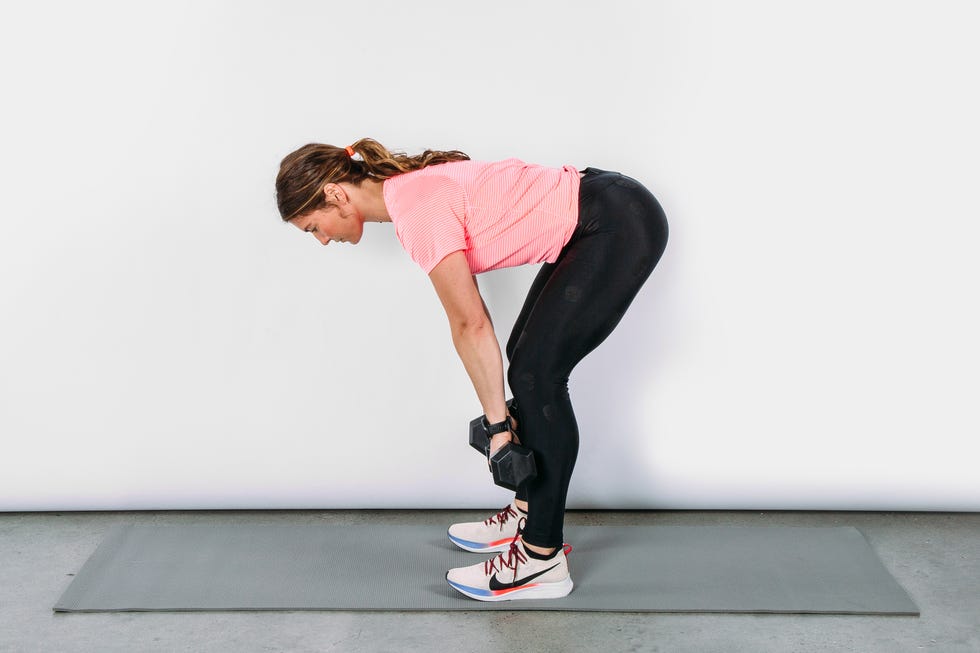
Julia Hembree Smith
Why it works
Deadlifts are a great move to work your hamstring tendons, says Aguillard. You can do a traditional deadlift with a barbell, dumbbells or hex bar.
How to do itStand with your feet hip-width apart and hold two heavy dumbbells against your thighs, with your palms facing you and your hands just wider than shoulder-width apart.Hinge at the hips by sending your glutes straight back while maintaining a slight bend in your knees. Slowly lower the dumbbells down your legs for a count of three seconds until they reach just below your knees and you feel a slight pull in your hamstrings. Drive your feet into the ground and engage your glutes to stand up on a count of three seconds. Repeat for three sets of six reps. 3. Bulgarian split squat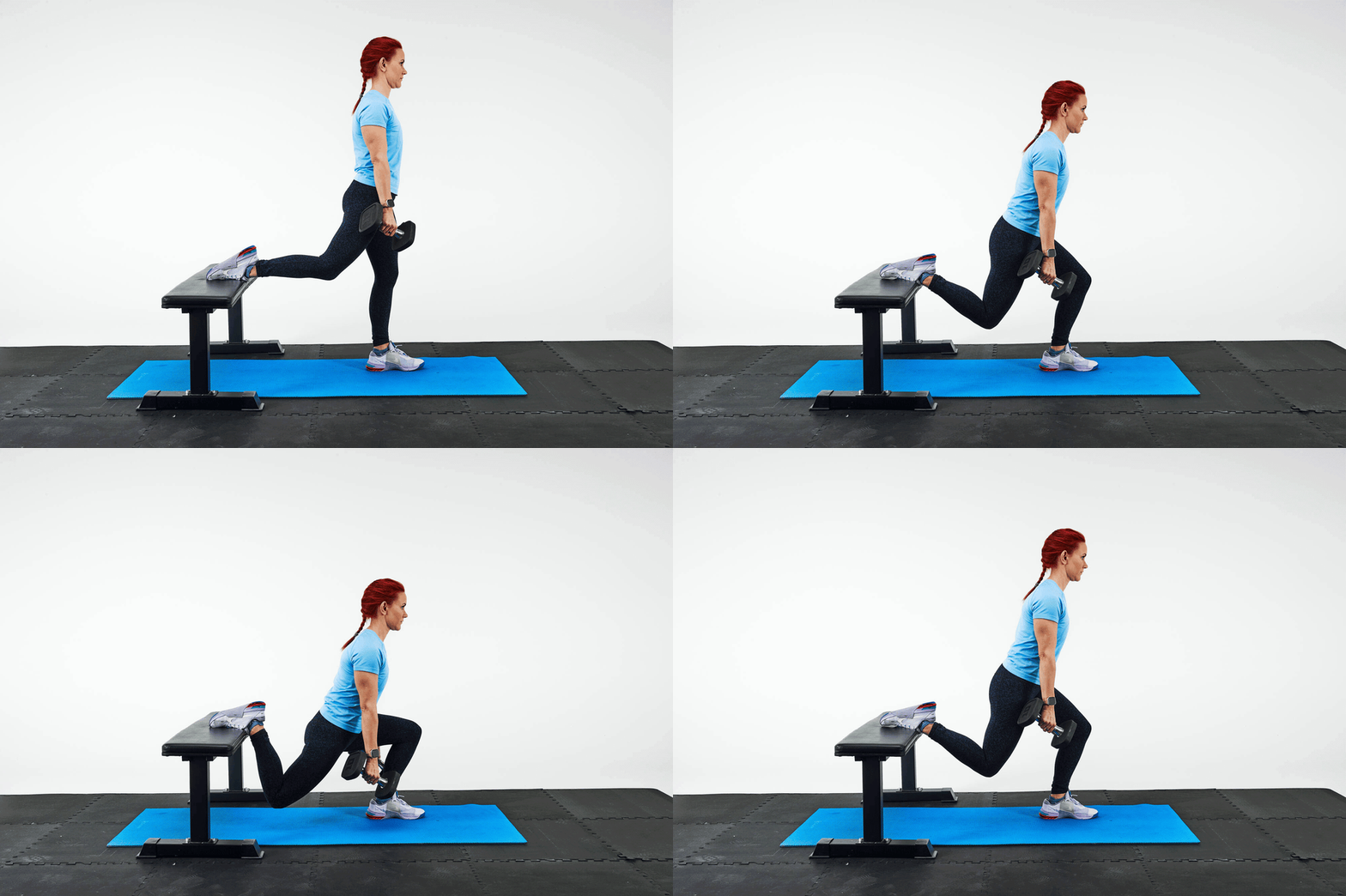
Trevor Raab
Why it works
Bulgarian split squats help to strengthen your patellar tendon, according to Aguillard.
How to do itStart standing up to two feet away from a bench or chair that’s knee-high. Face away from the chair or bench and place your feet hip-width apart. Hold a heavy dumbbell in each hand, with your arms down by your sides. Lift your left leg behind you and place your left foot on the bench or chair. Slowly bend your right knee for a count of three seconds to lower into a lunge position. Make sure that your right knee forms a 90-degree angle – your back left knee should hover just off the floor. Pause for a second at the bottom, then slowly extend your right leg for a count of three back to the starting position. Repeat for three sets of six reps on your right leg, then switch sides.4. Speed skater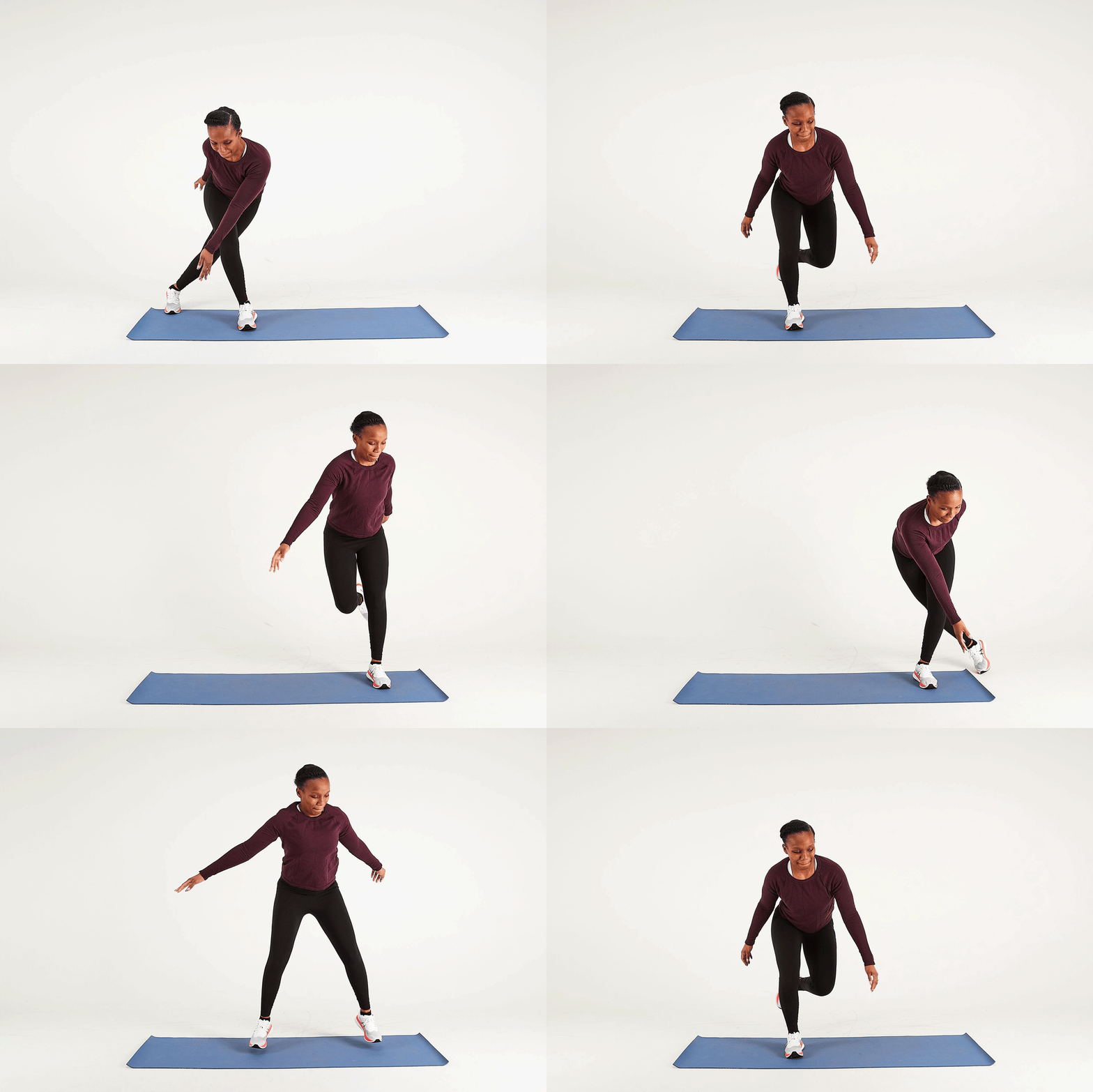
Trevor Raab
Why it works
Aguillard is a fan of speed skaters, which work your Achilles and patellar tendons. When running, these tendons help to propel you forwards and absorb impact when your feet touch the ground.
How to do itStand with your feet hip-width apart, with a soft bend in your knees and arms at your sides.Jump laterally to the left, driving off your right foot and landing on your left foot in a quarter squat position. Your right foot should follow behind your left leg and your right toes should hover above the ground or make light contact with the ground to aid balance. Immediately repeat, pushing off your left foot and landing on your right foot. Continue alternating.Do 20 reps in total.5. Pogo hops
Trevor Raab
Why it works
Pogo hops are another type of plyometric exercise that Aguillard loves, which work your Achilles tendon. A strong Achilles tendon helps you to push off the ground when running.
How to do itStand with your feet hip-width apart, with your arms at your sides. Rise up onto the balls of your feet.With a soft bend in your knees, bounce up and down using your ankles and calves to push off the floor.Land softly on the balls of your feet and rebound immediately into the next jump without pausing. Limit time spent on the ground. Do 20 reps in total.