
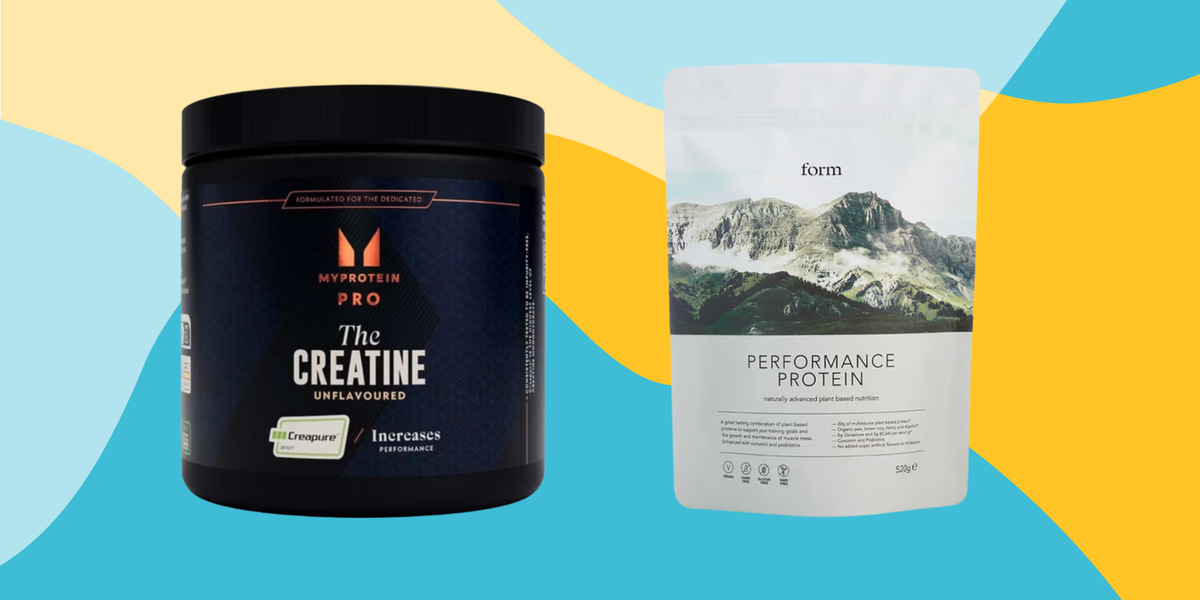
It’s true: protein powder and creatine – two of the most popular supplements in the fitness space – have escaped the gym floor. Even friends who don’t lift weights are taking them, while TikTok promises benefits including stronger muscles and sharper thinking.
But are these two powders doing the same job? Or have we started talking about them in the same breath and become confused about which one does what?
‘They’re often grouped together because both have a long history in fitness and bodybuilding, but they do very different jobs,’ explains Dr Jamie Pugh, sports physiologist and scientific advisor at Puresport.
Protein powder is a convenient source of protein, which your body uses to repair and build muscle after training. Creatine works differently – it’s stored in muscle, where it helps replenish energy during short, hard efforts, such as a heavy set or a sprint.
As Dr Pugh puts it: ‘Protein provides the bricks, and creatine helps you do more work on the building site.’
Here’s everything you need to know.
What does protein powder do?
Protein powder is a convenient way to increase your daily protein intake, explains Dr Pugh.
‘It’s useful for people who find it hard to get enough from food alone, such as those who train regularly, follow a plant-based diet or have a low appetite, and for older adults, who need more protein per meal to get the same muscle-building response,’ he says.
‘It’s also practical when you’re travelling or can’t easily get to whole foods. If you already get enough protein from your diet, it won’t give you any extra benefit.’
What does creatine do?
‘Creatine increases the energy available for repeated short bursts of high-intensity exercise, so you can get a little more out of each session,’ explains Dr Pugh.
Over time, that may lead to greater gains in strength and muscle, particularly for those doing resistance training or interval-based sport.
‘Vegetarians and vegans tend to see the biggest response because their stores start lower, and there’s good evidence for older adults who combine it with strength training,’ he adds.
‘Creatine is also an energy source for the brain, and researchers are starting to look at its effects on cognition, although that work is at an early stage.’
Which is better for building muscle?
Training is the most important factor for building muscle, says Dr Pugh.
Yes, protein and creatine can support the changes that training produces, but ‘if you aren’t doing regular resistance training, you won’t see much effect from either,’ he explains.
Once training is in place, eating enough protein is essential, ‘because your body needs it to build new muscle’. Creatine can then add to that. Research shows that people who add creatine to resistance training gain roughly an extra kilo of lean mass over a few months, and get stronger, compared with training alone.
‘So it isn’t a case of one being better than the other,’ says Dr Pugh. ‘They do different jobs and work well together.’

ATHVisions//Getty Images
Can you take both?
Yes. You can take them separately or together.
‘Many people simply mix their creatine into their protein shake,’ says Dr Pugh. ‘That can also make it easier to take creatine every day, which matters more than anything else.’
When should you take creatine and protein powder – and does timing matter?
For protein, how you spread it across the day matters more than exact timing.
‘Having some within a few hours of training makes sense, but the idea that you need to get protein in as quickly as possible after training is something research has shown is not the case,’ explains Dr Pugh.
For creatine, taking it daily matters most, because it works by gradually building up your muscle stores over several weeks.
‘There’s some early evidence that taking it after training may work slightly better than before, and taking it with a meal may help a little with uptake. The differences are small, though, so pick whatever time of day you’ll stick to,’ he says.
What about side effects?
Protein powder side effects are usually minimal.
‘Some people get mild digestive discomfort, usually from lactose or sweeteners, and switching to a whey isolate or a plant-based powder often helps,’ says Dr Pugh.
If you compete in drug-tested sport, he recommends choosing a product that has been third-party tested for contaminants.
Likewise, for most people taking the usual dose of 3–5g of creatine monohydrate a day, side effects are generally mild.
‘Some people take around 20g a day, split into four doses, for five to seven days to fill their stores faster. This “loading” isn’t necessary: 3–5g a day reaches the same level within three to four weeks and is less likely to upset your stomach,’ says Dr Pugh.
The most noticeable side effect of creatine is often a small increase in weight from extra water stored in the muscles.
It’s also worth knowing that creatine naturally breaks down into creatinine, which doctors use in blood tests to estimate kidney function. Taking creatine can raise your creatinine level and make your kidney function look lower than it is, even when your kidneys are healthy.
Tell your GP you’re taking it before any blood test. If there’s any doubt, a test called cystatin C gives a reading that creatine doesn’t affect.
The bottom line
Protein powder and creatine can both be useful, depending on your fitness goals. Protein powder can help you get enough protein, while creatine can support strength and performance during intense exercise. Neither is essential, and neither is automatically better than the other.
Dr Pugh recommends speaking to your GP or a registered dietitian before taking either if you have kidney or liver disease, diabetes, take medication that affects your kidneys, or are pregnant or breastfeeding. Under-18s should also get advice first.