
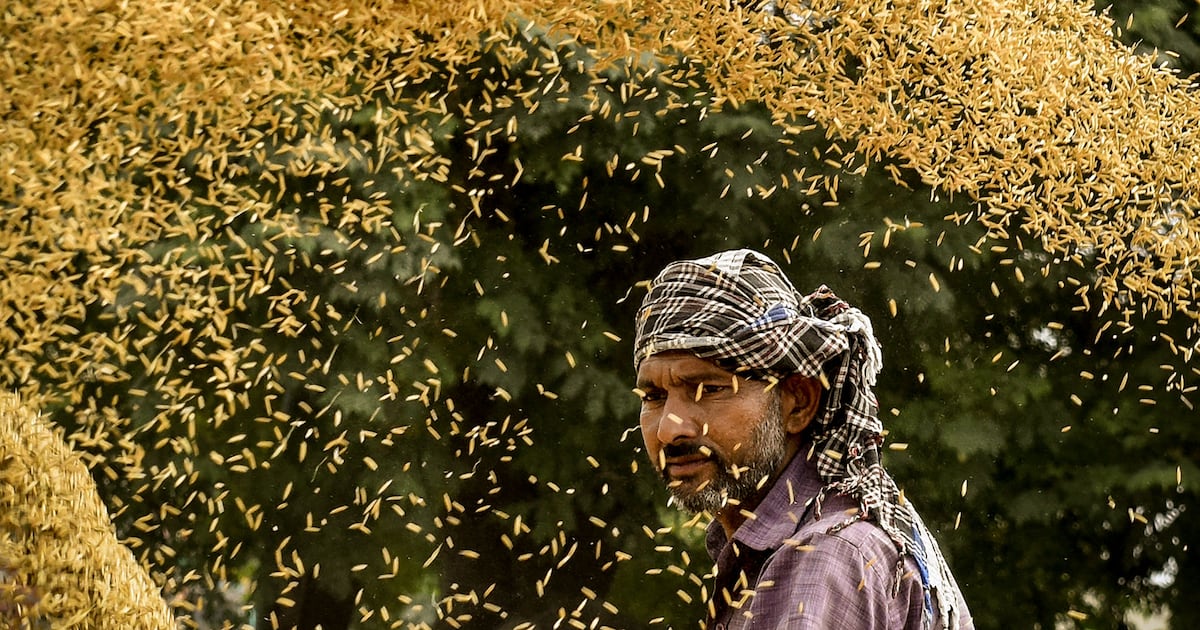
In the early 18th century, Finland was familiar with the fear of hunger.
A famine fuelled by an unpredictable climate had killed off a third of the population in the 1690s.
The Great Northern War with Russia further disrupted farming, as well as everything else, in the first 20 years of the century.
So in 1726, the country began setting aside grain to ensure it could feed the population in case of emergency. Long winters, a short growing season and disruption from clashing empires demanded it.
Three centuries later, that logic is shaping policy far beyond Finland. Decades after governments dismantled food reserves and placed their faith in global trade, a growing number are rebuilding emergency stockpiles.
From Sweden and Norway to India and Indonesia, states are holding back increasing quantities of rice, wheat and other staples as insurance against a world they increasingly view as unstable.
“When the Cold War ended, somehow we were the only ones who stuck with these stockpiles … because you never know what is going to happen,” says Miika Ilomäki, chief preparedness specialist for Finland’s national emergency supply agency.
Finland, long regarded as an outlier for maintaining extensive emergency reserves, is starting to look prescient. Norway, its neighbour, is building up its grain stockpiles again, adds Ilomäki, and “Sweden is taking the first steps to have these stockpiles too.”
The return of food stockpiling reflects a convergence of shocks: pandemic disruption, a general sense of global unease with the war in Ukraine and recent conflicts in Gaza, Venezuela and Iran, climate volatility and the renewed weaponisation of trade. It also exposes a deep fault line in global economic thinking.
Governments argue that markets can no longer be relied upon in a crisis and that food, like energy, must be treated as a strategic asset. Economists and trade officials counter that when many countries hoard at once, they risk tightening global supply, pushing up prices and hurting the poorest importers.
What looks like prudence at home, critics warn, may become instability abroad. “The Scandinavian countries serve as a barometer of global geopolitical risk and so the extent that they’re bringing food stocks back up means that they’re perceiving an increased geopolitical stress in the world,” says Frederic Neumann, chief Asia economist at HSBC, warning that “food might be one of the first casualties” of rising geopolitical tension and protectionist policies.
Once governments begin to intervene, defensive measures quickly cascade across borders, he said. “It’s very hard to turn back.”
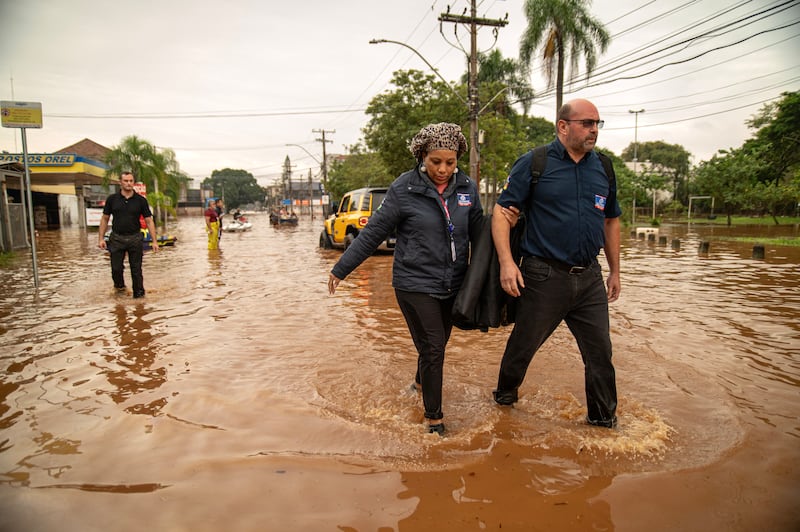 People wade through a flooded street in Porto Alegre, Rio Grande do Sul State, Brazil, in May 2024. Nearly 70,000 people were forced from their homes amid flooding, mudslides and torrential storms in southern Brazil, with the major city of Porto Alegre particularly hard hit. Photograph: Carlos Fabal/AFP via Getty Images
For much of the past three decades, public food reserves were in retreat in most of the world.
Open trade, diversified supply chains and sophisticated logistics made national stockpiles appear unnecessary in advanced economies.
Europe dismantled intervention buying under the Common Agricultural Policy. Nordic countries ran down cold war grain stores. Even food-insecure states increasingly relied on global markets.
That confidence has eroded sharply since 2020, when Covid-19 exposed the fragility of just-in-time supply chains. Russia’s invasion of Ukraine two years later disrupted one of the world’s most important grain exporters.
Climate shocks – droughts, floods and heatwaves – have become more frequent and harder to predict. At the same time, trade has become a geopolitical tool rather than a neutral conduit, culminating in the aggressive tariff escalation last year under Donald Trump’s second presidency.
“There were rules and regulations put in place, particularly in the 1990s through the WTO … It was never perfect, but it created the idea that if we had localised food stresses, we could always go to global markets,” says Neumann. “That trust has faded because of geopolitical fragmentation.”
For many governments, the conclusion is simple: markets may still work most of the time, but in extreme scenarios they cannot be trusted to deliver food when it is most needed.
Nowhere is the shift clearer than in northern Europe. Norway, one of the world’s richest and most trade-dependent economies, has begun rebuilding emergency grain reserves for the first time since the end of the cold war. Across 2024 and 2025, the government contracted private operators to hold roughly 30,000 tonnes of wheat. Officials have framed the move as a response to pandemic disruption, heightened geopolitical risk and climate uncertainty, stressing that the reserves are intended for preparedness rather than market intervention.
Sweden has gone further. In its 2026 budget, published at the end of last year, Stockholm set aside SKr575 million (€53.7 million) to re-establish emergency food stockpiles as part of its “total defence” strategy.
“It’s one of the biggest investments actually we’ve made since 1950,” says Saranda Daka, who leads the project on establishing stockpiles at the Swedish board of agriculture.
Sweden’s decision marks a sharp reversal of policy. After joining the European Union in 1995, the country began dismantling its Cold War stockpiling system, which was fully wound down by 2001, according to Daka. “This idea was created that we will never have war again in Europe,” she says. “So the whole Swedish defence started to decrease. Now we’re rebuilding again.”
From 2021, the Swedish board of agriculture started receiving formal food-security assessments from the government, triggering internal reviews of vulnerabilities in the food system. But the decisive shift came after Russia’s full-scale invasion of Ukraine in February 2022 – and Sweden’s subsequent decision to apply for Nato membership, which it formally joined in spring 2024.
Sweden plans to stockpile not only grain but also seeds and fertiliser, while integrating private companies to manage and rotate reserves so that quality is maintained and markets are not distorted. The plans are being rolled out first in the north of the country. Food production and processing are heavily concentrated in southern Sweden, but the north is also seen as critical in the event of a war between Nato and Russia.
“In a case of a war between Russia and the West, we anticipate that the war will be going on through the border with Russia, making Finland and the Baltic countries the main battlefield,” Daka says.
This state insurance is a guarantee to Swedish citizens but also “a message to Russia”, she adds. “You want to show that you have muscles, that you’re doing something. You want to increase the threshold for someone to attack you.”
While Sweden is gearing up to stockpile enough for 3,000 calories a day for each of the country’s 10.6 million citizens for a year, Finnish officials have moved to increase emergency grain holdings from six months’ worth to nine and to update legislation governing the country’s security-of-supply system, arguing that preparedness must be strengthened in a more volatile world.
Germany’s agriculture minister Alois Rainer said in August last year that Berlin was reviewing its long-standing emergency food reserves to include more ready-to-eat items such as canned ravioli. Germany already spends €25 million a year on a 100,000-tonne food stockpile.
As trade tensions worsen, economists and traders warn that food stockpiles could become a tool of political interference that can be weaponised.
But the erosion of trust in markets is not only geopolitical. Climate change has become a more immediate driver of defensive policy, not because food is unavailable globally, but because governments increasingly doubt they will be able to access it when weather shocks hit.
Climate-driven volatility is now one of the fastest-growing triggers of state intervention, according to the World Bank’s April 2025 review of strategic grain reserves, particularly where extreme weather coincides with political risk. Droughts, floods and heatwaves are hitting multiple breadbaskets in quick succession, compressing recovery time and raising the risk that temporary shortages turn into sustained stress.
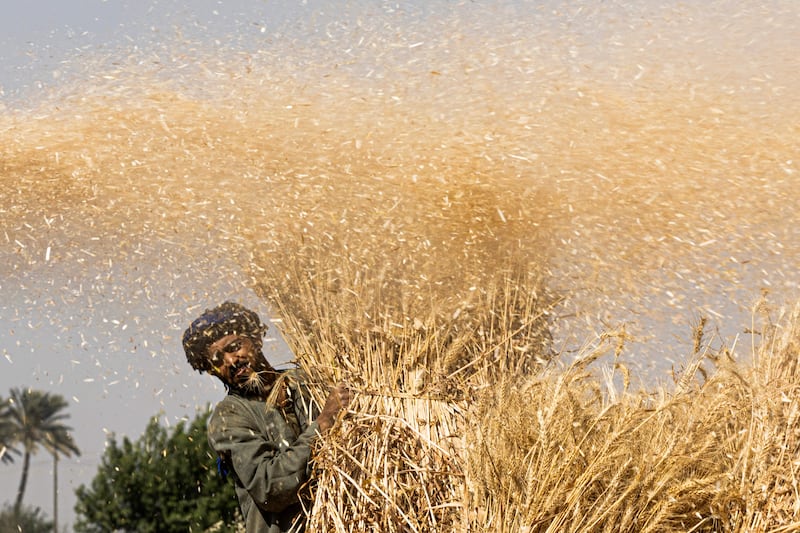 An Egyptian farmer takes part in a wheat harvest in Bamha village near al-Ayyat town in Giza province. Photograph: Khaled Desouki/AFP via Getty Images
In Egypt, for example, a series of heatwaves and irregular rainfall has repeatedly cut domestic wheat yields over the past decade, increasing dependence on imports just as global markets have become more volatile.
Cairo has expanded state storage capacity to roughly six million tonnes and maintained reserves covering more than six months of consumption, explicitly to buffer against climate-related supply shocks and price spikes.
Similarly after floods damaged rice crops in 2024 and again in early 2025, the Bangladeshi government convened a taskforce that recommended expanding emergency reserves beyond food grains to include fertiliser, diesel and edible oil. The 2025-2026 budget subsequently increased funding for strategic reserves, despite stable global availability.
In Brazil, upon taking office in 2023 Luiz Inácio Lula da Silva’s government began rebuilding public food stocks that had been dismantled under previous administrations. “Our goal is to guarantee food sovereignty and [address] price fluctuations that occur in large part due to climate change,” Paulo Teixeira, Brazil’s minister for agrarian development and family agriculture, says.
The government spent about $100 million on stockpiling in 2025, buying mainly corn and, after devastating floods hit Rio Grande do Sul in 2024, resuming public purchases of rice.
The World Bank report noted that governments acted pre-emptively “not because food was unavailable globally, but because climate uncertainty made future access feel unreliable”, concluding that climate change is intensifying the impulse to internalise risk even in countries deeply integrated into global markets.
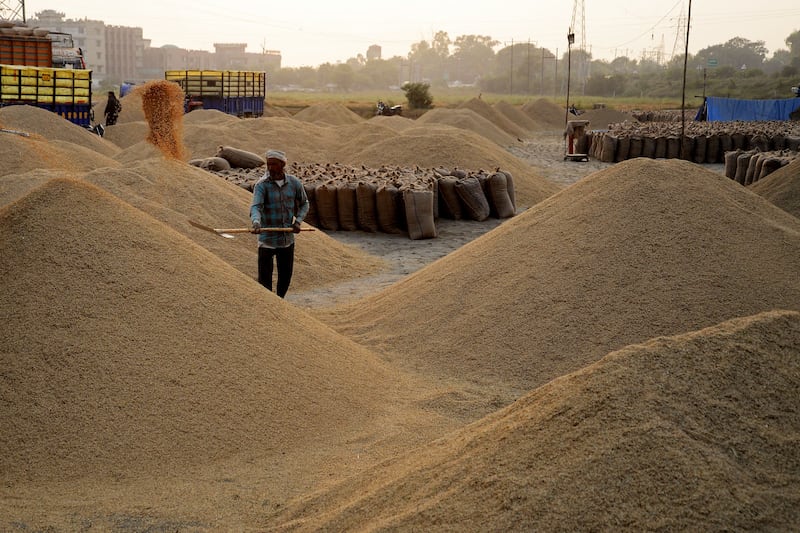 A worker segregates paddy rice at an open grain market on the outskirts of Jalandhar in India. Photograph: Shammi Mehra/AFP via Getty Images
Elsewhere, and especially in Asia, stockpiling has become an instrument of economic and political management, with consequences that extend well beyond national borders.
India, the world’s largest rice exporter, is holding some of the biggest public grain stocks in its history. By December 2025, government rice reserves stood at nearly 58 million tonnes, about 12 per cent higher than a year earlier, while wheat stocks were also well above official buffer norms.
The grain is procured and managed by the Food Corporation of India as part of a system designed to stabilise prices and supply subsidised food to hundreds of millions of people. When domestic prices rise, the state releases grain. When global markets tighten, it restricts exports.
The annual cost of this is about $2 billion, (€1.72 billion) estimates Dr Alisher Mirzabaev of the International Rice Research Institute. “When you are holding these big stocks, it’s not only procurement, also it’s handling, it’s stocking, it’s everything. So it’s quite a big cost,” he says. “But on the other hand, we are also talking about food security … [the government] is striking the balance between fiscal costs on one hand, but also making sure there is enough food security in the country.”
Indonesia has taken a parallel path. Through state logistics agency Bulog, Jakarta has sharply increased government rice reserves since late 2024, using public procurement and market intervention to stabilise prices. By September 2025, Bulog’s stocks were close to four million tonnes, almost double the level a year earlier.
Officials present the build-up as necessary to curb inflation and protect consumers. But Adrian Gasparian of trading house Pisces et Granum argues the policy has less to do with supply security than with political control.
In Indonesia’s case, the state has increasingly required private buyers to purchase from government channels at administered prices. That, Gasparian says, raises baseline costs without insulating the country from global volatility. “Markets are efficient,” he says. “When governments try to get in the way, it creates higher prices for inputs.”
China’s stockpiling is larger still, and far less transparent. According to official budget documents, Beijing increased its 2025 budget for stockpiling grain, edible oils and other agricultural commodities by about 6.1 per cent from a year earlier, to roughly 132 billion yuan (€16.3 billion).
The increase came alongside repeated official emphasis on grain self-sufficiency and what authorities describe as the “absolute security” of supply, as China seeks to insulate itself from external shocks amid rising geopolitical tension. Officials say rice and wheat reserves are sufficient to meet domestic needs for more than a year.
Taken together, such policies absorb a growing share of global grain production into public stocks rather than allowing it to circulate freely through markets.
Economists do not dispute that governments face greater risks, says Joseph Glauber, a former US chief agricultural economist, but what they question is whether widespread stockpiling actually reduces them.
“Holding stocks … it only makes sense if you were thinking that trade was just totally disrupted and too costly. But that hasn’t been the case so much,” says Glauber. “Even with the Suez Canal and Red Sea blockages and other sorts of things, exports have adjusted for the most part … I think even the Ukraine war showed that you could actually get wheat if you wanted.”
This is why, he adds, it does not “make much sense for a large net exporter to be holding very large reserves like India has been doing”.
There are also practical limits. Grain is expensive to store and difficult to maintain at scale. “What happens is the quality deteriorates, and the stocks end up going to animal feed or industrial uses,” he says.
China’s experience is a warning, Glauber adds. Large corn reserves accumulated between 2008 and 2016 ultimately proved unsuitable for food use, forcing authorities to divert them into ethanol and industrial processing. Better management can mitigate that risk, economists say, but in practice rotation and timely release are politically fraught.
Despite growing challenges due to climate change, global agriculture still produces enough food, economists say. “On average, the world actually tends to produce enough food in a given year,” says Neumann. “As long as we can ensure free allocation, that wouldn’t be a problem.”
However, when countries respond to disruptions and geopolitical instability by stockpiling and interfering with the free flow of food, they actually risk causing greater local shortages and instability, he says.
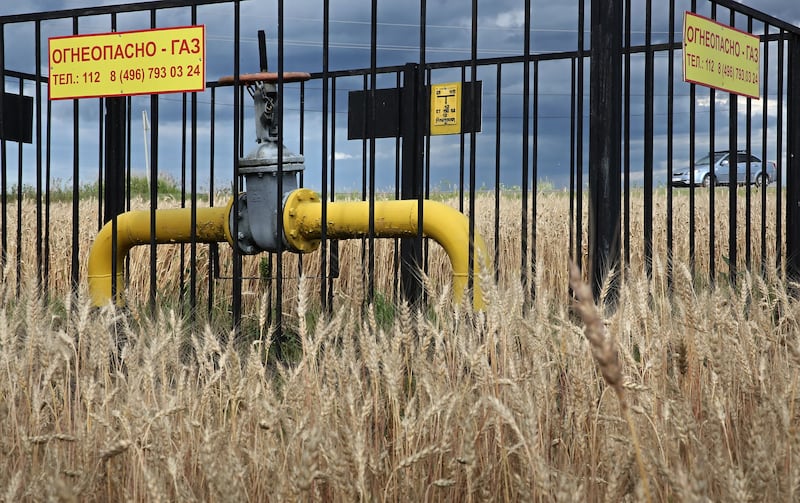 A sliding valve on the Russian Gazprom pipe supplying gas to residential buildings in a wheat field in Domodedovo, outside Moscow in Russia. Photograph: Maxim Shipenkov/EPA
Studies of the surges in global food prices in 2007-2008 found that export bans and precautionary stockbuilding accounted for a significant share of price spikes, even when global harvests were relatively healthy. Similar dynamics emerged after Russia’s invasion of Ukraine, when a wave of restrictions magnified the impact of disrupted supply.
The greatest risk, economists argue, is not any single policy but the cascade. “Once even a few economies go down the road of food protectionism, everybody feels like they have to do it as well,” Neumann says. “Everybody would be better off if we had free flow of food stuff around the world.”
Ilomäki disagrees. “If you’re an economist of course you may think like this,” he counters, “but then you also have to understand that every country has the responsibility to take care of its population … you have to give them food and to give them fuels.” – Copyright The Financial Times Limited 2026