
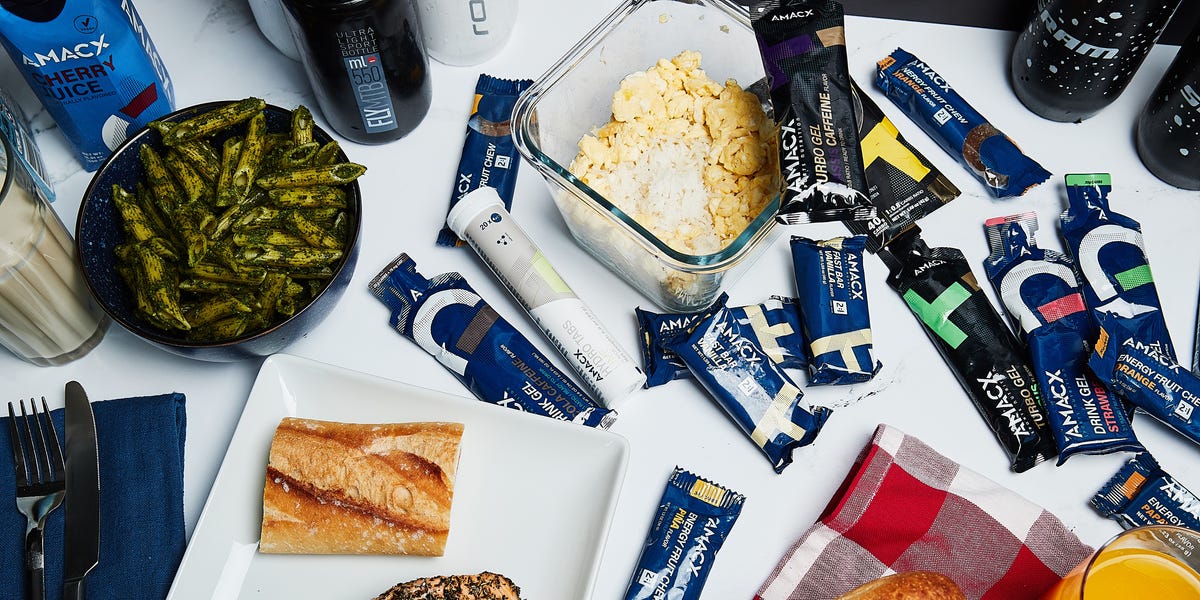
 9 min read
Professional bicycle racing is a very demanding sport. Elite road cyclists spend several hours on their bikes for each race, often covering more than 100 miles a day. And for stage races, they do that for several days in a row. The mileage they rack up in a week is longer than many of us ride in a month.
Bike racing fans often focus on the bicycles and specialty gear at the highest levels of the sport. (We get it; high-tech gear is admittedly cool.) And beyond the equipment, the main themes in media coverage of bike racing are usually team tactics and dramatic stories.
However, bike and strategy aren’t the biggest indicators of success; it’s training and nutrition. Regardless of ability level or discipline, cyclists who don’t properly fuel for a ride usually won’t perform well in competition. So, to survive a three-week Tour, riders and team staff put in countless hours training and preparing in the weeks and months leading up to the event.
However, fueling for a three-week stage race is not the same as what you and I need for daily training, our long rides on weekends, or even tackling a century. Riding an average of 90.2 miles per day (including two rest days) over a 23-day block, racers in the 2025 Tour de France consumed a lot of food, both on and off the bike.
I was curious about the meals professional cyclists racing the Tour de France actually eat, and whether an average cyclist like me could consume those calories in a day. So, I reached out to some teams, got some meal plans, and started cooking.
How Much Do Pros Eat?
As Bicycling previously reported, Tour racers typically burn between 4,000 and 8,000 calories per day. That’s a wide range—the actual calories expended depend heavily on the type of stage and riding conditions.
Former Tour de France competitor Joe Dombrowski told Bicycling, “Flat sprint stages, which are not nervous in nature, or without crosswinds, tend to be lower kilojoule (kJ) days.” He also explained that riders expend less energy on time trial stages but more in the mountains. “Mountain stages, and days you might be in the breakaway, or pulling on the front of the peloton tend to be higher kJ,” Dombrowski said.
For insights and answers on the specific foods and meals Grand Tour racers consume to meet their caloric needs, I contacted representatives from EF Pro Cycling and Visma-Lease a Bike. Both supplied a full day’s menu: EF sent the meal plan from a stage of the Giro d’Italia in May, while Visma’s nutrition partner replied with an example of what its racers will eat on a day of this year’s Tour de France.
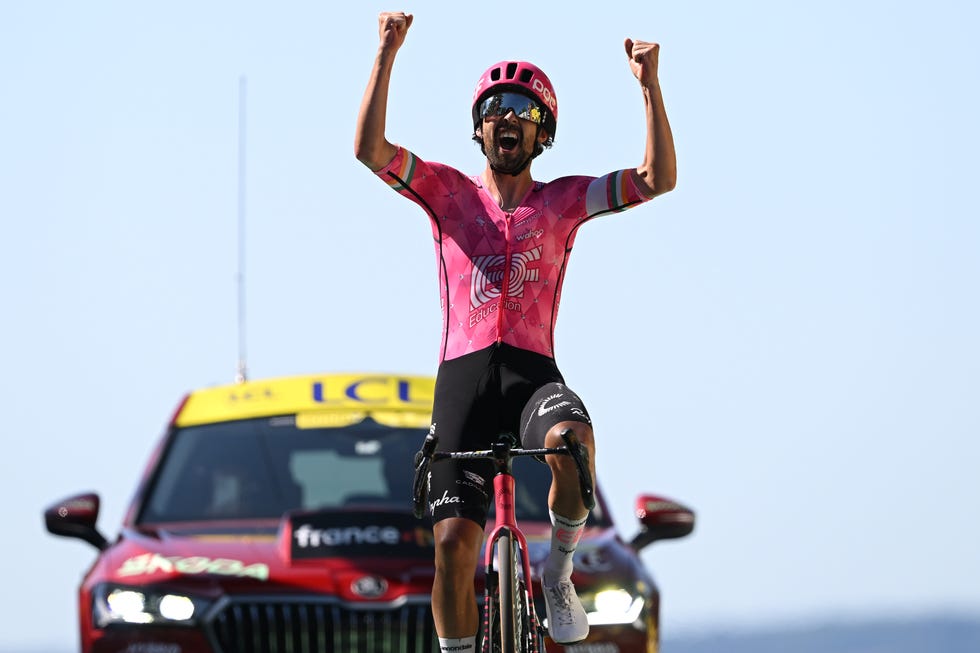 Dario Belingheri//Getty Images
EF Racing pro Ben Healy rode to a stunning stage 6 victory in the 2025 Tour de France.
EF Racing Meal Plan
Racing in bright pink kits on Cannondale bikes, EF Education-EasyPost has been a fixture of World Tour cycling for many years. The U.S.-headquartered squad is known as much for its fun personalities and outspoken stances, including those of team boss Jonathan Vaughters, as for its plucky and gutsy racing style.
EF Education racers often get into breakaways and are known for attacking on mountain stages. Notable members of the team’s 2025 Tour de France team included Stage 6 winner Ben Healy, American Neilson Powless, and Danish racer Kasper Asgreen. Food and nutrition sponsors of EF Racing-EasyPost include oat milk brand Oatly and Amacx Sports Nutrition.
While EF Racing did not provide a Tour de France menu, the team shared a meal report from stage 11 of the 2025 Giro d’Italia. The meal plan is very proven—It carried team rider Richard Carapaz to a 10-second victory at Castelnovo ne’ Monti. (Unfortunately, the Ecuadorian star was a late scratch from EF’s 2025 Tour de France roster due to illness.)
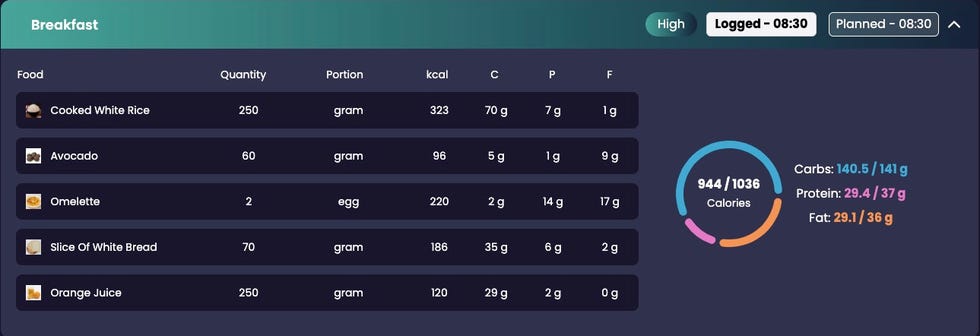
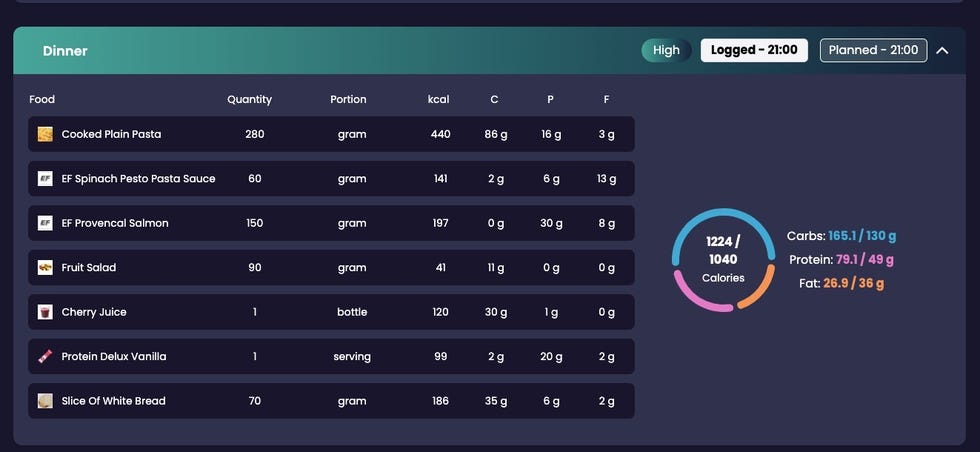
Carapaz’s meals for the Giro stage were very straightforward, with cyclist-favorite foods of rice and pasta heavily represented. He consumed 944 calories for breakfast, 1,224 calories for dinner, and a 1,236-calorie post-stage recovery meal. An EF representative noted that, “During the stage, the target was 105 grams of carbs [per hour].”
Visma-Lease a Bike Meal Plan
Netherlands-based Team Visma-Lease a Bike is one of the most noticeable and dominant programs in professional cycling. Racing on Cervélos, two-time Tour de France champion Jonas Vingegaard led a men’s squad backed up by all-star domestiques.
With a stacked roster and deep bench, Visma-Lease a Bike riders were in the mix on almost every stage. The team particularly shines in the mountain stages as Americans Sepp Kuss and Matteo Jorgenson rode to support Vingegaard’s bid to win a third Tour, with Belgian Wout van Aert capturing a dramatic win on the 2025 Tour’s final stage.
A nutritionist from The Athlete’s FoodCoach (Visma-Lease a Bike’s official partner for meal plans) supplied examples of the meals team riders will eat in a day, along with recipes. While EF’s meals were rather routine and similar to what I eat on race days as an amateur, Visma’s meal plan was more complicated. The Athlete’s FoodCoach off-the-bike menu reads like a top-rated restaurant—mango-coco-banana pancakes, a banana cake crumble, and sea bass with saffron risotto.
On the bike, Visma-Lease a Bike racers aim for 120 grams of carbohydrates per hour. Like EF Education-EasyPost, Visma riders are supplied with sports nutrition products from Amacx.
Eat Like A Pro For A Day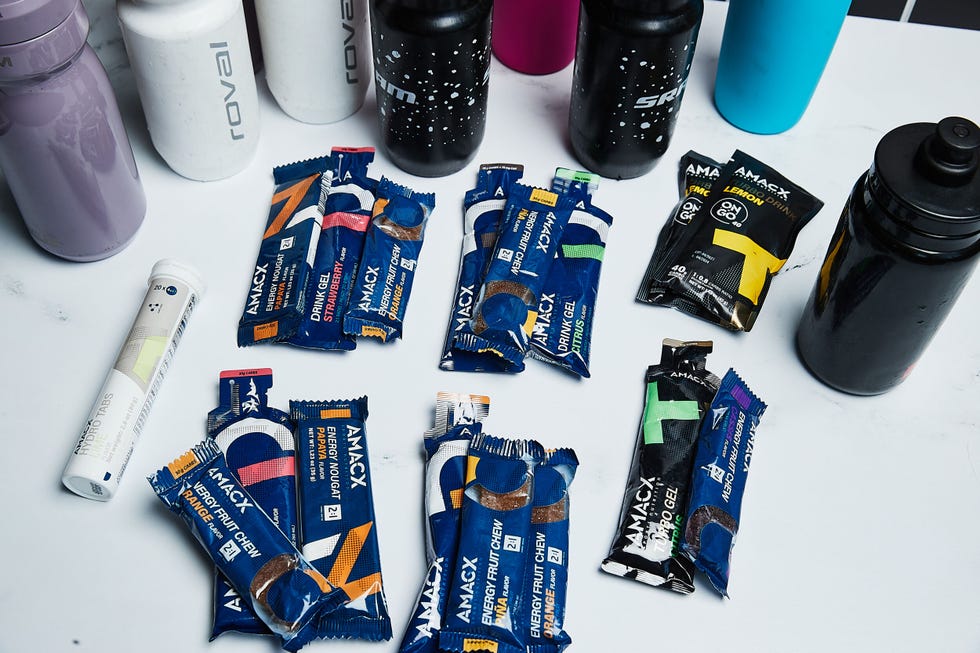
Trevor Raab
The premise for this “test” was simple—Could I eat everything a Tour de France racer eats in a day, and how did it make me feel on the bike and off?
While I wanted to challenge myself to eat everything a Tour racer eats in a day, I didn’t want to make myself physically sick. Additionally, though I love to cook, I didn’t want to prepare complex meals for the test as I needed to complete my regular office work and test a new bike for about 90 minutes midday.
After receiving meal plans from EF Racing and The Athlete’s FoodCoach, I pored over the details of both plans. I weighed my options and chose to tackle EF’s meal plan from the Giro. It used many ingredients I typically have in my fridge or pantry. Plus, it’s what Richard Carapaz ate on the day he won a stage of the Giro d’Italia.
Not only was it less complex to prepare, but the 105 grams of carbohydrates per hour consumed on the bike seemed less dangerous than Visma’s 120 g/h of carbs. The meal plan sent by The Athlete’s FoodCoach included a yellow-highlighted warning, “Don’t try to eat this if you are not trained for this.” It went on to explain that riders need to “train the gut” to prepare for eating this quantity of carbohydrates when riding. Since I didn’t train, much less do “gut training”, I opted for the lower carbs per hour.
How It Went
Over my three-plus decades riding bikes, I’ve done many things that challenged me physically and mentally: I completed the Trans-Provence enduro stage race twice, followed World Champions down trails I had no business riding, and returned to racing cyclocross and criteriums at 41 years old.
In retrospect, some of those challenges were not always the smartest or safest thing for my body. But somehow they seemed easier than my attempt to eat everything a Pro Tour cyclist eats in a day. It turned out to be at or near the top of “dumb ideas” I’ve had in my cycling life.
On the morning of the challenge, I started by prepping and cooking the meals I aimed to eat for the day. Then portioned them into containers. This is when the quantity of food first hit me—This was a decent amount of food. It was perhaps more like the quantity I’d prepare for myself and another person, or if I was planning to have leftovers for the next day, than I typically eat in a day.
Breakfast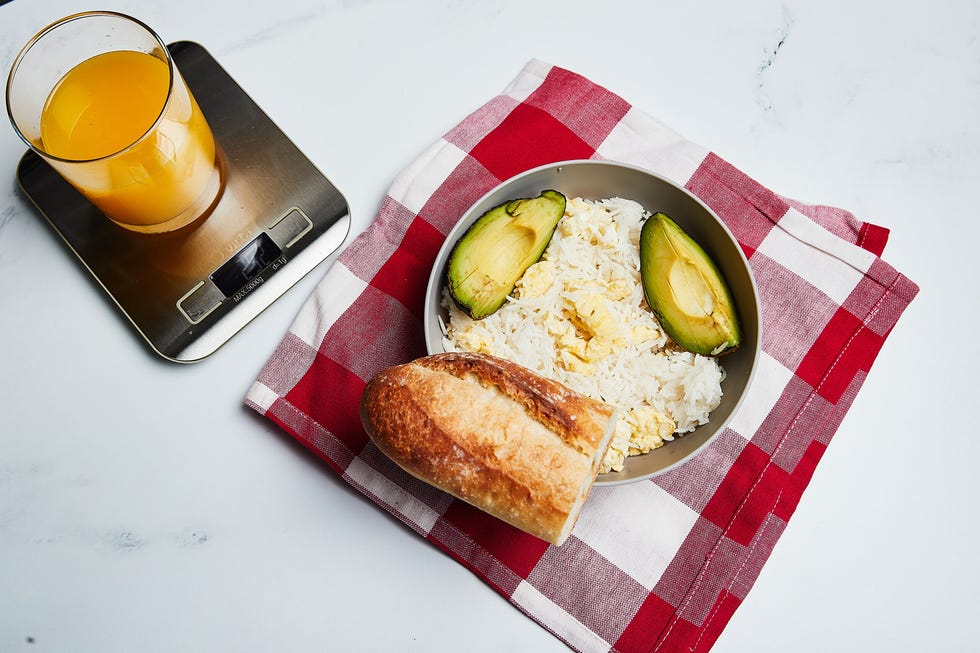
Trevor Raab
I sat down for breakfast at 8:00 am and stared down at the bowl of rice, scrambled eggs, and avocado. I added a mug of coffee to the meal that EF didn’t list on its meal plan (because I didn’t want to hate the rest of my morning). Breakfast didn’t seem like an overly excessive amount of food until I was about halfway through the meal.
EF Racing
My breakfast sometimes consists of rice and two fried eggs. However, I don’t have 250 grams of rice in a sitting—or a chunk of bread, half an avocado, and a big glass of orange juice along with it. I finished the meal, but it took me almost an hour to get everything down.
The Gels and Bars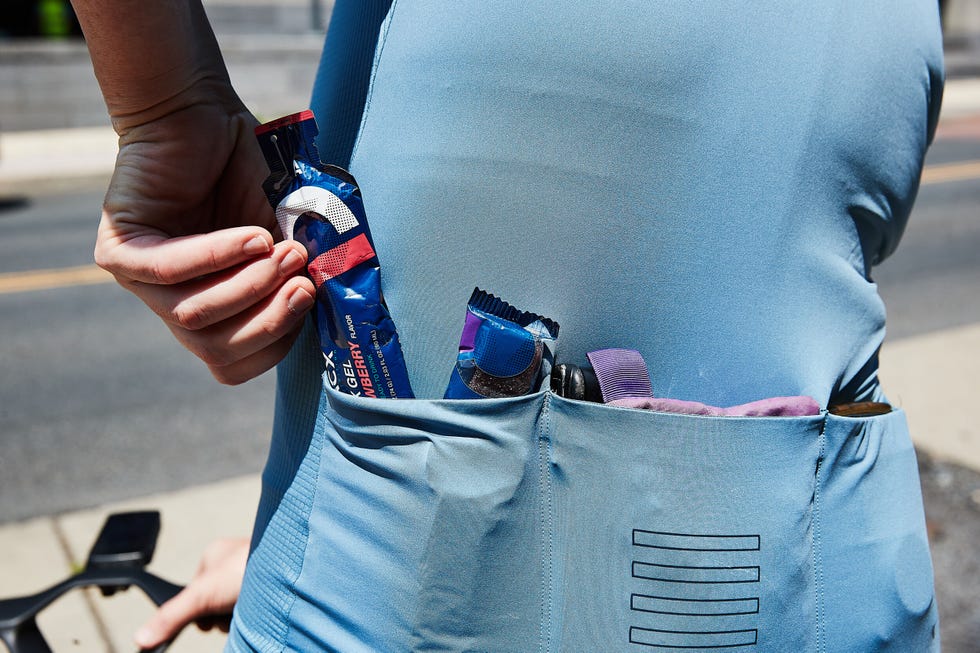
Trevor Raab
As a lifelong cyclist, I have a decent appetite. When I was actively training and tracking my food intake, I typically ate about 1,800 to 2,000 calories per day. Initially, the 3,400 calories Carapaz consumed on the day of Giro stage 11 seemed somewhat high, yet manageable.
However, Carapaz also put down 105 grams of carbohydrates per hour over his 4-hour and 35-minute stage win. Since my challenge was to eat everything a pro ate in a day, I portioned out approximately 475-carbohydrate grams of Amacx nutrition products—gels, chews, bars, and sport hydration mix—to consume over the “race” time. This roughly came out to a gel or two per hour, in addition to a bar or chew, and sports drink or hydration mix. Tallying to 1,890 calories, this was a lot of food.
Amacx Tryout Pack
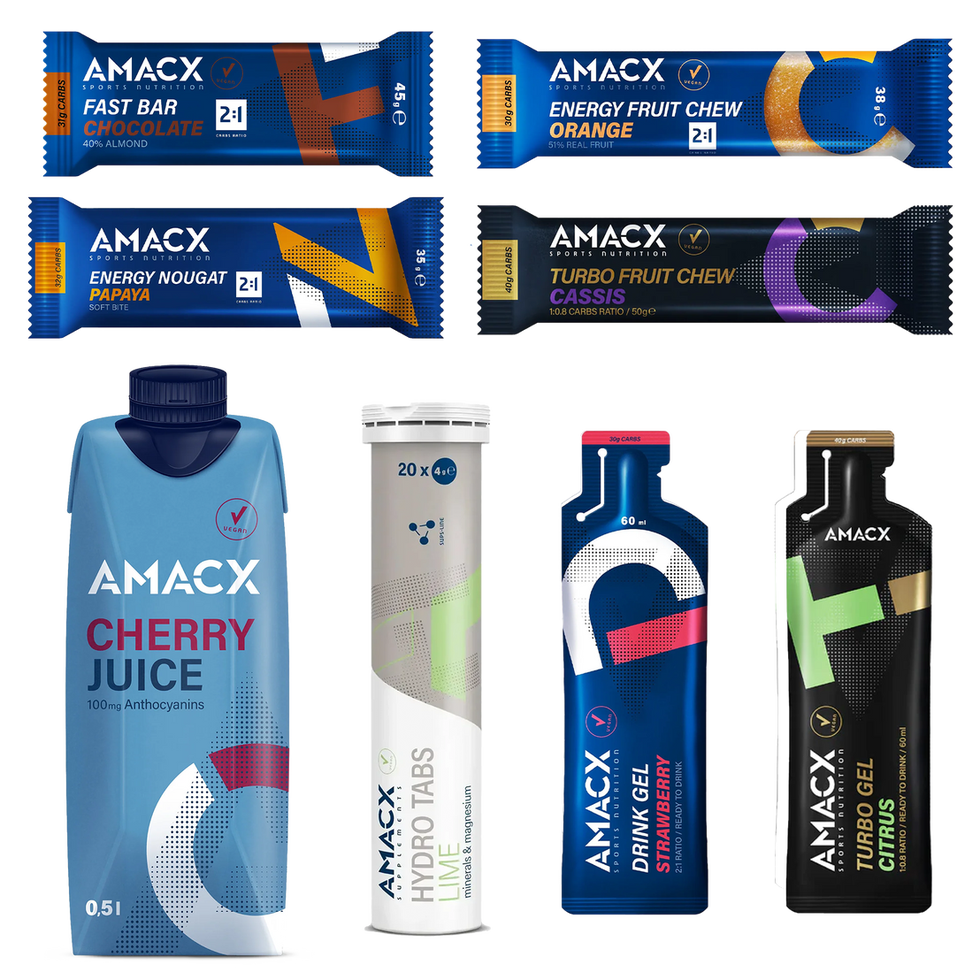
Since EF eats breakfast three hours before a stage kicks off, I began tackling the pile of Amacx nutrition a little after 11:00 am with a plan to eat 105 g/h of carbs. At 11:45 am, we rolled out on a 25-mile ride with 1,200 feet of climbing.
The loop took one hour and thirty-five minutes. I put down two gels and a bottle of Amacx Turbo Drink on the ride. I felt excellent on the bike and had energy in the tank at the end of the ride to push the pace up a mile-long grind. “Perhaps there is something to this 100 g/h of carbs thing,” I thought to myself as I crested the hill.
However, I only ate about 200 grams of the 475-gram target after three hours. I was also extremely full. Around four hours in, I ate another gel, bringing my carb total to approximately 230 grams. I began to feel nauseous as soon as the gel hit my tongue. I tapped out less than halfway to my goal.
Post-Race Recovery Meal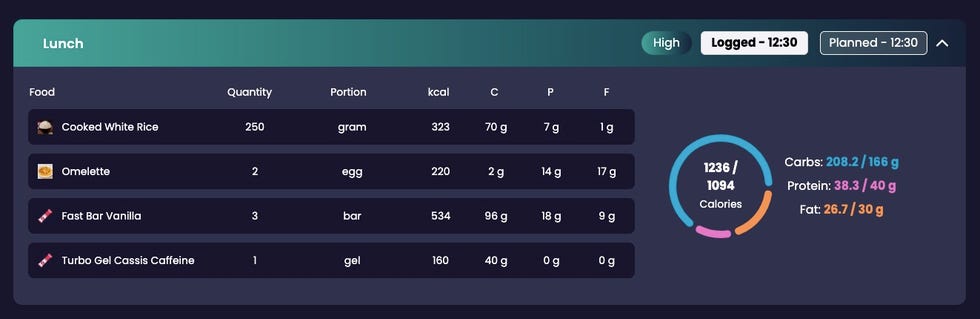
EF Racing
The EF meal plan called for a 1,236-calorie recovery meal after the race. While it is listed as “Lunch” and logged at 12:30 pm, an EF representative explained that “the rice and omelet were consumed after the stage during the podium as Richard won that stage and the gels consumed before the stage.”
I was too full from energy products to eat the recovery meal at 4:00 pm as planned. Eventually, I sat down with the container of rice and eggs at 5:00 pm in an ill-fated attempt to eat them. I added some soy sauce to the rice because I couldn’t eat any more plain white rice. I ate between one-third and half of the meal over an hour and binned the rest.
Dinner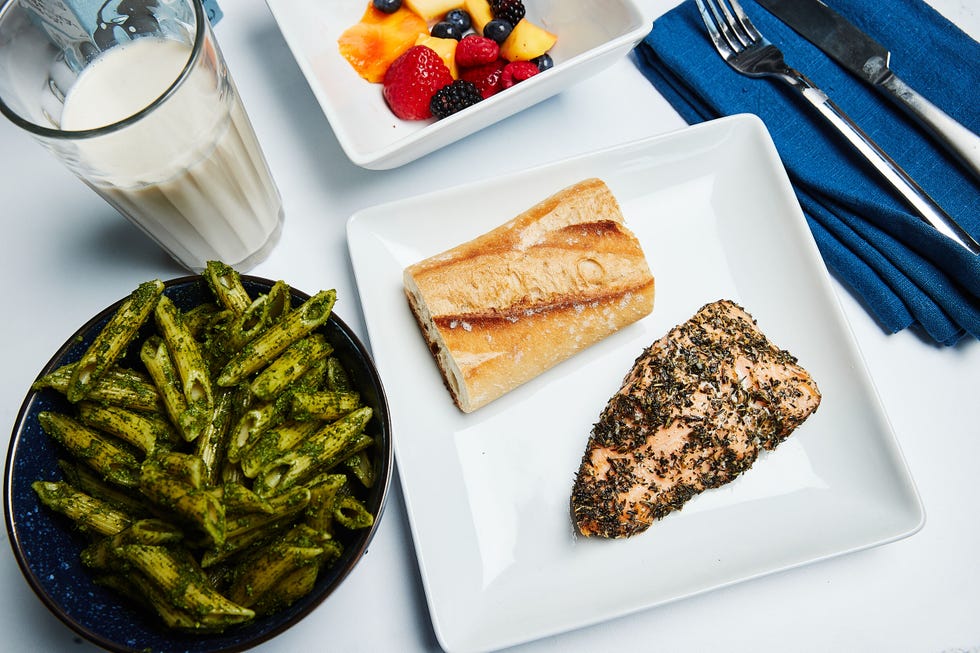
Trevor Raab
Pesto pasta salad and salmon were on the menu for my final meal, and EF’s plan called for dinner at 9:00 pm. However, I was still too full from my failed attempt at the recovery meal four hours before to eat again.
EF Racing
After some procrastination, I assembled dinner around 10:00 pm. I’m glad I did because the meal was great. Even though it was about three hours later than I typically eat dinner, and I was still somewhat full from the copious calories consumed throughout the day, I ate most of the meal. I skipped the protein shake but finished about two-thirds of the pasta and salmon.
The Recipes
Click on the arrows below for ingredient lists and instructions for meals provided by the EF Education and Visma-Lease a Bike teams.
EF Education-EasyPost
Dinner: Spinach Pesto Pasta Sauce
Ingredients (8 servings):
Fresh basil – 200gOlive oil – 100gBlanched almonds – 100gSpinach – 340g
Instructions:
Wash and roughly chop the fresh basil and spinach.In a food processor, combine the basil, spinach, and almonds.Add olive oil in stages while blending until you reach your desired consistency.Taste the pesto and add salt if necessary.Use immediately on pasta, sandwiches, or as a dip. Enjoy!
Dinner: Provencal Salmon
Ingredients (8 servings):
Olive oil – 1 tbspHerbs de Provence – 15gSalt – 10gSalmon raw – 1,600g
Instructions:
Preheat your oven to 400°F.In a small bowl, mix the olive oil, herbs de Provence, and salt.Rub the seasoning mixture evenly over the raw salmon fillets.Place the seasoned salmon on a baking tray lined with parchment paper.Bake for 12-15 minutes, or until the salmon is cooked through and flakes easily with a fork.Remove from the oven and serve immediately.Visma-Lease a Bike
Breakfast: Mango-Cocos-Banana Pancakes (+/- 780 kcal)
Ingredients:
Pancakes
Gingerbread spice – 0.1gOrganic egg – 40 gGluten-free pancake mix – 70gBanana – 60gCoconut Dream (coconut & rice) 100% – 90gLacto-free semi-skimmed milk – 25gMango frozen – 50gOlive Oil (to bake in) – 2g
Toppings
Note: Greek yogurt is a good substitute for quark if you can not find it where you live. Substitute regular Rice Dream or coconut milk for Coconut Dream (coconut & rice) if you cannot find it in your grocery store.
Instructions:
Make the pancake batter (without the mango) by combining the mashed banana, milk, coconut dream, and eggs in a bowl, then whisk in the dry ingredients until no lumps are visible.Mix the mango with the batter and cook the pancakes in some olive oil.Top the pancakes with skyr and fruit.Usually, they also eat this with rice cakes and bread with cheese on the side for extra carbs.
Recovery: Sticky Banana Cake with Crumble (+/- 360 kcal)
Ingredients:
Skyr Peanut Butter Banana
Whey Vanille Powder – 1gSkyr quark (peanut butter banana flavor) – 40g
Banana Quark Cake
Self-rising flour – 45gSugar – 30gBaking powder – 1gApple cider vinegar – 0.5gSalt – pinchOrganic egg – 17gWater – 5gBananas – 50gButter – 6gLindahls (quark) White chocolate – 40gLow-fat yogurt 20g
Crumble Topping
Flour – 6gSugar – 6gBuckwheat groats – 3gOats – 5gButter – 4gToppingsWhite chocolate flakes – 3g
Instructions:
Preheat the oven to 375°F. Line a muffin tin with paper liners.Start with the crumb topping. In a small bowl, whisk to combine the flour, sugar, buckwheat & cinnamon. Pour in the melted butter and mix with a fork until crumbs form. Chill in the refrigerator.For the muffin batter, in a large bowl, whisk to combine the flour, sugar, baking powder, whey, and salt.In another large bowl, whisk to combine the melted butter, egg, banana quark, and buttermilk. It’s fine if it looks curdled or lumpy.Add the wet ingredients to the dry, stir just enough to bring the batter together. It will be thick and lumpy, and that’s fine. Take care not to overstir, which can make your muffins tough.Bake for 30-40 minutes, until the crumbs are golden brown. To make sure they are done inside, I gently press my fingertip in the top centre of the cake. It should spring back to the touch.Serve the 130g cake with 40g quark, 13g crumble topping, and 3g white chocolate flakes.
Recovery: Tortellini with Rucola (+/- 360 kcal)
Ingredients:
Tortellini ricotta spinach – 210gCourgette (Zucchini) – 45gTomatoes – 45gRed onion – 10gTomato sauce (passata rustica) – 30gRucola (arugula) – 10gCapers – 2g
Instructions:
Prepare tortellini following the preparation steps on the packagingChop the courgette, tomatoes, and red onion into small pieces and add to a pan.When the veggies are softened, add the tomato sauce and let sauté.Combine the tortellini, veggie sauce, rucola, and capers and add to a plate.
Dinner: Saffron Risotto with Sea Bass (+/- 680 kcal)
Ingredients:
Risotto
Risotto rice – 120gVegetable broth – 500mLWhite wine – 15mLSaffron – 1gParmesan cheese – 8gSemi-skimmed milk – 15gGarlic – 0.2g
Sea Bass
Ratatouille
Green asparagus – 52gRed bell pepper – 52gRed onion – 26gZucchini – 52gEggplant – 52gGarlic – ½ clove Thyme – 1 sprigRosemary – 1 sprig Salt and pepper – to taste
Tomato Antiboisse (for the fish)
Tomatoes – 60gRed onion – 20gBalsamic vinegar – 2gBasil – 2gLemon juice – 10gHoney – 10g
Instructions:
Risotto
Note: Risotto is always made à la minute, so make sure you have already prepared the other items.
Make a vegetable stock or use a vegetable paste or cube. Lightly fry the risotto rice in a pan with shallots and the saffron. The flavor will now release nicely, and the risotto grain will open. Deglaze with the white wine, then add the vegetable stock little by little so that the rice can slowly absorb the stock. Put it on low heat with a lid, and keep adding the stock little by little.When the risotto is done, add the milk, cream cheese, and cheese at the end and serve immediately.
Grilled Vegetables
Cut everything into nice, long slices and grill in the grill pan.Fry the garlic, thyme, and rosemary with them and cook further in the oven if necessary. Season with salt and pepper
Antiboisse
Put the onion in a pan, cut the tomatoes into quarters, and add them together with the basil, balsamic vinegar, lemon juice, and honey; heat together briefly.
Sea Bass
Preheat the oven to around 400°F.Grill the sea bass briefly on the skin, turning once a quarter turn for a nice diamond-cooked shape. Continue in the oven for around 10 minutes.Season with salt and pepper.
Evening Snack: Skyr with Fruits (+/- 115 kcal)
Ingredients:
Granola almonds – 15gRaspberries – 80gSugar – 10gIsey Skyr (quark) Lemon Cheesecake – 120gNatural yogurt protein-rich – 120gCoconut flakes – 3g
Instructions:
Add the skyr and yogurt to a bowl and mix well.Add the sugar to the raspberries, press them together, and heat a little to get a raspberry sauce.Add the sauce to the bowl with yogurt, and add all other toppings.Key Takeaways
→ Eating almost double my typical daily calories doesn’t seem that crazy. I probably consumed that on many occasions at a restaurant with large portions, a family gathering, or attending a Major League Baseball game (Let’s Go Mets!). However, downing my daily calories in gels, bars, and drink mix, and ingesting double my intake in food was well beyond my physical limits.
→ Richard Carapaz is listed at 1.7 meters (5’7”) tall and 62 kilograms (137 lb.) in weight. On a good day, I outweigh him by almost 70 pounds and stand five inches taller. Thinking about someone his size eating 5,300 calories in a day highlights how much energy the top pro riders expend.
→ Visma-Lease a Bike’s nutritionists at The Athlete’s FoodCoach were not kidding with their admonition about gut training. Not only was I unable to eat 105 g/h of carbohydrates, but it also wrecked my stomach for the following two days. I attempted this challenge on a Thursday, and my stomach didn’t feel right until Sunday.
→ Amacx Sports Nutrition is tasty stuff! Distributed in the United States by The Feed, the Netherlands-based nutrition brand Amacx has some social media attention for pro cyclists drinking its cherry juice boxes after races. The product quality is great, and the flavors of gels, bars, chews, and mixes I tried all tasted good. In particular, the chews taste like real fruit and aren’t too gummy. However, Amacx products aren’t cheap—I used about $40 of Amacx products, and I didn’t even hit the 120 g/h goal.
Member Exclusive: Check Out Our Top Cycling Stories

As Deputy Editor, Tara Seplavy leads Bicycling’s product test team; after having previously led product development and sourcing for multiple bike brands, run World Championship winning mountain bike teams, wrenched at renowned bicycle shops in Brooklyn, raced everything from criteriums to downhill, and ridden bikes on six different continents (landing herself in hospital emergency rooms in four countries and counting). Based in Easton, Pennsylvania, Tara spends tons of time on the road and trail testing products. A familiar face at cyclocross races, crits, and bike parks in the Mid Atlantic and New England, on weekends she can often be found racing for the New York City-based CRCA/KruisCX team. When not riding a bike, or talking about them, Tara listens to a lot of ska, punk, and emo music, and consumes too much social media.