
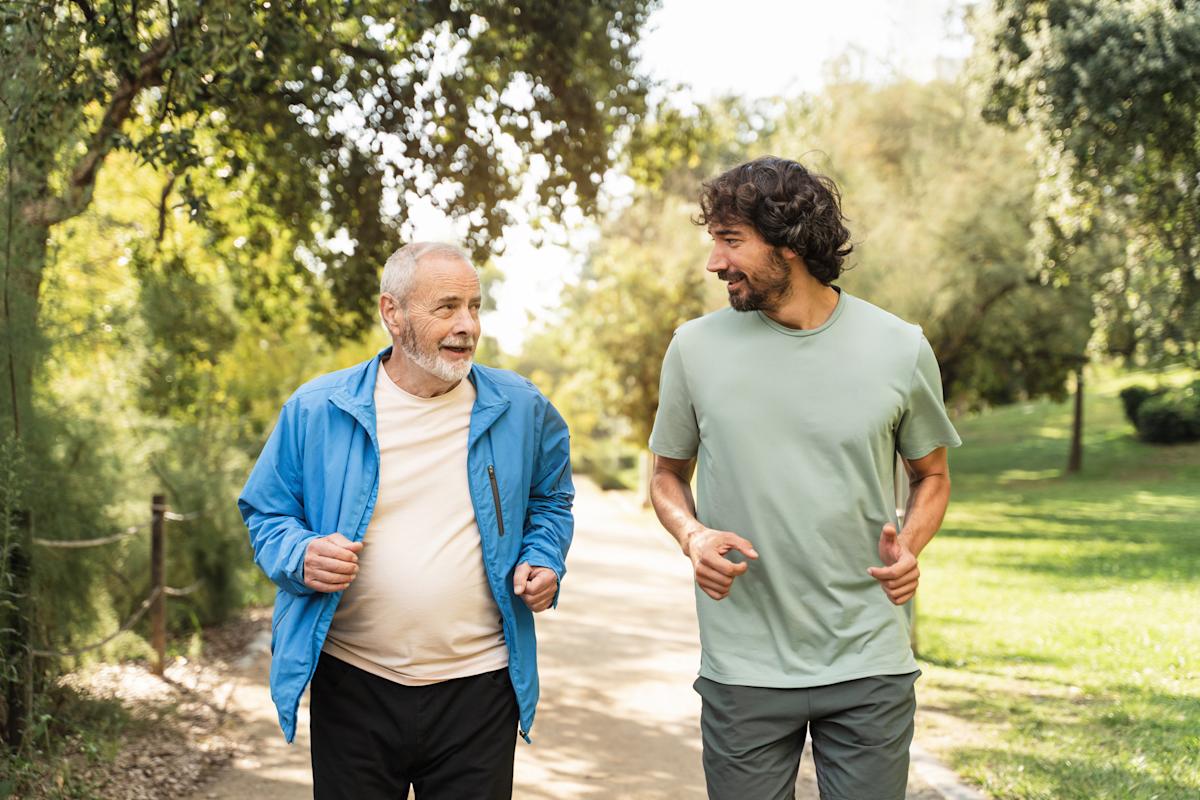
Only 13.9 percent of adults over 65 meet federal guidelines for both aerobic and muscle-strengthening activity each week. That number comes from a federal data analysis of the National Health Interview Survey. It is a small fraction, and it raises a more useful question than “how do we get people moving”: what is working for the ones who already are?
The answer, according to a growing body of research, is less about willpower and more about structure, company, and reframing what counts.
Here is what the research and the people living it consistently report.
Make it social first
A Sydney researcher recruited over 300 adults aged 70 and older who were not meeting physical activity guidelines and divided them into two groups. One received traditional self-motivation strategies. The other received a socially connected approach. The socially connected group showed significantly higher long-term exercise engagement. The researchers described the gap as striking.
Peer relationships consistently emerge as the most powerful motivator for older adults across multiple qualitative studies. It is not the activity itself but the obligation to another person that keeps the schedule. The social commitment of a walking group, a tennis partner, or a water aerobics class that meets regardless of how you feel does the work that motivation alone cannot sustain.
Count what actually counts
Gardening, carrying groceries, walking the dog, and mowing the lawn: these all contribute to the weekly total. The federal guidelines are explicit on this point. Moderate-intensity activity does not need to happen in a gym or in a single block of time. Twenty-two minutes per day at moderate intensity meets the 150-minute weekly recommendation. Three ten-minute walks spread through the day add up the same way as one thirty-minute walk.
Many adults over 65 who technically meet guidelines do not know it because they are measured by effort rather than by accumulation. Reframing the question from “did I exercise today” to “did I move enough today” makes a great deal of difference.
Build in balance deliberately
Falls are the leading cause of injury among adults over 65. Balance activities, the third required component alongside aerobic and strength work, are the most commonly skipped. Standing on one foot while waiting for coffee, walking heel to toe across a room, tai chi, and yoga. None of these requires a class or equipment. They require intention.
Published research found that for adults over 70, perceived risk of falling was itself a significant barrier to physical activity, creating a cycle that only worsened outcomes. Balance training is the intervention that interrupts it.
Start lower than you think you need to
The NIA is consistent on this: injuries happen when people restart at the level they used to maintain, not the level they currently can. Starting well below perceived capacity and building gradually over weeks is not timidity. It is how lasting routines are built.
Wrap up
The Boomers who are staying active are not necessarily the fittest or the most disciplined. They are the ones who made it social, made it count, and made it easy enough to keep doing.
Ask us! What questions do you have about content, strategy, pop culture, lifestyle, wellness, history or more? We may use your question in an upcoming article!
Related:
Like MediaFeed’s content? Be sure to follow us.
This article was syndicated by MediaFeed.org.