
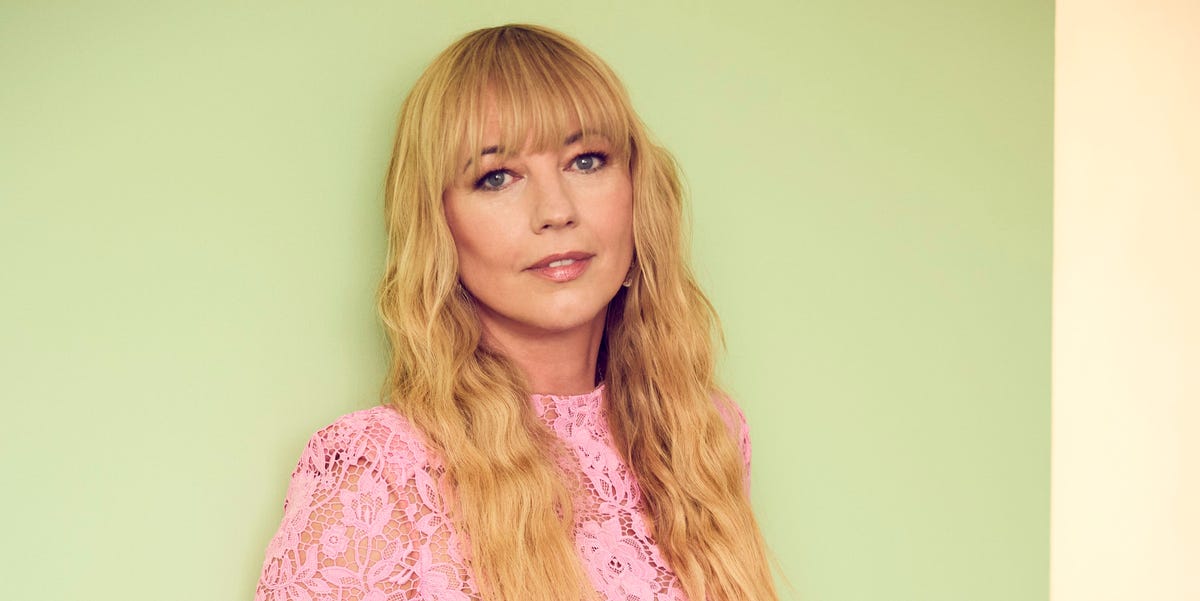
Is it possible to transform your attitude to health and fitness whatever your age? Yes, it really is – and you only have to look at broadcaster Sara Cox for inspiration.
The Radio 2 Breakfast Show presenter, who was once at the epicentre of the Britpop party scene, has quietly reshaped her approach to fitness over the past few years – and experts say her routine contains plenty of lessons for healthy ageing. Now 51, the broadcaster has spoken openly about ditching unhealthy habits and prioritising strength, movement and consistency over quick fixes, building a routine that fits around a busy career, family life and the demands of midlife.
‘In your 50s and beyond, the expectation used to be that you slowed down and started blaming that on your “age”,’ says GH fitness expert Kim Hawley. ‘Increasingly, though, women are rejecting that narrative, and Sara appears to be leading from the front. The reality is almost the opposite: the older we get, the more important it becomes to invest in our strength, fitness and resilience to help counter the natural effects of ageing and keep doing the things that we enjoy for longer.’
So what steps is Sara taking? From lifting weights to making everyday movement count, here are the habits that have become part of her wellbeing routine – and why experts say they’re particularly valuable after 50.
1. She prioritises strength training
Rather than focusing on endless cardio, Cox has made resistance training a regular part of her week, previously telling Good Housekeeping that strength training is ‘really important for women’ and something she aims to fit in a couple of times each week.
After completing her extraordinary challenge of five marathons in five days for BBC Children in Need, she also documented her gradual return to training, starting with light weights and low repetitions rather than rushing back into intense workouts.
2. She makes movement part of everyday life
Not every workout has to happen in the gym! Sara has said she’s a firm believer in walking more, whether that’s taking her dog out or choosing the stairs instead of the lift at work.
It’s an example of what fitness professionals call NEAT (non-exercise activity thermogenesis) – the everyday movement that can make a significant contribution to overall health.
3. She finds exercise she genuinely enjoys
Alongside weight training, Cox has spoken about loving Blaze, the HIIT-inspired class at David Lloyd gyms that combines cardio, boxing and strength work. She’s also a keen horse rider, an activity that builds balance, coordination and core strength while being relatively gentle on the joints.
4. She focuses on consistency rather than perfection
Back in 2022, Cox completed a 10-week fitness programme that also saw her give up alcohol temporarily, saying afterwards that she felt ‘ruddy ace’ and had loved taking a break from drinking. But perhaps the biggest lesson from her approach is that healthy habits don’t have to be all or nothing.
‘Women often feel guilty about taking time for themselves,’ says GH’s Kim Hawley. ‘One particularly effective strategy is reframing. Instead of thinking you’re “going to the gym”, think of it as “training”. It shifts the focus from self-indulgence to purpose. Equally, saying “I’m going to train” rather than “I might train” creates commitment instead of leaving the door open for excuses.
‘Another simple mindset shift is to plan the session to be easy as a rule. Thinking it will be hard before you’ve even started can be a barrier in itself, whereas once you’re moving and warmed up, you’ll almost always do more than you expected.
‘And do try habit stacking: adding small bursts of movement to things you already do every day. Always doing push-ups while the kettle boils. Taking the stairs two or three at a time. A dozen squats every time you visit the bathroom. None of these take any planning, but together they create meaningful gains over time. The key is making them non-negotiable.
‘Ultimately, healthy aging isn’t built on occasional bursts of motivation. It’s built on consistency. The aim is to make movement and exercise as automatic as brushing your teeth, because the small things you do every day will always have a greater impact than the big things you only do occasionally.’