While many may opt for marathon-length training sessions, not everyone has the luxury of hours to spend in the gym. And should you have goals of building muscle, you may not even need that much kit.
Rather than relying on heavy weights and marathon workouts, coach Adam Sinicki has been experimenting with short, high-rep training sessions that he says have helped him get leaner while allowing him to train more frequently. He argues that the key is reducing the eccentric portion of each rep to keep recovery demands lower. Sinicki describes the method as ‘prisoner-style’ training.
How ‘Prisoner-Style’ Training Works
Using push-ups as an example, he says, ‘If you do push-ups explosively and then let your body drop back into the lower position, you’ll be doing a lot more concentric work than eccentric. This is not truly concentric only because you still need to use your muscles to decelerate. However, we are certainly heavily emphasising the concentric portion.’
The same principle can be applied to curls.
‘With curls, for example, especially hammer curls or goblet curls. Here we muscle the weight upwards and then just let it drop back in a slightly controlled manner. I find goblet curls are particularly good for this because the position of the arms naturally makes them easier to rep out quickly.’
Why it May Help You Recover Faster
The method works best with lighter weights, quicker reps and a slightly shorter range of motion.
‘All these factors conspire to provide a workout that’s much easier for me to recover from,’ he says.
This is what allows him to increase his training frequency without feeling like he’s accumulating too much fatigue between sessions.
Using lateral raises as an example, he explains, ‘I can do this at any point during the day, multiple days a week with no real recovery cost and no downsides. I do it with my wife’s 5kg dumbbells when I’m working out from home.
‘As long as you’re feeling some of the pump in the right spots, it will. It’s not about how hard you work out or how long you spend. You just need that stimulus.’
So, it doesn’t mean the reps should be mindless, Sinicki says the stimulus still matters.
‘You may need to get into a slightly deeper stretched position. You may need to squeeze the muscle a little bit at the apex of the movement. Whatever it takes to feel the muscle actually working,’ he recommends.
As with any training method, there’s still a need to build up gradually.
‘You might find you’re sore for a few days when you first start this. Like anything, you need to let your body adapt,’ he says.
‘This concentric training can be added to any workout. It’s purely additive. It’s all extra,’ says Sinicki. ‘The point is, you can do a lot more of this concentric training and get lots more from your workouts.’
The main benefit is that the method doesn’t need to replace your current training, it can be woven into your current programme.
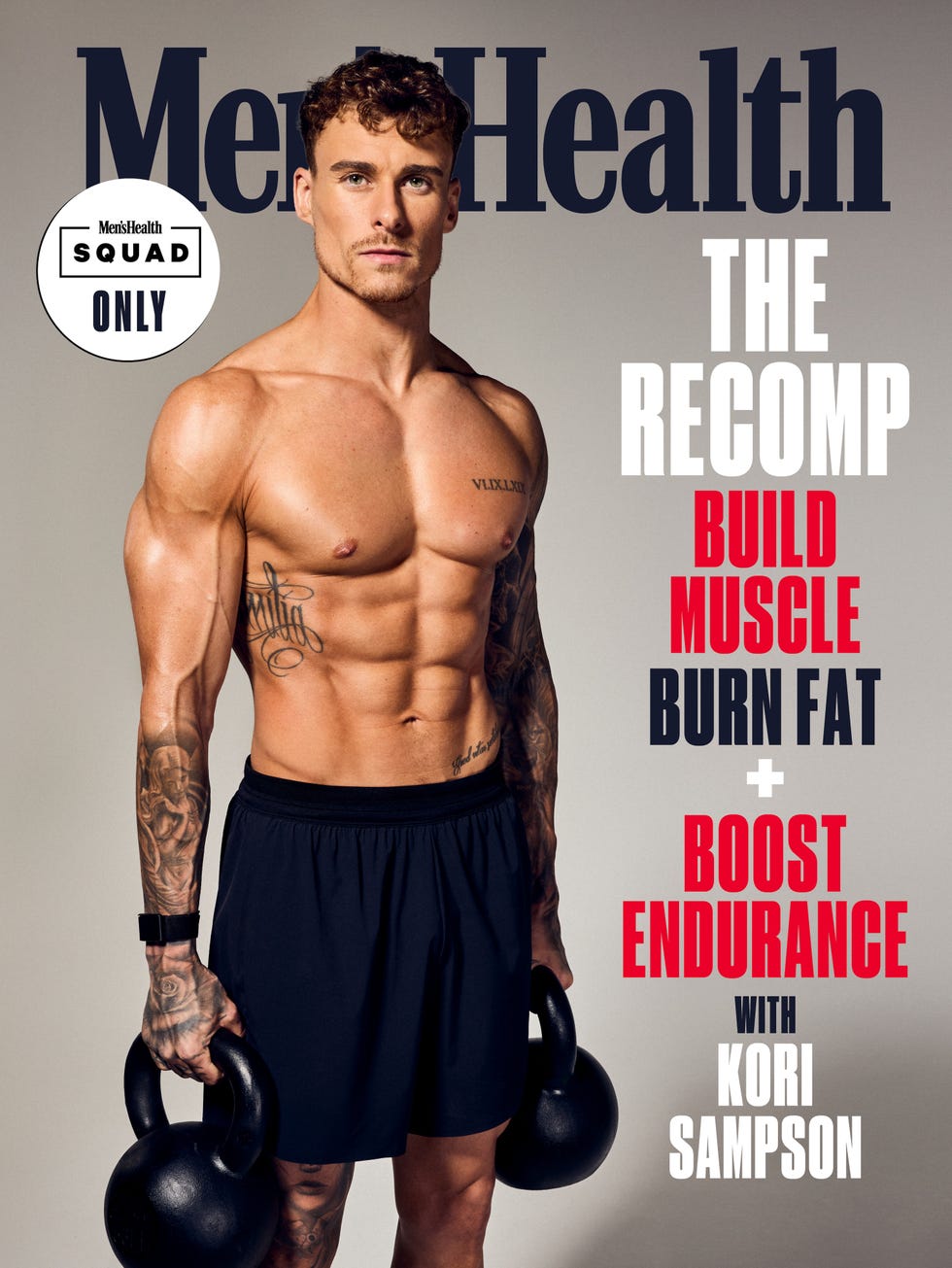
If there’s one thing Kori Sampson knows, it’s how to optimise your body composition for performance. To tap into his knowledge as an elite athlete and coach, we asked him to create a 4-week plan to help you move faster, recover quicker and keep pushing when the fatigue sets in – all while improving your muscle-to-fat ratio.
Ready to build muscle, burn fat and come out the other side looking, feeling and performing better? Click here to get 14 days of free access to the plan via the Men’s Health app.