
Published July 15, 2026 08:39AM
Tour de France riders will do anything for a bit of free speed, no matter how dumb it might seem. If it saves 2 watts, it’s worth it.
This year’s race is no exception.
The 2026 Tour de France is a treasure trove of marginal gains.
And we’re not talking bona fide game changers here. High-carb fueling or 30mm tubeless tires don’t count.
We’re talking gains so marginal that they might be pointless.
Things so simple that you can try them at home.
Think forearm baths, nostril strips, and duct-tape derailleur hacks.
We rated a pick ‘n’ mix of the performance “gains” being employed at this Tour de France that you could easily try in your training.
Some are old, some are new. Some are pointless, some are actually quite important.
But they’re all a part of the fastest bike race in the world – and they might make you faster too.
1. Getting creative to stay cool
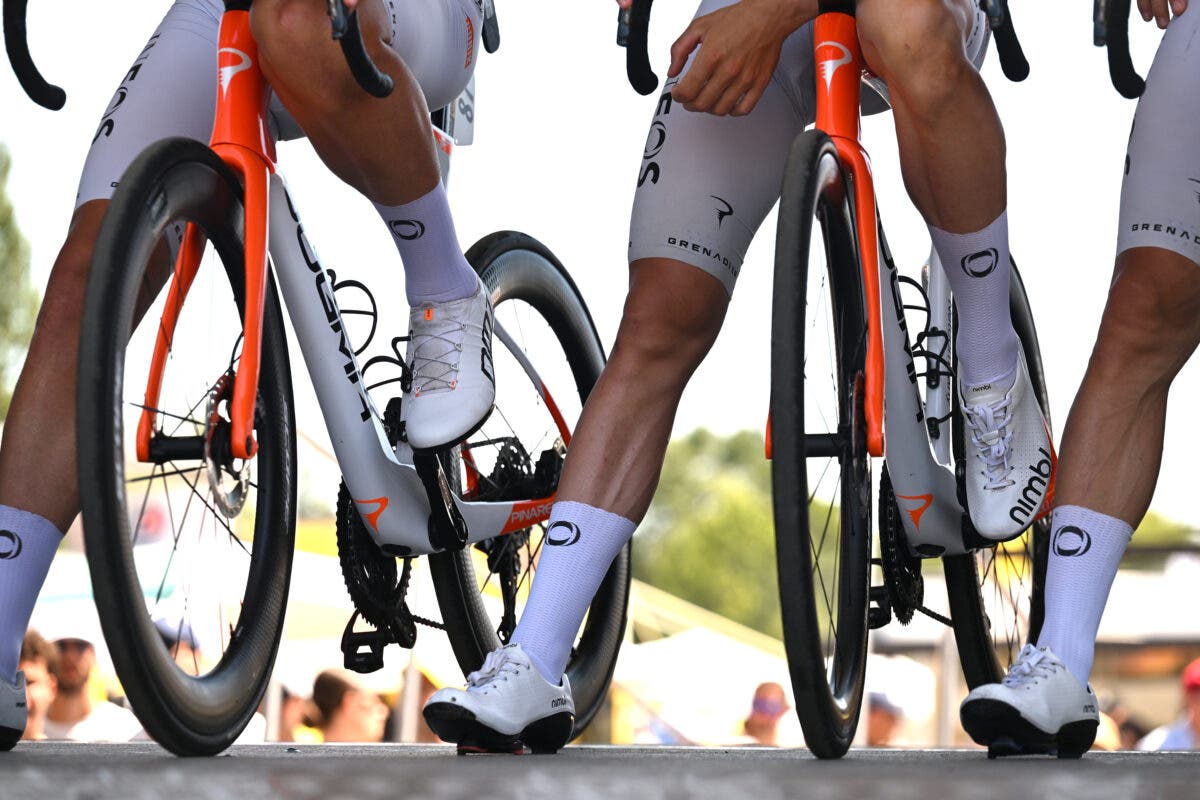
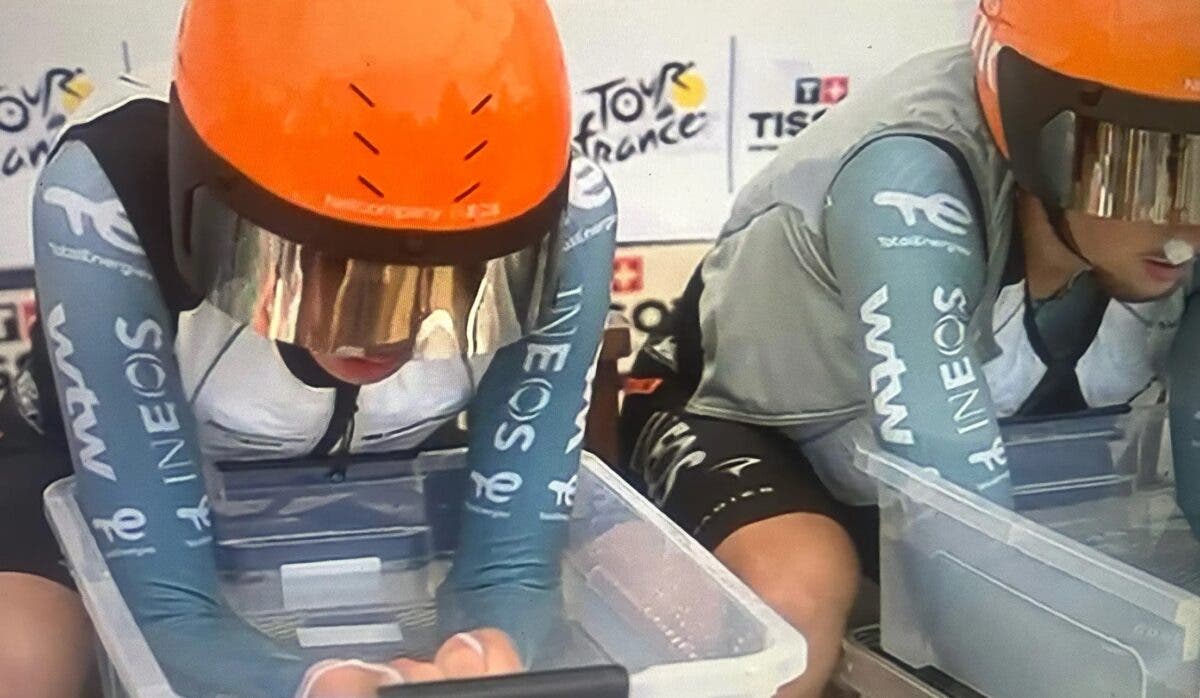 Team Ineos – the originator of marginal gains when known as Team Sky – stepped it up on stage 1 of the Tour. (Image: HBO Max / TNT Sport)
The 38°C heatwave that’s cooking Europe has hoovered headlines at this Tour de France. And it’s blessed with some of the race’s quirkiest gains, too.
Tour de France teams got creative to stay cool in the first half of the race.
The best heat-beating bodge came courtesy of Netcompany-Ineos, the team that pioneered the term “marginal gains” back in the Team Sky days.
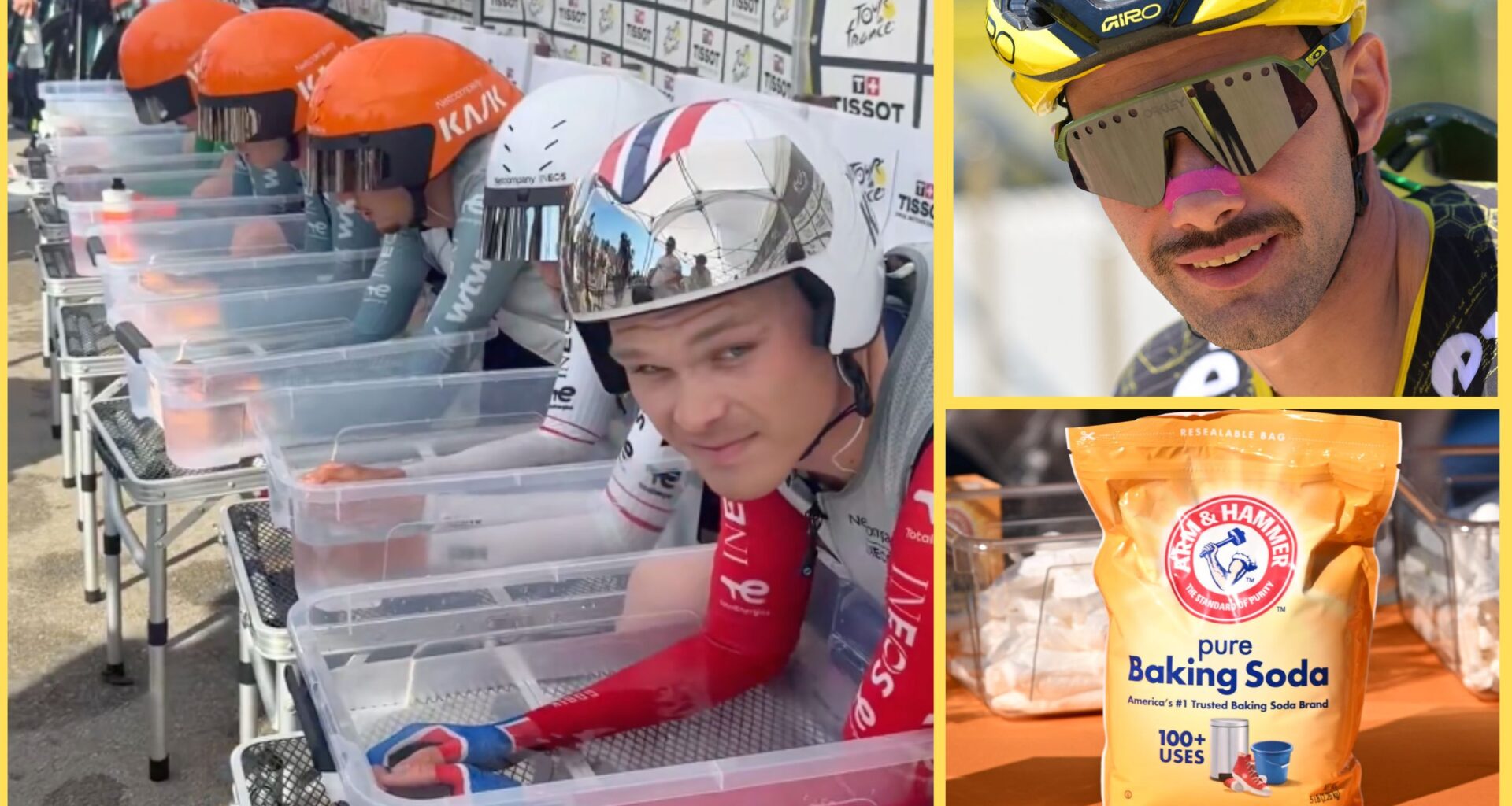
The team had its riders dunk their forearms in lukewarm water in the nerve-wracking minutes before the stage 1 TTT. Chilling the maze of exposed blood vessels at the wrist provides a whole-body cooling effect, without zapping heat from leg muscles that have just been warmed on the trainer.
The race has been riddled with other cooling hacks since the grand départ out of Barcelona. We spotted many other teams, including Cofidis, giving their arms a dunk after the race crossed into France.
Elsewhere, riders have been guzzling ice slushies, filling their jerseys with ice socks during stages, and diving into huge portable baths like it’s their 8th birthday party.
Should you try it? Yes, sort of.
OK, so we’re not suggesting you have your kid’s paddling pool on standby for your next interval session.
However the Tour’s quaint cooling workarounds prove a point.
Cooling doesn’t need to be complicated or costly. Ice gels and ultralight jerseys are not the only solution to riding in the heat.
Pre-cooling in the shower before a hot ride creates a “heat sink” that can delay the time to fatigue. Dunking your legs into cool water – or your kid’s paddling pool – provides rapid cooling after a ride and is proven to reduce DOMS.
And if you’re looking for cheapo ways to stay cool on the indoor trainer, we’ve got you. Here are our three favorite low-cost solutions.
2. Wearing nose strips
 Visma-Lease a Bike loves nose strips. The teams now-departed trainer Tim Heemkserk never understood why.
The 2026 Tour de France is throwing it back to the mid 1990s.
The “nostril dilators” that were made popular by controversial grand tour star Jan Ullrich boomed back into fashion last year, and the trend extended to this July.
Jonas Vingegaard, Sepp Kuss, Matteo Jorgenson, Mattias Skjelmose, and Remco Evenepoel are among the dozens of nose strip aficionados in this Tour de France peloton.
In theory, these “sports plasters” create negative pressure in the nostrils to improve nasal breathing and stop riders suffocating while they choke down their 15th gel of the stage.
However, many recent studies suggest they’re as good as useless, and Tour de France trainers told us last year they’re probably placebos.
It’s not clear what caused the sudden nose strip resurgence – maybe the launch of new brands with shiney marketing campaigns. However, the fact that the world’s best cyclists are using them suggests there might be something to them, placebo or not.
Should you try them? Might as well.
You can pick up a 30-pack of sport-specific nose strips for less than $20 USD.
If you get a stuffy nose when you train, you might as well give them a try and hope for airflow heaven.
3. Eating baking soda
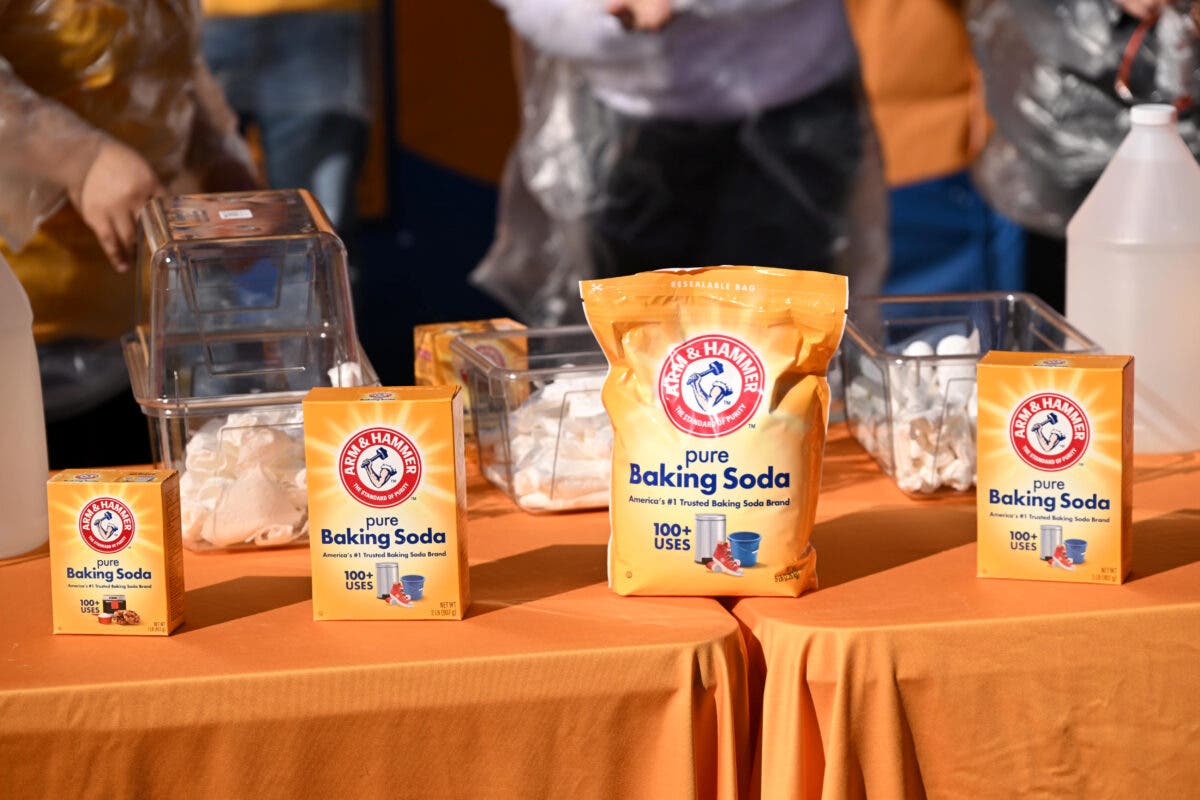 Take a dip – we dare you. (Photo: Dave Kotinsky/Getty Images for ARM & HAMMER Baking Soda)
You can bet that dozens of riders have got a gut full of baking soda in any given stage of the 2026 Tour de France.
Sodium bicarbonate delays time to fatigue, improves recovery between efforts, and is one of only 5 sport supplements recommended by the IOC.
The alkaline compound neutralizes acidic hydrogen ions that accumulate in the blood during high-intensity exercise and sting athletic performance.
Stocks of bicarb will be on every team bus at this Tour de France. But that’s not to say it’s new – it’s one of the oldest performance enhancers in the book.
What has changed is how it’s taken,and how often.
When bicarb became “a thing” in the 80s, athletes would mix raw household baking soda into water, slug it down, and hope for the best.
The abrasive cleaning and baking product serves either sporting nirvana or broiling guts. Who knows, maybe you’ll get a bit of both.
Few riders dared do it, and if they did, they only took the risk ahead of time trials.
More recently, stomach-safe “systems,” gels, and pills have made sodium bicarbonate part of every team’s fueling program. New research suggesting it’s as good for endurance as for fast-twitch efforts expanded its scope from TTs and sprints to mountain stages and beyond.
But bicarb is still not perfect. Maurten’s system has to be “eaten” in a hydrogel with a spoon (remember this from Mike Woods?!) and the risk of explosive G.I. issues remains.
Should you try it? Maybe.
The benefits of sodium bicarb are undeniable.
But if you want to do it the most gut-safe way, you gotta pay. Maurten’s leading “Bicarb System” is still crazy costly. Emteric sodium bicarbonate pills are a strong second option at a fraction of the price.
Or if you’re really brave, you could try a teaspoon of Arm&Hammer … but don’t blame us for any mess.
4. Pedaling in painters’ overalls in your basement
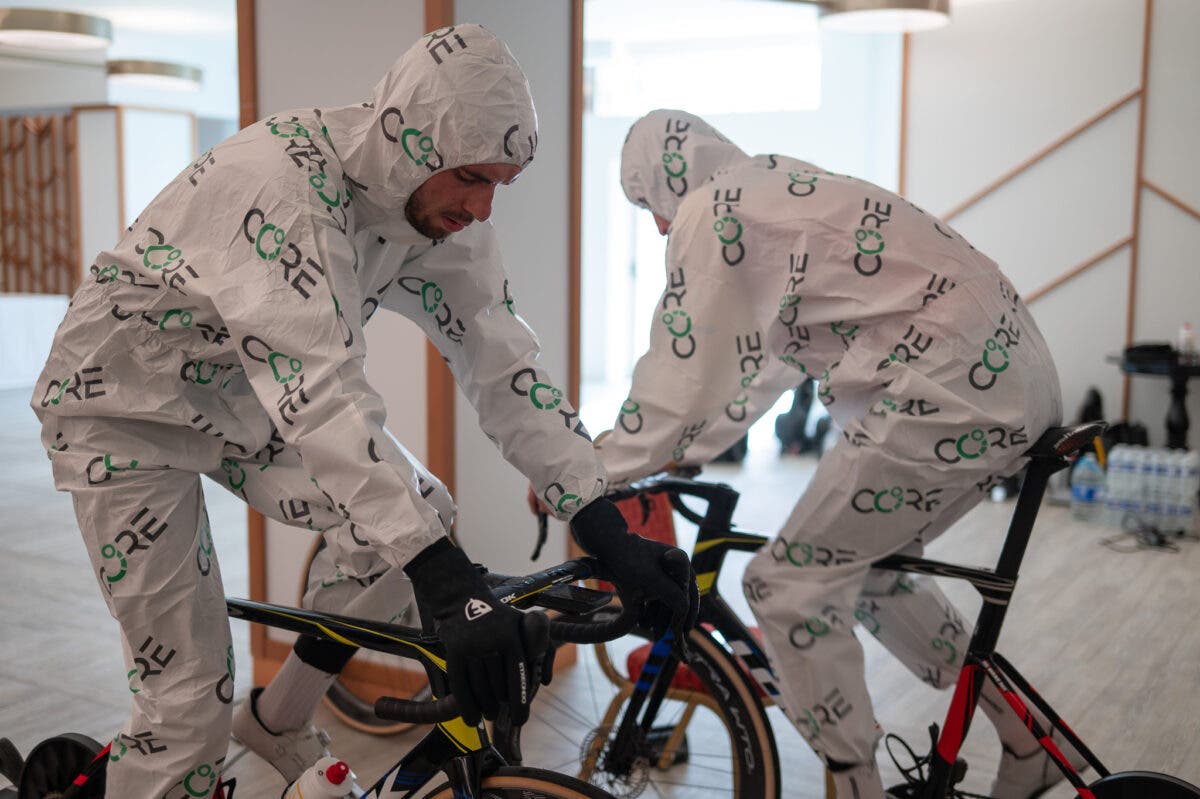 Two Cofidis riders boil away in Core ‘heat suits’ during their winter training camp. (Photo: Courtesy CORE)
No, riders aren’t pedaling in painters’ overalls in an unventilated room during the Tour de France.
But you can bet the majority of them spent significant time doing it before the Tour de France.
Heat training is one of the most influential training trends of the post-pandemic era.
OK, hands up, listing it as “a marginal gain” might not be doing it justice.
A well-executed block of heat training prepares conditions riders for the physiological demands of extreme heat. As a bonus, it also gives a blood boost that benefits performance in all environments.
The narrowing margins and rising temperatures of European summers have made heat training a non-negotiable for riders targeting the Tour de France.
But the peloton is divided over how best to do it.
Many team trainers advocate for the aggressive approach – riding a turbo trainer wearing a full winter wardrobe or a boil-in-the-bag “heat suit.”
Other coaches schedule outdoor workouts under the hottest sun of their team’s winter and spring training camps instead.
Should you do it? Maybe, but with caution.
For us weekend warriors, the biggest benefit of heat training is for climate acclimation. A heat block could be beneficial before a summer fondo or bike-packing trip, for example.
The blood-boosting benefits are only worth chasing once you’ve aced every other component of the workout program.
If you decide to have a go at heat training, approach it with caution. The risks of overcooking and longer-term burnout aren’t worth the hint of any reward.
You can check Velo’s best practice protocol for heat training here.
5. Shaving your legs
 Not a hair to be seen. (Photo: Getty Images)
Shaven legs are so much a part of men’s pro cycling that it’s a talking point when riders don’t do it.
Peter Sagan, Primož Roglič, and Jonas Vingegaard have all caught the attention of the cycling stylistas for riding with fuzz.
There’s no denying the pro vibes that radiate from a set of smooth, tanned, chiseled calves when they pop out of pristine white socks.
But Tour de France riders don’t only shave their legs for the panache.
Believe it or not, silky smooth calves and quads actually do provide some aero benefit. The nerds at GCN found that shaved legs were 15.5 watts faster at 45kph. Eternal triathlon tinkerer-and-optimizer Lionel Sanders claims he found 13 free watts when he turned his legs bald.
The benefits of shaven legs extend beyond performance.
For pros, smooth legs are practical legs. There’s less mess when oils are applied for evening massages and fewer complications when treating road rash.
Should you do it? Up to you.
This one depends on how much free time you have on your hands, and how bad you want to show off your chiseled calves, we guess.
But be warned.
There’s no such thing as “just one shave.”
Leg hair comes back thicker and faster than you might want to get out the razor.
6. Taping over random bits of your bike, going bonkers over bolts
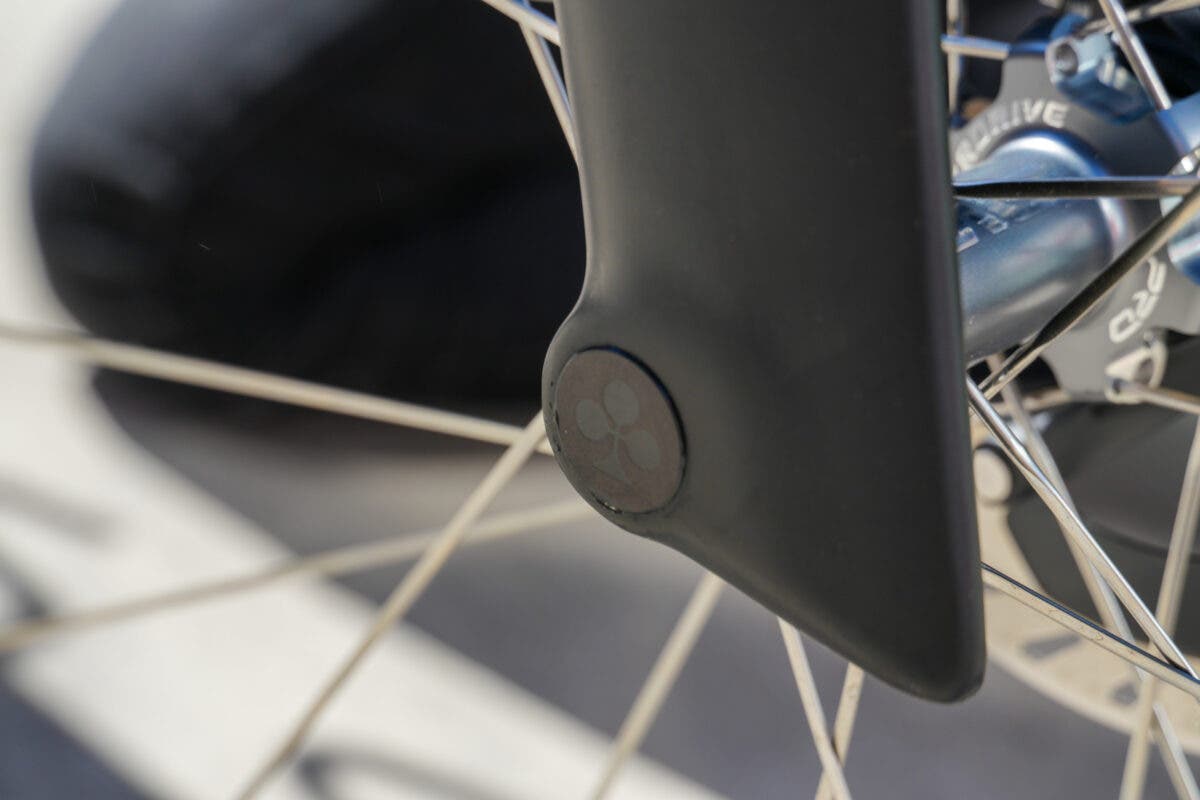 Mechanics at UAE Emirates taped over the exposed end of the thru axle on Pogačar’s Y1Rs for a tiny aero gain. It looks better, too. (Photo: Logan Jones-Wilkins/Velo)
Tour de France bikes are so dialed in 2026 that there’s little left to optimize. Cables are tucked away, everything is integrated, and aero upgrades are installed across almost every component of the bike.
However, there are still a few DIY upgrades being made at the 2026 Tour de France.
Our wiley tech reporters Logan Jones-Wilkins and “Shoddy” Dave Everett picked up three particularly marginal nuggets worth highlighting:
1. Ineos Grenadiers are taping over their rear mech hangars as an improvised aero solution. Instagram account CyclingSpy first noted Josh Tarling doing this last year.
2. Mechanics at UAE Emirates-XRG have placed a sticker over the open end of Tadej Pogačar’s thru axle to fill a “void” which would create drag.
3. A Lotto-Intermarche rider is so obsessed with stripping weight from his Orbea that he’s riding a prototype frame purely for its feathery frame bolts.
If you want to check more of the most intriguing tech being used at the Tour de France, check Logan’s gallery, here.
Should you do it? Why bother?
If you think a bit of duct tape over your derailleur hangar will make-or-break your chances at taking a local Strava KOM, go for it.
You might go faster by just cleaning and greasing your chain a little more often, though.
7. Peeing in water bottles while riding to save pulling off the road
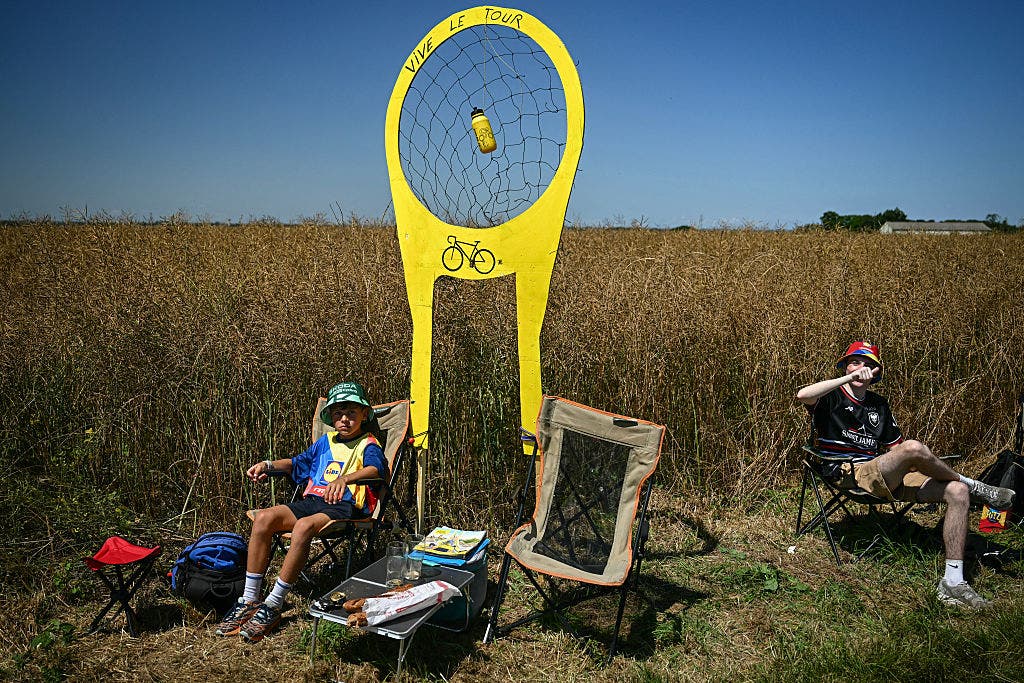 Discarded water bottles are sought-after swag for roadside fans. (Photo: LOIC VENANCE/AFP via Getty Images))
We’ve not seen it being done yet, but you can bet somebody’s doing it.
Should you do it? No. Just, no.
We’re not even going to discuss it.