
I’m pushing a sled in the middle of a high-intensity class, struggling to catch my breath. My vision is blurring at the edges – a brutal reminder of where my fitness levels are at right now. It’s the start of 2026, and despite having a Hyrox solo race to tackle in May, I’m the least fit I’ve been in a long time.
I’ve always been able to dip in and out of training and get back to a decent level of fitness relatively easily. But this time, things felt different.
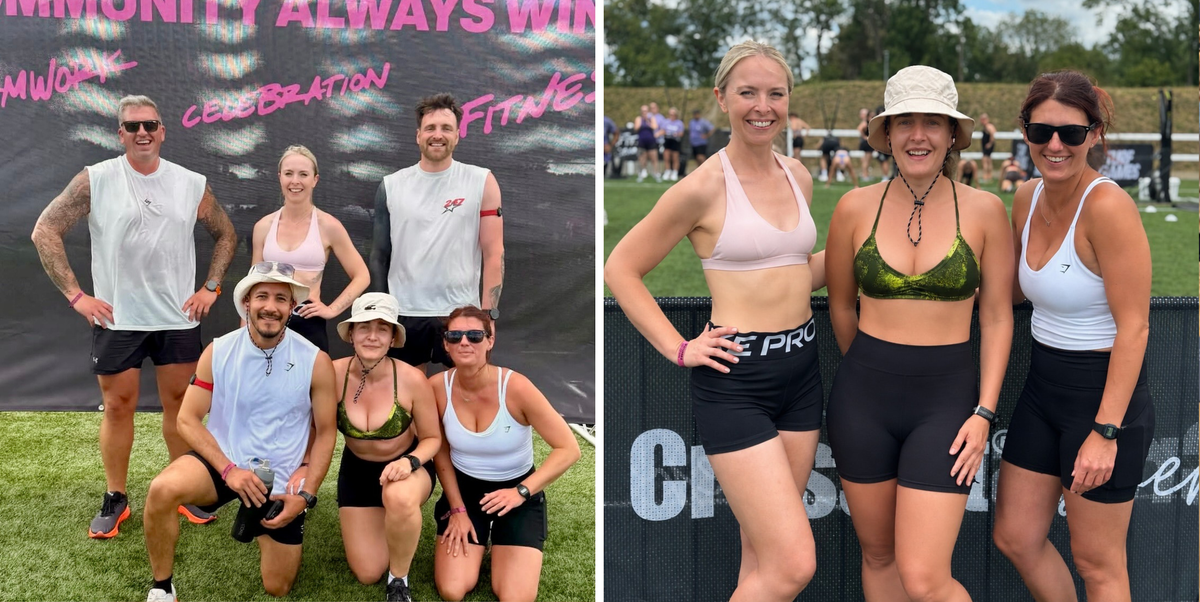
The only thing keeping me accountable was the looming Hyrox deadline, but the idea of training alone wasn’t exactly appealing. And that’s how I found myself signed up for another challenge – a functional fitness competition, known as the Turf Games – with a group from my gym at Vertex Pro Fitness.
At the time, the challenge felt so far away that I barely thought about it. But as time went on, I began to see progress. The first hurdle was simply ensuring I turned up to class. I was previously a serial 11pm class canceller, so breaking that habit became essential. I committed to attending two classes a week, focusing on metcon conditioning and barbell work. I also added two runs each week. In total, I was training four days a week.
Slowly but surely, my fitness and confidence improved – and by the time my Hyrox came around, I managed to knock 10 minutes off my PB. Looking back, though, I don’t think the biggest reason I kept turning up every week was the progress I saw.
A large part of the appeal was the people around me. From the start everyone celebrated each other’s progress, encouraged each other through the horrible workouts and embraced the fact that none of us were perfect. Making genuine friendships in your thirties isn’t always easy, especially with people who share your interests and happen to live nearby.
Their encouragement forced me to do something I’d avoided for years – be bad at something.
There was a time when I was a lot fitter and stronger than I am now. As I became more immersed in the fitness industry through my writing and coaching, I gradually developed an ego attached to that fitness. It felt embarrassing to admit I wasn’t as fit or as strong as I was in my 20s. As if someone who writes about fitness should always be perfect.
Training for competitions this year challenged that. For the first time in years, I let myself admit that I’m actually not very good at this anymore. Ironically, that was probably the biggest breakthrough.
Overcoming challenges as a team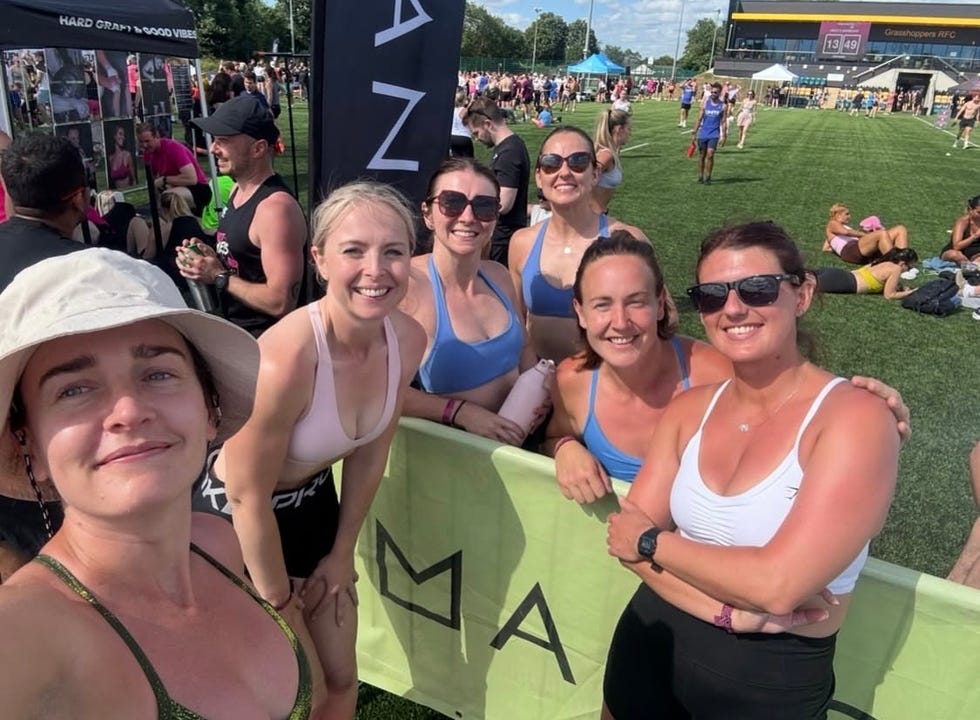
Kate Neudecker
The defining movement in Turf Games is the worm, where you have to lift, carry, squat and press a 90kg sandbag as a team. Strength helps, of course, but the movement lives and dies on communication. It doesn’t matter how strong three people are individually. If you’re not moving together, the weight isn’t going anywhere.
The first time we tried it, it was an absolute disaster. I was at the front, which meant I had to call the reps. As a coach, I naively assumed this would be the easy bit. Turns out, trying to coordinate three people while you’re underneath a 90kg sandbag yourself is very different to coaching from the sidelines. My voice didn’t carry, nobody was quite in sync and, at one point, the bag fell on my head.
When competition day came around months later, we’d barely practised the worm together as a full team. Yet somehow it worked. The timing clicked and the sequence came together, powered by the extra adrenaline. It was a small reminder that progress isn’t always obvious while it’s happening.
Reaching new levels
Neither, as it turns out, is fitness. The biggest sign I was getting fitter wasn’t that I suddenly felt fast or strong again. It was my ability to recover.
A few months earlier, one intense class would wipe me out for days. If I trained hard on Monday, there was no chance I was running on Tuesday. Gradually, that changed. I was recovering from them quickly enough to train again, rather than surviving through the week. That capacity, more than any PB, told me I’d rebuilt my fitness.
Preparing for competition
Competition weekend itself wasn’t exactly ideal preparation. I’d spent the Saturday spectating in a heatwave before competing on the Sunday and managed minimal sleep.
Before the competition, we even found ourselves wheeling a gazebo and sandbags across what felt like miles in a supermarket trolley because we had to park so far away from the actual event. It’s not a polished operation, but that’s one of the things I loved most about Turf Games. It felt more like a festival than some high-stakes competition.
The Turf Games consists of four workouts spread across the day, leaving just enough time between events to recover before throwing yourself into the next one.
The worm workout was the one I’d been looking forward to the least, but one I knew we’d do well in. When the results came through afterwards and we realised we were sitting seventh out of around 200 teams, we were pretty surprised.
Finding confidence 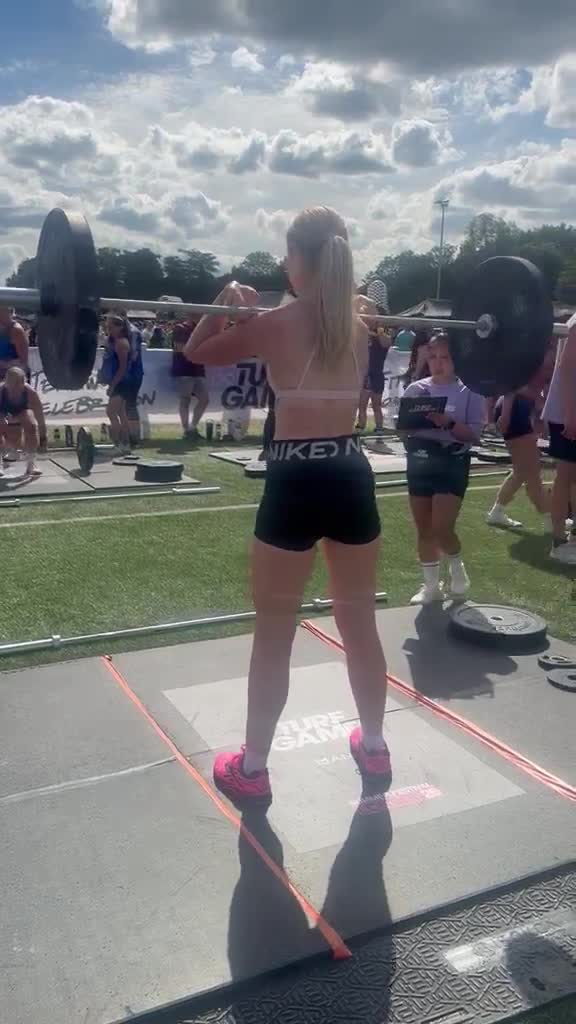
Later in the day came the Olympic lifting – my weakest event by some distance. I’d spent a couple of sessions trying to relearn the clean with help from a coach after years away from the movement, but it still wasn’t something I felt confident with.
I was in the same boat as my team mates: before the event, we all started getting into our heads a little. But after chatting it through, we realised we were taking ourselves too seriously. Once we’d realised that, the pressure disappeared. When our time to compete came around, we just laughed and got on with it. That, more than anything, summed up the day.
Between workouts, everyone watched everyone else compete. People lined the barriers shouting encouragement, not just for their own teams but for anyone who needed it, especially a team who completed their events in full fireman kit in a heatwave. It felt like everyone had turned up for each other.
The lessons I’m taking away
Looking back, I realised all parts of the preparation required exactly the same thing – being willing to suck at something. Whether that was carrying the worm or surviving a high intensity workout, progress only came once I stopped worrying about failing.
The biggest thing training harder gave me wasn’t a faster Hyrox time: it was a new relationship with discomfort. Somewhere between carrying a 90kg worm and turning up to classes where I was one of the least fit people in the room, I realised that growth almost always begins with feeling a little awkward.
The irony is that once I’d stopped trying to avoid those moments, they became far less frightening. The workouts got easier. My confidence followed. Progress, I’ve realised, rarely comes from staying comfortable. It comes from being willing to look a bit silly, work a bit harder and keep showing up anyway.
One of our most frequently asked questions here at Women’s Health? How to build muscle and burn fat at the same time. So, we asked superstar trainer Oyinda Okunowo exactly how to do it. In this 4-week plan – created exclusively for Women’s Health COLLECTIVE members – you’ll get the workouts and nutrition guidance needed to help you on your way to better body composition. Tap the link below to unlock 14 days of free access to Oyinda’s plan and start training today.


Kate is a fitness writer for Men’s Health UK where she contributes regular workouts, training tips and nutrition guides. She has a post graduate diploma in Sports Performance Nutrition and before joining Men’s Health she was a nutritionist, fitness writer and personal trainer with over 5k hours coaching on the gym floor. Kate has a keen interest in volunteering for animal shelters and when she isn’t lifting weights in her garden, she can be found walking her rescue dog.