
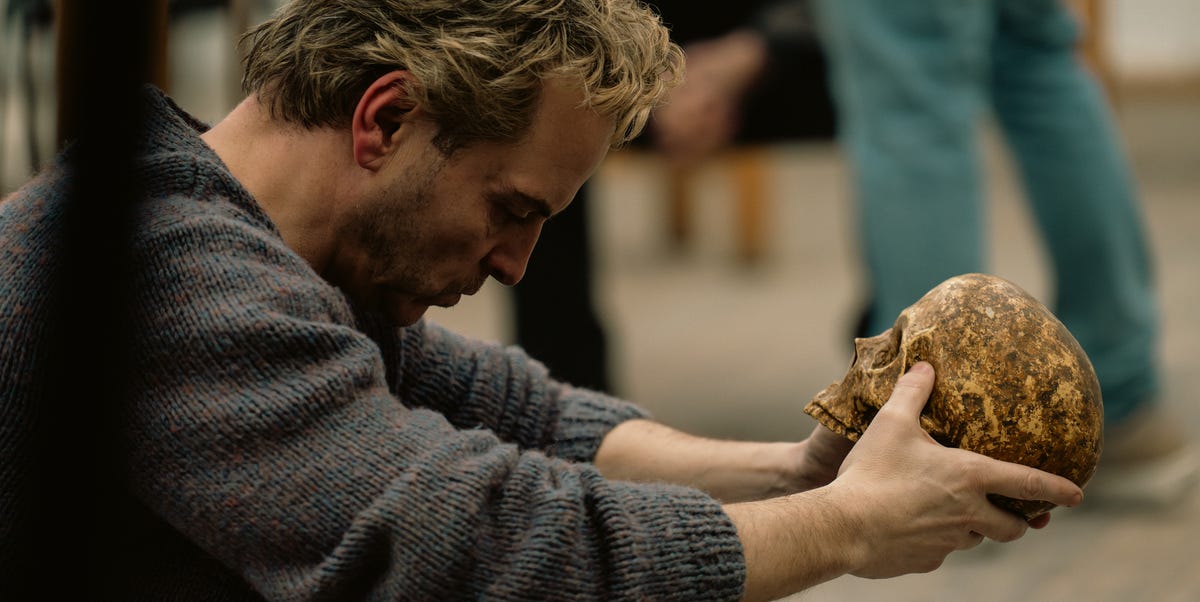
Listen to the late Ian Charleson speak, and you’ll immediately hear why Andrew Scott was chosen to play him in Elsinore – the melodrama about the Chariots of Fire star struggling to play Hamlet at the National Theatre while being ravaged by AIDS.
Despite Scott having to bleach his hair and wear blue contacts for the role, the actors have much in common. Their voice, their demeanour, the way they command empathy without words. And although the part seems cooked in a lab to appeal to BAFTA voters (an actor playing an actor playing the prince of Denmark? Come on), Scott’s performance elevates the tragic story beyond its straightforward unfurling.
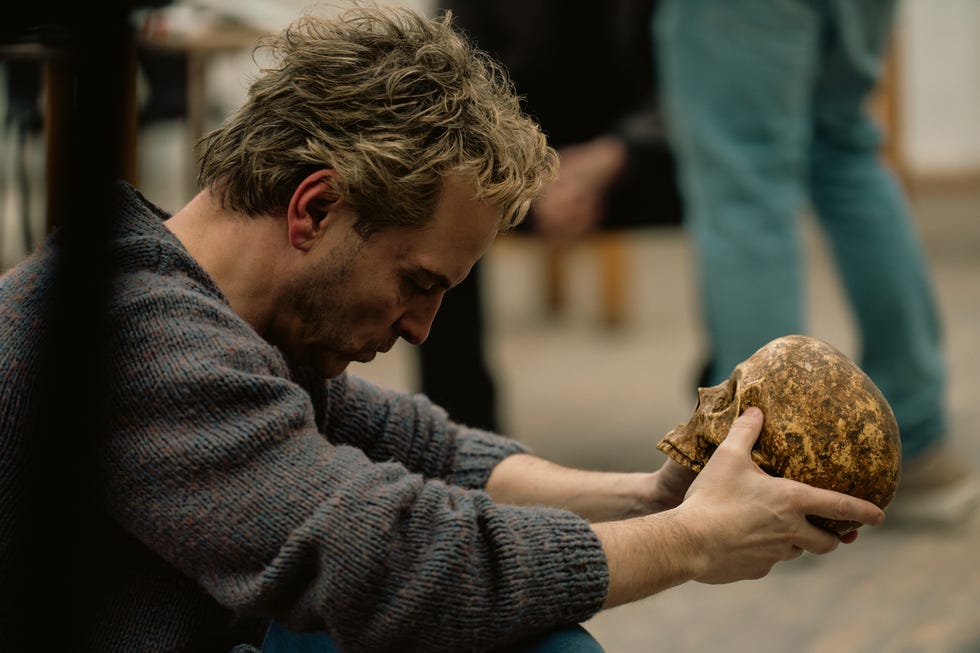
Director Simon Stone imbues the tale with occasional flourishes in the form of montage, using the text of Shakespeare’s Hamlet – as performed by Charleson in rehearsals – to find the movie’s rhythm. These are, however, the rare moments when Elsinore’s form rises above its trappings as a sentimental biopic, becoming something akin to a tale of Hamlet’s place in the public consciousness.
This is, after all, the third major Hamlet-related movie in recent years, following Chloé Zhao’s creation myth Hamnet and Aneil Karia’s modern, South Asian-centric telling starring Riz Ahmed. It’s through this reverence for the material that Stone justifies Charleson’s reckless quest to give his body and soul over to Shakespeare’s greatest play, even if it kills him.
Anthony Dickenson/Focus Features
Opening with a re-creation of Daniel Day-Lewis’s notorious walkout while playing Hamlet in 1989, Elsinore bides its time by introducing Charleson’s search for work and recognition after his Chariots success nearly a decade prior.
We meet him in Shakespearean fashion, often through the eyes of those around him, including his best friend and casting director Patsy Pollock (Billie Piper), as well as jilted former collaborator Derek Jarman (David Dawson), an openly gay director who, perhaps rightfully, resents Charleson for sanitising – which is to say, heterosexualising – his identity.
Charleson is also HIV positive, and although he hasn’t felt the full effects of AIDS just yet, he makes frequent trips to his physician. The fear of the disease taking him always looms, and when a minor lesion appears on his temple, it feels like the end.
Through smart use of language and minor interactions, Stone quickly establishes the contours of the movie’s in and out groups. The gay men of the era (including support groups led by drag queens) understand each other’s plight, and speak in shorthand, while those outside their circle are politely cautious at best.
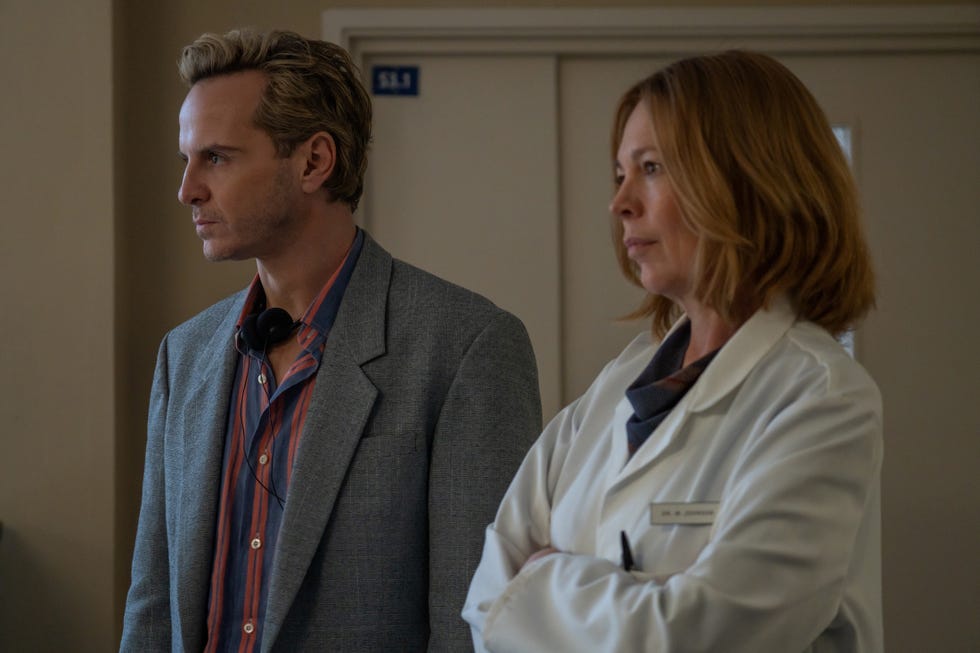
However, when the opportunity to replace Day-Lewis arrives, Charleson jumps at it despite the ticking clock, confiding only in close friends and the production’s director, Richard Eyre (Johnny Flynn). The role feels fated, and Charleson is determined to give it his all, which also involves seeing a dedicated new specialist, the curt but well-meaning Margaret Johnson (Olivia Colman), who wants to give him more time to live, while all he seeks is just enough time to achieve his dream.
StudioCanal
Scott wears this soulful dilemma on his face, and just behind his expressive eyes, turning in a performance of great suffering, the kind that movie award season is usually populated by. Only he crafts the role with so much familiar humanity that it’s hard not to fall in love with him, or feel for his pull toward self-destruction.
His conception of Charleson is that of a man filled with regret, hoping to find some kind of last-minute catharsis through the magic of the stage, which allows Stone to entwine key moments of the actor’s life with beats from the play itself.
The movie’s melodrama may be obvious, but it’s also rousing, thanks in part to a murderer’s row of supporting performances, which colour the contours of Charleson’s personal and professional life. His friends and parents are forced to live in the blast radius of his disease, while his collaborators form a welcoming support network – as do fellow patients, who occasionally express artistic dreams of their own. The movie may be focused on Charleson’s journey, but it extrapolates, in subtle ways, the widespread devastation of the AIDS epidemic, and all the life and creativity that was lost to government apathy.
Granted, the movie’s search for a complicated, defiant dignity is eventually subsumed by its straightforward musings about bright lights and the immortality of celebrity. However, with Scott as the emotional anchor, Elsinore stays the course against all odds, overcoming even its most mechanical moments through the beating humanity of a man forced to reckon with impermanence, while fighting for something more.

Elsinore is released in UK cinemas on 29 January 2027. It will receive its European premiere at the BFI London Film Festival on 7 October.
Visit our Streaming Guide now to see at a glance where you can view ALL your favourite shows and movies.
The new edition of Legends, a 100-page celebration of Dolly Parton’s life, is here. Buy Dolly in newsagents or online.