
 4 min read
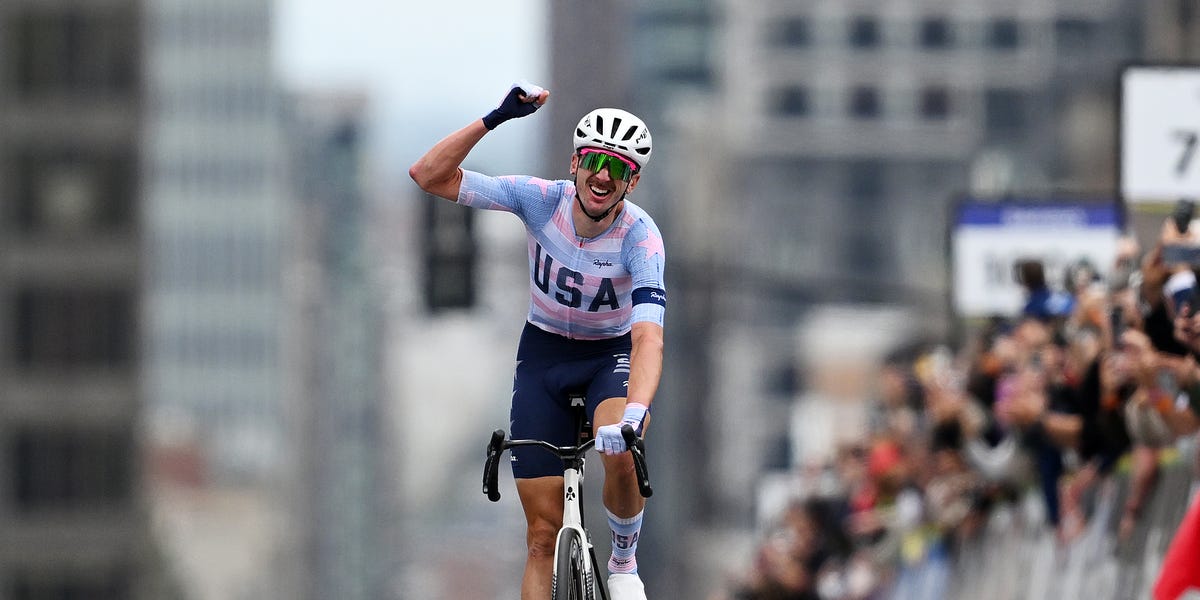
There were a little over 30 kilometers to go in the 2026 Road Racing World Championship when Brandon McNulty put in his attack. As he rolled away from the group it was apparent there was little interest in anyone digging in for a counterattack—the end of a decades-long drought for an American to be in the rainbow jersey at the end of this race was slowly coming to fruition.
The American team had deployed brilliant team tactics to get McNulty into this position. Other riders, some of them favorites to win like Remco Evenepoel and Mathieu van der Poel, were putting out raw power throughout the race. But McNulty and the rest of the American squad prioritized team strategy, appropriate pacing, and hard efforts when needed, to get an American back on the top of the podium at Worlds.
While most of us aren’t creating a gap on our weekly ride with riders like Evenepoel and van der Poel, there is something we can learn from Team USA’s strategy. Knowing when to dig deep and put in an effort and when to conserve energy can be key to you feeling good on a long ride.
As a trainer, coach, and group rider, I’ve seen so many people blow up because of poor pacing throughout a ride. Here we’re going to go through pacing strategies for your next long ride so you can finish like McNulty.
Get Bicycling’s Guide to How to Master the Century
Pace from the start
It’s easy to let excitement get the better of you in those opening miles of a long ride and jump on the gas as soon as the pedals start turning. But take a page out of McNulty’s book from Worlds—if you’re with a group, take a turn sitting in the wheels for the opening stretch. Take your turn at the front, but you don’t need to counter every attack that you see go off the front of the group—and definitely don’t burn all your matches trying to put in a dig on every climb.
“Part of pacing long rides is to make sure you’re not surging on every hill,” says Dan Chabanov, test editor at Bicycling and an experienced bike racer.
Focus on keeping your power and/or heart rate firmly in a comfortable zone 1 or 2, especially as you warm up for the first 30 to 60 minutes. (Don’t have a monitor? Use the talk test—even if you’re riding solo, keep checking that you can comfortably speak in full sentences.) “If you’re in a race (or group ride), staring at your power meter is a great way to get dropped,” Chabanov notes. It’s important to know where you’re at so you don’t burn matches too early, but learn to feel out where your body is so you aren’t staring at your bike computer for the whole ride.
Focus on consistency
Newer cyclists may want to focus on holding a certain speed on a ride like this, but your better pacing strategy is to focus on keeping your power, heart rate, or perceived exertion (how you feel) consistent throughout the day. Ideally, most of your time should be spent in zone 2, dipping into zone 1 and zone 3 occasionally—and this is true whether you’re focusing on power or heart rate zones.
When Chabanov and I were talking about the race, he started talking about McNulty’s last lap. “He [McNulty] clearly rode slower on the Mount Royal climb by quite a bit. The chase closed about 40 seconds on him. But he had to leave enough in the tank to pedal the last 10 km instead of trying to nuke the climb,” says Chabanov.
Part of the key with pacing is knowing where you’re at in the route and having a plan to spread your effort accordingly. If you’re basing your effort on your perceived exertion, come back to the talk test. If you’re struggling to string together a sentence without gasping for breath, you’re going too hard. You should always be able to get at least a full sentence out without trouble.
Don’t forget to fuel
Perhaps most importantly to the mental side: eat and drink! Spencer notes that often, we think of food as fuel for our physical bodies, but our brains need it just as much. “Our mood, focus, and concentration are greatly impacted by what we put in our bodies,” she adds. “An underfueled athlete is not just a slow athlete, they are also a grumpy athlete.”
Plus, your pace is in large part dictated by your fueling, and unfortunately, if you wait until hour three to start eating and drinking, you’re likely too late and you’ll be feeling the bonk. Eat and drink early and often, says Frank Overton of FasCat Coaching. “Remember to eat and drink every 30 minutes, starting at the first 30 minutes into the ride,” he says.
Ideally, stick to foods and beverages you know work well for you—test them on shorter rides first! No one wants to interrupt their century ride at mile 70 with a sprint for the nearest public restroom. (You can pick favorite snacks here: Cookies are absolutely acceptable sources of fuel, says Overton. In a century, snacks should feel fun!)
Stay Present
“In the last few miles, don’t get lost focusing on the finish line,” says Spencer. “Keep your attention to the here and now. When you cross that finish line, embrace the joy and celebrate your accomplishment.”
This is also a safety issue: In skiing, they have the curse of the “last run,” where inevitably, it ends not so pleasantly. Don’t let your “last mile” be the one where you steer into a ditch!

Jason Griffin is Bicycling’s Senior Health and Fitness Editor, bringing more than a decade of fitness experience and years in the cycling industry to every story. A former personal trainer and bike shop manager, he’s lined up for crits, tackled enduros, but prefers getting lost on multi-day bikepacking adventures. Lately though, his toughest balancing act has been fitting trainer rides between family life and the next adventure.

Molly writes about cycling, nutrition and training with an emphasis on bringing more women into sport. She’s the author of nine books including the Shred Girls series and is the founder of Strong Girl Publishing. She co-hosts The Consummate Athlete Podcast and spends most of her free time biking and running on trails, occasionally joined by her mini-dachshund.