
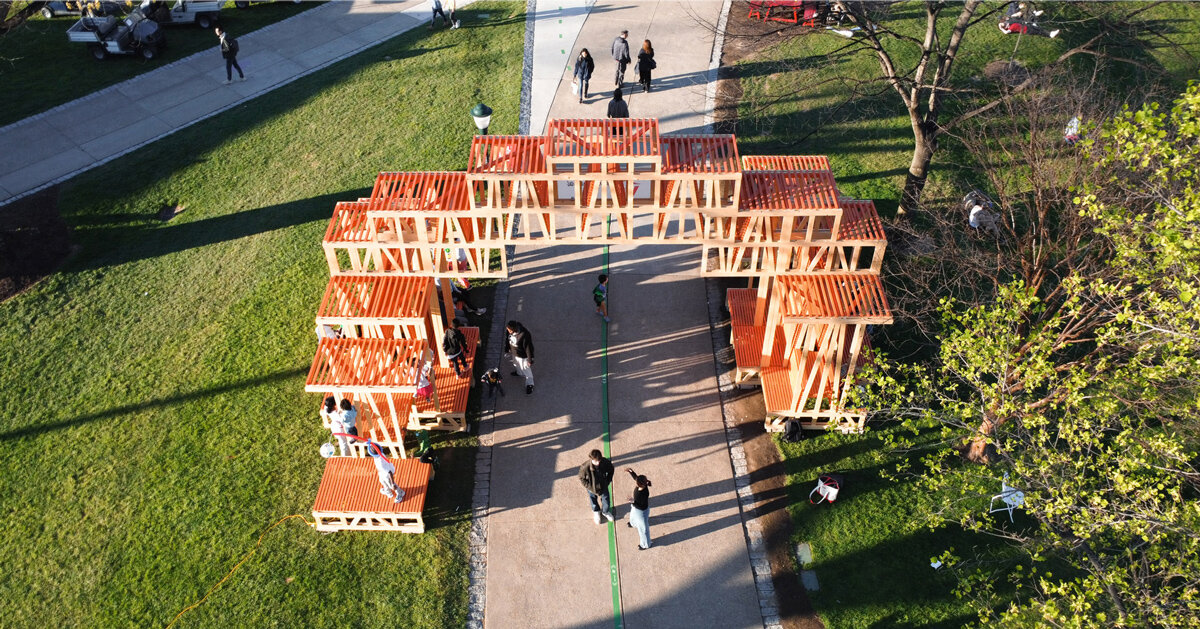
modular pavilion shifts from carnival gateway to public furniture
Frame to Folly is a modular timber pavilion designed to be disassembled, transported, and reconfigured for different sites and community uses in Pittsburgh, Pennsylvania. Developed by Carnegie Mellon University’s student-led Architectural Crafts Collective and Pittsburgh-based PARTlab (Laboratory for Radical Participatory Design), the project forms part of a year-long partnership with local nonprofit Neighborhood Allies.
The structure uses a system of vertical timber frames connected by interchangeable infill panels that double as seats, tables, backrests, and awnings. Initially assembled as a gateway for Pittsburgh’s annual Spring Carnival, the pavilion was prefabricated at a shared fabrication space, flat-packed, and transported to the festival site. The frames were joined on the ground and raised into place using a communal technique that required no heavy equipment. Bright orange infill panels were then secured with removable hardware, providing seating, shade, and other amenities for festival visitors.
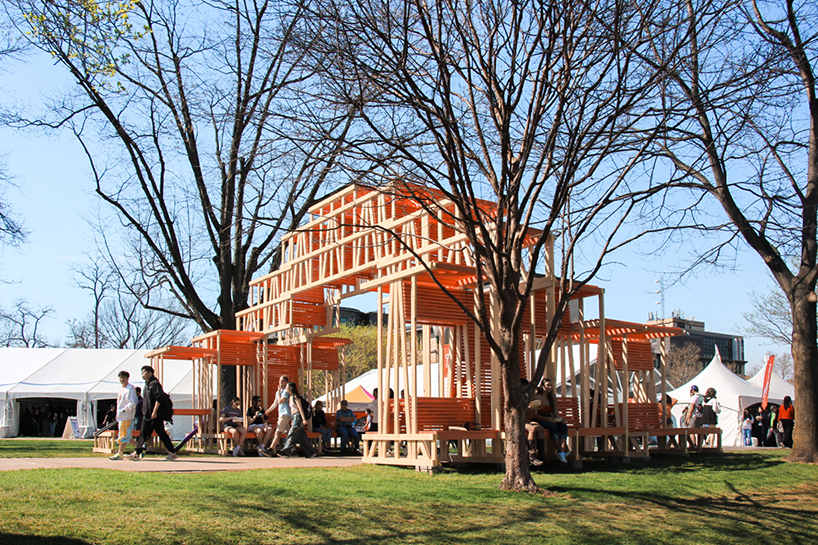 view of Frame to Folly in its carnival gateway configuration | all images ©Architectural Crafts Collective and PARTlab
Reusable timber components adapt to new community setting
After the three-day event, the pavilion was disassembled and moved to the backyard of a neighborhood tea shop, where the same components were reconfigured as flexible public furniture and an open-air teahouse. Built collaboratively by the Architectural Crafts Collective, a student-led design-build collective at Carnegie Mellon University, and Pittsburgh-based PARTlab, the modular system adapts to the new setting while retaining its original components.
At the end of its use at the tea shop, the structure will either be gifted to another community for reconfiguration or disassembled and donated to a material bank operated by the neighboring public library. Through its successive forms and uses, Frame to Folly demonstrates design for disassembly and material reuse, treating architecture as an adaptable system that can respond to changing community needs.
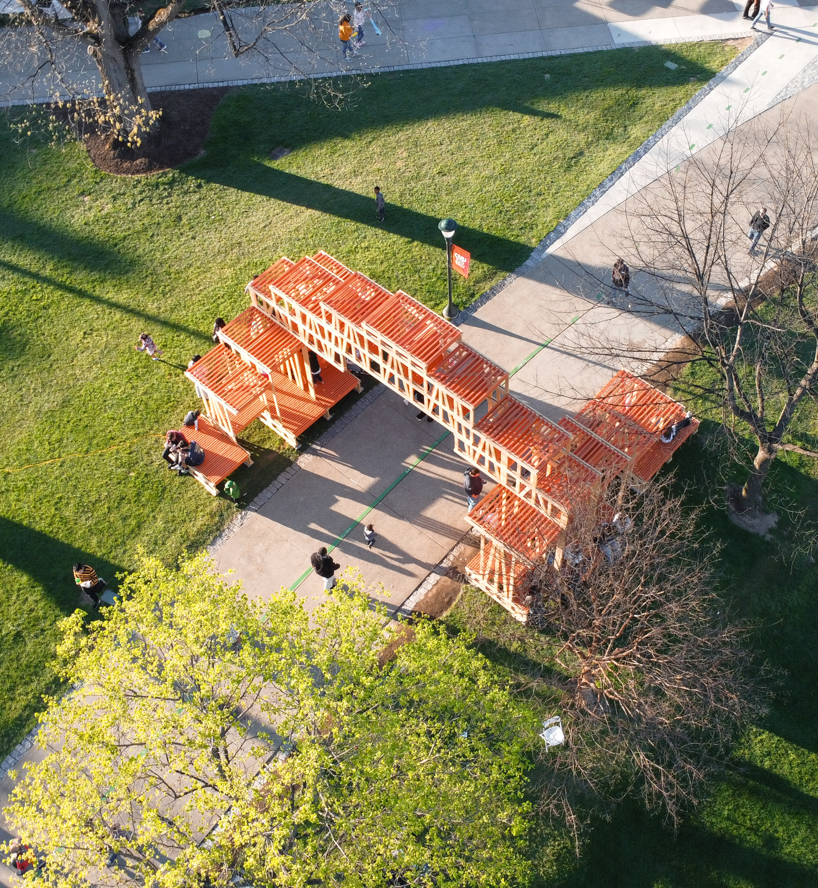 aerial view of Frame to Folly spanning the main carnival pathway
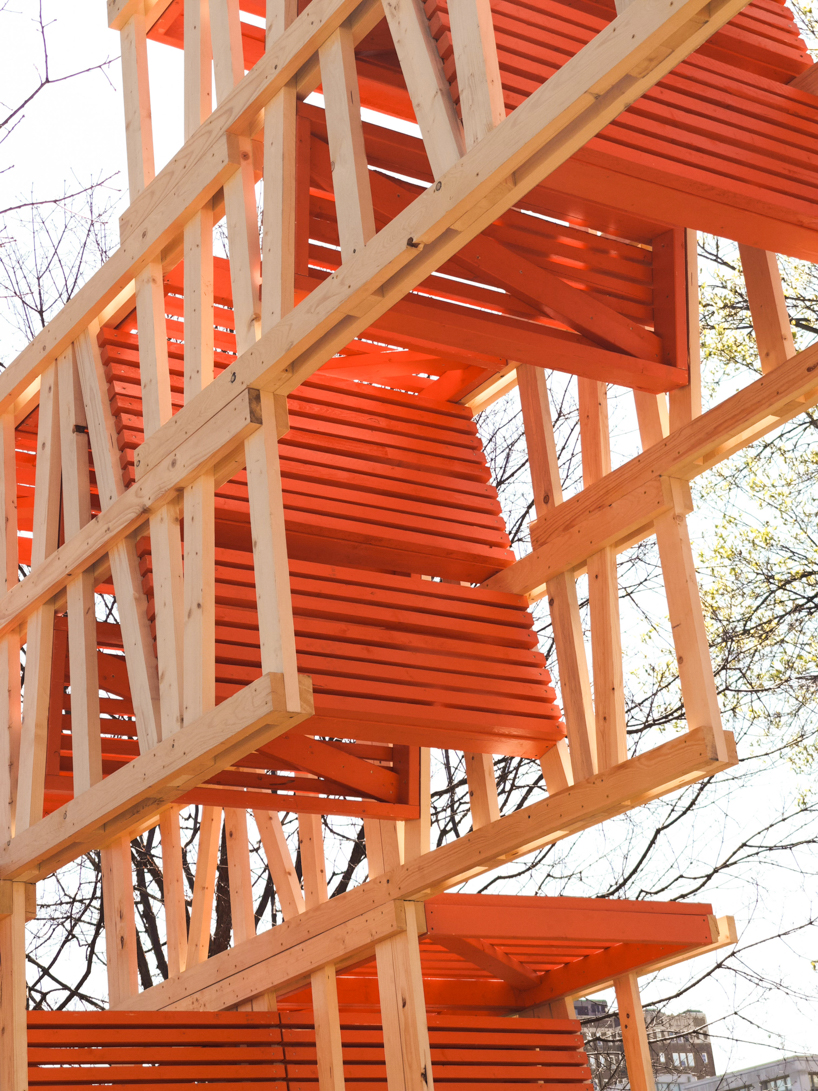 brightly painted orange infill panels connect the timber frames
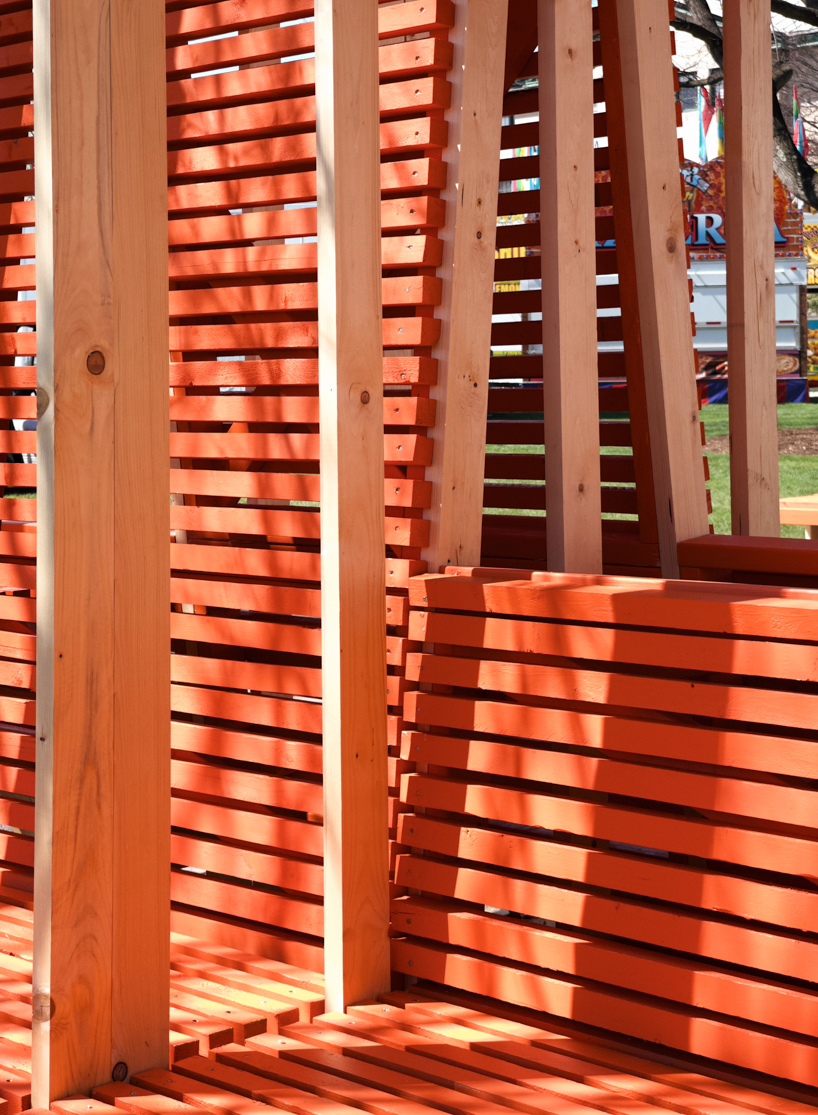 modular infill panels double as seating, backrests, and shading elements
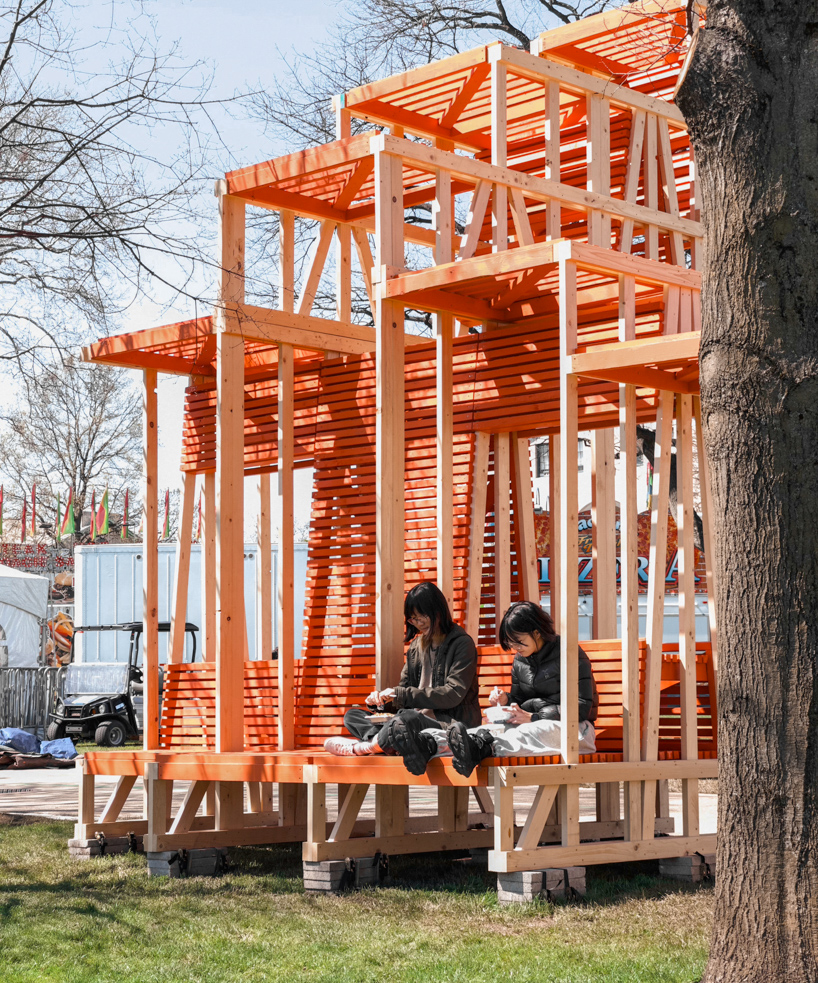 the inhabitable archway provides spaces for carnival-goers to gather and rest