

Runners: We have a big opportunity right now to set ourselves up for our best race training cycles ever in 2026. No, the opportunity is not to run as much as humanly possible. In fact, it’s to deprioritize running and focus on strength training in the “offseason,” during which we don’t have a race on the immediate horizon.
It’s implied that runners should, in fact, have an offseason, says Heather Milton, CSCS, exercise physiologist supervisor at NYU Langone’s Sports Performance Center. “The main focus during training is your running, but then in the offseason, switching it to strength training can help you make appreciable gains and adaptations that then [help] you perform better and prevent injury when you are in your running cycle.”
Samantha Rothberg, CSCS, who coaches runners and triathletes, agrees that runners shouldn’t feel “polarized” in the strength or endurance category, and that the script should flip in the offseason: “In-season training for runners focuses on muscular endurance in the gym, which means lighter weights with higher reps (think 12 or more),” she says. “We do this because the intensity is lower and it prevents undue stress on the central nervous system thereby allowing runners to prioritize intensity during running sessions.”
But when your race is behind you, it can pay off to increase your intensity in the gym—with heavier weights and fewer reps—and decrease the frequency and intensity of your runs. Here’s how to do it right, plus two offseason strength workouts to try.
Related StoryThe Goal of Your Offseason Strength Workouts
Physiologically, heavier lifting builds neuromuscular capacity (which helps your brain talk to your muscles more efficiently), improves force production (a.k.a. power that can translate to speed), and strengthens your tendons and ligaments for the upcoming season, Rothberg says, which can help ward off injury when you start adding mileage again.
Milton adds that lifting heavier helps build your “pillar of strength and stability,” while contributing to boosting your running economy, efficiency, and biomechanics.
There are mental benefits, too, Rothberg says. “It’s a way to allow yourself to stray from the rigidity that endurance athletes have and it’s fun to mix it up,” she explains.
Related StoryWhy It’s Smart to Focus on Heavy Lifting and Total-Body Training Right Now
While you can start off with your bodyweight or lighter weights, the key is to work up to using heavier weights and doing fewer reps, says Milton. “The reason for that would be to improve your lean mass quality,” she says, which means that the muscle tissue and bone get stronger to withstand the impact of running. Milton and Rothberg agree that six to eight reps is a good sweet spot for achieving this goal.
As far as just how heavy to go, Milton recommends using what pros call “reps in reserve,” which is essentially how many reps you could theoretically do after you finish what’s prescribed. In other words, if you’re supposed to do 10 squats with two reps in reserve, you should feel like you could probably eek out another two—but no more than that—when you finish a set.
Two reps in reserve typically means you’re working at about 70 to 80 percent of your max effort, or at about a seven or eight out of 10, which aligns with Rothberg’s recommendation for perceived exertion. “The idea is that the intensity really mimics what you would feel in a track workout,” Rothberg says. “Maybe not with how sweaty or out of breath you are, but how you sit down and you’re like, ‘oh my gosh, I really need the rest.’”
In terms of which exercises to do, Milton says you ideally want to incorporate all the major movement patterns (including pushes, pulls, squats, and hinges), like chest presses, rows, squats, and deadlifts, respectively. She says to think about the joints that move when you run and move through daily life—your hips, ankles, and knees all flex and extend and your shoulders rotate, flex, and extend.
Related Story
You want to include your upper body in the work because it helps with efficiency: “We do want forward lean when we’re running, that is the best way to maintain economy, continue to move in a forward motion rather than wasting some energy in your lateral motion. So your upper body stability is important for that,” Milton says.
Core exercises that help build stability are key, too, and might include side planks, planks, dead bugs, Palloff presses, or Russian twists, Milton adds.
Rothberg adds that unilateral moves—which are exercises that work one side of the body at a time—are “non-negotiable” for runners whether in season or offseason because running itself is a unilateral sport. Bulgarian split squats, and bird dogs are examples of unilateral exercises. She also likes to have runners work more plyometrics—like box jumps—into their offseason training to help build power and explosiveness that can ultimately help you run faster.
Rothberg says you can strength train up to six days a week in the offseason, but for the average athlete, two to three times per week is a good sweet spot, especially if you’re not discontinuing running altogether. Milton, too, has her runners strength train three days a week in the offseason.
The two also agree that total-body workouts are ideal for runners who are still maintaining some degree of running as it’s more efficient and won’t burn out the legs.
One note of caution: “Be aware that your body might feel sore when you begin [strength] training, but this will likely dissipate,” Rothberg says. “After the first few sessions, you probably won’t feel sore because you’ve taught your body the program. Remember that soreness is not an indicator of a good workout, just a new one. Try not to program hop, and focus on increasing weight gradually.”
Related StoriesThe Strength Workouts You Need Between Training Cycles
These workouts are designed to be done for four to six weeks before you get into the meat of your next race training cycle when you’d then shift gears to re-focus on running over lifting. They’re intended for runners who have some familiarity with strength training. If you’re totally new to lifting, you’ll want to start by building a base before getting into these more advanced workouts.
NEED TO BUILD A STRENGTH BASE FIRST? START HERE
How to use this list: Complete these workouts each week, with at least one day in between. You can complete each workout once, or, if you’d like to do three strength workouts a week, alternate weeks where you do the A workout twice and the B workout twice (so you’re doing ABA, then BAB). Follow the reps and sets prescribed below.
Ideally, keep any running you still plan to do on separate days but if you do combine them, consider lifting before running (which is the opposite of what you’d do while in peak race training). You’ll also want to consider avoiding something like a hill workout the day after squatting, for example.
Each week, increase the weights you’re using by 2.5 to 5 pounds (for upper-body exercises) and 5 to 10 pounds (for lower-body exercises). “Form is the most important here because when you are lifting heavier, the potential for injury does get higher, especially as you get more fatigued,” Rothberg cautions.
A Workout
Complete all exercises in each group back to back, in order, with no rest. Then rest for 2-3 minutes before repeating for all sets. Then, move on to the next group of exercises. For the main lift, rest 2-3 minutes between rounds.
Plyo Set: 4 Rounds
Box Jump, 4 reps
Stand in front of a box. Send hips back into a shallow squat position, hands reaching behind you.Explode as you stand up, jumping onto the box, landing with knees bent in a squat position.Stand up. Step off the box. Repeat.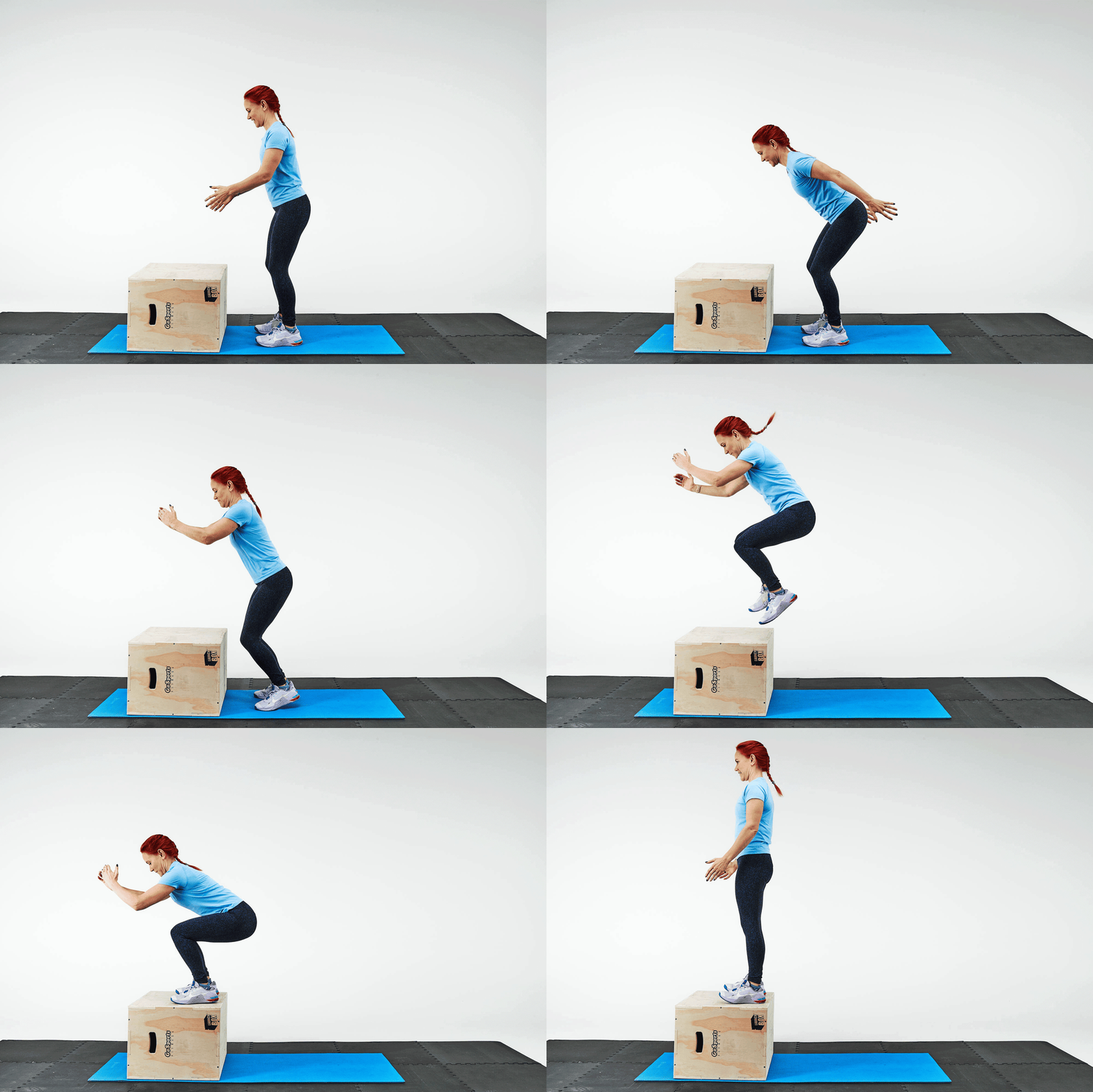
Trevor Raab
Split Squat Jump, 12 reps (total)
Stand with feet hip-width apart.Step right foot back, bending both knees 90 degrees to lower into a lunge, left knee tracking over toes and right knee hovering just off the floor. Explode up, jumping off the floor, switching feet in the air, and landing back into a lunge with left foot back. Repeat, alternating lunges.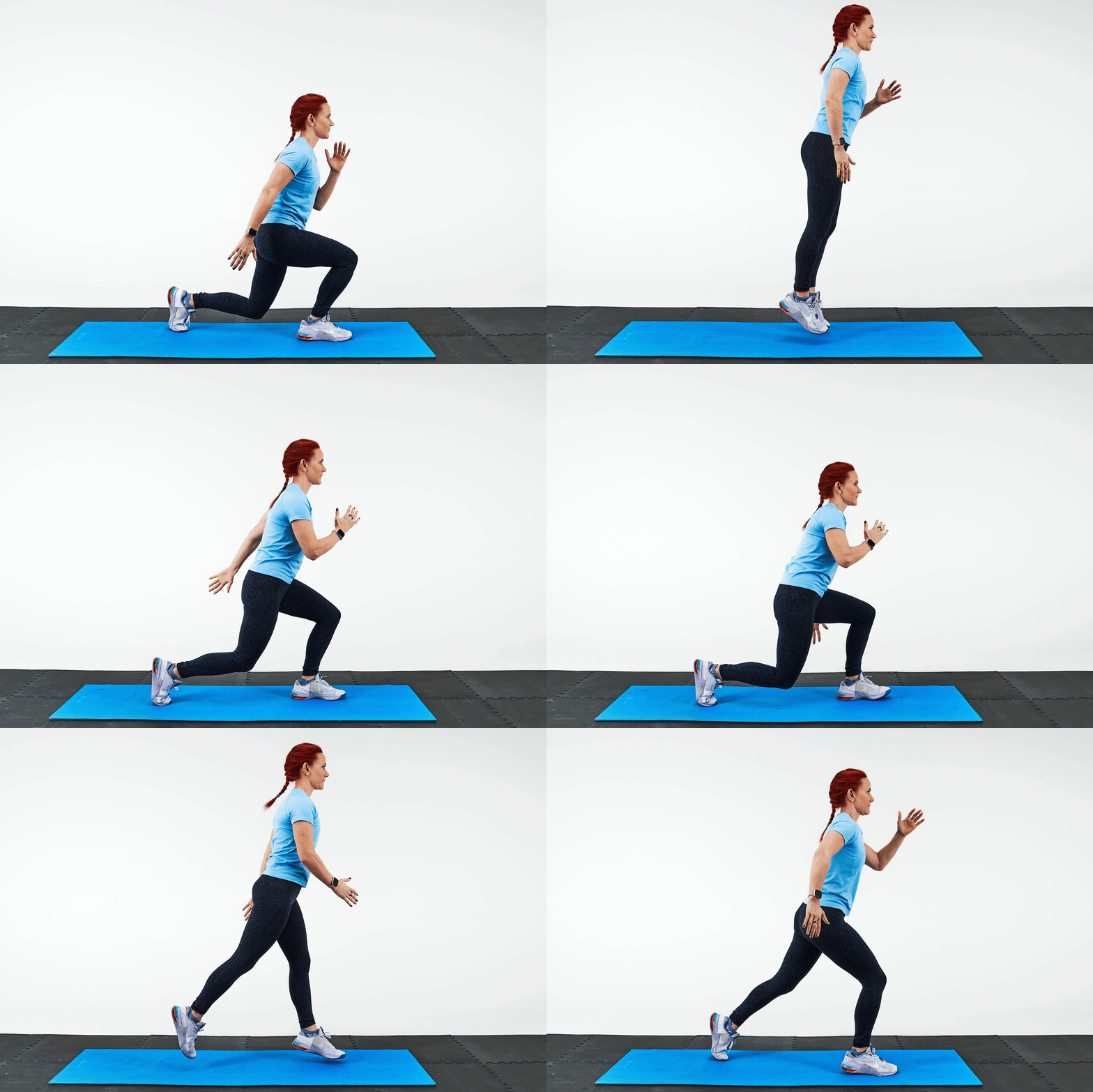
Trevor Raab
Main Lift: 4 Rounds
Squat, 5 reps
Stand with feet shoulder-width apart, toes turned slightly out. Hold a dumbbell in each hand, racked at shoulders with elbows bent. Send hips down and back to lower into a squat. Drive through feet to stand back up.Repeat.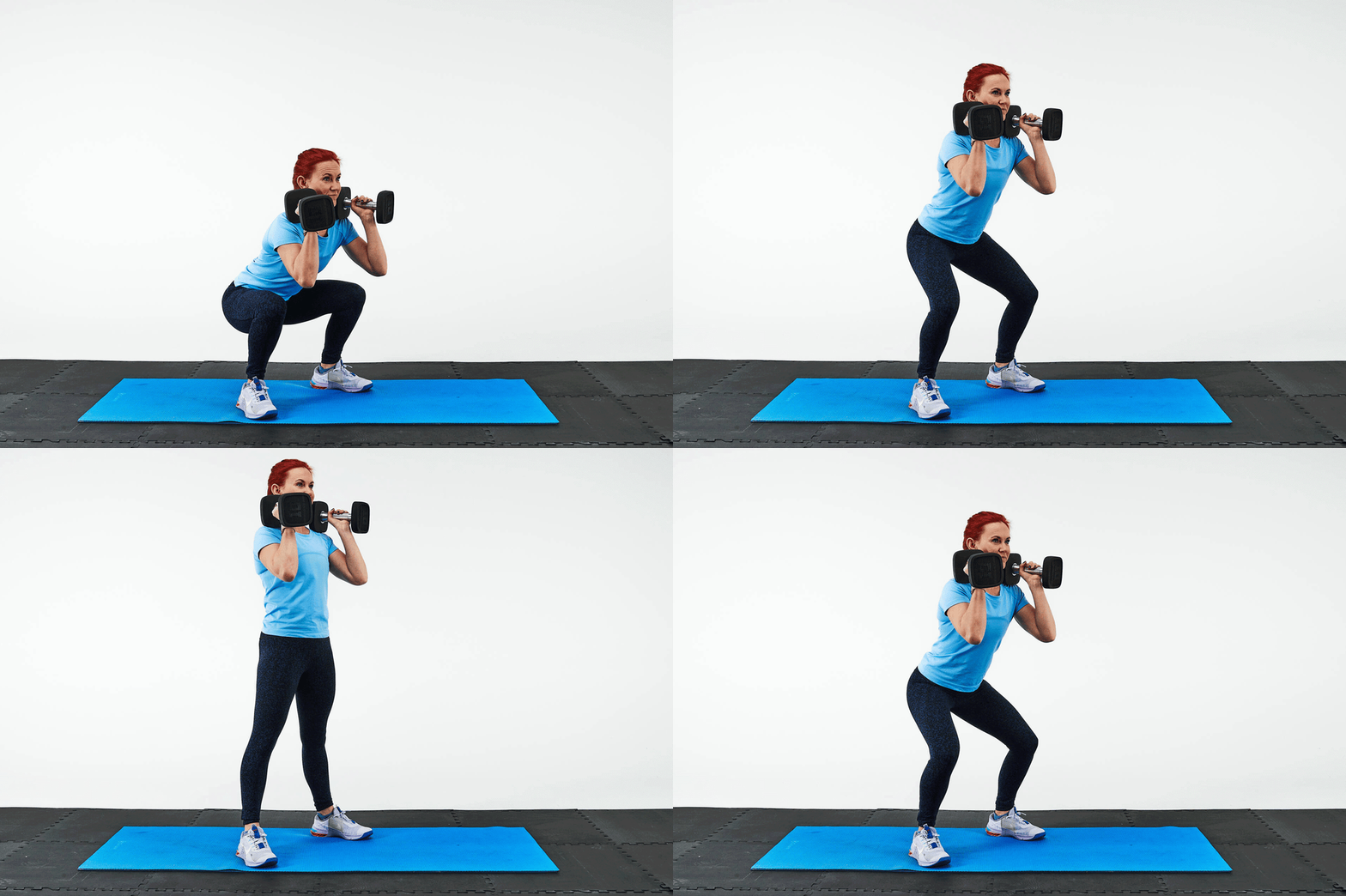
Trevor Raab
Strength Set 1: 3 Rounds
Lat Pull-Over, 6 reps
Lie faceup on a bench, holding one dumbbell with both hands, over shoulders, arms straight.Keeping core engaged and back flat, lower weight behind head with control.Lift weight back up over shoulders.Repeat.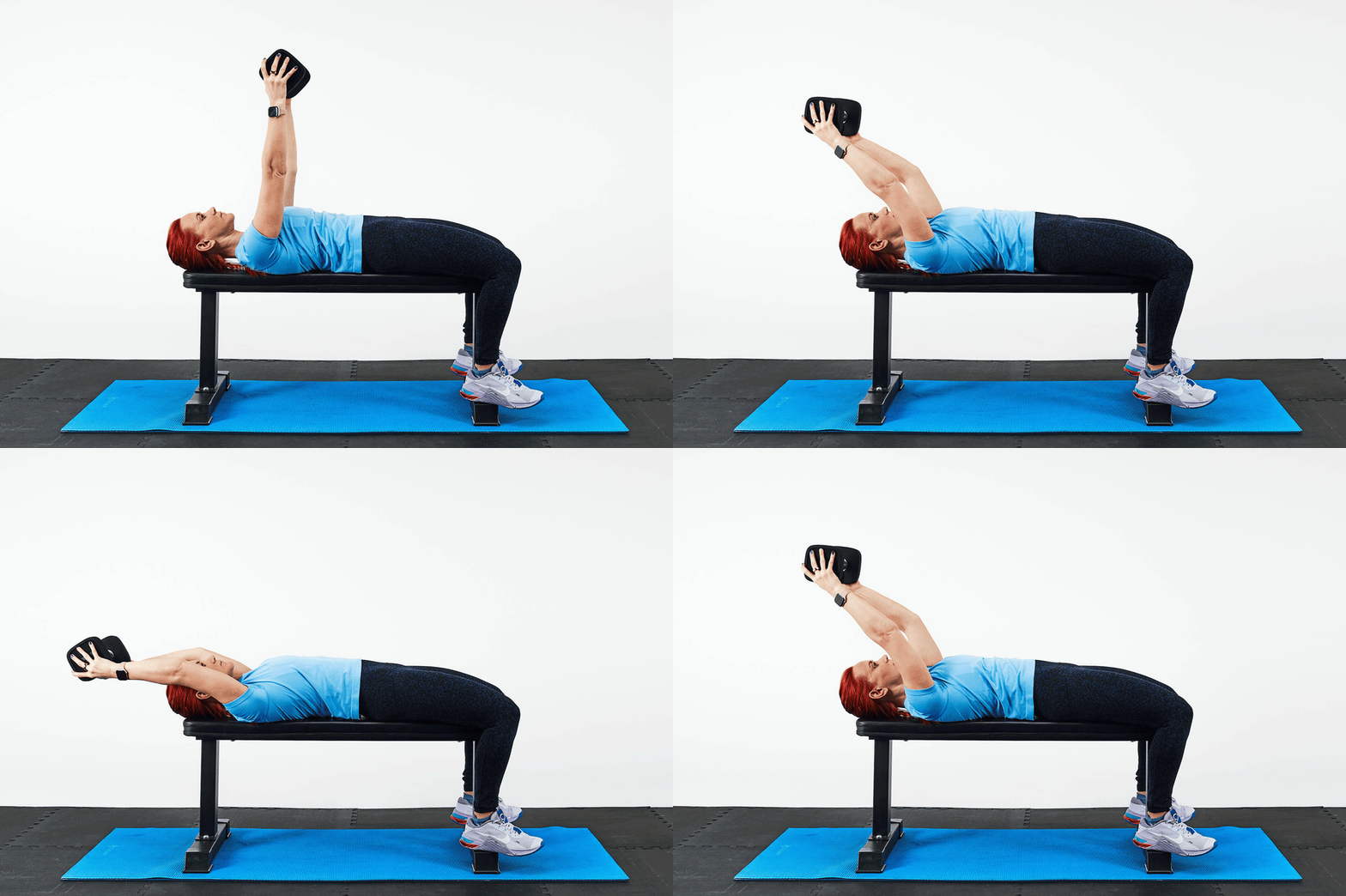
Trevor Raab
Push-Up, 6-8 reps
Start in a plank position, shoulders over wrists and body forming a straight line from head to heels.Bend elbows to lower body toward floor, maintaining a plank position.Press back up to plank. Repeat.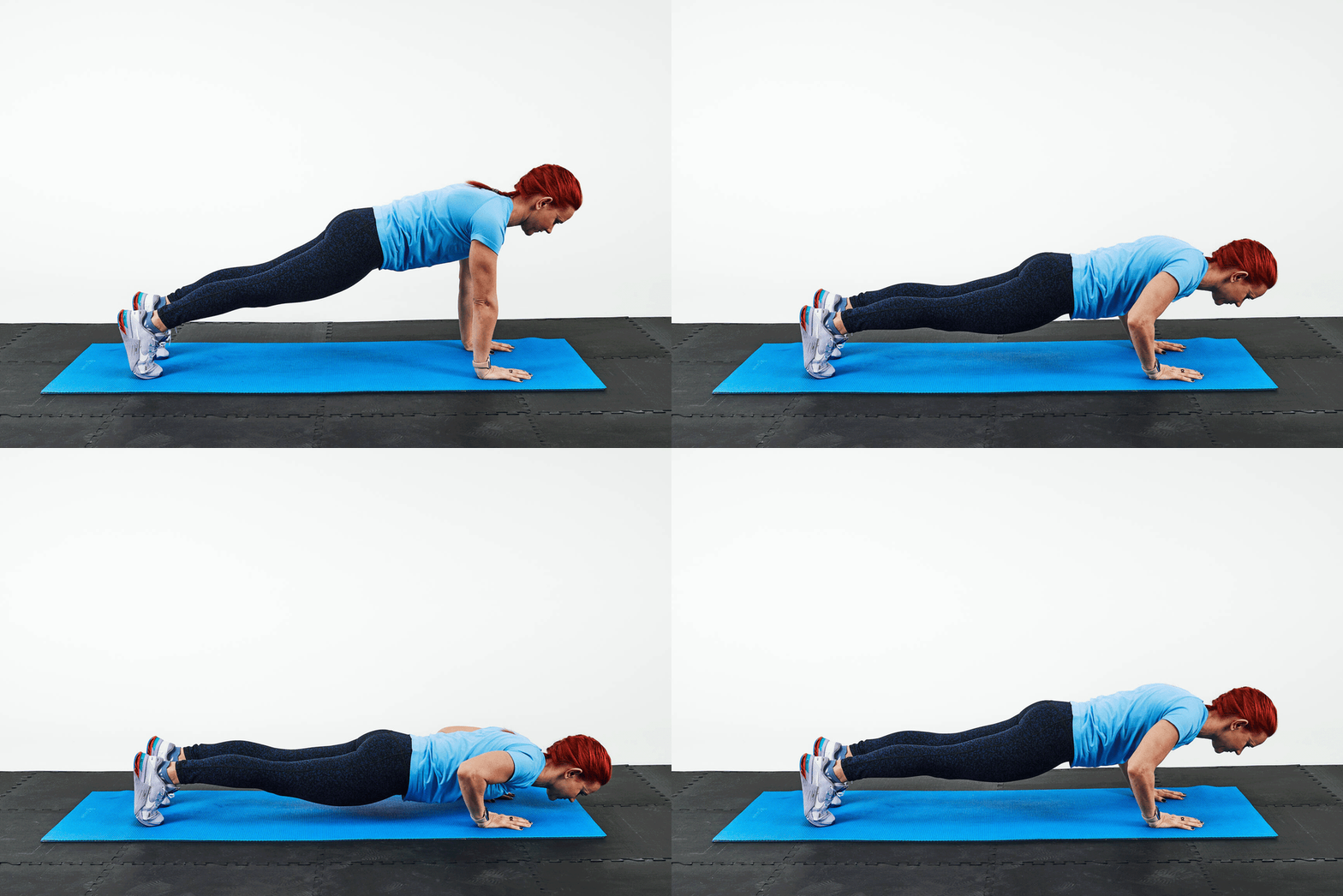
Trevor Raab
Copenhagen Side Plank, 30 seconds
Lie on right side near a bench or chair, left forearm on the floor with elbow directly under shoulder. Stack shoulders and hips. Place right foot on top of bench, legs straight.Drive left forearm into floor and lift hips up. Lift left leg up to bottom of bench, engaging inner thighs. Hold.Then switch sides. 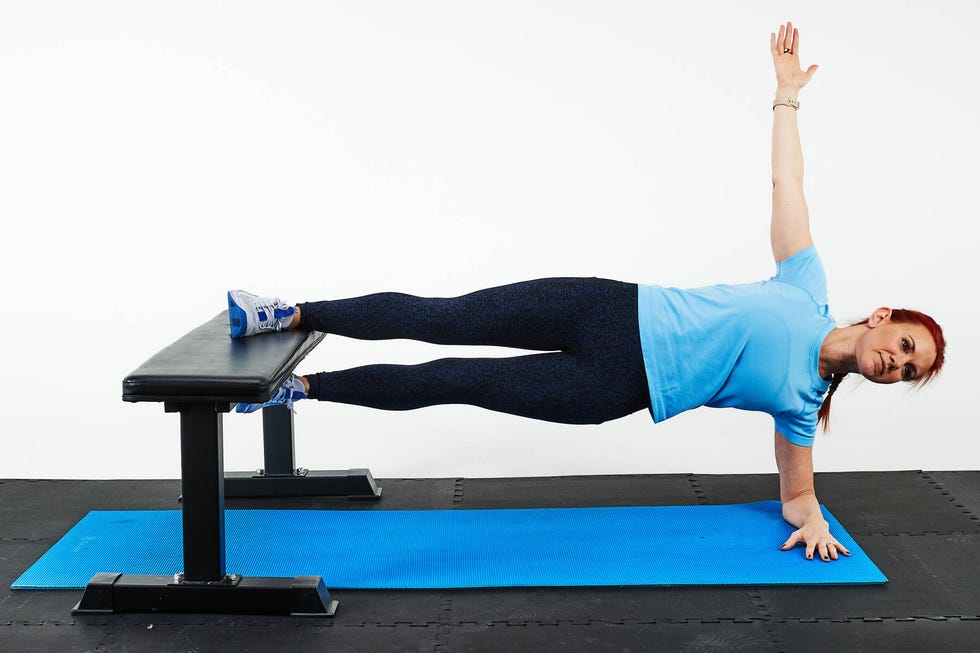
Trevor Raab
Strength Set 2: 3 Rounds
Bulgarian Split Squat, 6 reps per side
Stand in front of a bench, box, or chair. Place right foot on bench behind you and hold a dumbbell in each hand down by sides.Bend left knee to lower down until right knee hovers just above the floor. Left knee should track over toes. Keep core engaged and chest tall, with a slight hinge forward at hips.Drive through left foot to stand back up.Repeat.Then switch sides.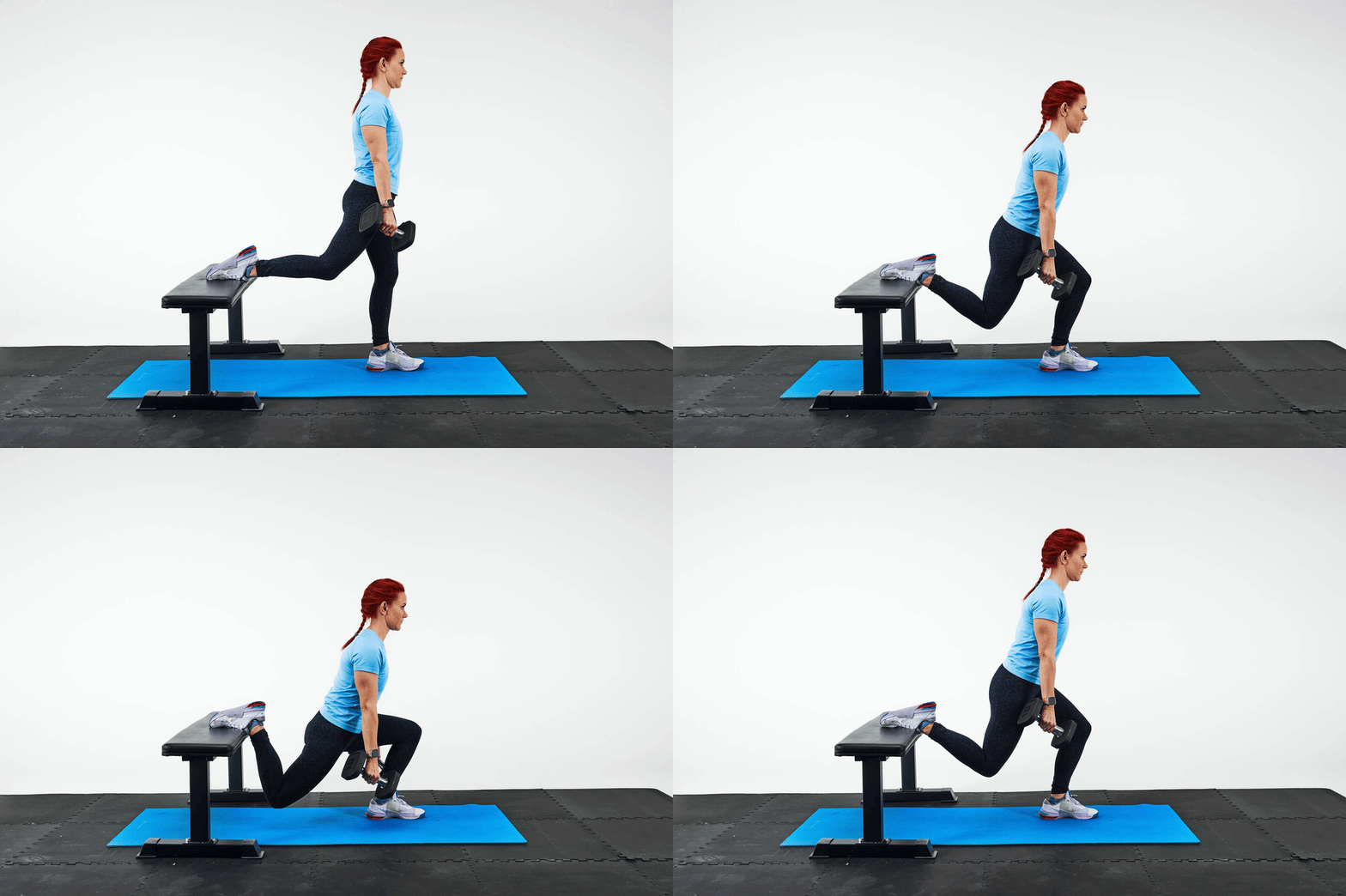
Trevor Raab
Bent-Over Row, 6 reps
Stand with feet hip-width apart, holding a dumbbell in each hand down in front of you, palms facing each other.Hinge at hips by sending glutes straight back, with back flat. Pull shoulders down and back and look down and forward so neck is neutral. This is the starting position. Pull dumbbells back to hips, elbows close to sides and squeezing shoulder blades together. Pause, then straighten arms to return to starting position.Repeat.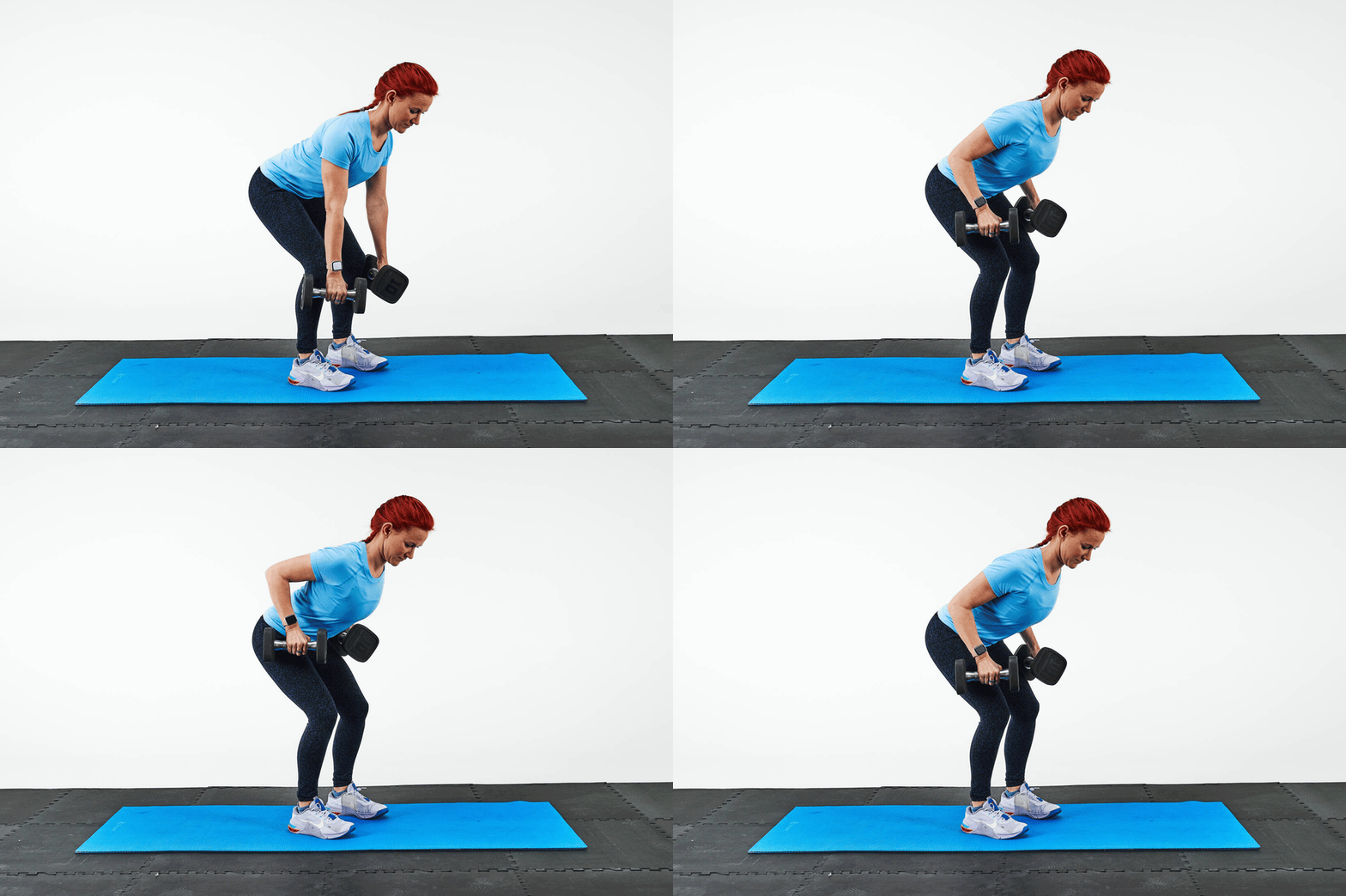
Trevor Raab
Weighted Dead Bug, 10 reps per side
Lie faceup, holding a light dumbbell in each hand, held over shoulders with arms straight, and knees bent 90 degrees, held directly over hips. This is the starting position.Extend right leg out, foot hovering off the floor and simultaneously lower left arm behind you.Exhale to return to starting position.Repeat on other side.Continue alternating.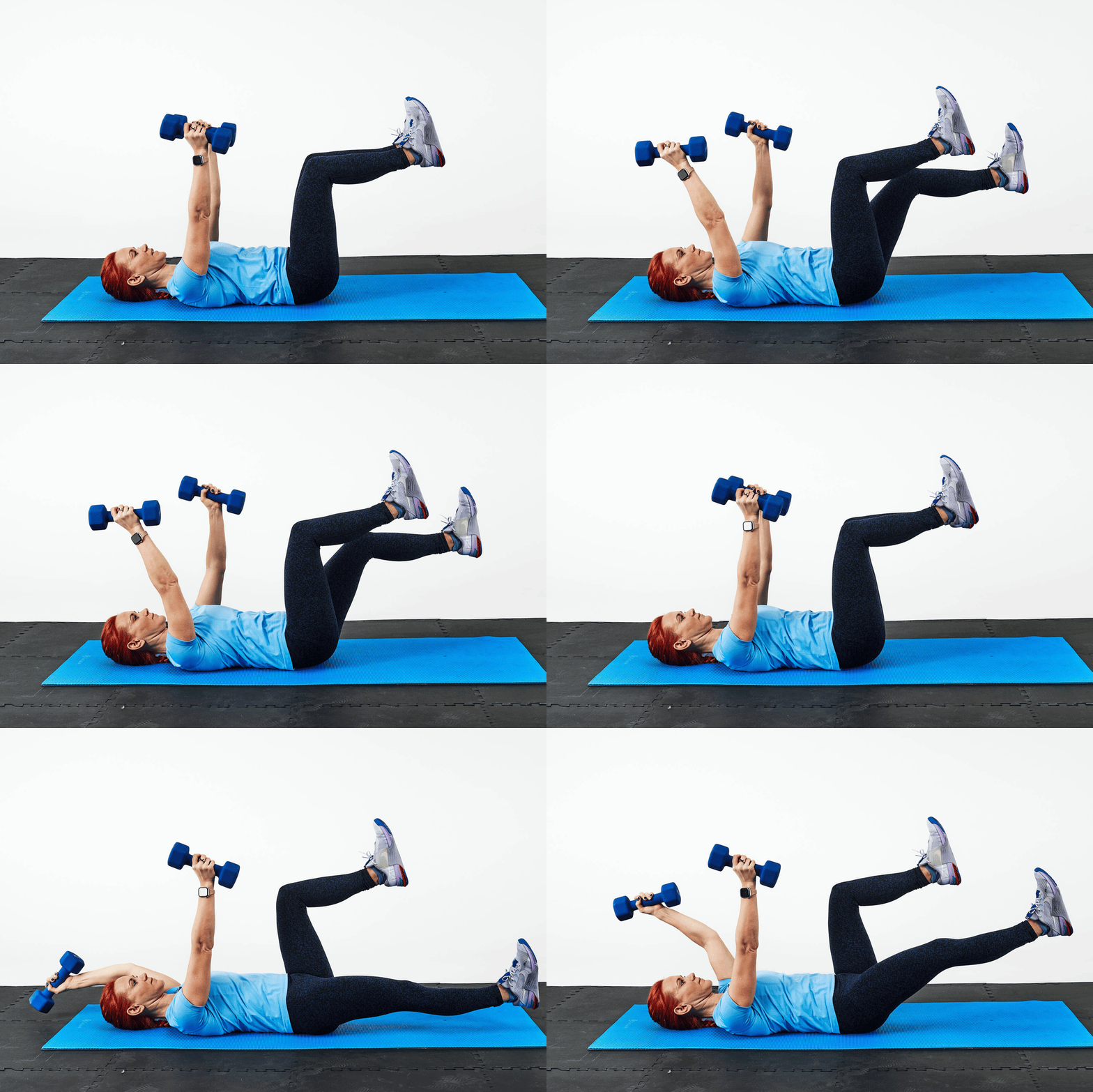
Trevor Raab
B Workout
Complete all exercises in each group back to back, in order, with no rest. Then rest for 2-3 minutes before repeating for all sets. Then, move on to the next group of exercises. For the main lift, rest 2-3 minutes between rounds.
Plyo Set: 4 Rounds
Lateral Hop, 10 reps (total)
Stand with feet together.Hop to the right with feet together.Then hop to the left.Continue alternating.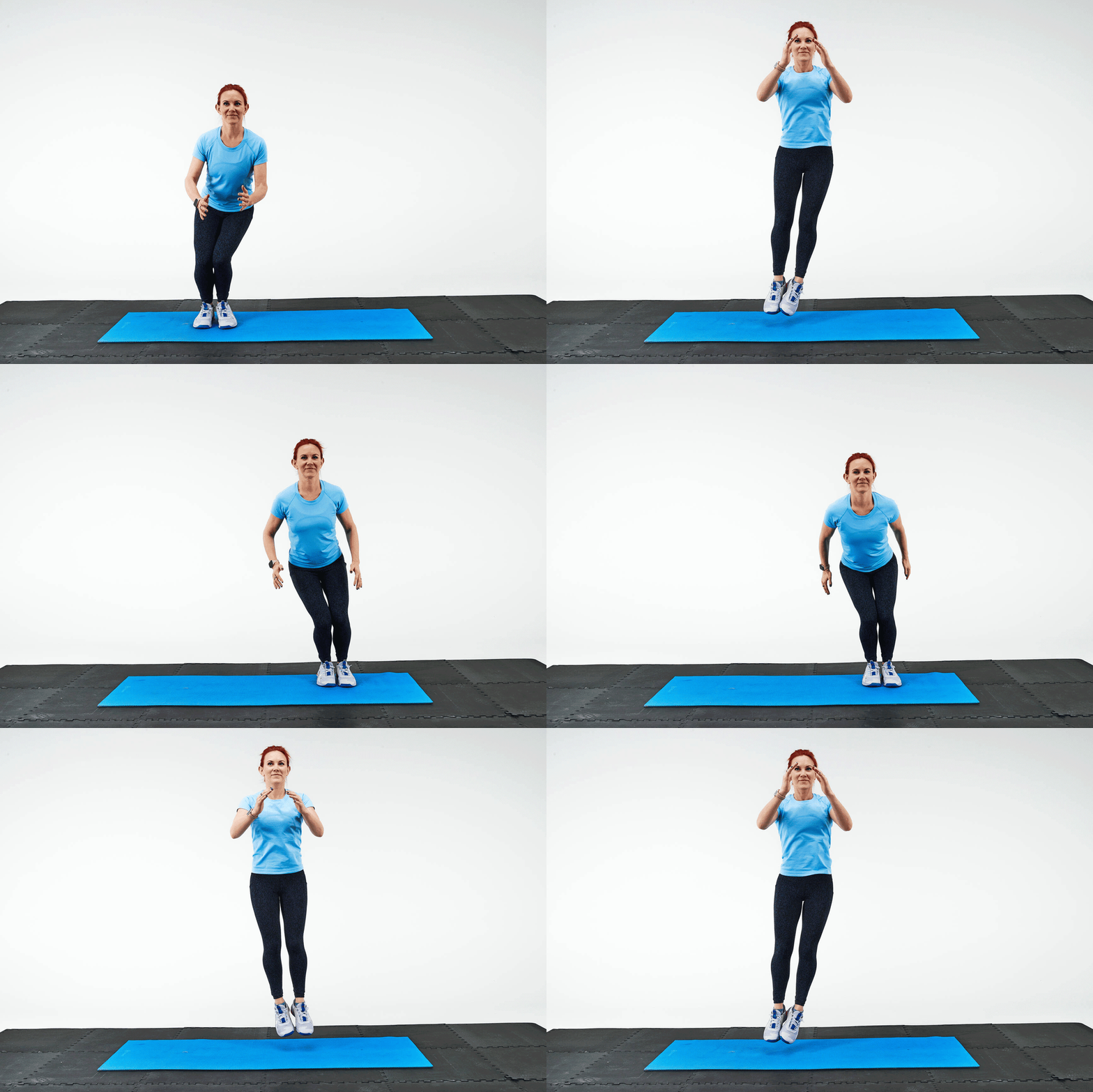
Trevor Raab
Broad Jump, 4 reps
Stand with feet hip-width apart.Send hips back into a hinge position, arms reaching behind you.Explode up, jumping off the floor and forward, landing in a squat.Stand up, turn around, and repeat. (Or continue moving forward if you have the space.)Repeat.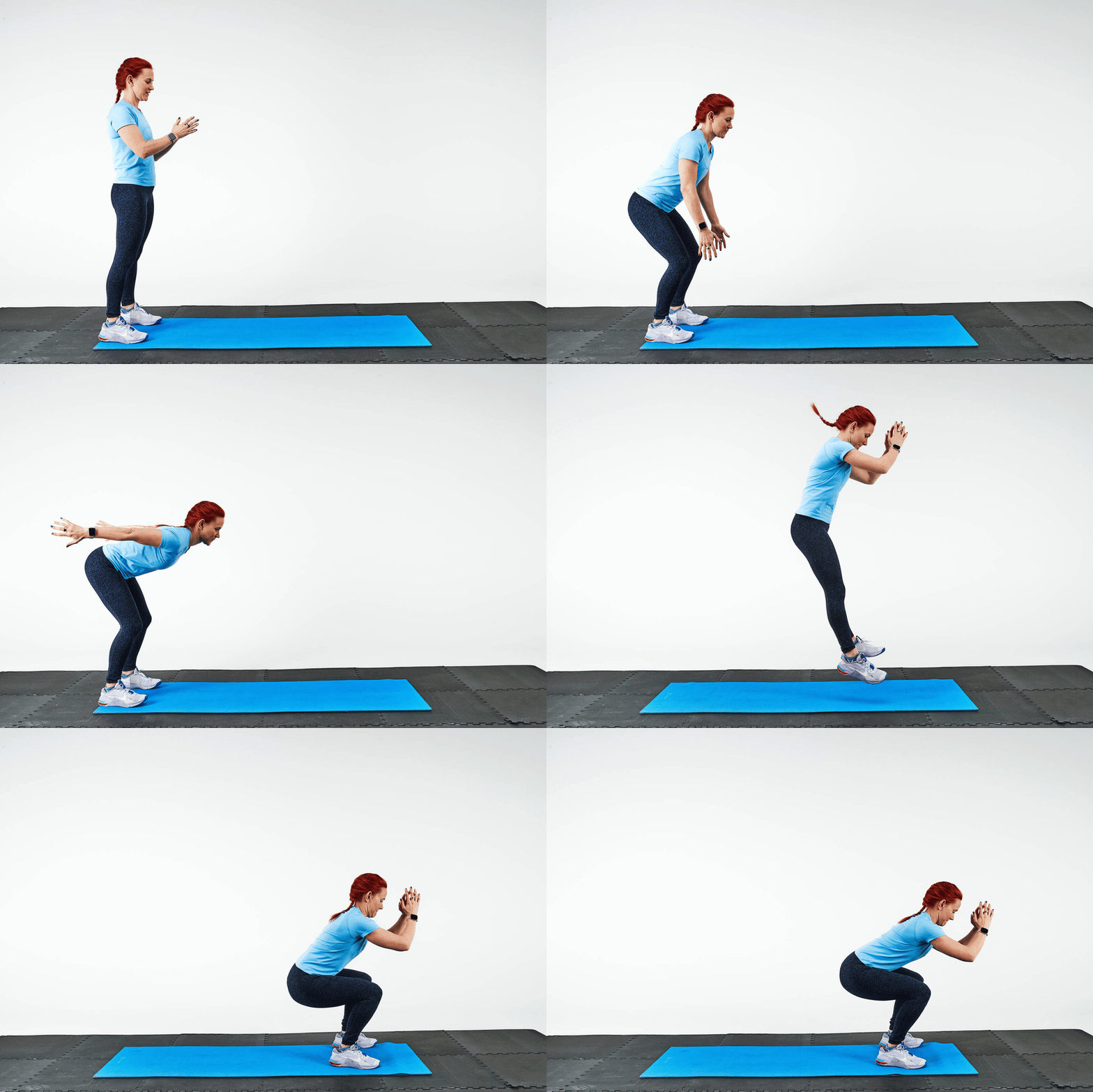
Trevor Raab
Main Lift: 4 Rounds
Romanian Deadlift, 6 reps
Stand with feet hip-width apart, holding a dumbbell in each hand down in front of thighs, palms facing you. Hinge at hips by sending glutes straight back, keep weights close to legs, and core engaged with back flat, shoulders down and back. Maintain only a slight bend in knees. Drive feet into floor to stand back up. Repeat.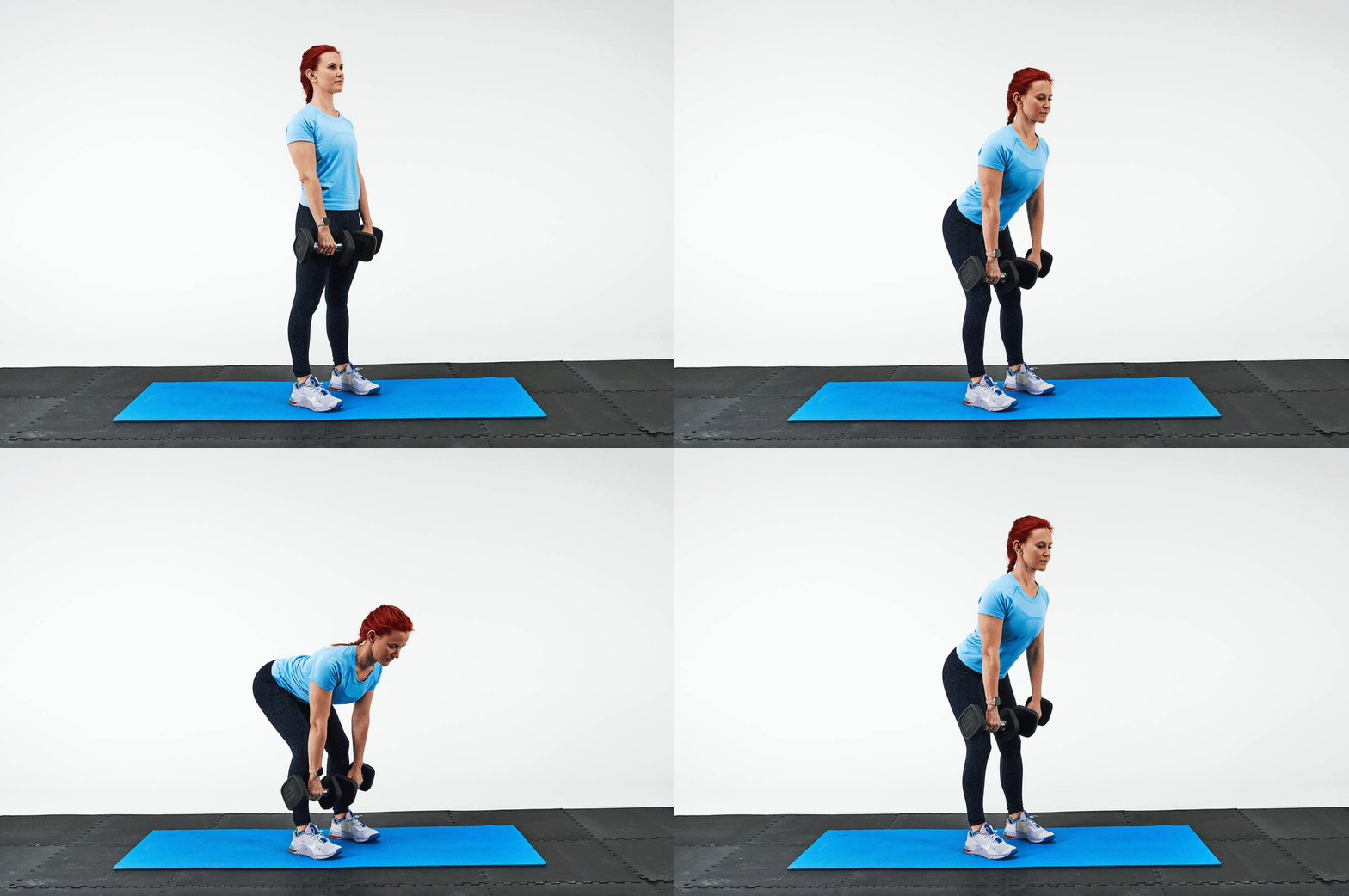
Trevor Raab
Strength Set 1: 3 Rounds
Glute Bridge, 8 reps
Lie faceup with knees bent, feet planted hip-width apart, and holding a dumbbell on each hip.Engaging core and maintaining a slight pelvic tilt toward the ceiling, drive through feet to lift hips up, engaging glutes. Slowly lower hips back down. Repeat.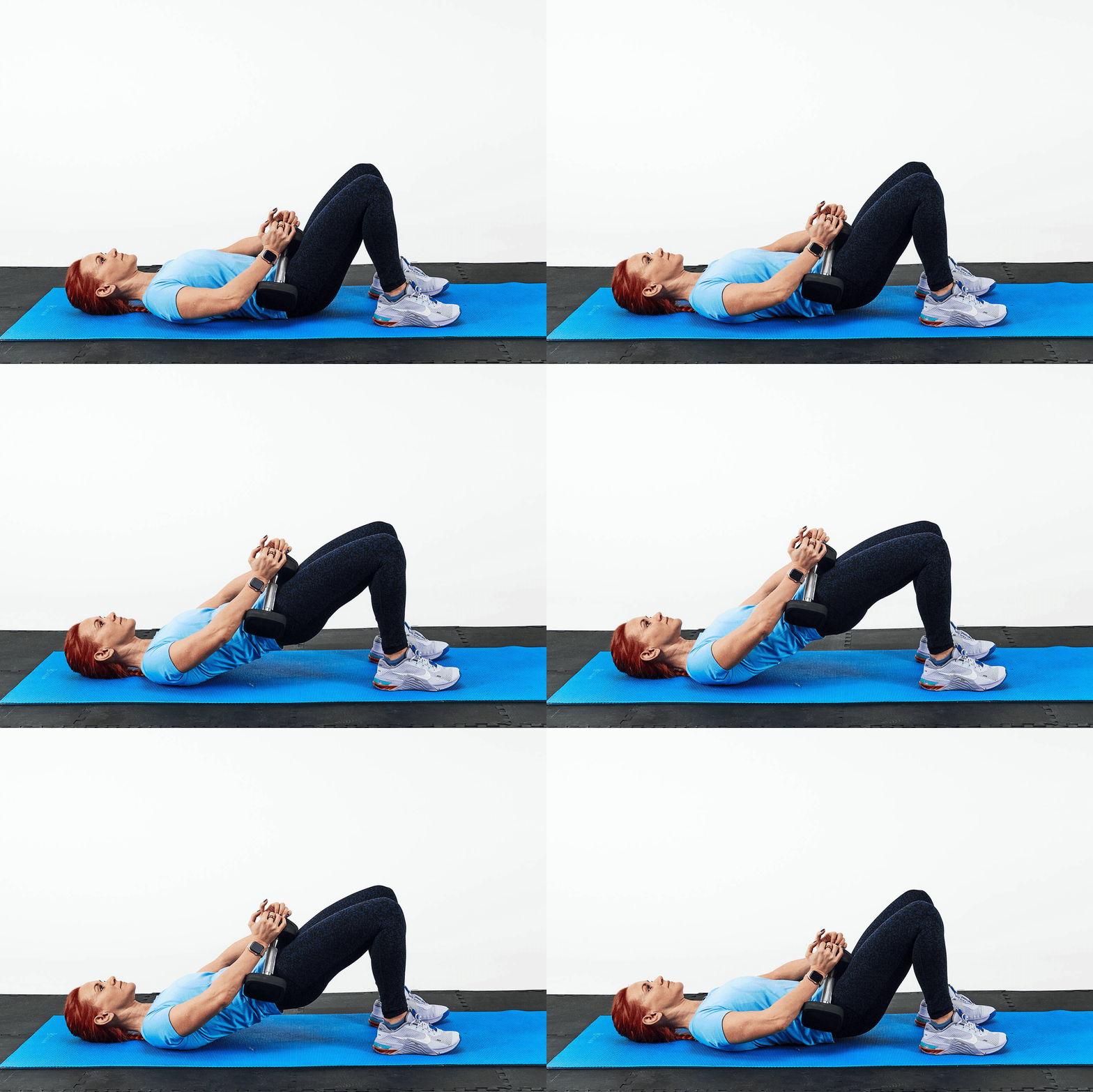
Trevor Raab
Half-Kneeling Overhead Press, 8 reps per side
Start kneeling with left foot forward, right knee on floor, both knees bent 90 degrees. Hold a dumbbell in right hand, racked at shoulder with elbow bent. Press weight overhead, bicep by ear.Slowly lower weight back to shoulder.Repeat.Then switch sides. 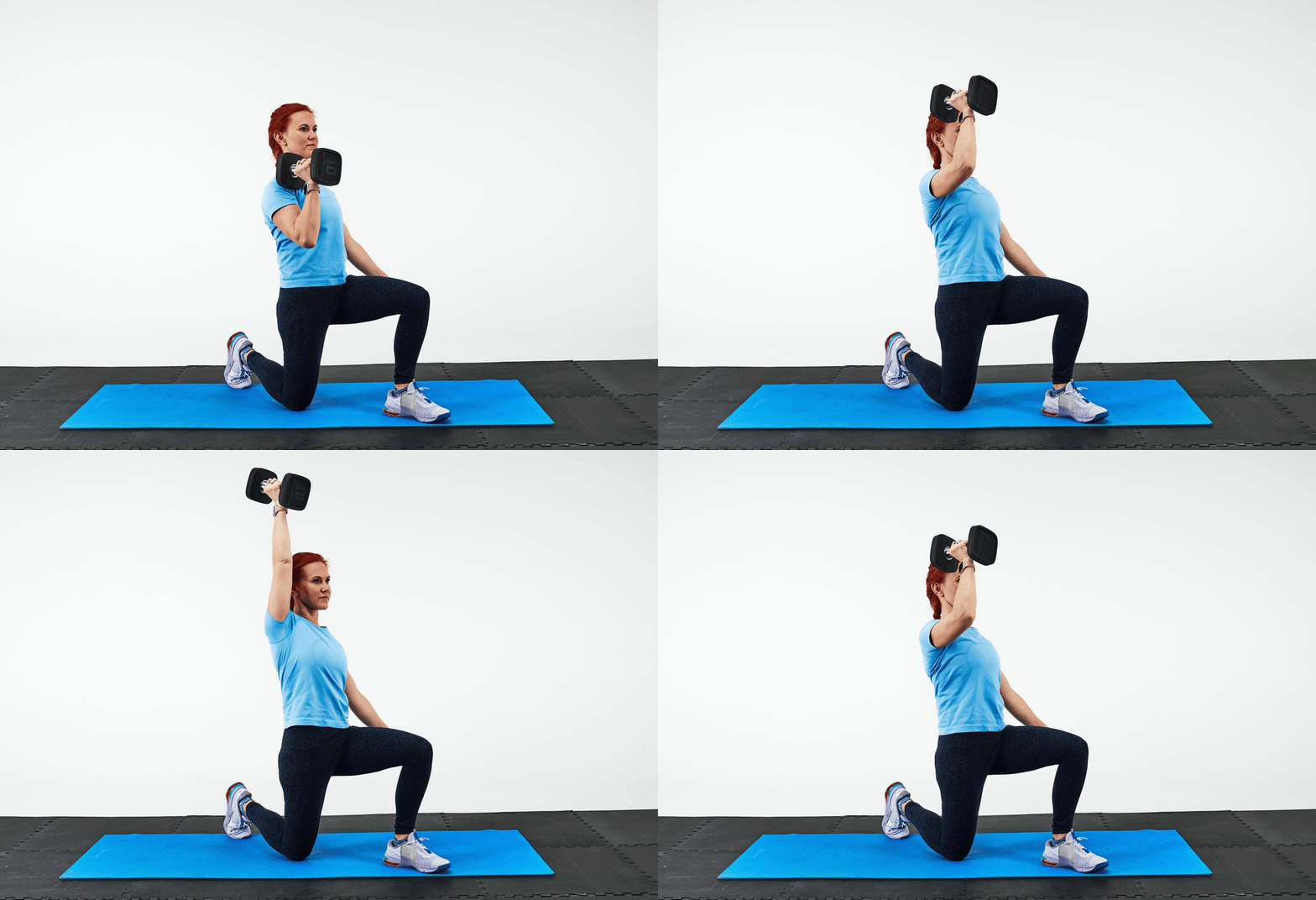
Trevor Raab
Banded Bird Dog, 10 reps per side
Place a mini looped band around feet and start on all fours, shoulders right over wrists and knees right under hips.Extend left arm and right leg straight out to torso height, keeping foot flexed (toes to shin), and hips and shoulders square to floor with core engaged.Draw left elbow toward right knee under torso, keeping hips and shoulders square to floor and core engaged.Then place back in all fours position.Repeat on opposite side.Continue alternating.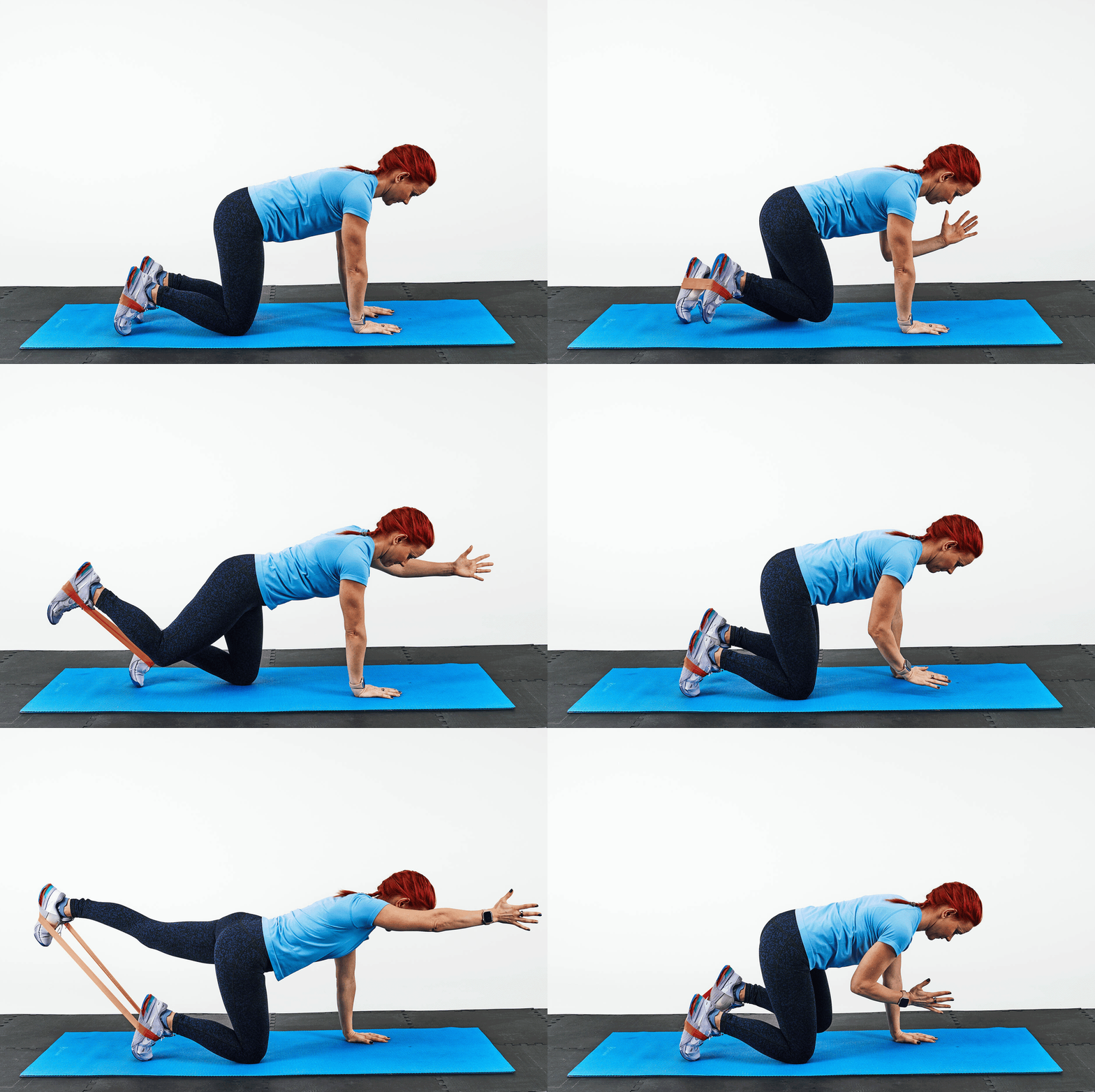
Trevor Raab
Strength Set 2: 3 Rounds
Lateral Step-Up, 6 reps per side
Stand to the right of a box, bench, or step. Hold a dumbbell in each hand down by sides. Place right foot on box, and drive foot into box to stand up onto it. Drive left knee toward chest at top.Slowly lower back down with control, keeping right foot on box.Repeat.Then switch sides.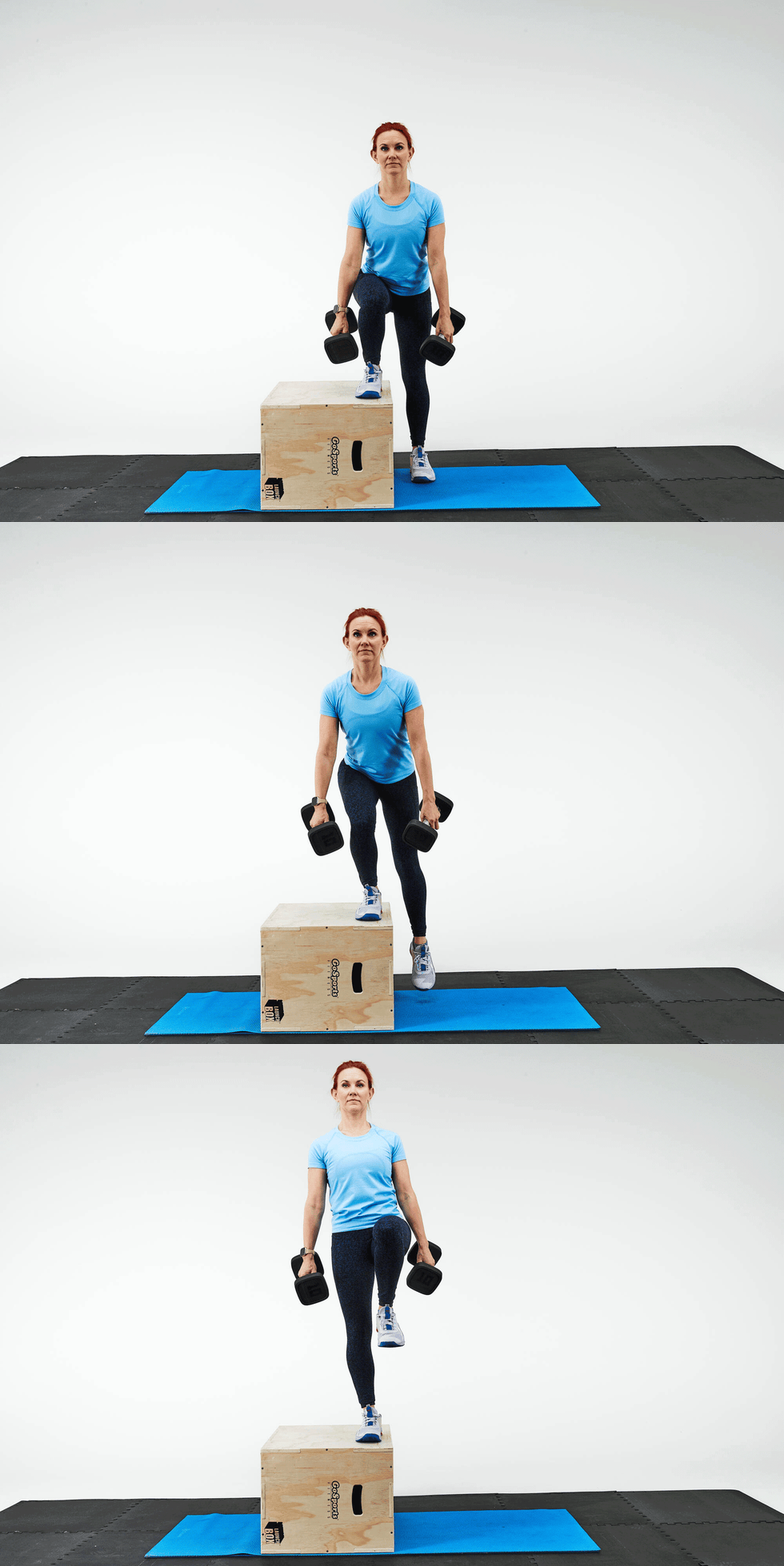
Trevor Raab
Single-Arm Banded Row, 6 reps per side
Stand with resistance band anchored on a heavy object, about at shoulder height.Grab band with right hand, palm facing midline, arm extended.With shoulders down and back and core engaged, pull band toward hip. Keep elbow close to side.Straighten arm back out.Repeat.Then switch sides.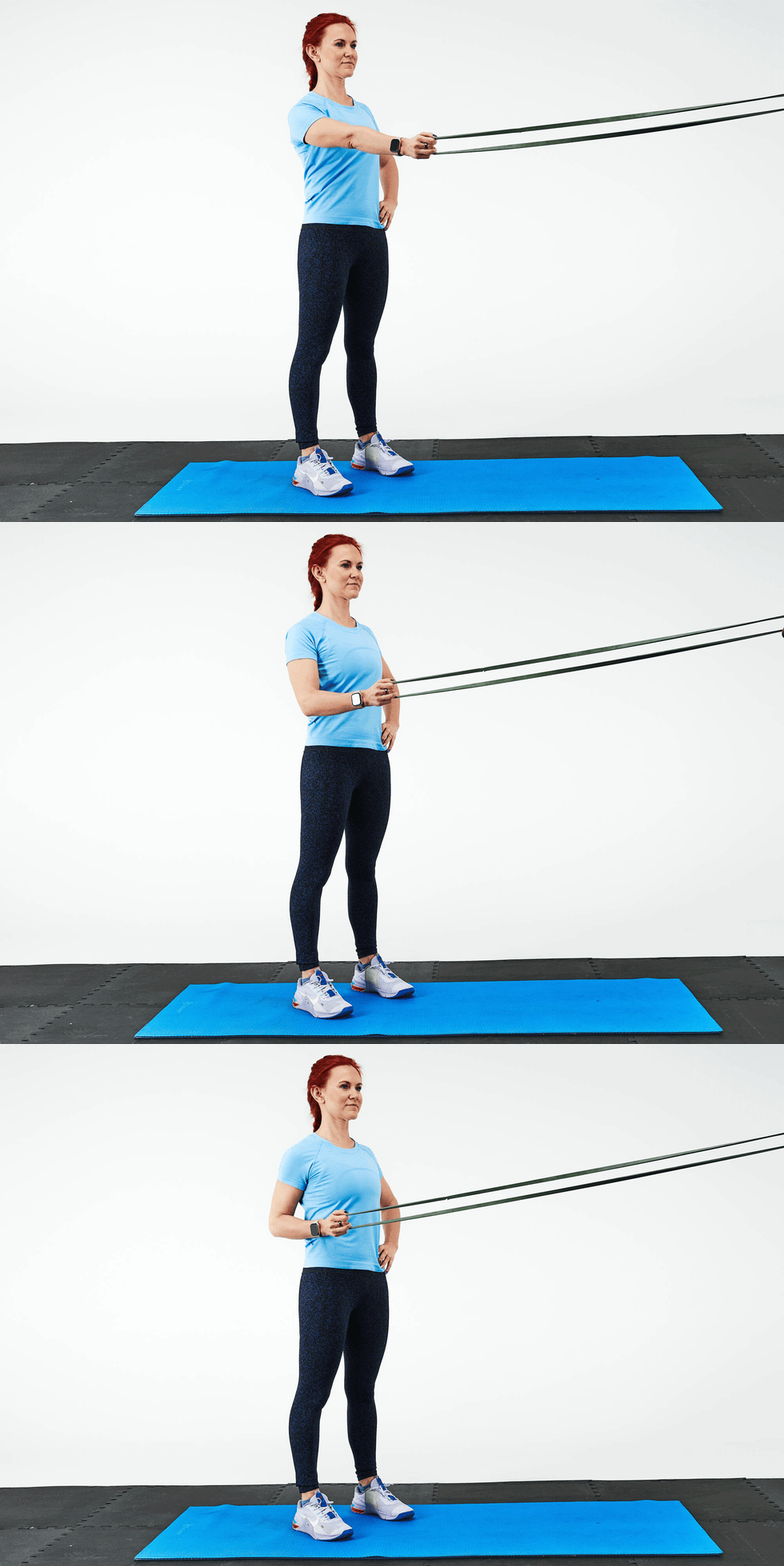
Trevor Raab
Wood Chop, 10 reps per side
Stand with feet slightly wider than hip-width apart. Hold dumbbell with both hands, overhead and to the right.Lower weight in front of body and toward the left hip as you squat down.Lift weight back up and over to right side, arms straight overhead, to right.Repeat.Then switch sides.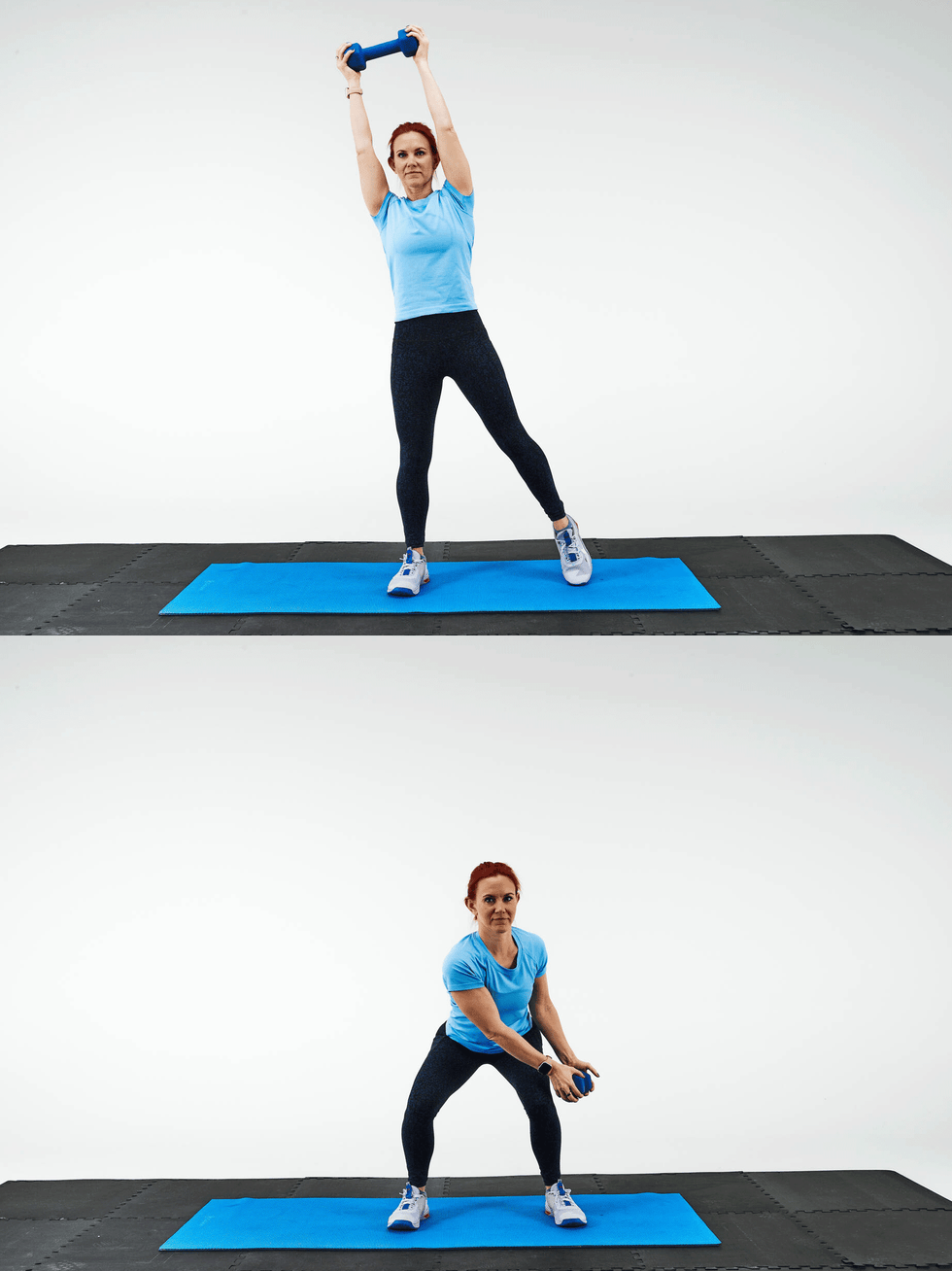
Trevor Raab
Related Story