
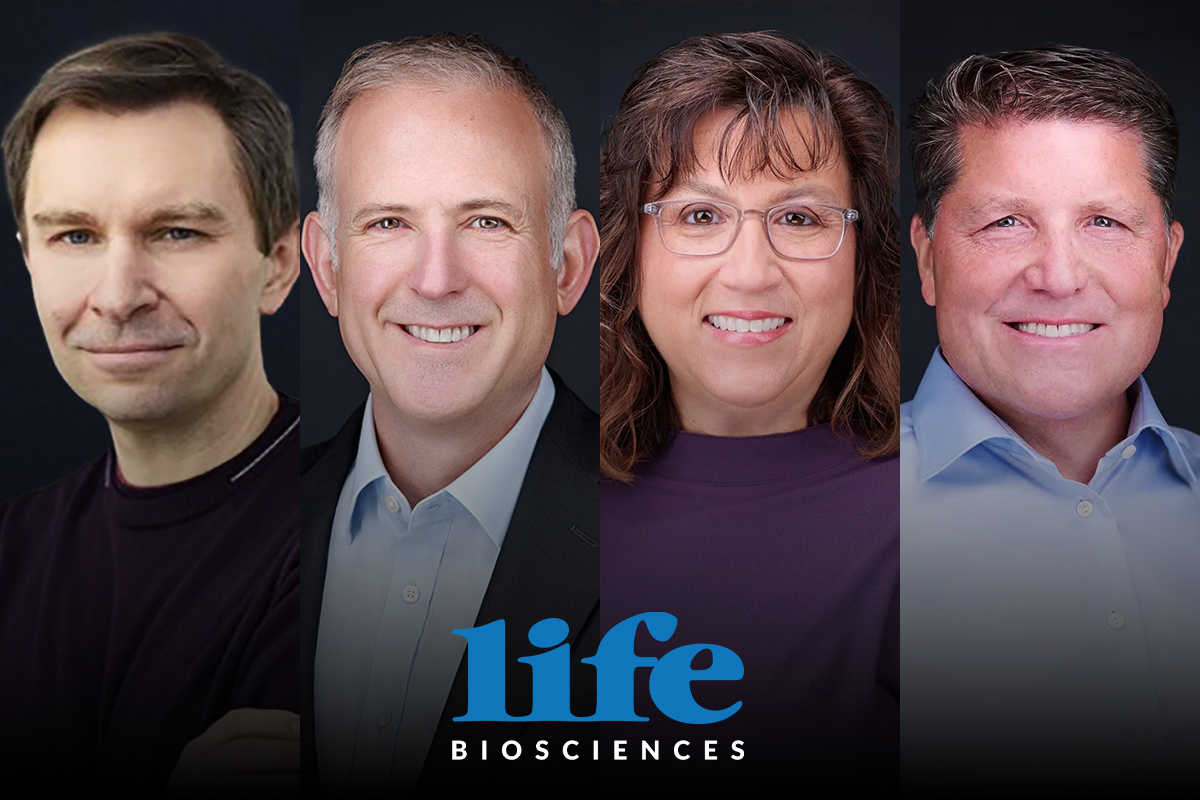
A milestone moment for longevity as Life Biosciences gets green light to progress cellular rejuvenation trial in eye disease.
Two decades ago, Professor Shinya Yamanaka discovered a groundbreaking method to reverse the biological age of cells. The Nobel prize-winning discovery sparked a global race to harness the approach therapeutically, and today marks a historic milestone in that journey with the news that the FDA has given the go-ahead for the first ever human trial of a partial epigenetic reprogramming therapy.
The FDA’s decision clears an investigational new drug application for Life Bioscience’s ER-100, a gene therapy designed to rejuvenate damaged retinal cells in people with serious, age-related eye diseases. The Boston-based biotech co-founded by Harvard professor Dr David Sinclair, who showed in 2020 that a partial epigenetic reprogramming treatment restored vision in blind mice, is now preparing to commence a Phase 1 first-in-human study to show its therapy can be delivered safely in patients with open-angle glaucoma and non-arteritic anterior ischemic optic neuropathy (NAION).
Longevity.Technology: This is clearly a huge moment for longevity, and one that has potential implications for many other companies, including the likes of Altos Labs, NewLimit and Retro Biosciences. However, it also represents a pragmatic step forward for the field. While it does not resolve the many questions surrounding human rejuvenation, it does place epigenetic reprogramming on a familiar path of dose finding, safety monitoring and measured clinical validation, and brings the promise of epigenetic rejuvenation a little closer to therapeutic reality. To find out more, we caught up with Life Bio CEO Jerry McLaughlin and CSO Dr Sharon Rosenzweig-Lipson.
 Jerry McLaughlin is CEO of Life Biosciences
While Yamanaka’s discovery that four transcription factors (Oct4, Sox2, Klf4 and c-Myc) could reset a cell to an embryonic-like state, researchers have since sought to adapt the biology in ways that preserve cell identity and reduce cancer risk.
Hailing the IND clearance as “a major inflection point for the longevity and aging biology field,” McLaughlin told us “since Shinya Yamanaka first showed that cellular age could be reset through the reprogramming factors OSKM, the potential of translating that biology into real medicines has been enormous yet has previously remained largely theoretical.”
Primary focus on safety
As a first-in-human trial, Life Bio’s study is primarily focused on safety and tolerability. Instead of using all four Yamanaka factors, ER-100 employs three of the factors (OSK) delivered transiently to reset age-associated epigenetic markers while keeping cells committed to their original function. By excluding c-Myc, a factor associated with uncontrolled growth, the strategy is intended to lower the risk of tumors that has historically concerned regulators and clinicians.
From a safety perspective, Rosenzweig-Lipson told us that the company’s preclinical studies in non-human primates demonstrated that ER-100 was well tolerated in NHPs, with no systemic toxicities.
“The therapy also uses a doxycycline-inducible system, giving us precise control over when the genes are active and allowing treatment to be paused or stopped if needed,” she added. “In addition, ER-100 is delivered locally to the eye, limiting systemic exposure. Multiple preclinical animal models have demonstrated controlled gene expression, favorable biodistribution, restoration of epigenetic markers, and improvements in visual function which has collectively provided the foundation for FDA clearance.”
 Sharon Rosenzweig-Lipson is Chief Scientific Officer at Life Biosciences.
The clinical trial will monitor immune responses and ocular effects while also collecting exploratory data on visual function and retinal health.
“At this stage, success means demonstrating that ER-100 can be administered safely,” said Rosenzweig-Lipson. “Any signals of improvement in visual parameters would be highly encouraging and would help inform the direction of subsequent efficacy-focused trials.”
A therapeutic platform for age-related disease
If the initial study identifies a safe dose and delivery regimen, Life Bio plans to move into larger trials designed to test whether partial epigenetic reprogramming can meaningfully preserve or restore vision. More broadly, the company views the trial as a test case for an entire therapeutic platform.
“Demonstrating that partial epigenetic reprogramming can be deployed in humans opens the door to applying the same approach to other age-related diseases and organ system,” said Rosenzweig-Lipson.
While the eye is seen as an ideal starting point because it is accessible and allows for localized treatment, Life Bio is already exploring other potential applications for its technology. The company’s near-term vision is to build evidence organ by organ and disease by disease.
“Preclinical data already suggest applicability beyond ophthalmology, including in liver diseases like MASH,” said McLaughlin. “While systemic or multi-organ rejuvenation remains a longer-term goal, the current strategy is to establish rigorous clinical proof in specific age-related conditions. Over time, this disciplined approach could support broader applications and new delivery modalities.”
“Life Bio is starting by applying this biology to clearly defined age-related diseases with measurable endpoints. This shift from aspiration to evidence-based clinical development is helping move the whole field forward.”